

P2610 on 2015-2019 Ford Transit 3.7L: Engine Off Timer Fault Causes and Fixes
On a 2015-2019 Ford Transit, code P2610 is most often caused by a weak or failing battery. Before attempting any other repairs, fully test the battery and charging system. A new battery, which costs around $150-$350, is the most likely fix.
- P2610 on a Ford Transit almost always points to a problem with the battery or its connections.
- Always start your diagnosis by load-testing the battery, even if it seems to hold a charge.
- Check for the companion code P068A, which reinforces the diagnosis of a power supply issue.
- Do not replace the PCM unless all other power-related causes have been definitively ruled out.
What's Unique About the 2015-2019 Ford Transit
For the Ford Transit and other Ford trucks of this era, the P2610 code is very frequently linked to low battery voltage. The PCM is sensitive to power supply interruptions during its shutdown sequence. A weak battery can prevent the PCM from correctly saving data to its Keep Alive Memory (KAM) and maintaining its internal clock, triggering this fault. It is often accompanied by code P068A (ECM/PCM Power Relay De-Energized Too Early), which further points to a power supply issue rather than an immediate internal PCM failure.
Symptoms You May Notice
- Check Engine Light is on
- Intermittent no-start or delayed starting
- Battery drains overnight or after short periods
- Failure to pass an emissions test
- Engine may not shut off immediately after turning the key off
- Replacing the PCM before thoroughly testing the battery and its connections. A faulty PCM is a rare cause, while a weak battery is a very common cause for this specific code on Ford trucks and vans.
Most Likely Causes
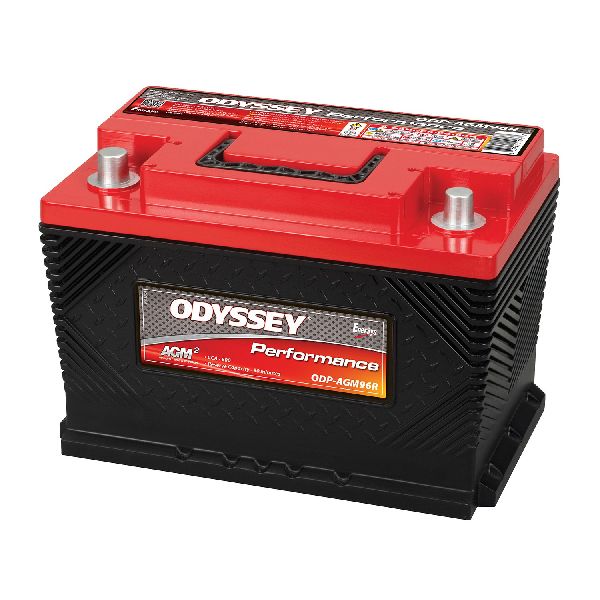
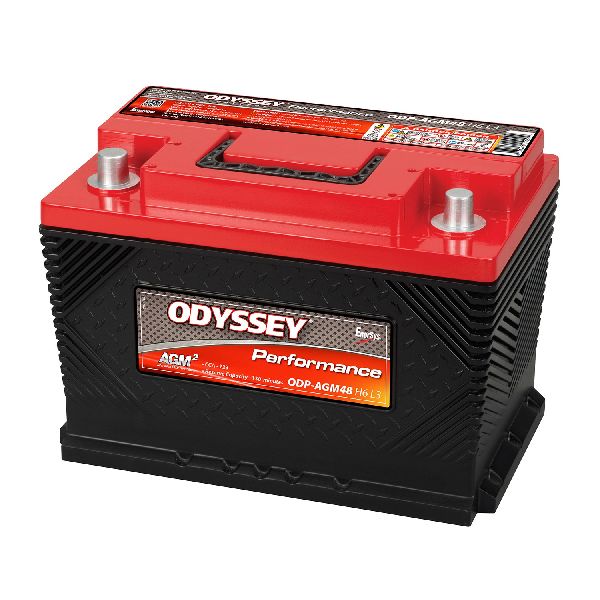
- Weak or Failing Battery 🔴 High Probability → Shop Vehicle Battery The PCM in these vans is sensitive to voltage drops during its power-down sequence. An aging battery often can't supply the stable voltage required for the PCM to maintain its 'keep alive' memory and internal timer.
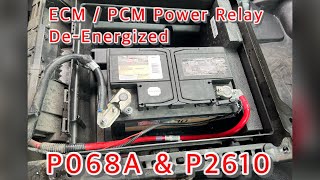
How to confirm: Use a multimeter to check the battery voltage with the engine off; it should be above 12.4V (ideally >12.6V for a healthy AGM). Perform a load test on the battery. Many auto parts stores offer this service for free. A video of a 2019 Transit 3.7L showed a battery with 0% state of health causing this code.
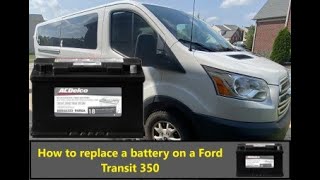
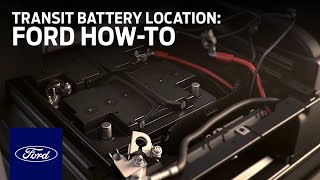
Typical fix: Replace the vehicle's battery. The battery is located under the driver's seat. After replacement, it's recommended to perform a Battery Monitoring System (BMS) reset using a capable scan tool or by following the manual procedure (if available) to ensure proper charging.
Est. part cost: $150-$350 - Poor Battery Connections or Ground Straps 🟡 Medium Probability → Shop Vehicle Battery Corrosion on battery terminals or loose/corroded ground straps can mimic the effects of a bad battery, causing intermittent voltage drops to the PCM.
How to confirm: Visually inspect the battery terminals for white or blue-green corrosion. Follow the main negative cable from the battery to the chassis and engine block, checking for tightness and corrosion at the connection points. A voltage drop test across the ground cables can confirm high resistance.
Typical fix: Clean the battery terminals and cable ends with a wire brush. Ensure all ground connections are clean, tight, and free of rust.
Est. part cost: $5-$20 - Faulty PCM Power Relay ⚪ Low Probability If the relay that supplies power to the PCM is faulty, it can de-energize too early, cutting power before the PCM has completed its shutdown timer sequence. This is a common reason for the related P068A code.
How to confirm: Locate the PCM power relay in the engine compartment fuse box. On many Transits, this is in the main fuse box near the battery. You can often swap it with an identical relay from a non-critical system (like the horn) to see if the problem is resolved.
Typical fix: Replace the PCM power relay.
Est. part cost: $15-$40
Rare But Worth Checking
- Internal PCM Failure: While this is a possible cause as the timer is internal to the PCM, it is much less common than power supply issues. This should only be considered after all battery, connection, and relay issues have been ruled out.
- Faulty Engine Coolant Temperature (ECT) Sensor: The PCM cross-references the engine off time with the drop in coolant temperature to validate the timer's reading. If the ECT sensor gives an erratic reading (e.g., not showing a plausible temperature drop after shutdown), the PCM might incorrectly flag the timer as faulty. This would typically be accompanied by other ECT-related codes.
- Electrical Glitch from External Source: In some cases, a significant electrical event, such as a short circuit in trailer wiring connected to the vehicle, can cause voltage spikes or drops that corrupt the PCM's operation and trigger a P2610 code.
Diagnosis Steps
- Scan the PCM for any other trouble codes. Pay close attention if P068A is also present, as this strongly points to a power supply issue.
- Using a digital multimeter, test the battery voltage with the engine off. It should be at least 12.4 volts, ideally above 12.6V.
- Have the battery professionally load-tested to confirm its health. This is the most important step, as a battery can show good voltage but fail under load.
- Inspect the battery terminals, cable ends, and primary chassis/engine ground straps for corrosion, damage, or looseness. Clean and tighten as necessary.
- If the battery and connections are good, locate the PCM power relay in the fuse box. Swap it with an identical relay from a different circuit and see if the code returns.
- If the code persists after a PCM reprogramming event, ensure the proper procedure was followed. Per TSB ASI-44707, the key must be left in the OFF position for at least 30 seconds after programming to allow the PCM to power down correctly.
- If all other steps fail, the issue may be an internal fault in the PCM, which may require professional diagnosis for a reflash or replacement.
Parts You'll Likely Need
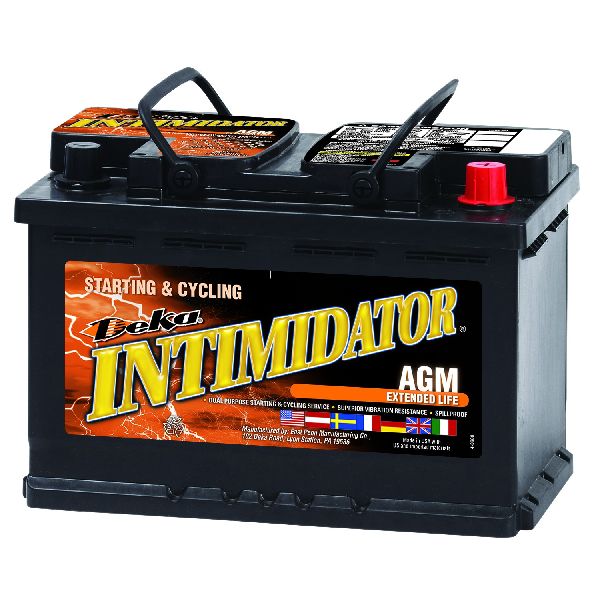
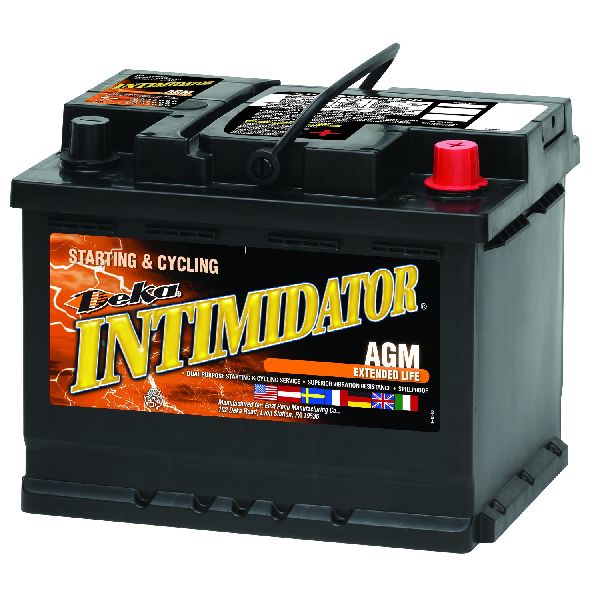
- Vehicle Battery
(OEM #BXT-48H6-610 (610 CCA, Standard) or BXT-94RH7-730 (730 CCA, optional AGM))— A weak battery is the most frequent trigger for code P2610 on this vehicle, as unstable voltage disrupts the PCM's internal timer during the engine-off cycle.
Trusted brands: Motorcraft, Interstate, DieHard, Duralast
OEM price range: $200-$400
Aftermarket price range: $150-$300
Related Codes That Often Appear With This One
- P068A — This code means 'ECM/PCM Power Relay De-Energized Too Early'. It is frequently set with P2610 because the root cause, often a weak battery, interrupts the power supply needed for the PCM to shut down correctly.
Technical Service Bulletins (TSBs) & Recalls
- ASI-44707 - Mentions that codes P2610, P068A, and P06B8 can be set after PCM reprogramming if the ignition key is not left in the OFF position for at least 30 seconds. This TSB applies to a wide range of Ford models, not just the Transit.
Platform-Specific Known Issues
- A Ford Technical Service Bulletin (ASI-44707) notes that P2610 can be set on many Ford vehicles after PCM reprogramming if proper power-down procedure (key off for 30+ seconds) is not followed, highlighting the system's sensitivity to power cycles.
Mechanic-Grade Diagnostic Values
- Parasitic Current Draw — expected: < 50 mA (0.050A) after all modules go to sleep (approx. 40-75 minutes).. Failure: A sustained reading significantly above 50mA indicates a module is not shutting down or a short is draining the battery, which is a root cause of P2610.
- Battery Voltage During Cranking — expected: Should remain above 10.5 Volts.. Failure: A drop below 10.5V during cranking indicates a weak battery that cannot maintain stable voltage for the PCM, often triggering P2610.
- Alternator Output Voltage (Engine Running) — expected: 13.8V - 14.4V at the battery terminals.. Failure: Voltage significantly below 13.8V indicates an undercharging condition, while voltage above 14.8V can indicate an overcharging condition, both of which can stress the electrical system.
Scan Tool Commands That Help
- Ford IDS / FORScan: Battery Monitoring System (BMS) Reset — 🎬 Watch: How to reset the BMS yourself This is a mandatory step after replacing the vehicle's battery. It tells the PCM the battery's age and state of charge, ensuring correct charging strategy and preventing future electrical codes like P2610.
- Ford IDS / FORScan: PCM Adaptive Memory Reset — After replacing the battery or clearing a significant power-related fault. This command clears learned values and can resolve software glitches within the PCM that may have been caused by the power interruption.
- Manual Procedure (No Scan Tool): Battery Monitoring System (BMS) Reset — For DIYers without a scan tool, this procedure resets the BMS after a battery change. With the key on and engine off, flash the high beams 5 times, then press the brake pedal 3 times. The battery light on the instrument cluster will flash three times to confirm the reset.
Wiring & Ground Locations
- C175B — This is the main electrical connector for the Powertrain Control Module (PCM) on the 3.7L engine.. Technicians must access this connector to perform pin-out tests for critical PCM power and ground circuits, including the Keep Alive Memory (KAM) circuit that powers the engine-off timer.
Real Owner Repair Stories
- YouTube Channel 'Tuan Tran' (2019 Ford Transit 3.7L) — Check Engine Light on with codes P2610 and P068A. The battery would repeatedly die and require a jump start.
❌ Tried (didn't work) The video advises against chasing other codes before addressing the battery.
✅ What actually fixed it The battery was replaced. A professional load test on the original 3-year-old battery showed it had a 0% state of health, despite sometimes being able to start the vehicle after a jump. The new battery resolved both codes. - NHTSA ODI #11435669 — An owner of a Ford vehicle reported that the car stopped in the middle of traffic without warning. The diagnostic invoice noted codes P2610 and P2138, requiring a pinpoint test and a wire repair bypass for connector C210 to the PCM.
Model Year Variations Within This Range
- 2016-2019: Starting in 2016, Ford offered a single Absorbed Glass Mat (AGM) battery as an option. When replacing the battery, it is important to identify if the vehicle has the standard flooded battery or the optional AGM battery, as they have different charging requirements and testing parameters.
Diagnostic Flowchart
Other Known Issues on This Vehicle
Issues unrelated to this code that are worth knowing about as an owner of this generation:
- Driveshaft Flexible Coupling (Guibo) Failure 🔴 High — Common on 2015-2017 models, particularly those under heavy load. Can fail before 40,000 miles. (Ref: Recall 19S38.)
- Brake Vacuum Pump Oil Leak/Failure 🔴 High — More common on diesel models but can occur on gas engines. Failure leads to a hard brake pedal and loss of braking assist.
- Water Intrusion into Air Filter Housing 🟠 Medium — A known issue on 2015-2018 models where water leaks from the cowl onto the air filter, causing drivability issues and lean codes. (Ref: TSB 19-2091.)
- Sliding Door Mechanism/Adjustment Problems 🟡 Low — Widespread issue involving difficulty opening/closing the manual sliding door or intermittent operation of the power sliding door. (Ref: SSM 49665, SSM 50699.)
- Degrading Orange Coolant Clogging Radiator 🟠 Medium — Affects models built on or before Dec 31, 2018, using Motorcraft Orange coolant, leading to overheat conditions. (Ref: TSB 21-2038.)
Used vs. New Parts: Buying Guide for This Vehicle
When a used part is the smart pick: A used part is NEVER recommended for the most common fix (the battery). In the rare event the Powertrain Control Module (PCM) is faulty, a used OEM PCM from a reputable salvage yard can be a cost-effective alternative to a new unit, but it absolutely requires professional reprogramming.
Donor-vehicle mileage cap: roughly under 120000 miles for the part to have meaningful remaining life.
What to inspect on the donor part:
- For a used PCM, verify the donor vehicle was not in a flood or fire.
- Inspect the PCM case for physical damage or signs of being opened.
- Check all connector pins for corrosion, moisture, or damage.
OEM-only on this vehicle (don't cheap out):
- Powertrain Control Module (PCM): Due to the need for precise software and VIN programming, using a new or remanufactured OEM unit is strongly advised to prevent compatibility issues.
Aftermarket brands forum-validated for this vehicle:
- Battery: Interstate, DieHard, Duralast
Real Owner Stories
Aggregated from forums and TSBs cited above. Mileages and costs reflect what owners reported in those sources.
2019 Ford Transit 3.7L
Symptoms: Check engine light on with code P2610; diagnostic tools showed a 0% state of health for the battery.
What fixed it: Replacement of the vehicle's battery.
Source hint: A video of a 2019 Transit 3.7L showed a battery with 0% state of health causing this code.
Ford F-series (3.7L platform mate)
Symptoms: Received code P2610 after experiencing a short in the trailer wiring which was blowing fuses.
What fixed it: Fixing the electrical short in the trailer wiring and clearing the code.
Source hint: Ford-trucks.com thread titled 'Code P2610 and trailer light problem......'
Ford Owner Report (NHTSA ODI #11435669)
Symptoms: The vehicle stopped in the middle of traffic without any warning. Diagnostic codes P2610 and P2138 were found.
What fixed it: A technician performed a pinpoint test and a wire repair bypass for connector C210 to the PCM, followed by a PCM reprogram.
Related OBD-II Codes
Frequently Asked Questions
I just reprogrammed my PCM and now P2610 is showing up. Did I break something?
Where is the battery located on my 2015-2019 Ford Transit 3.7L?
Can a bad relay cause the P2610 code on my Transit?
Is there a specific battery reset procedure I need to follow after replacement?
My Transit won't shut off immediately after I turn the key. Is this related to P2610?
Does the 3.7L engine in the F-150 have the same P2610 issues as the Transit?
Helpful Videos
![Avoid Expensive Shop Repairs: DIY Reset the Ford Vehicle Battery Monitoring System [BMS]](https://img.youtube.com/vi/QTtb7rKaZTE/mqdefault.jpg)

We Have This Part in Stock


The information in this article is provided for general reference and educational purposes only. Vehicle specifications, procedures, and part compatibility can vary by production date, trim level, and region. Always consult your vehicle's factory service manual and verify part numbers before purchasing or performing repairs. Safety-critical components such as airbags, seat belts, and braking systems should be installed by a qualified professional.
- Ford Transit:
- 🧭 Diagnostic Flowchart
- 🎬 Helpful Videos
- 🛍️ Shop This Part
- What's Unique About the 2015-2019 Ford Transit
- Symptoms You May Notice
- Most Likely Causes
- Rare But Worth Checking
- Diagnosis Steps
- Parts You'll Likely Need
- Related Codes That Often Appear With This One
- Technical Service Bulletins (TSBs) & Recalls
- Platform-Specific Known Issues
- Mechanic-Grade Diagnostic Values
- Scan Tool Commands That Help
- Wiring & Ground Locations
- Real Owner Repair Stories
- Model Year Variations Within This Range
- Other Known Issues on This Vehicle
- Used vs. New Parts: Buying Guide for This Vehicle
- Real Owner Stories
- 2019 Ford Transit 3.7L
- Ford F-series (3.7L platform mate)
- Ford Owner Report (NHTSA ODI #11435669)
- Related OBD-II Codes
- Frequently Asked Questions
- 🎟️ Get 5% Off