

P2610 on 2008-2012 Honda Accord: ECM/PCM Internal Timer Malfunction Explained
This code indicates a problem with the internal timer of your car's main computer (ECM/PCM). The most common fix is a software update performed by a dealer, or in some cases, replacing the computer itself. A weak battery can also be a cause.
- P2610 on a 2008-2012 Accord points to an issue with the main computer's internal 'off' timer.
- Before replacing any expensive parts, have a dealer or qualified shop check if an ECM/PCM software update is available, as this is a very common fix.
- Always check the health of your car's battery and its connections, as low voltage can cause this code.
- If software and battery are good, the problem is likely the ECM/PCM itself.
What's Unique About the 2008-2012 Honda Accord
For this generation of Honda Accord, the P2610 code is frequently linked to the ECM/PCM's software. Honda's typical diagnostic procedure involves checking if the module has the latest software version before condemning the hardware. This suggests that a software glitch, rather than an outright hardware failure, is a very common scenario that can often be resolved with a re-flash by a dealer or qualified shop with a Honda Diagnostic System (HDS). In some cases, this code may appear after major engine work if the main PCM ground (G101) was not properly reconnected.
Symptoms You May Notice
- Check Engine Light is on.
- Vehicle may stall or have rough idling.
- Reduced engine performance or fuel efficiency.
- Failure to pass an emissions test.
- In rare cases, a no-start condition where the engine cranks but won't start.
- Replacing the ECM/PCM without first checking for software updates or verifying battery and connection integrity.
Most Likely Causes
- Outdated ECM/PCM Software 🔴 High Probability Manufacturers release software updates to fix bugs discovered after the vehicle is sold. This code is a known issue that can often be resolved with a software re-flash.
How to confirm: A dealer or a shop with a Honda Diagnostic System (HDS) can check the current software version against the latest available version.
Typical fix: Update the ECM/PCM software. This is often referred to as 're-flashing' the computer.
Est. part cost: $0 - Internal ECM/PCM Failure 🟡 Medium Probability Electronic components can fail over time due to heat cycles and vibration. The internal timer circuit within the module can develop a fault.
How to confirm: If the software is up to date and all power/ground circuits are good, the standard procedure is to substitute a known-good ECM/PCM and see if the code returns.
Typical fix: Replace the Engine Control Module (ECM/PCM). The new unit will need to be programmed to the vehicle's VIN and key.
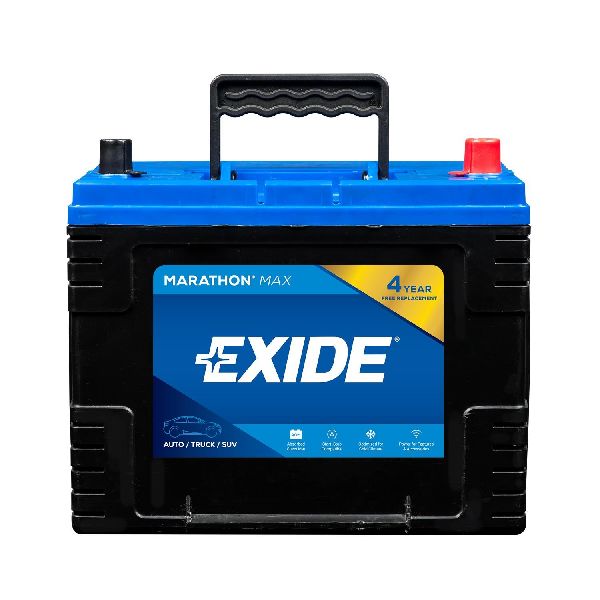
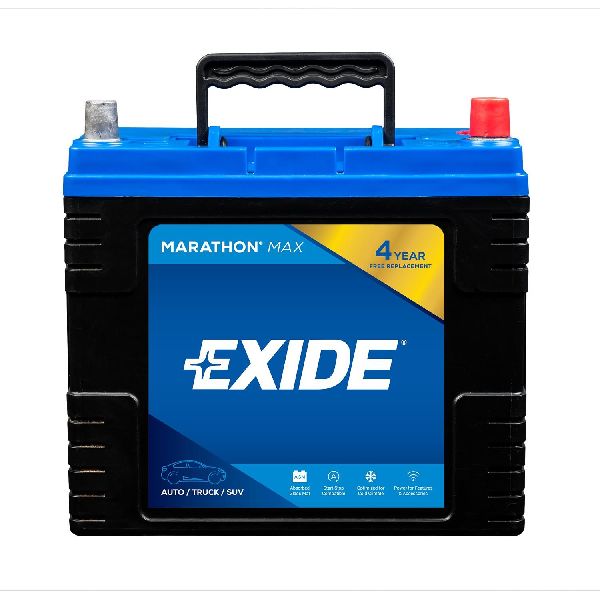
Est. part cost: $200-$800 - Weak or Failing Battery ⚪ Low Probability → Shop Vehicle Battery Low system voltage can cause a variety of unpredictable electronic issues in modern cars, including glitches in the ECM/PCM's memory and timer functions.
How to confirm: Test the battery's voltage and health. A healthy, fully charged battery should read approximately 12.4-12.6 volts with the engine off. Check for a significant voltage drop during cranking.
Typical fix: Replace the vehicle's 12V battery.
Est. part cost: $150-$250 - Poor Power or Ground Connection to ECM/PCM ⚪ Low Probability Corrosion or loose connections can interrupt the constant power supply the ECM needs to maintain its memory when the ignition is off. The main ground G101 is a known point to check, especially after other engine repairs.
How to confirm: Visually inspect the ECM/PCM connectors and wiring harness for corrosion, damage, or looseness. Perform a voltage drop test on the power and ground circuits. Specifically check the G101 ground on the cylinder head.
Typical fix: Clean or repair the affected wiring, connectors, or ground points.
Est. part cost: $5-$50
Rare But Worth Checking
- Faulty Engine Coolant Temperature (ECT) Sensor: While less common for this specific Honda issue, some vehicle platforms use the ECT sensor reading to help determine how long the engine has been off. A faulty sensor sending incorrect data could theoretically confuse the system, though it's not the primary cause cited for Hondas.
- Faulty Alternator: An alternator that is overcharging or undercharging can create an unstable voltage supply, potentially confusing the PCM and triggering various electronic fault codes, including P2610.
Diagnosis Steps
- Check the battery first. Ensure it is fully charged (12.4V+ engine off) and the terminals are clean and tight. Test the charging system; the alternator should output around 13.5-14.5V with the engine running.
- Use an OBD-II scanner to confirm the presence of the P2610 code. Note any other codes that may be present.
- Clear the code and drive the vehicle to see if it returns. If it does not return immediately, it may be an intermittent issue.
- If the code returns, the next step is to determine if the ECM/PCM software is up to date. This requires a dealer-level scan tool (Honda HDS).
- If a software update is available, perform the update. This is the most common solution.
- If the software is already current, inspect the power and ground connections to the ECM/PCM for any signs of corrosion or damage. Pay special attention to the main ground G101.
- If all wiring, grounds, and software are confirmed to be good, the ECM/PCM itself is likely faulty and will need to be replaced.
Parts You'll Likely Need
- Engine Control Module (ECM/PCM) — This is replaced only after confirming the software is up-to-date and all external factors like battery and wiring are good. The internal timer circuit has failed.
Trusted brands: Honda (OEM)
OEM price range: $600-$900
Aftermarket price range: $200-$500 (Remanufactured) - 12V Battery — A weak or failing battery can cause low voltage, leading to electronic glitches within the ECM/PCM that trigger this code.
Trusted brands: Interstate, DieHard, Duralast
OEM price range: $200-$300
Aftermarket price range: $150-$250
Technical Service Bulletins (TSBs) & Recalls
- While no specific TSB is universally cited for P2610 on this model, the standard diagnostic procedure recommended by Honda, which prioritizes a software update, is well-documented in service information and forums. The diagnostic path itself acts as a de facto bulletin.
Platform-Specific Known Issues
- Owner Experience: Dealer Reflash Solves P2610: Multiple owners on forums like Honda-Tech report that after getting the P2610 code, the dealership's first and often final step was to reflash the ECM/PCM with updated software. This confirms that a software update is the most common and successful fix before resorting to hardware replacement.
Mechanic-Grade Diagnostic Values
- Battery Voltage (Engine Off) — expected: 12.4V - 12.6V. Failure: A reading below 12.4V indicates a discharged or failing battery, which can cause electronic modules to malfunction.
- Charging System Voltage (Engine Running) — expected: 13.5V - 14.5V. Failure: Readings below 13.5V or above 14.5V suggest a faulty alternator or voltage regulator, creating an unstable power supply for the PCM.
- PCM Power (IGP) and Ground (PG1, PG2, LG1) Circuits — expected: Power: Battery voltage with key on. Ground: Less than 1.0V at all times.. Failure: No voltage on the power wire or more than 1.0V on a ground wire indicates a wiring issue (open or high resistance) that needs to be traced and repaired.
Scan Tool Commands That Help
- Honda Diagnostic System (HDS): Clear DTCs, then Check for Temporary DTCs or DTCs — This is the first step in the official Honda diagnostic procedure. It determines if the fault is hard (returns immediately) or intermittent.
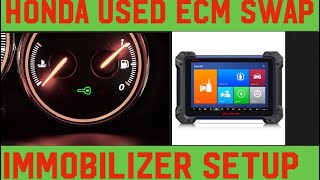
- Honda Diagnostic System (HDS) or J2534 Pass-Thru Device: Update the ECM/PCM — This is used 🎬 Watch: Step-by-step guide to programming a Honda ECU. when the HDS confirms the installed software is not the latest version. It is the most common fix for P2610 on this platform.
- Honda Diagnostic System (HDS): Substitute a known-good ECM/PCM — This is the final diagnostic step if a software update does not fix the issue. It confirms the original PCM is faulty before ordering an expensive replacement.
Wiring & Ground Locations
- G101 (2.4L Engine) — On the left side of the engine (cylinder head).. This is a primary ground point for the PCM. A loose or corroded connection here can interrupt power and cause various electronic faults, including the P2610 timer malfunction.
- G101 (3.5L V6 Engine) — On the right front of the engine.. This is the main ground for the PCM on the V6 model. A poor connection at this point is a known cause of intermittent electronic issues.
- PCM Power Source (IGP) — At the PCM connector. The specific pin varies, but it is a Yellow/Black wire.. This circuit provides the main power to the PCM when the ignition is on. A voltage drop here will cause the PCM to malfunction.
- PCM Keep Alive Power — At the PCM connector, typically a White/Yellow wire on pin D1 for this era.. This circuit provides constant battery power to the PCM to maintain memory (like the internal clock) when the ignition is off. A fault in this specific circuit is a direct cause for the P2610 timer issue.
Real Owner Repair Stories
- Honda-Tech.com forum member (2005 Honda Accord V-6) — Check Engine Light with code P2610.
❌ Tried (didn't work) Mechanic reset the code, but it came back a couple of days later.
✅ What actually fixed it The owner was advised by a forum expert that the dealer-prescribed procedure is to first attempt a software update on the PCM. If that fails, the next step is to substitute a known-good PCM. The thread implies this is the standard and successful resolution path.
OEM Part Supersession History
37820-R43-L53 through 37820-R43-L58→37820-R43-L59— Software and hardware revisions to address bugs and improve performance.
Heads up: Applies to 2.4L AT California emissions models (EX, EX-L). Using an incorrect part number can lead to functionality issues even if it physically connects.37820-R70-A72→N/A— Part number for a specific configuration.
Heads up: This part number is for a 2010 Accord with a V6 engine. It is not interchangeable with 4-cylinder models.
Diagnostic Flowchart
Other Known Issues on This Vehicle
Issues unrelated to this code that are worth knowing about as an owner of this generation:
- VTC Actuator Rattle at Cold Start (4-Cylinder) 🟠 Medium — Very common on the K24Z engines. A loud rattle for 1-2 seconds upon cold startup. (Ref: Honda TSB 09-010 describes the issue and provides the repair procedure, which involves replacing the VTC actuator with an updated part (P/N 14310-R44-A01).)
- Excessive Oil Consumption (4-Cylinder and V6) 🔴 High — Widespread enough to trigger a class-action lawsuit. Owners report needing to add oil between changes. Primarily affects 2008-2011 models. (Ref: Honda extended warranties and issued TSB 11-033, which involved a software update to the PGM-FI and potentially piston ring replacement to correct the issue.)
- Premature Rear Brake Wear 🟡 Low — Common complaint where rear brake pads wear out faster than the front pads, sometimes due to sticking caliper slide pins.
- Torque Converter Judder/Shudder (V6 Automatic) 🟠 Medium — A vibration or judder felt when driving between 20-60 mph. Caused by deteriorated automatic transmission fluid. (Ref: Honda issued TSBs (e.g., 17-017 for later models, but the issue is known on this generation) that involve a PGM-FI software update to better manage fluid temperature and a transmission fluid flush procedure.)
- Failing Starter Motor 🟡 Low — A noticeable number of owners report starter motor failure at higher mileage, resulting in a no-start condition.
Used vs. New Parts: Buying Guide for This Vehicle
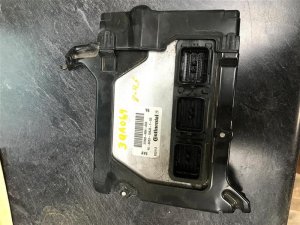
When a used part is the smart pick: A used PCM from a reputable salvage yard is a viable option if a software reflash doesn't solve the P2610 code, as it can be significantly cheaper than a new OEM unit. This is only recommended if you have access to a mechanic or dealership with the tools to program the used PCM to your vehicle's VIN and immobilizer keys.
Donor-vehicle mileage cap: roughly under 120000 miles for the part to have meaningful remaining life.
What to inspect on the donor part:
- Ensure the part number on the used PCM is an exact match to your original unit.
- Inspect the connectors for any signs of corrosion, bent pins, or water damage.
- Ask for the VIN of the donor vehicle to check its history for flood or major electrical damage.
- Purchase from a seller that offers a warranty or guarantee.
OEM-only on this vehicle (don't cheap out):
- While remanufactured PCMs are available, a genuine Honda OEM part (new or used) is often recommended for best compatibility and to avoid programming issues.
Brands owners have reported issues with on this vehicle:
- Be cautious of no-name, pre-programmed or 'plug-and-play' modules sold online, as they often fail to integrate correctly with the Honda immobilizer system, resulting in a no-start condition.
Real Owner Stories
Aggregated from forums and TSBs cited above. Mileages and costs reflect what owners reported in those sources.
2008 Honda Accord 2.4L EX-L
Symptoms: Vehicle was hard to start when cold or after sitting for over 25 minutes. The Check Engine Light was on with codes P2610, P062f, p060a, and p2118.
What fixed it: The source report did not specify the final repair.
Source hint: startmycar.com
2010 Honda Accord
Symptoms: The Check Engine Light came on, and a scan revealed code P2610.
What fixed it: The dealership's first and final step was to reflash the ECM/PCM with updated software, which resolved the issue without any hardware replacement.
Source hint: Owner Experience: Dealer Reflash Solves P2610
Related OBD-II Codes
Frequently Asked Questions
My 2009 Accord has a P2610 code. Is a software update really the most likely fix?
If the software update doesn't fix P2610, what's the next most likely cause?
Can a weak battery on my 2011 Accord really cause a P2610 code?
I was told to check ground G101 for my P2610 code. Where is it located?
Is the P2610 code related to the common oil consumption issue mentioned in TSB 11-033?
My mechanic wants to replace the ECM for P2610. Should I ask about a software update first?
Helpful Videos
Used OEM Parts in Stock
New Aftermarket Parts Available


The information in this article is provided for general reference and educational purposes only. Vehicle specifications, procedures, and part compatibility can vary by production date, trim level, and region. Always consult your vehicle's factory service manual and verify part numbers before purchasing or performing repairs. Safety-critical components such as airbags, seat belts, and braking systems should be installed by a qualified professional.
- Honda Accord:
- 🧭 Diagnostic Flowchart
- 🎬 Helpful Videos
- 🛍️ Shop This Part
- What's Unique About the 2008-2012 Honda Accord
- Symptoms You May Notice
- Most Likely Causes
- Rare But Worth Checking
- Diagnosis Steps
- Parts You'll Likely Need
- Technical Service Bulletins (TSBs) & Recalls
- Platform-Specific Known Issues
- Mechanic-Grade Diagnostic Values
- Scan Tool Commands That Help
- Wiring & Ground Locations
- Real Owner Repair Stories
- OEM Part Supersession History
- Other Known Issues on This Vehicle
- Used vs. New Parts: Buying Guide for This Vehicle
- Real Owner Stories
- 2008 Honda Accord 2.4L EX-L
- 2010 Honda Accord
- Related OBD-II Codes
- Frequently Asked Questions
- 🎟️ Get 5% Off