

P2610 on 2015-2016 Jeep Renegade: PCM Timer Performance Causes and Fixes
On a 2015-2016 Jeep Renegade with the 2.4L engine, code P2610 is almost always caused by outdated Powertrain Control Module (PCM) software. The definitive fix is a software update performed by a Jeep dealer, as specified in TSBs #18-061-16 REV. C and #1806316. This service typically costs $150-$250. A weak or failing battery is a common secondary cause that should be checked first.
- For a 2015-2016 Jeep Renegade with code P2610, the first step is always to check with a dealer for applicable software update TSBs (#18-061-16 REV. C or #1806316).
- Before paying for a dealer visit, ensure the battery is fully charged and the terminals are clean and tight, as this is the most common hardware cause.
- Do not replace other parts like EVAP components or the crankshaft sensor if they have codes alongside P2610, as the PCM software update is designed to fix these false codes simultaneously.
- This is a known, widespread software issue affecting many FCA vehicles with the 2.4L engine, not a unique or random failure on your vehicle.
What's Unique About the 2015-2016 Jeep RENEGADE
For the 2015-2016 Jeep Renegade with the 2.4L engine, this code is exceptionally common and directly addressed by manufacturer Technical Service Bulletins (TSBs). Unlike in many other vehicles where P2610 might point to a complex electrical fault, on this specific Renegade, the cause is overwhelmingly a software logic issue in the original PCM programming. The fix is not a part replacement but a simple software reflash at the dealership. This issue is also prevalent across other FCA vehicles sharing the 2.4L engine, such as the Jeep Cherokee, Dodge Dart, and Chrysler 200, all of which have similar TSBs for the same problem.
Diagnostic Flowchart
Tap your situation to follow the diagnostic path that matches what you're seeing on this vehicle.
Symptoms You May Notice
- Check Engine Light is on
- Vehicle fails emissions testing because readiness monitors won't complete.
- In some cases, issues with the auto start/stop system.
- Flashing of multiple, seemingly unrelated warning lights on the dashboard in a 'pinball machine' effect, as described by some owners experiencing cascading electrical faults.
- Replacing EVAP system components. The TSBs for the P2610 software update also list numerous EVAP codes (like P0440, P0441, P0456). These codes are often triggered falsely by the same software glitch. You should resolve P2610 before attempting any EVAP system repairs.
- Replacing the Crankshaft Position Sensor. Code P0335 (Crankshaft Position Sensor Circuit) is frequently listed in the same TSBs as P2610. The software update is designed to fix both, so replacing the sensor is often unnecessary.
Most Likely Causes
- Outdated Powertrain Control Module (PCM) Software 🔴 High Probability → Shop Engine Control Module (ECM) Jeep released multiple TSBs (e.g., #18-061-16 REV. C) specifically to correct faulty logic in the PCM that causes this code to set incorrectly on 2.4L models. This is a well-documented issue across the entire FCA family of vehicles using this engine.
How to confirm: A Jeep dealer or a qualified shop with a wiTECH scan tool must check your vehicle's current software calibration ID against the latest version available for your VIN.
Typical fix: Reprogramming (flashing) the PCM with the latest software version. The TSBs often require updating the TCM and BCM software at the same time.
Est. part cost: $0 (if under warranty) - $250 - Weak or Failing Battery 🟡 Medium Probability → Shop Vehicle Battery Modern vehicles are highly sensitive to voltage. A weak battery can cause a variety of erratic electrical issues, including causing the PCM's internal timer to lose track or report errors upon startup. This is the most common hardware-related cause and should be ruled out before proceeding with software updates.
How to confirm: Test the battery with a digital multimeter and, more importantly, a load tester. A healthy, fully charged battery should read approximately 12.6 volts with the engine off and maintain voltage above 9.6 volts during a load test. The charging system should also be checked; with the engine running, voltage should be stable, typically between 13.5 and 14.5 volts.
Typical fix: Replace the vehicle's 12V battery.
Est. part cost: $180-$350 - Poor Battery Connections or Ground Circuit ⚪ Low Probability → Shop Vehicle Battery
How to confirm: Visually inspect the battery terminals for corrosion. Clean them thoroughly with a wire brush. Check that the main engine and chassis ground straps are clean, tight, and free of corrosion. A bad battery terminal connection was the reported fix for one owner's widespread electrical issues. Key ground points to inspect include G002AA (under the battery) and G002B (left front of the engine compartment).
Typical fix: Clean or tighten battery terminals and ground connections.
Est. part cost: $0-$20
Rare But Worth Checking
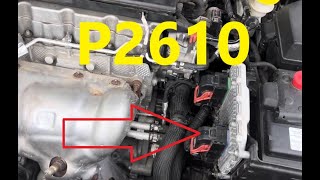
- Faulty Powertrain Control Module (PCM): → Shop Engine Control Module (ECM) This is rare. The PCM should only be considered faulty after all other possibilities, especially the software update, have been exhausted. An internal hardware failure in the timer circuit 🎬 Watch: Understanding how the PCM engine off timer works and fails can cause this code, but it is far less common than the software bug. One owner on a forum reported a dealer replaced the PCM, but it did not solve their widespread electrical issues, highlighting the importance of proper diagnosis.
- Faulty Ignition Switch: A malfunctioning ignition switch could fail to send the proper 'key off' signal to the PCM, preventing the engine-off timer from starting correctly. This can cause a range of electrical issues and prevent the vehicle from starting.
Diagnosis Steps
- Check for Technical Service Bulletins (TSBs): The first and most important step is to contact a Jeep dealership with your VIN. Ask them to check if TSB #18-061-16 REV. C (for 2016 models) or #1806316 (for 2015 models) apply to your vehicle.
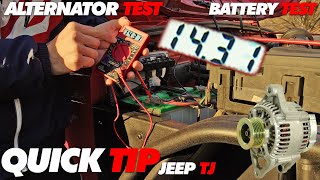
- Test the Battery and Connections: 🎬 Watch: A quick tip on checking your alternator and battery Before going to the dealer, thoroughly test the battery. Ensure it holds a proper charge under load. Clean any corrosion from the terminals and check that all connections, including main grounds like G002AA and G002B, are tight. A weak battery or poor connection can mimic PCM issues.
- Perform PCM Software Update: If a TSB is applicable, have the dealer perform the PCM reflash. This is the most likely solution and should be done before any other diagnostic work. Ensure they also update the TCM and BCM software if the TSB specifies it.
- Perform Proxi Configuration Alignment: After any module software update or replacement, a 'Proxi Alignment' must be run using a compatible scan tool like wiTECH. This procedure synchronizes the vehicle's configuration across all modules and can resolve issues like a flashing odometer.
- Inspect PCM Power and Ground Circuits: If the code returns after the update, check the wiring harness going to the PCM for any signs of damage, corrosion, or loose pins. Perform a voltage drop test on the PCM power and ground circuits; a reading higher than 50 millivolts (0.05V) indicates excessive resistance that needs to be corrected.
- Consider PCM Replacement: If all previous steps fail to resolve the issue, the PCM itself may have an internal hardware fault and require replacement. This is the least likely cause and should be a last resort.
Parts You'll Likely Need
- PCM Software Update — This is not a physical part but a service. It is the official fix documented by Jeep in multiple TSBs to correct faulty logic that causes P2610 on this vehicle.
Trusted brands: Mopar (via dealership service)
OEM price range: $150-$250
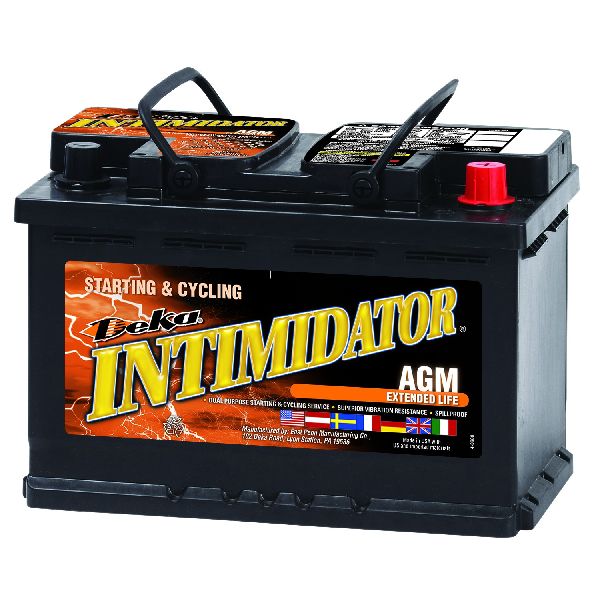
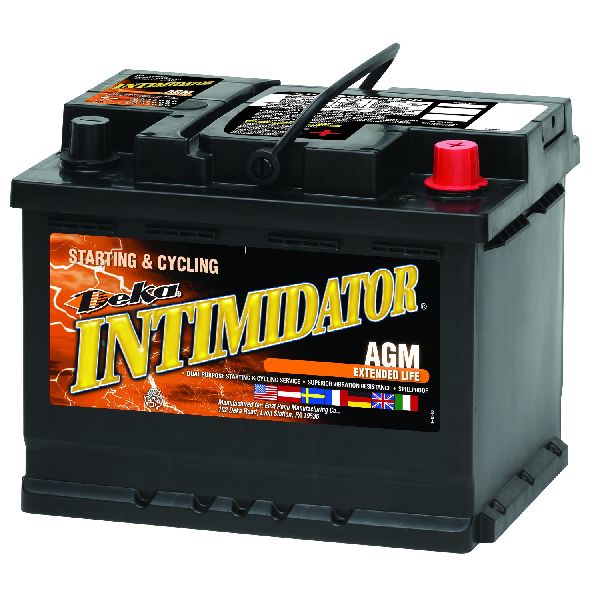
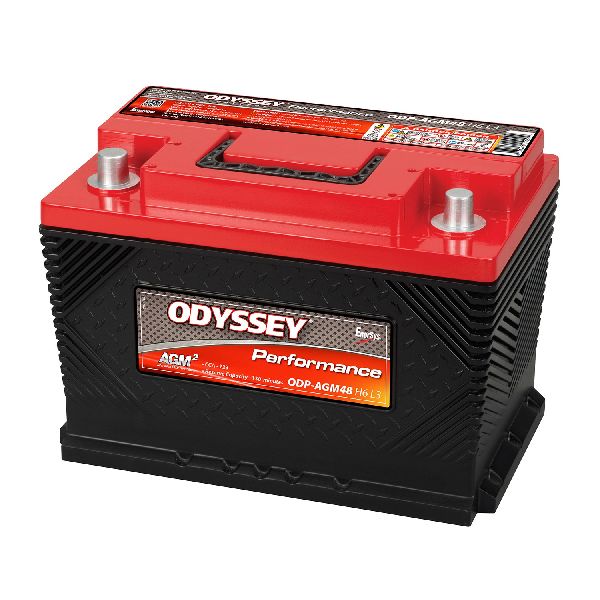
Aftermarket price range: N/A - Automotive Battery — A weak battery can cause low voltage conditions that disrupt the PCM's internal timer, leading to this code. It's the most common hardware-related cause.
Trusted brands: Mopar, Interstate, DieHard
OEM price range: $200-$350
Aftermarket price range: $180-$250
Related Codes That Often Appear With This One
- P1607 — Stands for 'PCM Internal Shutdown Timer Rationality'. This is a closely related code that is also specifically mentioned in the Jeep TSBs and is resolved by the same PCM software update.
- P0456 — Stands for 'EVAP System Small Leak'. The PCM's inability to properly track engine-off time prevents it from running the EVAP leak test correctly, often resulting in a false P0456 code. The TSB for the P2610 fix also lists this code as being resolved by the software update.
- P0128 — Stands for 'Thermostat Rationality'. This code is also listed in TSB #18-061-16 REV. C as being resolved by the same PCM software update, indicating it can be triggered by the same logic flaw.
- P0335 — Stands for 'Crankshaft Position Sensor Circuit'. This code is frequently included in the list of DTCs resolved by the P2610 software update TSBs for the Renegade and its platform mates, suggesting it is often a false flag.
- U1424 — Stands for 'Implausible Engine Torque Signal Received'. This communication code is also mentioned in TSBs as being fixed by the same PCM software update, indicating the timer logic flaw can disrupt network communications between modules.
Technical Service Bulletins (TSBs) & Recalls
- 18-061-16 REV. C: For 2016 Jeep Renegade 2.4L, involves reprogramming the PCM with updated software to fix P2610 and a long list of other potential DTCs including P1607, P0456, P0128, and P0335.
- 1806316: For 2015 Jeep Renegade, also involves a PCM software update to address P2610 and other codes.
Platform-Specific Known Issues
- Jeep issued TSB #18-061-16 REV. C for the 2016 Renegade 2.4L and TSB #1806316 for the 2015 model to resolve P2610 (and a long list of other codes) by reprogramming the PCM. This strongly indicates the problem is known to be software-based from the factory.
- The TSBs for this repair often mandate that the Transmission Control Module (TCM) and Body Control Module (BCM) also receive software updates at the same time as the PCM, indicating a system-wide software patch.
Mechanic-Grade Diagnostic Values
- PCM Power & Ground Circuit Voltage Drop — expected: Less than 0.05 Volts (50 millivolts). Failure: A reading higher than 0.05V indicates excessive resistance in the power or ground circuit, which can cause intermittent PCM issues.
- Battery Voltage at PCM Connector (Engine Off) — expected: Above 12.2 Volts. Failure: Persistent low voltage suggests a battery or charging system issue that should be addressed before condemning the PCM.
- Battery Voltage at PCM Connector (Engine Running) — expected: Above 13.5 Volts. Failure: Voltage below this level indicates a problem with the alternator or charging circuit.
Scan Tool Commands That Help
- wiTECH: Proxi Configuration Alignment — This procedure is required after replacing or reprogramming modules (like the PCM, BCM, or radio) to synchronize the vehicle's configuration data across all electronic control units. Failure to perform this can result in a flashing odometer and communication errors between modules.
- wiTECH: Restore Vehicle Configuration — Used to restore the vehicle's original factory configuration to the Body Control Module (BCM) before performing a Proxi Alignment, often as part of a guided diagnostic procedure for module-related issues.
Wiring & Ground Locations
- G002AA — Under the battery tray in the engine compartment.. This is a primary ground distribution point. Corrosion or looseness here can affect multiple systems, including the PCM, leading to erratic behavior and codes like P2610.
- G002B — On the left front of the engine compartment.. Another critical chassis ground point. Ensuring it is clean and tight is essential for stable PCM operation.
- PCM Location — Bolted to the left side of the transmission.. Knowing the physical location is necessary for inspecting the connectors and wiring harness for damage, or for performing a voltage drop test directly at the module.
- Engine Compartment Fuse Box — Located next to the battery. The cover slides off from the side, not the top.. This box contains the primary fuses and relays for the PCM. A poor connection or blown fuse here would cause a no-power condition for the PCM, which could potentially trigger timer-related faults.
Real Owner Repair Stories
- Reddit user @bakelandy (2016 Jeep Renegade Trailhawk 2.4L) — Persistent warning that the left tail lights were out. The issue was intermittent before becoming permanent.
❌ Tried (didn't work) Initial intermittent nature made it difficult for the dealer to diagnose.
✅ What actually fixed it The dealer found that the electrical connector for the tail light had melted, also damaging the tail light housing. Replacing both the connector and the housing resolved the electrical fault. While not directly P2610, this illustrates how wiring and connector issues can cause persistent, hard-to-diagnose electrical gremlins on this platform.
OEM Part Supersession History
5150899AC→5150899AD, 5150911AD— Part revision and update by the manufacturer. Later part numbers typically contain software and potential hardware revisions to address known issues.
Heads up: When replacing the PCM, it is critical to use a part that is programmed to the vehicle's specific VIN to ensure all features and security protocols function correctly.
Model Year Variations Within This Range
- 2015 vs 2016: While mechanically very similar, Jeep issued separate TSBs for the 2015 (TSB #1806316) and 2016 (TSB #18-061-16 REV. C) models to address the P2610 code, suggesting there may be slight differences in the base software requiring different update packages.
Helpful Videos
Used OEM Parts in Stock
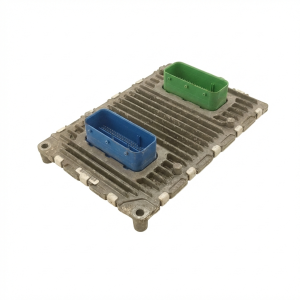
New Aftermarket Parts Available



The information in this article is provided for general reference and educational purposes only. Vehicle specifications, procedures, and part compatibility can vary by production date, trim level, and region. Always consult your vehicle's factory service manual and verify part numbers before purchasing or performing repairs. Safety-critical components such as airbags, seat belts, and braking systems should be installed by a qualified professional.
- Jeep RENEGADE:
- 🧭 Diagnostic Flowchart
- 🎬 Helpful Videos
- 🛍️ Shop This Part
- What's Unique About the 2015-2016 Jeep RENEGADE
- Symptoms You May Notice
- Most Likely Causes
- Rare But Worth Checking
- Diagnosis Steps
- Parts You'll Likely Need
- Related Codes That Often Appear With This One
- Technical Service Bulletins (TSBs) & Recalls
- Platform-Specific Known Issues
- Mechanic-Grade Diagnostic Values
- Scan Tool Commands That Help
- Wiring & Ground Locations
- Real Owner Repair Stories
- OEM Part Supersession History
- Model Year Variations Within This Range
- 🎟️ Get 5% Off