

P2610 on 2016-2021 Mazda CX-3: Instrument Cluster Timer Fault Causes and Fixes
On a 2016-2021 Mazda CX-3, code P2610 is most often caused by a weak or dying battery, or a blown 'ROOM' fuse. Before replacing any major components, test the battery and check the 15A ROOM fuse in the interior fuse box. A new battery costs around $150-$350, while a fuse is less than a dollar. This issue is common across many Mazda models from the same era.
- P2610 on your Mazda CX-3 points to a problem with the instrument cluster's engine-off timer.
- The most likely cause is not the cluster itself, but a weak battery or a blown 15A 'ROOM' fuse.
- Always perform a load test on the battery; a simple voltage check can be misleading.
- If you have an i-stop equipped model, ensure you replace the battery with an EFB (Q-85) type.
- The issue is common across many Mazda models of the same era, including the Mazda3, Mazda6, CX-5, and CX-9.
What's Unique About the 2016-2021 Mazda CX-3
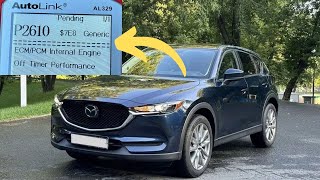
For this generation of Mazda vehicles, including the CX-3, the P2610 code is very specifically tied to the instrument cluster's timer, not a generic PCM internal timer. Manufacturer bulletins highlight a unique scenario where the code, along with P2507, can be set simply by removing the 15A 'ROOM' fuse, which is often done during shipping (transport mode) or service. The odometer may display "F0 🎬 Watch: How to check for instrument cluster timer malfunctions.-002" while in this transport mode. However, many real-world owner experiences point to a weak battery causing a voltage drop during startup, which confuses the timer and triggers the code. Vehicles equipped with i-stop technology use an Enhanced Flooded Battery (EFB), which is more sensitive to voltage and state-of-charge.
Diagnostic Flowchart
Tap your situation to follow the diagnostic path that matches what you're seeing on this vehicle.
Symptoms You May Notice
- Check Engine Light is on
- i-stop (start-stop) system may be disabled or a yellow i-stop warning light may appear
- Inconsistent or intermittent Check Engine Light
- Difficulty starting the engine (slow or labored cranking)
- A no-start condition that may require a jump-start
- In some cases, other electrical warnings like the Electric Parking Brake (EPB) light may appear briefly on startup due to low voltage
- Replacing the PCM
- Replacing the Engine Coolant Temperature (ECT) Sensor
- Assuming a loose gas cap is the cause, which is a common reason for a Check Engine Light but does not typically throw a P2610 code.
Most Likely Causes
- Weak or Failing 12V Battery 🔴 High Probability → Shop Vehicle Battery Modern vehicles with many electronic modules, especially those with i-stop, are sensitive to voltage fluctuations. The CX-3 uses an Enhanced Flooded Battery (EFB) like the Q-85 type, which must maintain a stable charge for the i-stop system. A weak battery causes a significant voltage drop during engine cranking, which disrupts the instrument cluster's timer logic and triggers P2610.
How to confirm: Use a multimeter to test the battery voltage with the engine off; it should be above 12.4V. Have the battery load-tested at an auto parts store to check its health under load, as a simple voltage test may not be sufficient. Many owners report that a battery tested as 'okay' was still the root cause.
Typical fix: Replace the 12V battery. It is recommended to use an EFB type battery (e.g., Q-85) for vehicles with i-stop. After replacement, the i-stop system may need to be reinitialized.
Est. part cost: $150 - $350 - Blown 'ROOM' 15A Fuse 🟡 Medium Probability Mazda Technical Service Bulletins explicitly state that removing this fuse (e.g., for transport mode) and starting the engine multiple times can set codes P2610 and P2507. It can also blow due to a short circuit. A video shows a case where a 10A fuse was incorrectly installed in its place, causing it to blow.
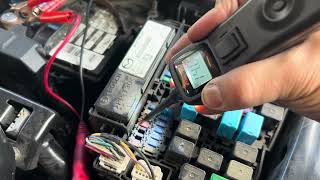
How to confirm: Locate the interior fuse box on the driver's side and visually inspect the 15A fuse labeled 'ROOM'. Check for a broken filament.
Typical fix: Replace the blown 15A fuse. If it blows again, further diagnosis of the circuit is needed to find a short.
Est. part cost: $1 - $5 - Loose or Corroded Battery Terminals ⚪ Low Probability → Shop Vehicle Battery Vibration and time can lead to loose connections, while moisture can cause corrosion, both of which create poor electrical contact and voltage drops similar to a weak battery.
How to confirm: Visually inspect the battery terminals for white or blue-green powder (corrosion). Attempt to wiggle the terminals by hand; they should not move.
Typical fix: Disconnect the terminals (negative first), clean them and the battery posts with a wire brush, and reconnect securely (positive first).
Est. part cost: $5 - $10 for a terminal cleaning kit
Rare But Worth Checking
- Faulty Instrument Cluster: → Shop Instrument Cluster While the code points to an internal cluster timer, the cluster itself failing is less common than the power supply issues that cause it to report a fault. Diagnosis would involve verifying power, ground, and CAN bus signals to the cluster before condemning it.
- PCM Malfunction: A faulty Powertrain Control Module is a rare possibility. This should only be considered after all other potential causes, especially power supply and wiring, have been thoroughly ruled out.
- CAN Bus Communication Error: A wiring issue between the instrument cluster and the PCM could disrupt communication and trigger this code. This would likely be accompanied by other communication-related DTCs and require advanced diagnostics.
- Outdated PCM/CMU Software: In one forum discussion, a user questioned if outdated infotainment (CMU) or PCM software could be a cause, though the issue was ultimately resolved with a new battery. While less likely, software updates can sometimes resolve unexpected electronic glitches.
Diagnosis Steps
- Read all stored trouble codes with an OBD-II scanner. Note if P2507 is also present, as this strongly points to a power supply issue.
- Inspect the battery terminals for corrosion and ensure they are tight.
- Test the 12V battery. Check the static voltage (should be >12.4V) and, more importantly, perform a load test to confirm its health. A failing battery is the most common culprit even if static voltage seems acceptable.
- Locate the interior fuse box on the driver's left side and inspect the 15A 'ROOM' fuse. Ensure it is the correct amperage and not blown.
- If the battery and fuse are good, clear the codes with the scanner.
- If the code was set due to the ROOM fuse being removed, follow the TSB procedure: Install the fuse, start the engine for 10+ seconds, stop the engine, restart to confirm the light is off, then clear codes.
- If you replaced the battery, the vehicle's systems (power windows, sunroof, i-stop) may need reinitialization. The i-stop system may take some driving to relearn the new battery's state of charge. Some sources suggest a specific reset procedure may be needed.
- If the code reappears, the issue may be more complex, such as a wiring problem (CAN bus), a fault in the instrument cluster, or the PCM, which may require professional diagnosis.
Parts You'll Likely Need
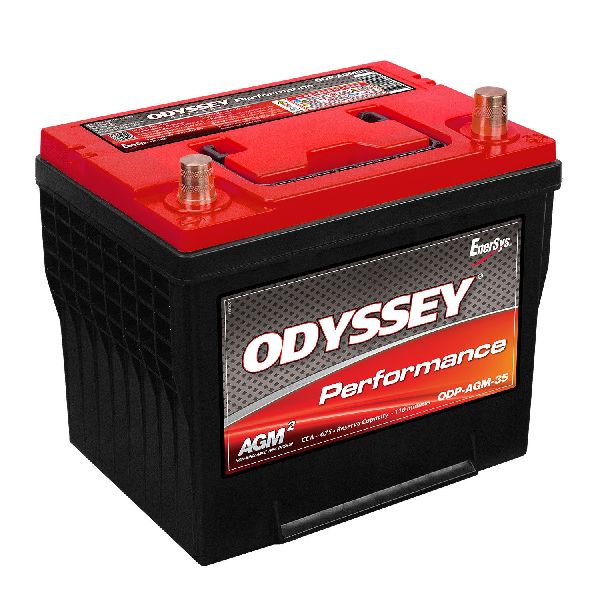
- 12V Automotive Battery (EFB Type)
(OEM #PE1T-18-520-9U (Supersedes multiple previous numbers, often referred to as Q-85 type))— This is the most common cause of P2610 on Mazda vehicles, as a weak battery causes voltage drops that disrupt the instrument cluster's timer. Vehicles with i-stop require an Enhanced Flooded Battery (EFB).
Trusted brands: Mazda OEM, Yuasa, Amaron, Varta
OEM price range: $300-$480
Aftermarket price range: $150-$350 - 15A Blade Fuse (Low-Profile Mini) — A blown 'ROOM' fuse will cause this code to set, as documented in Mazda TSBs.
Trusted brands: Bussmann, Littlefuse
OEM price range: $1-$5
Aftermarket price range: $1-$5
Related Codes That Often Appear With This One
- P2507 — P2507 (PCM Battery Voltage Low Input) is frequently stored with P2610. Mazda TSBs confirm they are set together when the ROOM fuse is removed or when there is a significant voltage drop, reinforcing the likelihood of a battery or fuse issue.
Technical Service Bulletins (TSBs) & Recalls
- 01-012/18: Supersedes previous bulletins. Explains that starting the engine 3 or more times with the room fuse removed can cause P2610 and P2507. It provides a specific procedure to clear the codes and confirms this applies to 2016-2018 CX-3, among other models.
- 01-003-21-3776: Mentions P2610 and P2507 may be stored after the room fuse 15A is removed.
- 01-003-19-3557: Similar to the above, notes P2610 and P2507 can be stored after room fuse removal.
- 01-001-17: Also documents P2610 and P2507 appearing after the room fuse is removed.
Platform-Specific Known Issues
- Mazda issued several Technical Service Bulletins (e.g., #01-003-21-3776, #01-012/18) indicating that P2610 and P2507 can be stored in memory if the engine is started after the 15A ROOM fuse has been removed. This is a known condition related to 'transport mode' and the fix is to reinstall the fuse and clear the codes.
- After replacing the battery on an i-stop equipped model, a system reinitialization may be required for the i-stop to function correctly. This can sometimes happen automatically after some driving, but a manual procedure or dealer reset may be necessary.
Mechanic-Grade Diagnostic Values
- Battery State of Charge (SOC) for i-stop operation — expected: 65.7% or more. Failure: i-stop will be disabled if SOC is below this threshold.
- Battery Voltage for i-stop operation — expected: 11.2 V or more. Failure: i-stop will be disabled if voltage is below this threshold.
- Battery Fluid Temperature for i-stop operation — expected: 0—70 °C {32—158 °F}. Failure: i-stop will be disabled if the battery temperature is outside this range.
Hidden / Shadow Codes Worth Checking
- P2610:00: Instrument cluster internal engine off timer performance problem. The ':00' is a failure type code indicating a general performance issue, as cited in Mazda TSBs. (see via Standard OBD-II scanner, often displayed with the primary code.)
Scan Tool Commands That Help
- Manual Procedure (No Tool Required): i-stop System Initialization — After disconnecting or replacing the battery to ensure the i-stop system relearns battery status and resumes normal operation. The procedure involves a specific sequence of ignition cycles and pressing the i-stop OFF switch.
- FORScan or similar: Battery Monitoring System (BMS) Reset — While not always explicitly required on all Mazda models like it is on some Fords, performing a BMS reset with a tool like FORScan informs the PCM that a new battery has been installed, which can help optimize charging strategy and i-stop function immediately.
Wiring & Ground Locations
- Instrument Panel Ground Point — Typically located under the driver's side dashboard, sometimes near the hood release lever, attached to a metal part of the chassis.. A poor or corroded ground for the instrument cluster can cause erratic behavior and communication issues with the PCM, potentially triggering a P2610 code. Ensuring this connection is clean and tight is a valid diagnostic step if power supply issues are ruled out.
- Battery Current Sensor Connector — On the negative battery terminal.. When replacing the battery, the negative cable must be connected *before* the battery current sensor connector. Connecting the sensor first can cause the PCM to incorrectly learn the new battery's state, affecting i-stop and potentially triggering faults.
Real Owner Repair Stories
- Mazdas247 Forum User (2016 Mazda CX-9) — Intermittent Check Engine Light with P2610, which would clear and then return. Eventually, the engine was laboring to start.
❌ Tried (didn't work) Clearing the code with an OBD-II reader (it came back).
✅ What actually fixed it The owner charged the battery, which made the CEL turn off after 3 start/stop cycles. Although a parts store test showed the battery as '80% good', the owner recognized it was the original and the root cause of the slow cranking and code. - Reddit User r/mazda3 (2018 Mazda CX-3) — Check Engine Light with P2610, light was on and off intermittently for a week, then a sudden no-start condition that required a jump start.
❌ Tried (didn't work) Driving with the intermittent light on.
✅ What actually fixed it Replacing the 5-year-old battery resolved all issues. - Mazdas247 Forum User (2017 Mazda CX-5 GT) — Check Engine Light with P2610 appeared after replacing rear brakes.
❌ Tried (didn't work) Initial diagnosis was confusing due to the recent brake work.
✅ What actually fixed it Replacing the original, failing battery solved the P2610 code. The user noted that low voltage from a weak battery can cause various unrelated-seeming electrical issues.
OEM Part Supersession History
pe1t18520, pe1t18520a, pe1t18520b, pe1t18520c, pe1x18520, pe1x18520a→PE1T-18-520-9U— Standard part updates and revisions by the manufacturer.
Model Year Variations Within This Range
- 2019-2021: The 2019 model year refresh for the CX-3 made the Electric Parking Brake (EPB) standard. The EPB system can be sensitive to low voltage and may exhibit its own warnings or malfunctions (like slow operation or failure to release) concurrently with a P2610 code when the battery is failing.
Helpful Videos



We Have This Part in Stock


The information in this article is provided for general reference and educational purposes only. Vehicle specifications, procedures, and part compatibility can vary by production date, trim level, and region. Always consult your vehicle's factory service manual and verify part numbers before purchasing or performing repairs. Safety-critical components such as airbags, seat belts, and braking systems should be installed by a qualified professional.
- Mazda CX-3:
- 🧭 Diagnostic Flowchart
- 🎬 Helpful Videos
- 🛍️ Shop This Part
- What's Unique About the 2016-2021 Mazda CX-3
- Symptoms You May Notice
- Most Likely Causes
- Rare But Worth Checking
- Diagnosis Steps
- Parts You'll Likely Need
- Related Codes That Often Appear With This One
- Technical Service Bulletins (TSBs) & Recalls
- Platform-Specific Known Issues
- Mechanic-Grade Diagnostic Values
- Hidden / Shadow Codes Worth Checking
- Scan Tool Commands That Help
- Wiring & Ground Locations
- Real Owner Repair Stories
- OEM Part Supersession History
- Model Year Variations Within This Range
- 🎟️ Get 5% Off