

P2610 on 2016-2020 Mazda MX-5: Engine Off Timer Fault Causes & Fixes
On a 2016-2020 Mazda MX-5, code P2610 is almost always caused by a blown 15A 'ROOM' fuse or a weak/dying battery. Before considering expensive repairs, check the main fuse box in the engine bay and have the battery professionally tested.
- P2610 on your MX-5 is an electrical code, not a major mechanical failure.
- Always check for the companion code P2507; their presence together strongly points to a simple power supply issue.
- The first and most important diagnostic step is to inspect the 15A 'ROOM' fuse.
- The second step is to have your battery's health professionally tested, as a weak battery is a common cause.
- Do not replace the instrument cluster or PCM unless these simple, inexpensive fixes have been ruled out.
What's Unique About the 2016-2020 Mazda MX-5
For the ND generation Mazda MX-5, this code is very specifically documented by the manufacturer. Unlike in other vehicles where P2610 might suggest a complex internal computer failure, on the MX-5 it's most often a simple power supply issue. Mazda's own service bulletins link P2610 directly to its companion code, P2507 ("PCM battery voltage low input"), and point to the 15A ROOM fuse as the culprit. This fuse is often intentionally removed by dealerships to put the car in 'transport mode' to reduce electrical load during shipping, and the codes can be set if the engine is started multiple times in this state. This makes diagnosis much more straightforward than the generic definition implies.
Diagnostic Flowchart
Tap your situation to follow the diagnostic path that matches what you're seeing on this vehicle.
Generation note: The 2016-2020 model years cover the ND1 (2016-2018) and ND2 (2019-2020) versions of the fourth-generation (ND) MX-5. The provided TSBs and general owner reports indicate this issue affects the entire generation, as well as many other Mazda models from the same era, with no significant differences in cause or repair.
Symptoms You May Notice
- Check Engine Light is illuminated.
- Possible hesitation, slow cranking, or a complete no-start condition if the battery is the cause.
- i-Stop (start-stop) system may be disabled.
- In some cases, the code may be stored in memory with no visible warning light, found only during a service scan.
- Replacing the PCM or Instrument Cluster without first checking the 15A ROOM fuse and properly load-testing the battery.
- Assuming the battery is good based on a simple voltage check or because interior lights work.
Most Likely Causes
- Blown 15A 'ROOM' Fuse 🔴 High Probability Mazda has issued multiple Technical Service Bulletins (TSBs) identifying the removal or failure of this specific fuse as the primary cause for P2610 and P2507 appearing together. This fuse is often pulled for 'transport mode' and if not reinstalled correctly, or if it blows due to a short (e.g., from aftermarket accessories), it will trigger these codes.
How to confirm: Visually inspect the 15A fuse labeled 'ROOM' in the main fuse box in the engine compartment. 🎬 See how to locate and replace fuses on your MX-5. The fuse box is on the driver's side of the engine bay. A multimeter can be used to test for continuity if visual inspection is unclear.
Typical fix: Replace the blown 15A fuse. If the fuse blows again, the circuit must be diagnosed for a short, paying close attention to any aftermarket wiring (dashcams, lights, etc.).
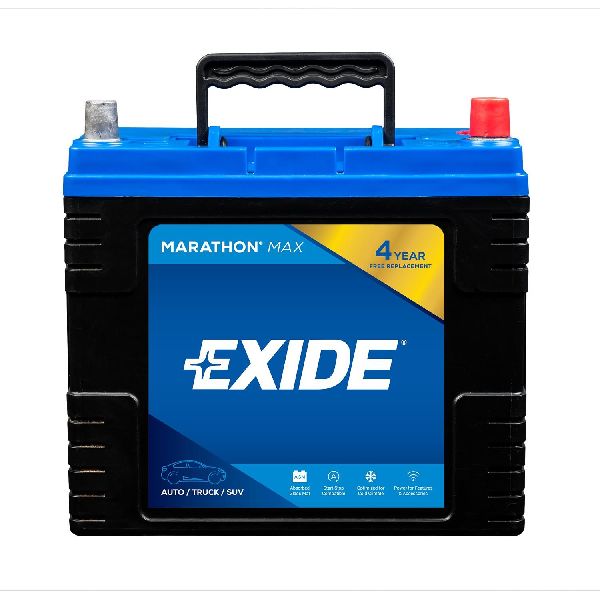
Est. part cost: $1-$5 - Weak or Failing Battery 🟡 Medium Probability → Shop Vehicle Battery A weak battery can cause a significant voltage drop during engine cranking, which can be interpreted by the PCM as a power loss, triggering the P2610 and P2507 codes. Forum users across multiple Mazda models report that replacing an aging battery (often 3-5 years old) resolved the code, even if the battery seemed to work otherwise.
How to confirm: Test the battery voltage with a multimeter (should be ~12.4-12.6V with the engine off) and have it professionally load-tested at an auto parts store or shop to check its health. A simple voltage check is often not enough to identify a weak battery.
Typical fix: Replace the 12V battery. The ND MX-5 often uses a Group Size 51R battery. 🎬 Watch: Step-by-step guide to replacing your ND Miata battery.
Est. part cost: $150-$250 - Loose or Corroded Battery Terminals/Grounds ⚪ Low Probability → Shop Vehicle Battery Poor connections can mimic a weak battery, causing intermittent power loss to the vehicle's modules.
How to confirm: Visually inspect the battery terminals for corrosion (white or blue powder). Ensure the terminal clamps are tight and cannot be moved by hand. Check that the main chassis ground strap is clean and secure.
Typical fix: Clean the battery terminals and cable ends with a wire brush. Tighten all connections.
Est. part cost: $1-$10
Rare But Worth Checking
- Faulty Instrument Cluster: → Shop Instrument Cluster The 'engine off timer' is located within the instrument cluster. If all power supply issues are ruled out, the cluster itself could be faulty. Mazda's diagnostic procedure suggests this as a possibility after checking fuses and power supply circuits. 🎬 Watch: A quick walkthrough of the instrument cluster and fuse check.
- Faulty Powertrain Control Module (PCM): → Shop Engine Control Module (ECM) An internal failure of the PCM is a very rare cause for this code but remains a possibility if all other diagnostic steps fail.
- Wiring Harness Issue: A short or open in the wiring between the fuse box, instrument cluster, and PCM could cause this code, especially if the ROOM fuse blows repeatedly.
Diagnosis Steps
- Scan for all DTCs. Confirm if P2507 is present alongside P2610, which is highly likely.
- Turn the ignition off. Locate the main fuse box in the engine bay on the driver's side.
- Inspect the 15A fuse labeled 'ROOM'. If it is blown, replace it with a new 15A fuse.
- If the fuse is intact, inspect the battery terminals for tightness and corrosion. Clean and tighten as necessary.
- Test the battery. Use a multimeter to check the static voltage (should be ~12.4V or higher). For a definitive test, have the battery load-tested at a qualified shop or auto parts store, as a weak battery is a very common cause.
- If the fuse was blown and replaced, or the battery was replaced, clear the codes with a scan tool. Start the engine for at least 10 seconds, then shut it off. Start it again and see if the Check Engine Light returns.
- If the ROOM fuse blows again after replacement, inspect for a short circuit. Pay special attention to any aftermarket accessories like dash cameras, aftermarket lighting, or remote starters that may be tapped into the interior power circuits.
- If the light returns and all power sources are confirmed good, a more complex diagnosis of the wiring harness, instrument cluster, or PCM may be required.
Parts You'll Likely Need
- 15A Mini Fuse — This is the most common failure point identified in Mazda's own service bulletins for this specific code.
Trusted brands: Bussmann, Littlefuse
OEM price range: $1-$5
Aftermarket price range: $1-$5 - 12V Battery
(OEM #0000-80-051R-WB)— A weak or failing battery is the second most common cause, as the voltage drop during cranking can trigger this timer performance code. Many owners on forums resolved the issue with a new battery.
Trusted brands: Mazda OEM (0000-80-051R-WB), Duralast Gold (51R-DLG), Interstate (MT-MX-5)
OEM price range: $200-$300
Aftermarket price range: $150-$250
Related Codes That Often Appear With This One
- P2507 — This code, for 'PCM Battery B+ Circuit Low Input', is almost always triggered with P2610. The power loss that disrupts the instrument cluster's timer (P2610) is the same power loss that the PCM sees as low voltage (P2507). Mazda TSBs consistently group these two codes together as being caused by the same fault.
Technical Service Bulletins (TSBs) & Recalls
- 01-003-19-3557: Notes that P2610 and P2507 can be stored after the 15A room fuse is removed. Covers 2016-2019 MX-5 among other models.
- 01-003-21-3776: Repeats the information from the previous TSB for a later model year.
- 01-001-17: An earlier TSB also documenting the link between P2610/P2507 and the removal of the 15A room fuse, covering the 2016-2017 MX-5.
Platform-Specific Known Issues
- Mazda has issued multiple TSBs (e.g., 01-003-19-3557, 01-001-17) confirming that P2610 and P2507 can be stored in memory if the engine is started after the 15A ROOM fuse has been removed. This is a common practice for vehicles in 'transport mode' before dealer delivery to reduce parasitic draw on the battery. The odometer may display 'F0-002' while in this mode. This indicates the code can be set without an actual component failure, but simply from a procedural step.
- The issue is not unique to the MX-5 and is documented across many Mazda models of the same era, including the Mazda3, CX-3, CX-5, and CX-9, all pointing to the same fuse/battery causes.
Mechanic-Grade Diagnostic Values
- Battery Voltage (Engine Off) — expected: 12.2V - 12.6V. Failure: Voltage below 12.2V indicates a discharged or failing battery.
- Charging System Voltage (Engine Running) — expected: 13.5V - 14.3V. Failure: Voltage significantly outside this range indicates a potential alternator or regulator issue.
Hidden / Shadow Codes Worth Checking
- U3003:16: Indicates a power supply malfunction detected by the instrument cluster itself. The timer that triggers P2610 is located in the cluster. (see via Requires a scan tool capable of reading DTCs from the Instrument Cluster module, not just the PCM.)
- F0-002: This is not a DTC, but a message displayed on the odometer when the vehicle is in 'transport mode', which is activated by removing the 15A ROOM fuse. Seeing this confirms the condition that sets P2610 has occurred. (see via Visible on the odometer display when the ROOM fuse is removed and the ignition is on.)
Scan Tool Commands That Help
- Mazda IDS (Integrated Diagnostic System): Clear DTCs — This is the manufacturer-specified tool for clearing P2610 and P2507 from the PCM memory after replacing the fuse or battery.
- Mazda IDS (or equivalent): KOER Self Test — To be performed after clearing codes to verify that the fault does not immediately return as a pending code.
Wiring & Ground Locations
- F-01 — The main Relay and Fuse Block in the engine compartment, driver's side.. This block contains the 15A 'ROOM' fuse and 10A 'METER' fuse, both of which supply power to the instrument cluster.
- Engine Bay Ground Points — Key grounds are located on the left front strut tower and near the PCM in the left front corner of the engine compartment.. A poor ground connection at these points can cause intermittent voltage drops to the PCM and instrument cluster, mimicking a battery or fuse issue.
- Interior Ground Points — Multiple ground points exist under the dashboard and on the rear strut towers.. The instrument cluster relies on these grounds. A service bulletin for the Global MX-5 Cup car specifically calls for cleaning these points to improve electrical stability.
- C-03 — A major harness-to-harness connector between the Front Harness (F) and the Instrument Panel Harness (I).. A poor connection at this point could interrupt power or communication to the instrument cluster, where the engine-off timer resides.
Real Owner Repair Stories
- Mazdas247 Forum user '2MazdaFam' (2016 Mazda CX-9 (platform shares the same P2610 cause)) — Check engine light with P2610 came on, was cleared, but returned a week later. The car then began laboring/cranking slowly to start.
❌ Tried (didn't work) Clearing the code with a scanner (it came back immediately).
✅ What actually fixed it Replacing the vehicle's battery resolved both the slow cranking and the P2610 code, which did not return.
OEM Part Supersession History
N243-55-430 (example)→Varies— N/A
Heads up: Instrument clusters are not interchangeable. Part numbers vary based on transmission type (manual/auto), keyless entry, and other factory options. A replacement cluster must have the exact same part number as the original, or it will not function correctly.
Helpful Videos

We Have This Part in Stock


The information in this article is provided for general reference and educational purposes only. Vehicle specifications, procedures, and part compatibility can vary by production date, trim level, and region. Always consult your vehicle's factory service manual and verify part numbers before purchasing or performing repairs. Safety-critical components such as airbags, seat belts, and braking systems should be installed by a qualified professional.
- Mazda MX-5:
- 🧭 Diagnostic Flowchart
- 🎬 Helpful Videos
- 🛍️ Shop This Part
- What's Unique About the 2016-2020 Mazda MX-5
- Symptoms You May Notice
- Most Likely Causes
- Rare But Worth Checking
- Diagnosis Steps
- Parts You'll Likely Need
- Related Codes That Often Appear With This One
- Technical Service Bulletins (TSBs) & Recalls
- Platform-Specific Known Issues
- Mechanic-Grade Diagnostic Values
- Hidden / Shadow Codes Worth Checking
- Scan Tool Commands That Help
- Wiring & Ground Locations
- Real Owner Repair Stories
- OEM Part Supersession History
- 🎟️ Get 5% Off