

P2610 on 2021 Mazda MX-5: Instrument Cluster Timer Fault Causes and Fixes
On a 2021 Mazda MX-5, code P2610 almost always points to a power interruption, not a failed part. It's typically caused by a removed or blown 15A 'ROOM' fuse or a weak battery. Check the fuse in the engine bay fuse box and test the battery before attempting any repairs.
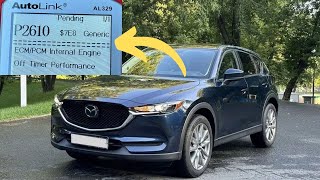
- P2610 on a 2021 MX-5 refers to the timer in the instrument cluster, not the main engine computer.
- Always check for the companion code P2507, as their presence together strongly points to a power supply issue.
- The first and most important step is to check the 15A 'ROOM' fuse in the engine bay fuse box on the driver's side.
- The second step is to have the battery professionally load-tested, as a weak battery is the next most likely cause, even if it seems to start the car.
- Do not replace expensive components like the PCM or instrument cluster before ruling out the simple fuse and battery issues.
What's Unique About the 2021-2021 Mazda MX-5
Unlike many other vehicles where P2610 might suggest a serious internal computer failure, on the ND generation Mazda MX-5, it's very frequently a simple electrical issue. Mazda has specifically documented in TSBs (like 01-003-21-3776) that removing the 15A 'ROOM' fuse can set this code, often along with P2507. This is sometimes done intentionally by dealerships for shipping or storage ('transport mode'), so the code may appear without any actual component failure. This makes the diagnosis on an MX-5 much more straightforward than the generic definition implies.
Diagnostic Flowchart
Tap your situation to follow the diagnostic path that matches what you're seeing on this vehicle.
Symptoms You May Notice
- Check Engine Light is illuminated.
- Vehicle may fail an emissions test because internal system monitors cannot complete their drive cycles.
- In some cases, the start-stop (i-stop) system may hesitate or fail to engage.
- With a very weak battery, the engine may labor to start or require multiple attempts.
- Replacing the Powertrain Control Module (PCM)
- Replacing the Engine Coolant Temperature (ECT) sensor
Most Likely Causes
- Removed or Blown 15A 'ROOM' Fuse 🔴 High Probability Mazda has issued multiple Technical Service Bulletins (TSBs) identifying the removal or failure of this specific fuse as the primary cause for P2610, especially when paired with P2507. This fuse is sometimes pulled for vehicle transport or storage, and the TSB notes the codes can set if the engine is started 3 or more times while the fuse is out.
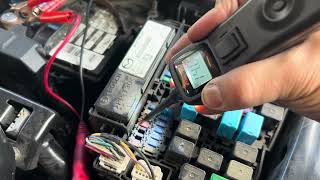
How to confirm: Visually inspect the 15A 'ROOM' fuse in the main fuse box, located in the engine compartment on the driver's side. Check if it is missing, has a broken filament, or test it for continuity with a multimeter.
Typical fix: Reinstall or replace the 15A fuse and clear the diagnostic trouble codes. The codes may clear on their own after a few drive cycles.
Est. part cost: $1-$5 - Weak or Failing Battery 🟡 Medium Probability → Shop Vehicle Battery Modern Mazda electronics are sensitive to voltage drops. A battery nearing the end of its life (typically 3-5 years) can cause a significant voltage drop during engine cranking. The PCM interprets this as a power loss, triggering P2610 and P2507.
How to confirm: Test the battery voltage with a multimeter (should be ~12.4-12.6V with engine off) and perform a load test. A simple voltage check is often not sufficient to identify a weak battery. Many auto parts stores offer free battery testing.
Typical fix: Replace the 12-volt battery. Forum users on Mazdas247 and Reddit confirm that replacing a 3-5 year old battery resolved the code instantly.
Est. part cost: $150-$250 - Loose or Corroded Battery Terminals/Grounds ⚪ Low Probability → Shop Vehicle Battery Poor connections at the battery or chassis ground points can create high resistance, mimicking a weak battery and causing intermittent power loss to modules, especially during startup.
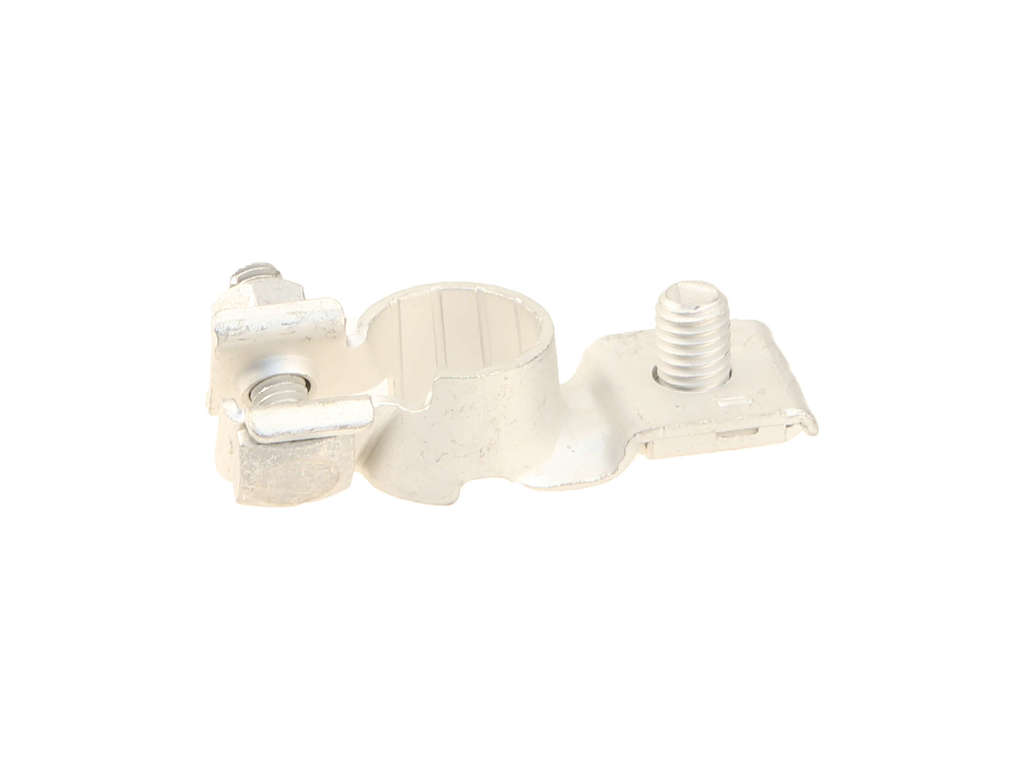
How to confirm: Visually inspect the battery terminals for white or greenish corrosion. Ensure terminal clamps are tight and check that the main chassis ground straps are clean and secure.
Typical fix: Clean the battery terminals and cable ends with a wire brush. Tighten all connections.
Est. part cost: $1-$10
Rare But Worth Checking
- Instrument Cluster Malfunction: → Shop Instrument Cluster If all power supply issues (fuse, battery, connections) are ruled out, the instrument cluster itself, which houses the timer, could have an internal fault. 🎬 Watch: How to perform a fast check on the instrument cluster. This is rare and would likely be accompanied by other cluster-specific DTCs.
- PCM Malfunction: An internal fault in the Powertrain Control Module is a very unlikely cause for this code on this vehicle, but it remains a remote possibility if all other diagnostics fail.
Diagnosis Steps
- Scan the vehicle for all stored DTCs. Note if P2507 is present with P2610, as this strongly indicates a power supply issue.
- Locate the main fuse box in the engine compartment on the driver's side and inspect the 15A fuse labeled 'ROOM'. Ensure it is present and not blown.
- If the fuse was missing or blown, replace it with a new 15A fuse. Clear the codes with a scanner or perform several start/stop drive cycles to see if the Check Engine Light turns off.
- If the fuse is good, test the 12V battery. A professional load test is recommended over a simple voltage check to confirm its health.
- Inspect the battery terminals and main ground connections for corrosion or looseness. Clean and tighten as necessary.
- If codes return after confirming the fuse and battery are good, the issue may be a more complex wiring problem or a fault within the instrument cluster, which may require professional diagnosis using the Mazda Diagnostic and Repair System (MDARS).
Parts You'll Likely Need
- 15A Blade Fuse — This is the most common cause according to Mazda's own service bulletins. It may have been removed for service/transport or blown due to a short.
Trusted brands: Bussmann, Littlefuse
OEM price range: $1-$5
Aftermarket price range: $1-$5 - 12V Battery (Group Size 51R)
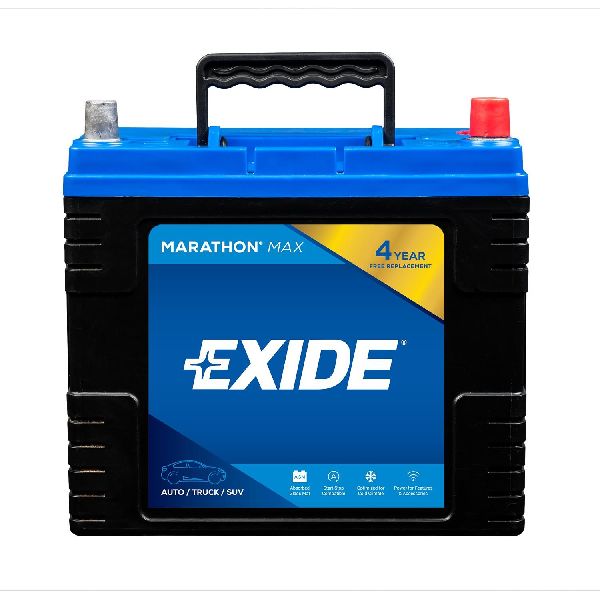
(OEM #0000-80-051R-WB)— A weak battery is the second most common cause, as low voltage during cranking can disrupt module timers and set this code. This is a well-documented fix in owner forums.
Trusted brands: Mazda OEM, Interstate, DieHard, Duralast Gold (51R-DLG)
OEM price range: $200-$300
Aftermarket price range: $150-$250
Related Codes That Often Appear With This One
- P2507 — This code means 'PCM/ECM Power Input Signal Low'. The TSBs for the MX-5 explicitly state that P2610 and P2507 are stored together when the 15A ROOM fuse is removed or when the battery is weak, as these actions cut or reduce a key power supply to the vehicle's modules.
Technical Service Bulletins (TSBs) & Recalls
- 01-003-21-3776: The most current TSB, covering up to 2021 models. States P2610 and P2507 may be stored after engine start if the 15A ROOM fuse is removed. Applies to MX-5, CX-3, CX-5, CX-9, Mazda6.
- 01-003-19-3557: An earlier version of the TSB for 2013-2019 models with the same information regarding the ROOM fuse and codes P2610/P2507.
- 01-001-17: A superseded TSB, also noting the same issue with the ROOM fuse removal causing codes P2610 and P2507 on 2013-2018 models.
Platform-Specific Known Issues
- Mazda has issued TSB #01-003-21-3776 and its predecessors which state that DTCs P2610 and P2507 can be stored in memory if the engine is started after the 15A ROOM fuse has been removed. The TSB clarifies this can happen if the engine is started 3 or more times with the fuse out. 🎬 See this video for common reasons and ways to fix these codes.
- This issue is common when dealers place the car in 'transport mode' by pulling the fuse to reduce parasitic draw, and then fail to properly clear the codes after reinstalling it. The odometer may display 'F0-002' while in this mode.
Helpful Videos
We Have This Part in Stock

The information in this article is provided for general reference and educational purposes only. Vehicle specifications, procedures, and part compatibility can vary by production date, trim level, and region. Always consult your vehicle's factory service manual and verify part numbers before purchasing or performing repairs. Safety-critical components such as airbags, seat belts, and braking systems should be installed by a qualified professional.
- Mazda MX-5:
- 🧭 Diagnostic Flowchart
- 🎬 Helpful Videos
- 🛍️ Shop This Part
- What's Unique About the 2021-2021 Mazda MX-5
- Symptoms You May Notice
- Most Likely Causes
- Rare But Worth Checking
- Diagnosis Steps
- Parts You'll Likely Need
- Related Codes That Often Appear With This One
- Technical Service Bulletins (TSBs) & Recalls
- Platform-Specific Known Issues
- 🎟️ Get 5% Off