

P2610 on 2015-2019 Subaru WRX: Engine Off Timer Performance Fixes
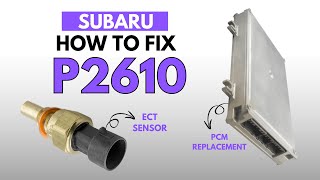
On a 2015-2019 Subaru WRX, code P2610 almost always indicates an internal fault within the Engine Control Module (ECM), as confirmed by a Subaru Technical Service Bulletin. The official fix is to replace the ECM with an updated part designed to be resistant to electrostatic surges. Before replacement, a thorough check of the battery and its connections is recommended, especially in cold weather.
- P2610 on a 2015-2019 WRX is not a typical sensor failure; it's a known issue with the ECM itself being sensitive to electrostatic surges.
- Subaru has released a Technical Service Bulletin (TSB #11-191-19R) and an updated ECM with revised hardware to permanently fix the problem.
- Before condemning the expensive ECM, always perform basic checks on the battery and its connections, as low voltage, especially in cold weather, can trigger this code intermittently.
- This is not a DIY-friendly repair. ECM replacement requires special programming tools and online authentication to sync with the car's security systems.
What's Unique About the 2015-2019 Subaru WRX
For the 2015-2019 WRX, this code is the subject of a specific Technical Service Bulletin (TSB #11-191-19R). Subaru identified that under certain rare conditions, an electrostatic surge can disrupt the ECM's internal timer. This isn't a generic software bug but a hardware sensitivity issue. In response, Subaru released an updated ECM where the "hardware in the ECM has been changed to eliminate any impact from electrostatic surges." The new ECMs were incorporated into production for WRX models starting with VIN K9820661 for manual transmissions and K8820856 for CVT models.
Diagnostic Flowchart
Tap your situation to follow the diagnostic path that matches what you're seeing on this vehicle.
Symptoms You May Notice
- Check Engine Light is on
- Vehicle may fail an emissions test because internal monitors cannot run
- In rare cases, a no-start or intermittent stalling condition
- Code may appear intermittently, especially during extreme cold weather, potentially due to lower battery voltage exaggerating the ECM's sensitivity.
- Replacing the Engine Coolant Temperature (ECT) sensor. While a faulty ECT can cause timer issues on some vehicles, for the 2015-2019 WRX and 2016-2018 Forester XT, the issue is almost always the ECM itself per TSB 11-191-19R.
Most Likely Causes
- Internal ECM Fault (per TSB #11-191-19R) 🔴 High Probability Subaru identified that the original ECM in these models is sensitive to electrostatic surges, which can corrupt the internal engine-off timer. 🎬 Watch: Understanding the causes and fixes for the P2610 code The TSB explicitly states new hardware was developed to fix this.
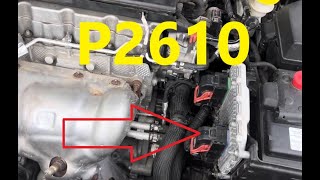
How to confirm: After ruling out battery and power supply issues, the presence of P2610 as the sole code strongly points to the ECM. A Subaru dealer can confirm using their diagnostic tools and check against TSB #11-191-19R. 🎬 Watch: Three methods to help fix the P2610 error code
Typical fix: Replace the Engine Control Module (ECM) with the updated part number specified in the TSB. The new ECM must be programmed to the vehicle. This repair is covered under Subaru's basic or emissions warranty if applicable.
Est. part cost: $800-$1200 - Weak or Failing Battery ⚪ Low Probability → Shop Vehicle Battery Low system voltage, especially during startup in extreme cold, can cause various unpredictable electronic faults in sensitive modules like the ECM.
How to confirm: Test the battery voltage with the engine off (should be >12.2V) and while running (should be ~13.5-14.5V). A load test will provide the most accurate assessment of battery health. Some owners report the code appearing in extreme cold (-31C) and disappearing after a few days, suggesting a voltage-related trigger.
Typical fix: Replace the vehicle's battery.
Est. part cost: $150-$300 - Poor Power or Ground Connection to ECM ⚪ Low Probability
How to confirm: Inspect the ECM wiring harness for corrosion or damage. Check the main engine and chassis ground straps to ensure they are clean, tight, and free of corrosion. A critical ground point for the ECU on Subarus is the intake manifold.
Typical fix: Clean or repair the affected wiring or ground connections.
Est. part cost: $5-$50
Diagnosis Steps
- Scan the vehicle for trouble codes. Note if P2610 is the only code present.
- Check for applicable Technical Service Bulletins. TSB #11-191-19R directly addresses this code for the WRX and Forester XT.
- Thoroughly test the battery's state of charge and health, including a load test. A weak battery is a known trigger for various electrical issues.
- Inspect the battery terminals and main ground connections for cleanliness and tightness. Pay special attention to the main ECU ground on the intake manifold.
- If the battery and connections are good, the cause is highly likely the internal ECM fault described in the TSB.
- Confirm the diagnosis at a qualified shop or Subaru dealership before ordering an expensive ECM. They can verify the part numbers and warranty status.
- If the ECM is replaced, ensure it is properly programmed to the vehicle using specialized equipment like the Subaru Select Monitor.
Parts You'll Likely Need
- Engine Control Module (ECM), Updated
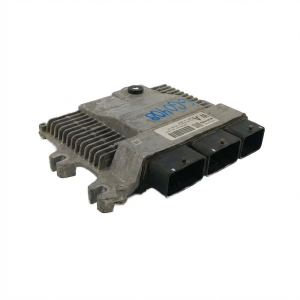
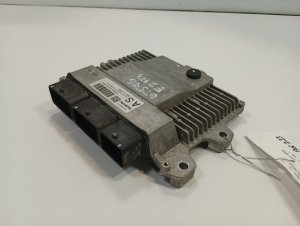
(OEM #Varies by year/trans, e.g., 22765AG249 (15 MT), 22765AH614 (15 CVT), 22765AH624 (16 MT), etc.)— This is the official fix documented by Subaru in TSB #11-191-19R to resolve the internal timer performance issue. The updated parts contain revised hardware to prevent failure from electrostatic surges. The original part 22765AG239 was superseded by multiple newer parts.
Trusted brands: Subaru (OEM)
OEM price range: $1000-$1200
Aftermarket price range: $500-$900 (Refurbished)
Technical Service Bulletins (TSBs) & Recalls
- 11-191-19R: Announces the availability of a new Engine Control Module (ECM) with updated hardware to address DTC P2610 caused by electrostatic surge sensitivity. It applies to 2015-19 WRX and 2016-18 Forester XT models and provides specific updated part numbers for each.
Platform-Specific Known Issues
- TSB #11-191-19R: ECM Replacement: Subaru issued TSB #11-191-19R which states that an electrostatic surge can affect the ECM's internal timer, causing P2610 to be stored. The fix involves replacing the ECM with an updated version containing revised hardware. The TSB lists specific updated part numbers for each model year and transmission combination.
Mechanic-Grade Diagnostic Values
- Battery Voltage (Engine Off) — expected: >12.2V. Failure: A reading below 12.2V indicates a discharged or failing battery that could cause spurious electrical faults.
- Charging System Voltage (Engine Running) — expected: ~13.5V - 14.5V. Failure: Voltage outside this range indicates a potential alternator or regulator issue, which can create electrical instability.
- Engine Coolant Temperature (ECT) Sensor Resistance — expected: 2,000 - 3,000 Ohms at 68°F (20°C). Failure: No reading or a reading far outside this range. NOTE: While this is a generic test value, replacing the ECT for P2610 on this specific vehicle is a common misdiagnosis; the cause is almost always the ECM per TSB 11-191-19R.
Scan Tool Commands That Help
- Subaru Select Monitor (SSM) or equivalent: ECM Reprogramming / FlashWrite — This is required after installing a new ECM. The process involves using a 'Decryption Keyword' specific to the programming file (PAK file) to update the ECM's Calibration Identification (CID) number. A stable power supply (like the GR8 Power Supply Mode) is mandatory during this process to prevent bricking the new module.
Wiring & Ground Locations
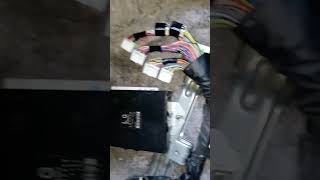
- Engine Control Module (ECM) — In the passenger footwell, under the carpet/floor panel, against the firewall.. 🎬 See this walkthrough on how to locate and remove the ECU This is the component that must be replaced. Knowing its location is the first step for inspection of its connectors or for replacement.
- Primary ECM Ground — The top of the engine's intake manifold. The ECM's main ground reference is established through wiring that bolts to the manifold.. Unlike many vehicles that ground the ECU directly to the chassis, Subaru uses the intake manifold. If the manifold's ground path to the engine block is compromised (e.g., by non-conductive TGV delete spacers or corroded bolts), the ECM can lose its reference, causing unpredictable codes like P2610.
- Main Chassis Ground — The point where the negative battery cable bolts directly to the vehicle's chassis, typically on the strut tower or inner fender.. A loose or corroded main chassis ground can cause system-wide low voltage and electrical noise, which could potentially trigger the electrostatic surge sensitivity of the original ECM.
Real Owner Repair Stories
- Reddit user on r/wrx_vb (2023 Subaru WRX) — Check Engine Light with code P2610 on startup.
❌ Tried (didn't work) No repairs attempted initially.
✅ What actually fixed it The code appeared during an extreme cold snap of -31°C (-24°F) and cleared on its own after a few days as temperatures rose. This strongly suggests the fault was triggered by a temporary voltage drop from the extremely cold battery, rather than a permanent ECM failure. - Reddit user on r/WRX (2017 Subaru WRX) — Check Engine Light with code P2610 appeared, along with a misfire code.
❌ Tried (didn't work) Changing spark plugs for the misfire code.
✅ What actually fixed it The P2610 code was triggered immediately after the user performed an 'ECU Reset' function using a Cobb Accessport tuner. This indicates that interrupting the ECM's power or performing a non-standard reset can sometimes corrupt the engine-off timer logic, causing the code to appear. The resolution path from here would be a proper dealer reflash or consultation with the tuner manufacturer.
Model Year Variations Within This Range
- 2015-2018 and early 2019: These models were built with the original ECM part numbers that are susceptible to the electrostatic surge issue. The updated, more robust ECM was incorporated into factory production starting with VIN K9820661 for manual transmission models and K8820856 for CVT models. Vehicles built before these VINs are more likely to experience this code.
Helpful Videos
![How to Change ECU [Engine Control Unit Swap // Subaru]](https://img.youtube.com/vi/-EmwuYWWbUE/mqdefault.jpg)
We Have This Part in Stock

The information in this article is provided for general reference and educational purposes only. Vehicle specifications, procedures, and part compatibility can vary by production date, trim level, and region. Always consult your vehicle's factory service manual and verify part numbers before purchasing or performing repairs. Safety-critical components such as airbags, seat belts, and braking systems should be installed by a qualified professional.
- Subaru WRX:
- 🧭 Diagnostic Flowchart
- 🎬 Helpful Videos
- 🛍️ Shop This Part
- What's Unique About the 2015-2019 Subaru WRX
- Symptoms You May Notice
- Most Likely Causes
- Diagnosis Steps
- Parts You'll Likely Need
- Technical Service Bulletins (TSBs) & Recalls
- Platform-Specific Known Issues
- Mechanic-Grade Diagnostic Values
- Scan Tool Commands That Help
- Wiring & Ground Locations
- Real Owner Repair Stories
- Model Year Variations Within This Range
- 🎟️ Get 5% Off