

P2610 on 2014-2015 Toyota Prius: Engine Off Timer Performance Causes and Fixes
On a 2014-2015 Toyota Prius, code P2610 is almost always caused by a software glitch in the Engine Control Module (ECM). The fix is a dealer-installed software update detailed in TSB T-SB-0071-16. This issue also affects its platform-mate, the Lexus CT200h. Before going to the dealer, test the 12V auxiliary battery, as low voltage can also trigger this code.
- P2610 on a 2014-2015 Prius is almost certainly a software issue, not a failed part.
- The official fix is a software update from a Toyota dealer, as detailed in TSB T-SB-0071-16.
- This repair may be covered by the Federal Emissions Warranty (8 years/80,000 miles) or an even longer PZEV warranty (15 years/150,000 miles) in certain states.
- Before paying for a diagnosis, always test the health of your 12V auxiliary battery, as low voltage is a known trigger.
- Do not replace the Engine Control Module (ECM); the problem is the software inside it, and the TSB explicitly warns against replacement.
What's Unique About the 2014-2015 Toyota PRIUS
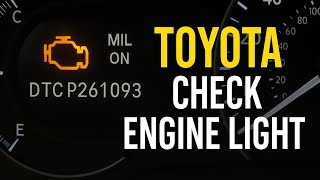
For this specific generation of Prius, the P2610 code is a well-documented and acknowledged software issue. Toyota released Technical Service Bulletin T-SB-0071-16, stating that the original ECM software logic was too sensitive and could falsely trigger the code. This means that unlike in many other vehicles where this code might point to a hardware failure, on the 2014-2015 Prius, the problem is most often the software itself, not a bad part. 🎬 Watch: A mechanic explains the P2610 software fix and TSB. The issue is so specific to this platform that its Lexus counterpart, the CT200h, has its own TSB (L-SB-0039-16) for the exact same problem.
Diagnostic Flowchart
Tap your situation to follow the diagnostic path that matches what you're seeing on this vehicle.
Symptoms You May Notice
- Check Engine Light (MIL) is illuminated.
- Inability to pass an emissions inspection because readiness monitors will not set.
- The code may appear as 'permanent' in some OBD-II scanners and cannot be cleared until the underlying software issue is fixed.
- Replacing the Engine Control Module (ECM) before verifying the software version. The TSB clearly indicates the issue is the software, not the hardware.
- Replacing other sensors, like the Engine Coolant Temperature (ECT) sensor, without first addressing the known software issue.
Most Likely Causes
- Outdated Engine Control Module (ECM) Software 🔴 High Probability → Shop Engine Control Module (ECM) Toyota officially recognized this as a software glitch and issued TSB T-SB-0071-16 to correct the ECM logic. The bulletin states the logic was modified to reduce the possibility of this condition.
How to confirm: A Toyota dealership can check the current software calibration ID in the ECM using Techstream software and compare it against the updated versions listed in TSB T-SB-0071-16. For the standard 2014-2015 Prius, the previous calibration IDs are 34754000 or 34754100, and the new ID is 34754200. An 'Authorized Modifications' label (P/N 00451-00001-LBL) may also be present under the hood if the update has already been performed.
Typical fix: Reprogram (reflash) the ECM with the updated software. This is a 0.4-hour job according to the TSB. The dealer must use a stable power supply to maintain 13.5 volts during the procedure.
Est. part cost: $0 - Weak or Failing 12V Auxiliary Battery 🟡 Medium Probability → Shop Vehicle Battery Hybrid vehicles like the Prius are very sensitive to the voltage of their 12V battery. Low or unstable voltage during shutdown can cause electronic modules, including the ECM, to behave erratically and set false codes. Owners on forums have reported this code appearing after jump-starting the vehicle or after the 12V battery has been completely drained.
How to confirm: Test the 12V battery with a digital multimeter or an electronic battery tester. A healthy, resting AGM battery should show approximately 12.6-12.8 volts. A reading below 12.2V, or a failure on a load test, indicates it needs charging or replacement.
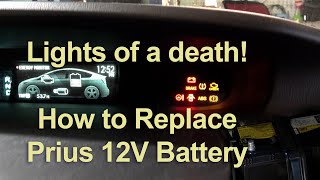
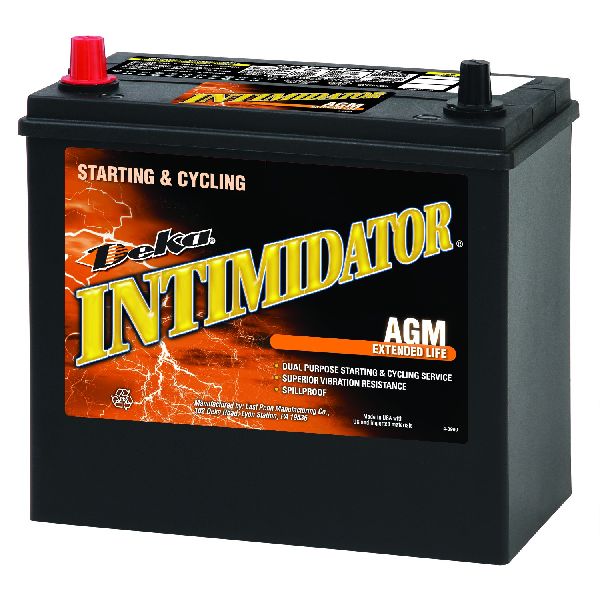
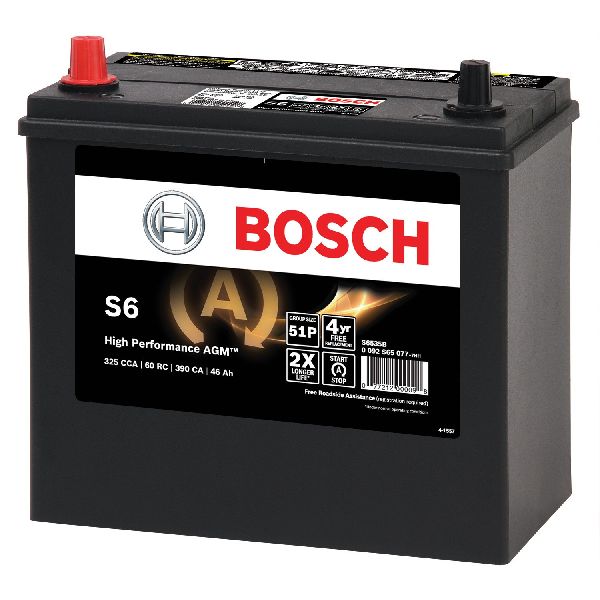
Typical fix: Replace the 12V auxiliary battery. The correct group size is an AGM S46B24R battery. 🎬 Watch: Step-by-step guide to replacing your Prius 12V battery.
Est. part cost: $200-$350
Rare But Worth Checking
- Faulty Engine Control Module (ECM): → Shop Engine Control Module (ECM) This is very rare. The TSB explicitly states the ECM should NOT be replaced as part of the standard repair procedure for this code. Only consider this if the software is confirmed to be up-to-date, the 12V battery is healthy, and all power and ground circuits to the ECM have been tested and are confirmed good.
Diagnosis Steps
- Read the Diagnostic Trouble Codes (DTCs) with an OBD-II scanner to confirm P2610 is present.
- Perform a health test on the 12V auxiliary battery. Ensure it is fully charged and holds a proper load. A weak battery is a known cause of this code and can prevent a successful ECM reflash.
- Visually inspect the engine bay for an 'Authorized Modifications' label to see if the TSB has already been performed.
- If the battery is healthy and no label is present, contact a Toyota dealership and reference TSB T-SB-0071-16. Ask them to verify if your vehicle's ECM has the latest software calibration.
- If the software is outdated, the definitive fix is to have the dealer perform the ECM reflash procedure outlined in the TSB.
- Confirm if the repair is covered under warranty. The TSB notes this repair is covered under the Toyota Federal Emission Warranty (96 months or 80,000 miles). For vehicles sold or registered in certain states (like CA, CT, ME, MD, MA, NJ, NY, OR, PA, RI, VT, WA), it may be covered under the PZEV warranty for 15 years or 150,000 miles.
- After the update, ensure the technician affixes the 'Authorized Modifications' label, clear all codes, and perform a drive cycle to ensure the code does not return and the readiness monitors set correctly.
Parts You'll Likely Need
- 12V Auxiliary Battery
(OEM #28800-21171)— A weak 12V battery is a common secondary cause of this code on a Prius, as low voltage can cause electronic glitches in the ECM. This part number also fits the Lexus CT200h.
Trusted brands: Toyota TrueStart, GS Yuasa, Optima YellowTop
OEM price range: $250-$350
Aftermarket price range: $200-$280
Related Codes That Often Appear With This One
- P0A80 — In some cases, a weak 12V battery can cause multiple system glitches, leading to P2610 appearing alongside hybrid battery codes like P0A80 ('Replace Hybrid Battery Pack'). Diagnosing the 12V system first is crucial, as a failing 12V battery can cause false positives for other, more expensive components.
Technical Service Bulletins (TSBs) & Recalls
- T-SB-0071-16: "MIL 'ON' DTC P2610" - Confirms that some 2014-2015 Prius and Prius PHV vehicles may exhibit this code due to ECM logic, and the fix is to reprogram the module. It provides the specific old and new calibration IDs and warranty information.
Platform-Specific Known Issues
- Toyota has issued Technical Service Bulletin T-SB-0071-16 specifically for the 2014-2015 Prius and Prius PHV to address DTC P2610 with a software update.
- The repair may be covered by the Toyota Federal Emission Warranty (8 years/80,000 miles).
- For vehicles originally sold, registered, and operated in California or states that have adopted California's PZEV standards (CT, DE, ME, MD, MA, NJ, NY, OR, PA, RI, VT, WA), this repair is covered for 15 years or 150,000 miles.
Mechanic-Grade Diagnostic Values
- Stable Power Supply Voltage during ECM Reflash — expected: 13.5 volts. Failure: Voltage below this level can cause the reflash to fail and potentially damage the ECM.
- 12V Auxiliary Battery Voltage (Engine Off, Resting) — expected: 12.2 V - 12.8 V. Failure: A reading below 12.2V indicates a discharged or failing battery, which is a known trigger for P2610.
Scan Tool Commands That Help
- Toyota Techstream: Health Check / Read Calibration ID — This is the first step to diagnose P2610. The 'Health Check' function will display all ECUs and their current software calibration IDs. This ID must be compared to the 'New Calibration ID' listed in TSB T-SB-0071-16 to confirm if the update is needed.
- Toyota Techstream: ECU Reprogramming (Calibration Update) — This is the primary repair procedure. It is used to flash the ECM with the new software logic provided by Toyota to fix the bug causing the false P2610 code. Requires software version 11.10.034 or later.
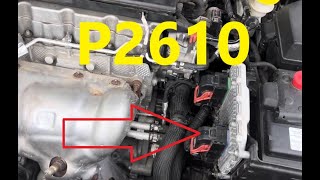
- Toyota Techstream: Live Data Monitoring of 'Engine Off Timer' — While not part of the standard TSB repair, a technician could use this to visually confirm if the timer is behaving erratically after engine shutdown, before and after the reflash. 🎬 See this breakdown of P2610 causes and timer performance fixes.
Wiring & Ground Locations
- Engine Control Module (ECM) — Located in the engine compartment on the driver's side (left side of engine compt).. The ECM is the component that stores the faulty software and must be reprogrammed. All power and ground connections to it must be secure for proper operation and for a successful reflash.
- ECM Ground Points (E01, E02, E03) — These are primary ground points for the ECM, typically grounded to the engine block or chassis near the ECM itself.. A poor ground connection at these points could cause voltage fluctuations and erratic behavior in the ECM, potentially mimicking the symptoms of a bad 12V battery and triggering a false P2610 code.
Real Owner Repair Stories
- Reddit user artem916 on r/prius (2011 Toyota Prius) — P2610 code appeared after jump-starting the car multiple times due to a dead 12V battery.
❌ Tried (didn't work) Replacing the 12V battery.
✅ What actually fixed it The code was stored as a 'permanent' DTC. While the user's final fix wasn't posted, the discussion pointed towards needing a dealer-level tool to perform a full system reset or reflash to clear the permanent code, as simply replacing the battery was insufficient once the code had locked in.
OEM Part Supersession History
34754000, 34754100→34754200— Software logic update to correct false P2610 trigger.
Heads up: These are software calibration IDs, not physical parts. The older IDs are what need to be updated.
Helpful Videos

We Have This Part in Stock


The information in this article is provided for general reference and educational purposes only. Vehicle specifications, procedures, and part compatibility can vary by production date, trim level, and region. Always consult your vehicle's factory service manual and verify part numbers before purchasing or performing repairs. Safety-critical components such as airbags, seat belts, and braking systems should be installed by a qualified professional.
- Toyota PRIUS:
- 🧭 Diagnostic Flowchart
- 🎬 Helpful Videos
- 🛍️ Shop This Part
- What's Unique About the 2014-2015 Toyota PRIUS
- Symptoms You May Notice
- Most Likely Causes
- Rare But Worth Checking
- Diagnosis Steps
- Parts You'll Likely Need
- Related Codes That Often Appear With This One
- Technical Service Bulletins (TSBs) & Recalls
- Platform-Specific Known Issues
- Mechanic-Grade Diagnostic Values
- Scan Tool Commands That Help
- Wiring & Ground Locations
- Real Owner Repair Stories
- OEM Part Supersession History
- 🎟️ Get 5% Off