

P2610 on 2012-2017 Toyota Prius V: Engine Off Timer Performance Causes and Fixes
On a 2012-2017 Prius V, code P2610 is almost always caused by a software glitch in the engine computer (ECM). The fix is a simple software update from a Toyota dealer, detailed in TSB T-SB-0087-16. Before going to the dealer, check that your 12V auxiliary battery is healthy, as low voltage can also trigger this code. This repair may be covered under the Federal Emissions Warranty (8 years/80,000 miles).
- P2610 on a 2012-2017 Prius V is almost certainly a software issue, not a failed part.
- The official fix is a software update from a Toyota dealer, detailed in TSB T-SB-0087-16.
- Before paying for diagnostics, ensure your 12V auxiliary battery is a healthy AGM type (S46B24R), as low voltage is the next most likely cause.
- Do not replace the Engine Control Module (ECM); the problem is the software inside it, not the hardware itself.
- This repair may be covered under the 8-year/80,000-mile Federal Emissions Warranty or a 15-year/150,000-mile PZEV warranty; always ask the dealer to check.
What's Unique About the 2012-2017 Toyota Prius V
For this generation of Prius V and many other Toyotas from the same era, the P2610 code is a well-documented and acknowledged software issue. Toyota released Technical Service Bulletin T-SB-0087-16 specifically for the 2014-2016 Prius V, confirming that the original ECM software logic was too sensitive and could falsely trigger the code. Unlike in other vehicles where this code might point to a failing computer, the problem on the Prius V is almost always solved with a software update, not expensive hardware replacement. The TSB explicitly warns against replacing the ECM before performing the software update.
Symptoms You May Notice
- Check Engine Light is on.
- Inability to pass an emissions test because readiness monitors cannot be completed.
- Code may appear more frequently in the morning after the car has been sitting overnight, especially if an aftermarket remote starter is used.
- Replacing the Engine Control Module (ECM) without first attempting the software update. This is an expensive and unnecessary repair in the vast majority of cases for this specific code, and Toyota's TSB warns against it.
Most Likely Causes
- Outdated Engine Control Module (ECM) Software 🔴 High Probability → Shop Engine Control Module (ECM) Toyota acknowledged this as a software logic issue and issued Technical Service Bulletin T-SB-0087-16 for the 2014-2016 Prius V to correct it with a software update. This is a known pattern across many Toyota models of this era, including the standard Prius, Camry, and Land Cruiser.
How to confirm: A Toyota dealer or a shop with Toyota's Techstream software can check the current software calibration ID against the updated versions listed in TSB T-SB-0087-16. For example, for a 2014 model, if the calibration ID is 89660-47680 or 89660-47681, it needs the update. An 'Authorized Modifications Label' may also be present in the engine bay if the update has already been performed.
Typical fix: Reprogram (reflash) the ECM with the updated software provided by Toyota. This is typically a 30-60 minute procedure at a dealership and may be covered under the Federal Emissions Warranty (8 years/80,000 miles).
Est. part cost: $0 - Weak or Failing 12V Auxiliary Battery 🟡 Medium Probability → Shop Vehicle Battery The ECM's internal timer relies on a stable voltage supply from the 12V battery when the car is off. If the battery voltage is low or unstable, it can disrupt the timer's operation and trigger the code. This is a common secondary cause across all Prius models.
How to confirm: Test the 12V auxiliary battery (located in the right rear of the cargo area) with a digital multimeter or a dedicated battery load tester. A resting voltage below 12.2V suggests it is discharged or failing. The battery should be load tested for a definitive diagnosis.
Typical fix: Recharge or replace the 12V auxiliary AGM battery.
Est. part cost: $180-$280
Rare But Worth Checking
- ECM Power or Ground Circuit Issue: A loose or corroded wire supplying power or ground to the ECM can cause various intermittent issues, including timer performance problems. This should only be investigated after confirming the software is up-to-date and the battery is good.
- Faulty Engine Control Module (ECM): → Shop Engine Control Module (ECM) This is a true hardware failure of the timer circuit inside the ECM. It is extremely rare for this specific code on this vehicle. The TSBs explicitly warn against replacing the ECM before performing the software update. In the rare case it is needed, a used ECM from a matching part number is a viable option.
- Aftermarket Remote Starter: An improperly installed or malfunctioning aftermarket remote starter can interfere with the vehicle's electrical system and the ECM's sleep/wake cycle, potentially triggering P2610. A user on PriusChat reported this code appearing primarily after using their Viper remote starter.
Diagnosis Steps
- Read the codes with an OBD-II scanner to confirm P2610 is the primary code present.
- Thoroughly test the 12V auxiliary battery. Using a multimeter, check the voltage with the car off. A healthy AGM battery should read between 12.4V and 12.8V. If it's below 12.2V, charge and re-test it. A professional load test is recommended, as voltage alone can be misleading.
- If the battery is weak, replace it. The correct type is an AGM battery, size S46B24R.
- Clear the codes after addressing any battery issues and drive the vehicle for a few days. The timer fault often sets after the vehicle has been off for a long period (e.g., overnight).
- If the code returns and the battery is confirmed good, the ECM software update is necessary. Contact a Toyota dealership or a qualified independent shop with Toyota Techstream software.
- Reference TSB T-SB-0087-16 (for 2014-2016 models, but the issue applies to the whole 2012-2017 range) to have the ECM reprogrammed.
- Ask the dealer to check if the repair is covered under warranty. It is explicitly covered by the Federal Emissions Warranty (8 years/80,000 miles). In states following California's standards (like CA, MA, VT, NY, etc.), it may be covered under the PZEV emissions warranty for 15 years/150,000 miles.
Parts You'll Likely Need
- 12V Auxiliary Battery
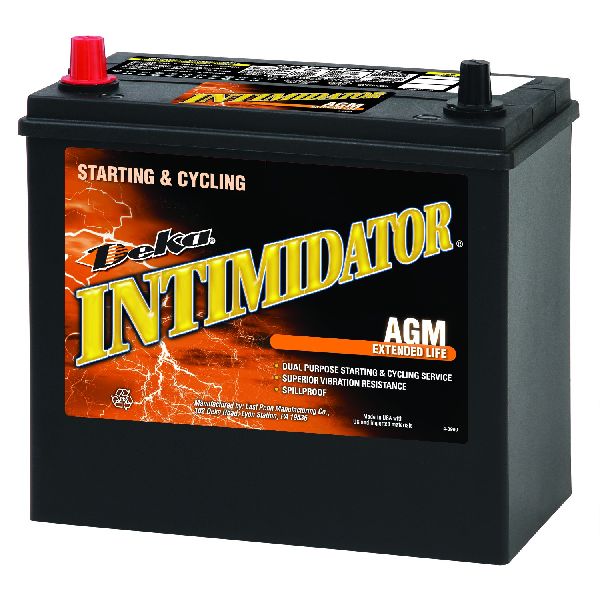
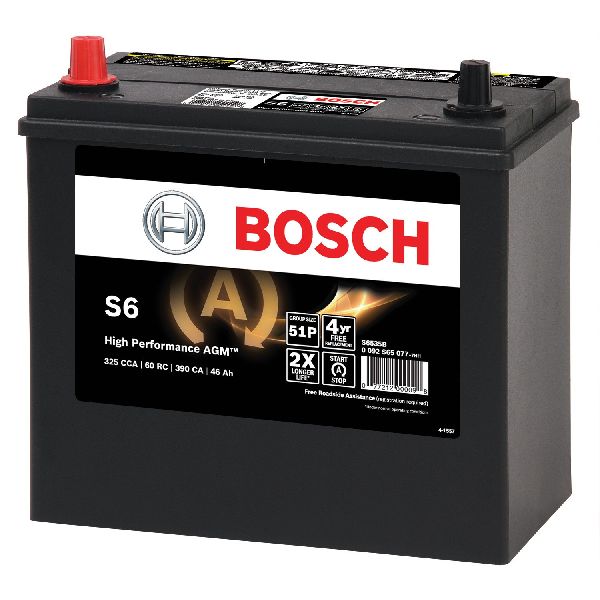
(OEM #00544-21171-325 (replaces 28800-21171))— A weak 12V battery is the second most likely cause of this code if the ECM software has not been updated. It fails to provide stable voltage for the ECM's internal timer when the vehicle is off. The correct type is an AGM S46B24R.
Trusted brands: Toyota TrueStart, Optima YellowTop, Interstate (Costco), Duralast Platinum AGM
OEM price range: $190-$230
Aftermarket price range: $220-$280
Related Codes That Often Appear With This One
- C1241 — Low or Abnormal Battery Voltage. This code, stored in the brake control module, would strongly reinforce the diagnosis of a failing 12V auxiliary battery causing the P2610.
- P0562 — System Voltage Low. This code would reinforce the diagnosis of a failing 12V auxiliary battery causing the P2610.
Technical Service Bulletins (TSBs) & Recalls
- T-SB-0087-16: Specifically for the 2014-2016 Prius V, confirms a MIL 'ON' with DTC P2610 can be fixed by reprogramming the ECM. Explicitly states the repair is covered under the 8yr/80k mile Federal Emission Warranty.
- T-SB-0071-16: For 2014-2015 Prius and Prius PHV, describes the same issue and software fix, noting PZEV warranty coverage of 15yr/150k miles in applicable states.
- T-SB-0276-17 & T-SB-0336-17: For other Toyota models like Camry, 4Runner, and Land Cruiser, showing the same P2610 software logic issue was widespread across the Toyota lineup in this era.
- L-SB-0039-16: The corresponding TSB for the platform-mate Lexus CT200h, confirming the same software flaw and fix.
Platform-Specific Known Issues
- A known software glitch in the Engine Control Module is the most common cause of P2610 on this vehicle, as documented by Toyota in TSB T-SB-0087-16 for the 2014-2016 models.
- The issue also affects the Lexus CT200h, which shares the same hybrid platform and has its own TSB for the same fix (L-SB-0039-16).
Mechanic-Grade Diagnostic Values
- Stable Power Supply Voltage during ECM Reflash — expected: 13.5 Volts. Failure: Voltage below 13.5V can cause the reflash to fail and potentially damage the ECM. Toyota requires the use of a high-quality power supply like the GR8 Battery Diagnostic Station during this procedure.
- 12V Auxiliary Battery Voltage (Engine Off, Resting) — expected: 12.2 V - 12.8 V. Failure: A reading below 12.2V indicates a discharged or failing battery, which is a known trigger for P2610.
- ECM Power (Terminal +B) to Ground Voltage — expected: 9 to 14 V (Power switch ON). Failure: Voltage outside this range indicates a problem with the EFI M relay, fuse, or wiring harness providing power to the ECM.
- ECM Ground Resistance — expected: Below 1 Ω. Failure: Resistance higher than 1 ohm between the ECM ground pin (E1) and the chassis ground indicates a poor ground connection, which can cause erratic ECM behavior.
Scan Tool Commands That Help
- Toyota Techstream: Health Check / Read Calibration ID — This is the first and most critical step. It reads the current software version (Calibration ID) from the ECM. This ID must be compared to the 'New Calibration ID' listed in TSB T-SB-0087-16 to confirm if the software update is required.
- Toyota Techstream: ECU Reprogramming (Calibration Update) — This is the repair procedure itself. It flashes the ECM with the new software provided by Toyota to fix the bug causing the false P2610 code. This requires Techstream software version 11.10.034 or later.
- Toyota Techstream: Freeze Frame Data — Use this to view the vehicle's state (engine temp, speed, etc.) at the exact moment the P2610 code was set. This can provide clues, such as whether the code set after a cold soak (pointing to a battery issue) or during a drive cycle.
Wiring & Ground Locations
- Engine Control Module (ECM) — In the engine compartment, on the driver's side, near the main fuse box and behind the inverter.. This is the module that stores the code and requires the software update. Its power and ground connections are critical for the internal timer's operation.
- ECU-B Fuse — In the instrument panel fuse box, located behind the left end of the dash.. This 7.5A fuse provides constant battery power to the ECM, which is necessary for the engine-off timer to function when the car is off. A fault in this circuit could trigger P2610.
- ECM Ground Points — The ECM grounds to the chassis at multiple points. A key ground connection is typically located on the engine block or inner fender near the ECM itself.. A poor or corroded ground connection can cause a voltage differential, leading to erratic behavior of the ECM's internal timer and other functions.
OEM Part Supersession History
89660-47680, 89660-47681→89660-47682— Software and potential hardware revisions to address issues including the P2610 logic flaw.
Heads up: These part numbers are for 2014 models built up to 11/2014. The TSB requires reprogramming; replacement is only for true hardware failure.89660-47620→89660-47621— Software and potential hardware revisions to address issues including the P2610 logic flaw.
Heads up: These part numbers are for 2015-2016 models. The TSB requires reprogramming; replacement is only for true hardware failure.89661-47361→N/A— Original part number for early models.
Heads up: This is a primary part number for 2012 models. While no TSB specifically lists the 2012-2013 Prius V for P2610, the issue is known to affect them. A dealer would need to check for an applicable calibration update via VIN.
Model Year Variations Within This Range
- 2015-2017: A facelift was introduced for the 2015 model year. This included a revised front bumper, higher resolution Multi-Functional Display (MFD) that did not use the problematic Harman expansion box of the 2012-2014 models, and updated LED headlights.
- Late 2014 onwards: The 2ZR-FXE engine received updated piston rings starting in late 2014 models to address potential oil consumption issues seen in earlier third-generation Prius engines.
- 2012-2014 vs 2015-2017: The instrument cluster display changed. Early models had a 'Hybrid Info Display' and instantaneous MPG, which were removed in the facelifted models in favor of a different info display.
Diagnostic Flowchart
Other Known Issues on This Vehicle
Issues unrelated to this code that are worth knowing about as an owner of this generation:
- Brake Booster / Actuator Assembly Failure 🔴 High — Common enough to warrant a Customer Support Program (20TE07) for 2012-2014 models. Can occur at various mileages, often over 100k. (Ref: Customer Support Program 20TE07 (not a recall) extended warranty coverage for this specific failure.)
- EGR System Clogging (Cooler, Valve, and Intake Manifold Passages) 🟠 Medium — Very common, typically requires cleaning every 75k-120k miles to prevent issues. Clogging can lead to poor performance, engine knocking, and eventually head gasket failure if ignored.
- Excessive Oil Consumption 🟠 Medium — More prevalent on earlier models (2012-2014), often attributed to piston ring design. Some owners report consuming a quart of oil between changes.
- Hybrid Inverter Failure 🔴 High — While not as widespread as on the previous generation, inverter failure can still occur, causing the vehicle to stall or enter 'limp mode'. A recall was issued for some vehicles to update software to prevent inverter damage. (Ref: Recall for hybrid system 'limp home' mode software.)
Used vs. New Parts: Buying Guide for This Vehicle
When a used part is the smart pick: For this code, a used part is only relevant if the ECM has a confirmed hardware failure, which is extremely rare. Since the primary fix is a software update to the existing ECM, no parts are typically needed. If the 12V battery is the cause, a new battery is always recommended over a used one.
Donor-vehicle mileage cap: roughly under 80000 miles for the part to have meaningful remaining life.
What to inspect on the donor part:
- Verify the part number on the used ECM EXACTLY matches the original.
- Purchase from a reputable salvage yard with a warranty and return policy.
- Ask for the VIN of the donor car to check its history for flood or major electrical damage.
OEM-only on this vehicle (don't cheap out):
- Engine Control Module (ECM) - While a used OEM part is an option, aftermarket or 'rebuilt' ECMs for this specific vehicle are not recommended due to the complexity of the hybrid system integration and immobilizer programming.
Aftermarket brands forum-validated for this vehicle:
- For the 12V Auxiliary Battery: Optima (YellowTop), Interstate, Duralast Platinum AGM are well-regarded alternatives to the OEM Toyota TrueStart battery.
Brands owners have reported issues with on this vehicle:
- Avoid generic or non-AGM batteries for the 12V auxiliary, as they may not have the required specifications and lifespan for a hybrid vehicle's electrical demands.
Real Owner Stories
Aggregated from forums and TSBs cited above. Mileages and costs reflect what owners reported in those sources.
2014 Prius v wagon — 25000 miles
Symptoms: Check engine light appears in the morning, especially when using a Viper 4205v remote starter. The code P2610 returns intermittently every year or two.
What fixed it: The dealership reprogrammed the engine control module (ECM) per TSB-0087-16.
Source hint: PriusChat: Code p2610?
2011-2017 Lexus CT200h (2ZR-FXE 1.8L I4 Hybrid)
Symptoms: Check engine light with code P2610. Owners noted that early diagnostic manuals incorrectly suggested replacing the entire ECM.
What fixed it: Software update per TSB L-SB-0039-16.
Source hint: ClubLexus: Check engine code P2610
Related OBD-II Codes
Frequently Asked Questions
Does TSB T-SB-0087-16 apply to my 2014-2016 Prius V?
Will the Federal Emissions Warranty cover the P2610 repair on my Prius V?
Can a weak 12V battery cause the P2610 code in a Prius V?
How can I tell if my Prius V has already received the ECM software update?
Why does my P2610 code appear more often in the morning or when using a remote starter?
What is the correct replacement battery for the Prius V if the 12V battery is failing?
Helpful Videos

We Have This Part in Stock



The information in this article is provided for general reference and educational purposes only. Vehicle specifications, procedures, and part compatibility can vary by production date, trim level, and region. Always consult your vehicle's factory service manual and verify part numbers before purchasing or performing repairs. Safety-critical components such as airbags, seat belts, and braking systems should be installed by a qualified professional.
- Toyota Prius V:
- 🧭 Diagnostic Flowchart
- 🎬 Helpful Videos
- 🛍️ Shop This Part
- What's Unique About the 2012-2017 Toyota Prius V
- Symptoms You May Notice
- Most Likely Causes
- Rare But Worth Checking
- Diagnosis Steps
- Parts You'll Likely Need
- Related Codes That Often Appear With This One
- Technical Service Bulletins (TSBs) & Recalls
- Platform-Specific Known Issues
- Mechanic-Grade Diagnostic Values
- Scan Tool Commands That Help
- Wiring & Ground Locations
- OEM Part Supersession History
- Model Year Variations Within This Range
- Other Known Issues on This Vehicle
- Used vs. New Parts: Buying Guide for This Vehicle
- Real Owner Stories
- 2014 Prius v wagon — 25000 miles
- 2011-2017 Lexus CT200h (2ZR-FXE 1.8L I4 Hybrid)
- Related OBD-II Codes
- Frequently Asked Questions
- 🎟️ Get 5% Off