

P2610 on 2009-2017 Toyota Venza 2.7L: ECM Internal Timer Fault Causes and Fixes
On a 2009-2017 Toyota Venza, code P2610 is most often caused by an Engine Control Module (ECM) software glitch, not a failed computer. The fix is a software update from a Toyota dealer, which may be covered under the 8-year/80,000-mile Federal Emissions Warranty. For 2015-2016 models, this is documented in TSB T-SB-0276-17. For earlier models, a weak 12V battery is the next most likely cause. Always check these simple fixes before considering any expensive part replacements.
- For a 2015-2016 Venza, P2610 is almost certainly a software bug that a Toyota dealer can fix with an update, as per TSB T-SB-0276-17.
- This software update repair may be covered free of charge under the 8-year/80,000-mile Federal Emissions Warranty.
- For 2009-2014 Venza models, the most likely cause is a weak or failing 12V battery.
- Do not replace the ECM unless all other possibilities, especially the software update and battery health, have been ruled out.
What's Unique About the 2009-2017 Toyota Venza
For this generation of Toyota Venza and many other contemporary Toyota models, the P2610 code is a widely documented software issue. Toyota released Technical Service Bulletin (TSB) T-SB-0276-17, which specifically includes the 2015-2016 Venza, acknowledging that the original ECM software logic was overly sensitive and could falsely trigger the code. This is a critical distinction because the problem is not a failing computer but a software bug that needs updating. The TSB explicitly warns against replacing the ECM for this issue and provides specific new calibration IDs (30T23100 for 2WD, 30T24100 for 4WD) to fix it.
Symptoms You May Notice
- Check Engine Light is on.
- Inability to pass an emissions test because system readiness monitors cannot be completed.
- In rare cases, delayed engagement of start-stop systems or accessories not powering down as expected.
- Replacing the Engine Control Module (ECM) without first checking for the software update specified in TSB T-SB-0276-17.
- Replacing the battery without performing a proper load test first.
Most Likely Causes
- Outdated Engine Control Module (ECM) Software 🔴 High Probability → Shop Engine Control Module (ECM) Toyota identified a software logic issue and released TSB T-SB-0276-17 for 2015-2016 models to correct it. The original software was overly sensitive in monitoring the ECM's internal clock. This issue was widespread across many 2014-2018 Toyota models, as documented in a broader TSB (T-SB-0336-17).
How to confirm: Contact a Toyota dealer with your VIN. They can verify if TSB T-SB-0276-17 applies and whether the software update has already been performed by checking for an 'Authorized Modifications Label' (P/N 00451-00001-LBL) under the hood.
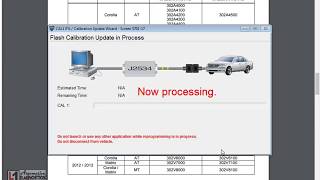
Typical fix: Flash reprogram the ECM with the updated calibration file (e.g., 30T23100 for 2WD, 30T24100 for 4WD on 2015-2016 Venza). This is done at a dealership and typically takes less than an hour. The repair is often covered under the Toyota Federal Emission Warranty (96 months or 80,000 miles).
Est. part cost: $0 - Weak or Failing 12V Battery 🟡 Medium Probability → Shop Vehicle Battery For earlier models (2009-2014) not covered by the TSB, or if the software has been updated, this is the next most likely cause. An unstable or low voltage supply during shutdown can disrupt the ECM's keep-alive memory and internal timer. This is a common cause for P2610 across many different makes and models.
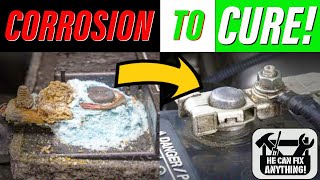
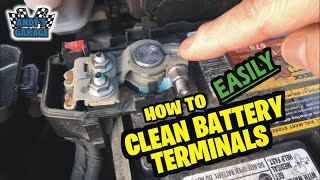
How to confirm: Perform a battery load test. A simple voltage check is not always sufficient. Many auto parts stores offer this service for free. Check battery terminals for corrosion and ensure they are tight.
Typical fix: Replace the 12V battery and clean the terminal connections.
Est. part cost: $150-$300
Rare But Worth Checking
- ECM Power or Ground Circuit Issue: While less common than a software bug or weak battery, a poor connection to the ECM can mimic an internal fault. This is worth checking before condemning the expensive computer, especially on older vehicles or those with a history of electrical problems. Inspect the ECM harness for corrosion, loose pins, or damage.
- Internal ECM Failure: This is the least likely cause. Toyota's TSB for this code specifically warns technicians NOT to replace the ECM as part of the standard repair procedure. It should only be considered after all other possibilities, including the software update and power supply checks, have been exhausted.
Diagnosis Steps
- Verify the code P2610 is present using an OBD-II scanner. Note any other codes.
- For 2015-2016 models, contact a Toyota dealer with your VIN to check the applicability of TSB T-SB-0276-17.
- Check for an 'Authorized Modifications Label' under the hood to see if a reflash has already been performed.
- If the TSB applies and has not been performed, have the dealer reflash the ECM. This is the most likely solution and may be covered by warranty.
- For all model years, thoroughly test the 12V battery using a load tester, not just a voltmeter.
- Inspect battery terminals and the main chassis ground connections for corrosion or looseness.
- If the battery is weak or failing, replace it, clear the codes, and see if P2610 returns.
- If the TSB does not apply and the battery is good, inspect the wiring and connectors at the ECM for any signs of damage, corrosion, or loose pins.
- As a final step, if all external factors are confirmed to be good, an internal ECM hardware failure is possible, but highly unlikely.
Parts You'll Likely Need
- Engine Control Module (ECM) Reprogramming — This is not a physical part, but a software update that corrects the overly sensitive logic in the original programming, which is the most common cause of P2610 on 2015-2016 models.
Trusted brands: Toyota
OEM price range: $100-$250
Aftermarket price range: N/A - 12V AGM Battery — A weak or failing battery can cause voltage instability, disrupting the ECM's internal timer and triggering the code, especially on 2009-2014 models not covered by the TSB.
Trusted brands: Bosch, Interstate, DieHard
OEM price range: $250-$400
Aftermarket price range: $150-$300
Related Codes That Often Appear With This One
- P0562 — This code indicates low system voltage and can be a direct cause of the P2610 timer fault if the battery is weak.
Technical Service Bulletins (TSBs) & Recalls
- T-SB-0276-17: 'MIL ON DTC P2610' - Released August 18, 2017, this bulletin confirms that some 2015-2016 Venza models (among others) may exhibit P2610 due to an ECM logic issue and provides new calibration files to fix it. It also states the repair is covered under the Federal Emissions Warranty (96 months/80,000 miles).
- T-SB-0336-17: 'MIL ON DTC P2610' - A later, broader TSB from December 21, 2017, covering many other 2014-2018 Toyota models for the same software issue, showing how widespread the problem was.
Platform-Specific Known Issues
- A software glitch in the ECM of 2015-2016 Venza models causes the P2610 code to be set falsely. This is documented in Toyota Technical Service Bulletin T-SB-0276-17.
- For 2009-2014 models not covered by the TSB, the most likely cause shifts from software to a weak 12V battery or other power supply interruption.
Mechanic-Grade Diagnostic Values
- 12V Battery Voltage (Engine Off, Resting) — expected: 12.2V - 12.8V. Failure: A reading below 12.2V indicates a discharged or failing battery, which is a known trigger for P2610, especially on pre-TSB models.
- Alternator Charging Voltage (Engine Running) — expected: ~14.2V - 14.5V. Failure: Significantly higher or lower voltage indicates a charging system problem that could disrupt the ECM's power supply and internal timer.
- Stable Power Supply Voltage during ECM Reflash — expected: 13.5V. Failure: Voltage below this level during the reflash procedure can cause the update to fail and potentially damage the ECM.
- Techstream Live Data 'Engine Off Timer' — expected: Timer should count accurately after engine shutdown.. Failure: Observing erratic counting or failure to count after shutdown can visually confirm an internal timer issue, though this is secondary to checking for the TSB.
Scan Tool Commands That Help
- Toyota Techstream: Health Check / Read Calibration ID — This is the first diagnostic step. It reads the current software ID from the ECM. This ID is then compared to the 'New Calibration ID' listed in TSB T-SB-0276-17 to confirm if the software update is required.
- Toyota Techstream: ECU Reprogramming (Calibration Update) — This is the repair procedure. It is used to flash the ECM with the new software logic provided by Toyota in the TSB to fix the bug causing the false P2610 code. Requires software version 12.10.018 or later.
- Autel (or similar professional scanner): VIN Write — This is only used if the ECM is replaced. A used or new ECM must have the vehicle's correct VIN written to it to ensure proper communication with other modules.
- Jumper Wire (Manual Method): Immobilizer Reset (Key Pairing) — If an ECM is replaced and the engine starts then dies, the immobilizer has not been paired with the new ECM. Jumpering pins 4 and 13 on the OBD-II port with the key on for 30 minutes forces the immobilizer system to sync with the new/used ECM. This is a common procedure for older Toyotas.
Wiring & Ground Locations
- ECM Location — The ECM on the Venza is typically located in the engine bay, often behind the driver's side headlight or against the firewall.. Physical access is needed to inspect connectors for corrosion or damage and to replace the module if it is condemned as a last resort.
- G01 / G09 (Engine Compartment Grounds) — Ground points located on the left and right fenders in the engine compartment.. These are primary grounding points for the engine compartment harness. A loose or corroded connection here can cause intermittent electrical issues for multiple components, including the ECM.
- G10 / G11 (Battery Grounds) — Ground points located near the battery tray.. These are the main ground connections for the entire electrical system. A fault at the battery ground can cause widespread voltage instability, directly leading to codes like P2610.
Real Owner Repair Stories
- Reddit user post on r/prius (2011 Toyota Prius (similar platform electronics)) — P2610 code appeared after the 12V battery went dead and the car was jump-started multiple times.
❌ Tried (didn't work) Initial jump-starting.
✅ What actually fixed it Replacing the weak 12V auxiliary battery resolved the code. This confirms that on Toyota platforms not covered by a specific TSB, an unstable power supply from a failing battery is a primary cause.
OEM Part Supersession History
Various (see TSB)→N/A (Software Calibration ID)— The primary fix is a software update, not a hardware change. TSB T-SB-0276-17 lists the old calibration IDs and the new ones that correct the logic flaw. For a 2015-2016 Venza 2WD, the new calibration is 30T23100. For 4WD, it is 30T24100.e.g., 89661-0T111 (for 2013-14 Venza 2.7L)→Varies by year— ECM hardware is often specific to a model year or a narrow range of years. When replacing an ECM, the part number must be an exact match or a manufacturer-approved supersession.
Heads up: Installing an ECM from a different year, even if it physically fits, will likely cause malfunctions because it expects different sensor inputs or has different programming.
Model Year Variations Within This Range
- 2015-2016: These model years are specifically covered by TSB T-SB-0276-17 for the P2610 software glitch. The primary cause is overwhelmingly the need for an ECM reflash.
- 2009-2014: These earlier models are not included in the TSB. For these vehicles, the diagnostic priority shifts to a weak 12V battery, corroded terminals, or a poor ground connection as the most likely cause of the P2610 code.
Diagnostic Flowchart
Other Known Issues on This Vehicle
Issues unrelated to this code that are worth knowing about as an owner of this generation:
- VVT Gear Rattle at Cold Startup 🟠 Medium — A brief (1-second) rattle or knock on cold starts. Fairly common but doesn't typically lead to failure. (Ref: TSB-0041-13 describes the issue and repair, which involves replacing the VVT gear assembly.)
- Engine Oil Consumption 🟠 Medium — Some owners report oil consumption, particularly at higher mileage (over 80k miles). Not as severe as the issue with the older 2AZ-FE engine, but worth monitoring oil levels between changes.
- Water Pump Failure 🟠 Medium — The water pump may fail between 90k-120k miles, leading to coolant leaks. An intermittent grinding noise from the passenger side of the engine can be a symptom.
- Torque Converter Shudder 🟡 Low — Some owners report a shudder or vibration during light acceleration, often between 25-50 mph, related to the U760E/F transmission's torque converter lock-up.
Used vs. New Parts: Buying Guide for This Vehicle
When a used part is the smart pick: A used ECM is a potential last-resort option if the original ECM has a confirmed hardware failure, which is extremely rare for this code. Since the most common fixes are software or a new battery, a used ECM should only be considered after all other diagnostic steps have been exhausted.
Donor-vehicle mileage cap: roughly under 150000 miles for the part to have meaningful remaining life.
What to inspect on the donor part:
- MUST have the exact same OEM part number as the original unit.
- Purchase from a reputable seller that offers a warranty and guarantees the unit is tested.
- Visually inspect the used ECM for any signs of physical damage, corrosion, or opened casing.
- Ensure the seller can provide the VIN of the donor vehicle to aid in potential programming needs.
OEM-only on this vehicle (don't cheap out):
- Engine Control Module (ECM) Reprogramming: The software update (reflash) must be done with Toyota's proprietary Techstream software and calibration files.
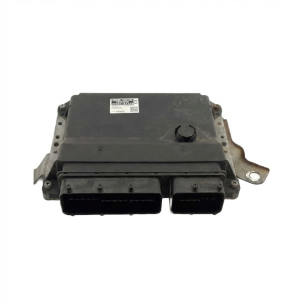
- Engine Control Module (ECM): While used units can work, a new OEM unit is the only way to guarantee compatibility and the latest hardware revisions. Remanufactured units from reputable sources that pre-program to your VIN are a viable alternative.
Aftermarket brands forum-validated for this vehicle:
- For Batteries: Bosch, Interstate, DieHard are commonly cited as reliable replacements.
- For ECMs: Flagship One (FS1) and Mintt are known vendors that sell pre-programmed (plug-and-play) remanufactured ECMs for Toyota vehicles.
Brands owners have reported issues with on this vehicle:
- Generic, unbranded ECMs from marketplaces like eBay or Amazon without a warranty or programming service should be avoided.
Real Owner Stories
Aggregated from forums and TSBs cited above. Mileages and costs reflect what owners reported in those sources.
2017 Toyota (Model not specified, likely 4Runner/Camry/Avalon)
Symptoms: Owner noticed the P2610 code and was inquiring about whether the TSB-related repair would be covered under warranty.
What fixed it: The owner was directed toward the TSB fix (ECM reflash) which is covered under the Federal Emissions Warranty.
Source hint: CarKiller Forums - 'P2610 (ECM/PCM Internal Engine Off Timer Performance)'
Toyota 4Runner (2015-2017 era)
Symptoms: The P2610 code was present, likely triggered by power supply interruptions to the ECM.
What fixed it: Cleaning corroded battery terminals resolved the issue, restoring a stable power supply.
Source hint: r/4Runner
Toyota Tacoma
Symptoms: P2610 code appearing on an Ultragauge; owner noted the code relates to the engine soak timer used to judge cooling before a restart.
What fixed it: Identified as an ECM/PCM Internal Engine Off Timer Performance issue, often requiring a software update or battery check.
Source hint: Tacoma World - 'P2610 popping up on Ultragauge'
Related OBD-II Codes
Frequently Asked Questions
Does TSB T-SB-0276-17 apply to my 2015 Toyota Venza?
Will the Toyota Federal Emission Warranty cover the P2610 fix on my Venza?
How can I tell if my Venza has already received the ECM software update for P2610?
I have a 2010 Venza not covered by the TSB; what is the most likely cause of P2610?
What are the specific calibration ID files used to fix the P2610 code on a 2016 Venza?
Can a bad battery really cause a P2610 code on my Toyota?
Helpful Videos
Used OEM Parts in Stock
New Aftermarket Parts Available

The information in this article is provided for general reference and educational purposes only. Vehicle specifications, procedures, and part compatibility can vary by production date, trim level, and region. Always consult your vehicle's factory service manual and verify part numbers before purchasing or performing repairs. Safety-critical components such as airbags, seat belts, and braking systems should be installed by a qualified professional.
- Toyota Venza:
- 🧭 Diagnostic Flowchart
- 🎬 Helpful Videos
- 🛍️ Shop This Part
- What's Unique About the 2009-2017 Toyota Venza
- Symptoms You May Notice
- Most Likely Causes
- Rare But Worth Checking
- Diagnosis Steps
- Parts You'll Likely Need
- Related Codes That Often Appear With This One
- Technical Service Bulletins (TSBs) & Recalls
- Platform-Specific Known Issues
- Mechanic-Grade Diagnostic Values
- Scan Tool Commands That Help
- Wiring & Ground Locations
- Real Owner Repair Stories
- OEM Part Supersession History
- Model Year Variations Within This Range
- Other Known Issues on This Vehicle
- Used vs. New Parts: Buying Guide for This Vehicle
- Real Owner Stories
- 2017 Toyota (Model not specified, likely 4Runner/Camry/Avalon)
- Toyota 4Runner (2015-2017 era)
- Toyota Tacoma
- Related OBD-II Codes
- Frequently Asked Questions
- 🎟️ Get 5% Off