

OBD-II Code P2615: Camshaft Position Signal Output Circuit Low
The Ultimate Guide: What P2615 means, why it triggers, and how to fix it for good
- Code P2615 indicates the Bank 1 camshaft position sensor signal dropped below the 5-volt reference threshold, disrupting engine timing and fuel injection.
- Expect immediate drivability issues, including a 5-15% drop in fuel economy, sudden stalling at low speeds, and the vehicle entering a restricted 'limp mode'.
- A failed $50-$100 sensor or a wiring short to ground causes 80% of P2615 codes, though it occasionally warns of a stretched timing chain.
- Never replace the sensor without testing the circuit first; a 5-minute multimeter check for a short to ground saves you from buying unnecessary parts.
- Stop driving within 50 miles to prevent unburnt fuel from melting the catalytic converter, which turns a $150 sensor repair into a $2,500 exhaust replacement.
What Does P2615 Mean?
The Powertrain Control Module (PCM) receives a signal from the Bank 1 camshaft position sensor that falls below the minimum voltage threshold. This sensor tells the computer the exact rotational position of the camshaft, essential for timing fuel injection, ignition, and variable valve timing (VVT). When voltage is too low, the PCM loses camshaft position data, causing poor engine performance and efficiency.
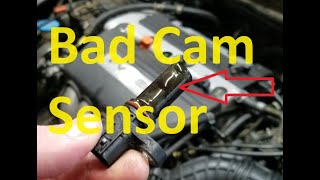
🎬 Watch: A breakdown of symptoms, causes, and troubleshooting steps.Technical definition: The official SAE/OBD-II definition is 'Camshaft Position Signal Output Circuit Low.' The PCM detects the voltage from the camshaft position sensor 'A' on Bank 1 dropped below its calibrated threshold for a specified duration. The 'Low' designation specifically points to an electrical fault, typically a short to ground.
Can I Drive With P2615?
Yes, But With Caution. You can drive, but it is a significant gamble. Expect stalling, poor acceleration, and rough idling. The engine shuts off unexpectedly in traffic, posing a major safety risk. Driving long-term with misfires dumps unburnt fuel into the exhaust, melting the catalytic converter—an $800 to $2,500 repair. Diagnose and repair promptly to avoid safety hazards and collateral damage.
Common Causes
- Faulty Camshaft Position (CMP) Sensor (Very Common) — The sensor itself is the most common culprit. Internal components fail due to constant heat cycles, vibration, or simple old age, causing it to produce a weak or non-existent signal.
- Damaged Wiring or Short to Ground (Common) — The signal wire from the sensor to the PCM rubs against a metal part of the engine, causing voltage to leak to ground. Frayed, cracked, or oil-soaked wires and brittle connectors disrupt the signal, making this a primary cause for a 'Circuit Low' code.
- Stretched Timing Chain or VVT Sludge (Common) — When a timing chain stretches or sludge blocks the variable valve timing (VVT) system, the correlation between the camshaft and crankshaft changes. The PCM detects this irregularity as an erratic signal before setting a dedicated timing code.
- Oil Leaking into Sensor or Harness (Less Common) — On certain engines (notably Mercedes-Benz and some GM models), oil leaks from the sensor's O-ring or a nearby camshaft adjuster solenoid. This oil seeps into the connector and travels down the wiring harness, causing a short circuit.
- Damaged Reluctor Wheel / Tone Ring (Less Common) — The sensor reads a notched ring on the camshaft. If this ring cracks, has broken teeth, or slips from its position, the sensor cannot generate a consistent signal.
- Poor PCM Power or Ground Connection (Rare) — The PCM requires a stable voltage and clean ground to operate. A corroded engine ground strap or a failing main relay causes voltage drops within the PCM, making it misinterpret a healthy sensor signal as being too low.
- Faulty Powertrain Control Module (PCM) (Rare) — The internal circuit within the PCM that processes the sensor's signal fails. Consider this only after exhaustively ruling out all sensor, wiring, and mechanical possibilities.
- Electromagnetic Interference (EMI) (Rare) — Improperly routing the sensor's wiring too close to high-voltage components like ignition coils or spark plug wires allows EMI to corrupt the low-voltage sensor signal, causing erratic readings.
Symptoms
- Check Engine Light is On — This is the most common and often first sign. The PCM illuminates the Malfunction Indicator Lamp (MIL) as soon as the fault is confirmed.
- Engine Stalling or Hard Starting — The engine is difficult to start, requiring long cranking times, or it stalls unexpectedly, especially at low speeds or when coming to a stop.
- Reduced Engine Power and Hesitation — The vehicle feels noticeably sluggish and stumbles when you press the accelerator. The PCM activates a 'limp mode' to prevent damage, severely restricting acceleration and engine RPMs.
- Worsened Fuel Economy — Inefficient engine timing increases fuel consumption, requiring more frequent trips to the gas station.
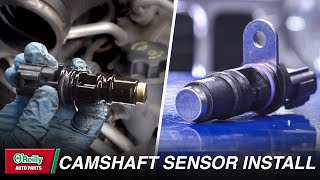
- Rough Idle and Engine Misfires (also visible on scanner) — The engine shakes, runs unevenly, or misfires at idle or during acceleration. This feels like a bucking or jerking sensation while driving. 🎬 See this guide on testing and fixing common sensor symptoms.
Diagnostic Flowchart
Tap your situation to follow the diagnostic path that matches what you're seeing on this code.
Common Fixes & Costs
- Replace Camshaft Position Sensor — Parts: $30-$110, Labor: $100-$285, ~0.8 hr book time (DIY)
- Repair Wiring Harness or Connector — Parts: $20-$80, Labor: $120-$250, ~1.5 hr book time (Intermediate)
- Replace Timing Chain and/or Tensioners — Parts: $400-$800, Labor: $1000-$2500, ~8.5 hr book time (Professional)
- Replace Damaged Camshaft/Reluctor Ring — Parts: $500-$900, Labor: $800-$1500, ~10 hr book time (Professional)
- Replace Powertrain Control Module (PCM) — Parts: $800-$1500, Labor: $200-$300, ~1.2 hr book time (Professional)
Used vs. New Parts: Buying Guide
When a used part is worth it: For a simple electronic component like a camshaft position sensor, buying used is generally not recommended. The low cost of a new, quality aftermarket or OEM part outweighs the risk and unknown history of a used one.
Donor-vehicle mileage cap: roughly under 20000 miles for the part to have meaningful remaining life.
Donor quality checklist:
- Verify the donor vehicle had low mileage and was not scrapped due to engine failure.
- Physically inspect the used sensor for cracks, corrosion, or oil contamination.
- Always match the part number exactly; small differences lead to incorrect signals.
Decision logic:
- If The cost of a new OEM or reputable aftermarket sensor is under $100 → Always buy new. The risk of installing a faulty used part and repeating the labor is not worth the minimal savings.
- If The vehicle is very old and budget is the absolute top priority → A used part from a reputable salvage yard with a short warranty (30-90 days) is a gamble but may be considered.
- If The part has a known high failure rate and is exposed to extreme heat/oil → Strongly favor a new OEM part, as they often have revised designs to improve longevity.
Warranty tradeoff: Used sensors typically have a 30-day exchange warranty at best, and often no warranty at all. New aftermarket sensors usually carry a 1-year to limited lifetime warranty. OEM parts carry a 12-month/12,000-mile warranty.
Worst-case if a used part fails: 150-300 if the used sensor is bad or fails quickly, requiring you to pay for labor a second time plus the cost of another part.
What Happens If You Wait — Timeline
- 0-1 month: Check Engine Light is on. You notice occasional hard starting or a brief, intermittent stumble at idle. The issue is often minor and not always perceptible. (MPG impact: 0-5%% · Added cost: $0-$50 in wasted fuel)
- 1-3 months: Symptoms become consistent. The engine frequently stalls at low speeds, idles roughly, and feels noticeably sluggish ('limp mode'). Hesitation when accelerating from a stop is common. (MPG impact: 5-15%% · Added cost: $50-$200 in wasted fuel)
- 3-6 months: The engine runs rich continuously. This overheats the catalytic converter, and its internal ceramic substrate begins to crack or melt. You smell raw fuel from the exhaust. (MPG impact: 15-25%% · Added cost: $800-$2,500 (catalytic converter replacement is now likely required))
- 6+ months: Worst-case scenario unfolds. If the code was an early sign of a failing timing chain, the chain skips a tooth or breaks. This causes pistons to collide with valves, resulting in catastrophic engine damage. (MPG impact: N/A (vehicle is inoperable)% · Added cost: $3,000-$8,000+ (engine rebuild or replacement))
Cost of Not Fixing It
- Immediate (0-1 month): Reduced fuel economy (5-15% drop), poor performance, and stalling risk. The vehicle is unsafe and unreliable. (Added cost: 50-150)
- Medium-Term (1-6 months): Continued misfires and rich fuel conditions overheat and damage the catalytic converter, a very expensive component. Increased strain on ignition components. (Added cost: 800-2500)
- Long-Term (6+ months): Catastrophic engine damage if the code is caused by a failing timing chain that eventually breaks. This leads to bent valves and piston damage, requiring a full engine replacement. (Added cost: 3000-8000+)
Diagnosis Steps
- Scan for Codes and Review Freeze Frame Data
Using an OBD-II scanner, confirm P2615 is active. Look for any other codes, especially P0340, P2614, or P0016, as they provide critical context. Review the freeze frame data to see the engine's speed, load, and temperature when the fault occurred.
Tools: OBD-II Scanner (Beginner) - Perform a Detailed Visual Inspection
Locate the Bank 1 camshaft position sensor. Meticulously inspect the sensor, its connector, and the visible wiring harness. Look for cracked wires, oil contamination, corrosion on connector pins, or any part of the harness rubbing against the engine.
Tools: Flashlight, Inspection Mirror (Beginner) - Test the Sensor's Circuit at the Connector
Turn the key to 'ON' (engine off). Disconnect the sensor and probe the harness-side connector with a multimeter. You should find a 5V reference wire, a ground wire (reading less than 0.1 Ohms resistance to chassis ground), and a signal wire. Missing reference voltage or a bad ground points to a wiring or PCM issue.
Tools: Multimeter, Vehicle-specific wiring diagram (Intermediate) - Check for a Short to Ground
Disconnect the sensor and the PCM connector. Set your multimeter to measure resistance (Ohms). Place one lead on the signal wire pin at the sensor connector and the other lead on a good chassis ground. A reading of low resistance (under 1,000 Ohms) indicates a short to ground in the harness. The reading should be Over-Limit (OL).
Tools: Multimeter, Vehicle-specific wiring diagram (Intermediate) - Monitor Live Data PIDs
Using an advanced scan tool, monitor the live data stream for PIDs related to the camshaft position sensor. While cranking or running, this value should toggle rapidly. If it is stuck low, shows 'No Data', or is erratic, it confirms a signal problem.
Tools: Advanced Scan Tool (Advanced) - Pro Tip: Perform a Harness 'Wiggle Test'
With the sensor and PCM connected and the engine running, use your scan tool to view live data or a multimeter to monitor signal voltage. Gently wiggle the wiring harness from the sensor to the PCM. If the signal drops out as you move the harness, you found an intermittent short or open.
Tools: Scan Tool or Multimeter (Intermediate) - Pro Tip: Analyze Sensor Waveform with an Oscilloscope
Back-probe the signal wire with an oscilloscope while the engine is running. A healthy Hall-effect sensor produces a clean, digital square wave switching between 0V and 5V. A low signal shows a wave with reduced amplitude (e.g., only reaching 2V). A short shows a flat line near 0V.
Tools: Oscilloscope (Advanced) - Inspect Mechanical Timing Components
If all electrical tests pass, the cause is mechanical. Inspect the timing chain/belt for slack or damage and check the reluctor ring on the camshaft for broken teeth or movement. This requires engine disassembly.
Tools: Basic hand tools, Engine timing tools (Advanced) - Test the Powertrain Control Module (PCM)
Perform this final step only when all other possibilities are eliminated. If the signal wire shows no short or open, and a known-good sensor still produces a fault, the PCM's internal driver circuit is faulty.
Tools: Advanced scan tool, Oscilloscope (Professional)
When This Code Triggers (Freeze-Frame Conditions)
- Engine Coolant Temp: 180-200°F (82-93°C) (Fully warmed up, during normal operation.)
- Engine RPM: 1500-3000 RPM (During steady cruise or light acceleration, not typically at idle.)
- Engine Load: 25-70% (The fault often appears when the engine is under a moderate load, such as climbing a slight incline or accelerating gently.)
- Vehicle Speed: 30-60 mph (48-97 km/h) (Commonly logged during city or highway driving rather than at a standstill.)
Related Codes
- P0340 — P0340 is a general code for 'Camshaft Position Sensor 'A' Circuit Malfunction.' P2615 is more specific, telling you the circuit voltage is 'Low.' If you have both, focus on diagnosing the 'Low' condition (like a short to ground).
- P2614 — This code means 'Camshaft Position Signal Output Circuit Open.' The PCM sees no signal at all (0 volts), as if a wire were cut. P2615 means a signal is present, but it's just too weak. A continuity test differentiates them.
- P2616 — This is the opposite of P2615, indicating the signal circuit voltage is too 'High.' This almost always points to an electrical short to a power source, whereas P2615 points to a short to ground.
- P0016 — This code means 'Crankshaft Position - Camshaft Position Correlation' error. Seeing P2615 alongside P0016 strongly indicates a mechanical problem like a stretched timing chain or slipped reluctor ring, rather than a simple sensor fault.
Climate & Environmental Factors
- Extreme Cold: Cold temperatures make wiring insulation brittle and prone to cracking, leading to shorts or open circuits. Moisture accumulates and freezes inside connectors, causing poor connections or short-circuiting.
- High Engine Bay Heat: Prolonged exposure to high heat is a primary cause of sensor failure and wiring degradation. Heat breaks down the plastic sensor housing and wire insulation over time, exposing wires and leading to shorts to ground.
- High Humidity / Moisture: Moisture from humidity or water ingress accelerates corrosion on connector pins and within the wiring harness. This corrosion increases resistance, weakening the sensor's signal and triggering a 'Circuit Low' code.
How to Talk to a Mechanic About This Code
Say this: "I have a check engine light with a P2615 code, and I'd like to schedule a diagnostic. I want to authorize one hour of diagnostic time to confirm the cause. Please test the camshaft position sensor circuit, including reference voltage, ground, and for a short on the signal wire, before recommending any part replacement."
This signals you understand that 'Circuit Low' requires electrical testing, not just blindly replacing the sensor. It sets clear expectations, authorizes a specific amount of diagnostic time to control costs, and prevents a shop from simply swapping parts and hoping for the best.
Avoid saying:
- 'My car is stalling, can you fix it?'
- 'My check engine light is on, just replace the camshaft sensor.'
- 'Just do whatever it takes to fix it.'
Questions to ask before authorizing the repair:
- What were the voltage and resistance readings on the sensor circuit?
- Did you find a short to ground, an open, or a faulty sensor?
- If it's a wiring issue, can you show me the damaged section?
- If it's a mechanical timing issue, what was the measured chain deviation or what did you see during the inspection?
- What is the warranty on this specific repair, covering both parts and labor?
Where to Take It: Dealer vs Independent vs Chain
- Dealer:
Recommended only if a known TSB, warranty, or software issue applies. Otherwise, it's an expensive option for this diagnosis.
Best for: Vehicles still under powertrain warranty., Known manufacturer-specific issues like the VW/Audi timing chain warranty extension or the Nissan Versa software glitch.
Downsides: Typically highest labor rate and part costs., Dealerships are less willing to perform targeted wiring repairs, often preferring to replace the entire harness. (Typical cost: +50% vs. baseline) - Independent Shop:
Best fit for most P2615 scenarios. A good independent diagnostician efficiently tests the circuit, sensor, and mechanicals without defaulting to the most expensive fix.
Best for: Out-of-warranty vehicles where the cause is unknown., Electrical diagnosis and wiring repairs., Major mechanical work like timing chain replacement for a reasonable price.
Downsides: Quality and expertise vary greatly. Look for shops with ASE-certified technicians and good reviews on electrical diagnostics. (Typical cost: +0% vs. baseline) - Chain Shop:
High risk. Acceptable only if you've already done the diagnosis and just need a simple sensor swapped. AVOID for initial diagnosis of a P2615 code.
Best for: If you are 100% certain the sensor itself is the only fault and it's an easy-to-access part.
Downsides: Technician skill is highly variable., Chain shops often lack the advanced diagnostic tools (oscilloscope) or experience for complex electrical diagnosis., High pressure to upsell leads to unnecessary part replacement. (Typical cost: -10% vs. baseline)
When to Walk Away From the Repair
If the estimated repair cost exceeds 40% of the car's private-party value (e.g., from Kelley Blue Book), you should pause and seriously consider alternatives.
- Car worth $5000, fix is $250: Fix it. This is a simple sensor replacement and is a very small fraction of the car's value.
- Car worth $4000, fix is $2200: Walk away. The repair (likely a timing chain) costs more than 50% of the car's value. This is a classic 'mechanic's special' situation.
- Car worth $8000, fix is $1200: Borderline. If the repair is a PCM replacement, get a second opinion. If the rest of the car is in excellent condition, it may be worth fixing.
What Scan Tool You Need for This Code
Minimum: A scanner that can read and clear codes, and most importantly, display live data PIDs (Parameter IDs) for the camshaft position sensor.
A basic $20 code reader only shows the P2615 code. It cannot display live sensor voltage or signal status, which is essential to determine if the problem is active. Without live data, you are flying blind.
Budget: BlueDriver Pro Scan Tool (~$100) — Connects to your smartphone and provides live data graphing for the cam sensor signal. You watch the voltage in real-time to see if it drops out, which is excellent for diagnosing intermittent issues.
Mid-range: Foxwell NT510 Elite (~$180) — A handheld unit that provides deep, OE-level diagnostics for a specific car brand. It offers advanced live data graphing and performs bidirectional controls or special functions relevant to the engine control module.
Professional: Autel MaxiCOM MK808S (~$350) — A full-featured diagnostic tablet. It provides robust live data, graphing, and includes special functions like 'Crankshaft Position Sensor Learn' which may be required after certain repairs. It also offers bidirectional controls to test actuators directly from the scanner.
Rent vs buy: AutoZone's 'Loan-A-Tool' program allows you to borrow an OBD-II scanner for free with a refundable deposit. This is a great option for a one-time diagnosis. Buy a scanner only if you plan to do your own car repairs more than once a year.
How to Clear the Code After You Fix It
- Reconnect the battery if it was disconnected for the repair.
- Use an OBD-II scan tool to clear the P2615 code and any other related codes.
- Perform a complete drive cycle to allow the vehicle's readiness monitors to run.
Drive cycle (~20 minutes): A typical drive cycle includes a cold start, followed by a few minutes of idling. Then, engage in mixed city driving (stop-and-go) for about 10 minutes. Finally, drive at a steady highway speed (55-65 mph) for 5-10 minutes. Allow the vehicle to cool down completely and repeat if necessary.
Readiness monitors affected: Catalyst (CAT) Monitor, Evaporative (EVAP) System Monitor, Oxygen (O2) Sensor Monitor
Before emissions retest: drive at least 50 miles to fully set monitors.
Watch out for:
- Simply disconnecting the battery clears the code, but it also resets all readiness monitors to 'Not Ready', guaranteeing an emissions test failure.
- The code returns within a few drive cycles if the underlying mechanical or electrical fault has not been properly fixed.
- Some vehicles require very specific conditions (like fuel level between 20-80% for the EVAP monitor) to complete their drive cycles.
Will This Fail Emissions / State Inspection?
Yes — this code typically fails an OBD-II emissions inspection.
- California: An active Check Engine Light results in an automatic failure of the smog check. All readiness monitors must be 'Ready' for 1996-1999 vehicles. For 2000+ vehicles, one monitor (usually EVAP) can be 'Not Ready'.
- New York: The New York Vehicle Inspection Program (NYVIP) includes an OBD-II scan. An illuminated Check Engine Light for a code like P2615 is an automatic failure.
- Texas: In the 17 counties requiring emissions testing, a vehicle with an active P2615 code and illuminated Check Engine Light fails the OBD portion of the inspection.
Most Commonly Affected Vehicles
- Nissan Versa (Manual Transmission) (2022-2024) — A widely reported issue where, after stalling the engine, it restarts in a severe low-power mode. It stores a pending P2615 code. A full restart cycle (shut off, open/close door, restart) temporarily clears the condition.
- Mercedes-Benz Various (C-Class, E-Class, ML-Class) (2010-2018) — Highly prone to oil leaks from camshaft adjuster magnets and the sensors themselves. Oil wicks through the wiring harness, causing shorts. The fix requires replacing the leaking component and installing a pigtail harness.
- Chevrolet Cruze, Sonic, Aveo (2009-2016) — Common on models with 1.4L and 1.8L Ecotec engines. The cause is often the sensor itself or a wiring issue near the connector. Sensor replacement is relatively inexpensive.
- Volkswagen / Audi Jetta, Golf, Passat, A4 (TSI Engines) (2008-2015) — P2615 on these engines prompts an immediate check of the timing chain tensioner and chain stretch. The code is an early warning of impending timing system failure.
- BMW Various (3-Series, 5-Series, X3, X5) (2006-2013) — On many N52/N54 engines, this code points to a failed sensor, but the wiring harness in the engine bay becomes brittle from heat and age, leading to shorts or breaks in the circuit.
- Hyundai / Kia Various (Elantra, Sonata, Optima, Forte) (2011-2016) — P2615 occurs on vehicles with Gamma and Theta II engines, often related to the sensor itself failing or intermittent wiring harness problems.
- Ford Taurus, Explorer, Escort (2000-2010) — These Ford models are commonly associated with camshaft sensor-related trouble codes. Diagnosis is straightforward and often leads to a failed sensor or a corroded connector.
- Subaru Legacy, Impreza, Forester (1995-2005) — Older models are known for engine wiring harnesses that become brittle with age. The wiring for the camshaft and crankshaft sensors breaks internally, often right at the connector, leading to sudden stalling.
- Renault Fluence, Megane (2004-2015) — These models are frequently cited in European markets as having issues with the camshaft position sensor circuit that trigger a P2615 code.
Manufacturer-Specific Notes
- Nissan: On 2022-2024 manual transmission Versa models, stalling the engine triggers a software glitch that puts the car in a severe low-power limp mode and sets a P2615 code. A full vehicle restart (key off, door opened and closed) temporarily restores power.
- Mercedes-Benz: A very common failure is oil leaking from the camshaft adjuster solenoids ('cam magnets'). The oil travels down the wiring harness via capillary action and contaminates the cam sensor connector, causing shorts. The fix involves replacing the leaking solenoid and installing isolating 'pigtail' harnesses.
- Volkswagen/Audi: On 2.0T and 1.4T TSI engines, treat P2615 with high suspicion for a mechanical timing issue. These engines are known for premature timing chain stretch and tensioner failure. A class action settlement led to an extended warranty for these components on many 2008-2015 models.
- Subaru: On older (1995-2005) models, the engine wiring harness becomes extremely brittle from heat and age. The wiring for the camshaft and crankshaft sensors cracks and breaks internally, often right at the connector, leading to sudden engine stalling.
Real Owner Stories
2023 Nissan Versa (Manual) at 12K miles
After stalling the engine during driver training, the car entered a severe low-power 'limp mode' but did not illuminate the Check Engine Light. The issue was reproducible after every stall.
Outcome: The owner discovered a specific reset procedure: turn the car off, open and close the driver's door, then restart. This temporarily restores full power. It was identified as a software glitch related to the stall event.
Lesson: On specific models like the 2022-2024 manual Nissan Versa, P2615 is a software issue, not a hardware failure. Report the issue to the NHTSA as it is a known problem without a formal recall.
2013 VW GTI (2.0T TSI) at 115K miles
Check Engine Light came on with code P2615. The owner, assuming a simple sensor failure, replaced the camshaft position sensor.
Outcome: A second diagnosis at a specialist shop revealed codes P2615 and P0016 (Crank/Cam Correlation). Physical inspection showed the timing chain stretched significantly, causing slack to slap against the timing cover. The total repair for a new timing chain, tensioner, and guides cost over $2,000.
Lesson: On engines with known timing chain issues, P2615 is an early warning of a major mechanical failure. Always investigate timing correlation codes (P0016) before assuming a bad sensor.
2012 Chevy Cruze (1.8L) at 95K miles
Car was hard to start, idled roughly, and occasionally stalled at stoplights. The Check Engine Light was on for P2615.
Outcome: The owner replaced the camshaft position sensor with a new ACDelco part (approx. $40). The job took 20 minutes using a single 10mm socket. After clearing the code, all symptoms resolved and the code did not return.
Lesson: Test before replacing parts. A few minutes with a multimeter confirmed the wiring was good, making the sensor replacement a confident and successful DIY repair.
How to Prevent This Code From Triggering
- Perform regular oil changes with high-quality synthetic oil (Per manufacturer's schedule (e.g., 5,000-7,500 miles)) — Clean oil is essential for lubricating the timing chain and VVT system. It prevents engine sludge that clogs oil passages, causes tensioner failure, and leads to chain stretch.
- Protect the engine wiring harness (During any repair near the engine) — Engine bay heat makes wire insulation brittle and prone to cracking, leading to shorts. Wrap vulnerable sections near heat sources with high-temperature cloth tape or a reflective heat sleeve.
- Inspect and clean engine ground connections (Every 30,000 miles or during battery replacement) — The PCM and its sensors rely on a clean ground path for accurate voltage readings. A corroded main engine ground strap creates a voltage offset, making the PCM misinterpret a healthy sensor signal as 'low'.
Frequently Asked Questions
What is the most common mistake when diagnosing P2615?
The biggest mistake is replacing the camshaft position sensor without testing the circuit. The code name is 'Circuit Low,' which means the problem is often the wiring, the connector, or the PCM. A five-minute test with a multimeter confirms if the sensor is getting proper power and ground, preventing you from wasting money.
Can a bad oil level or pressure cause P2615?
Yes, indirectly. On engines with Variable Valve Timing (VVT), low oil pressure or dirty oil prevents the VVT system from adjusting the cam timing correctly. This causes the camshaft's position to be erratic, which the PCM interprets as a sensor signal fault, triggering P2615.
Can a bad battery cause a P2615 code?
It is rarely the direct cause. While a failing battery triggers random electrical codes due to low system voltage, it does not typically isolate itself to the camshaft sensor circuit. Always ensure your battery and alternator are healthy before diving into complex electrical diagnostics.
What is the difference between a camshaft and crankshaft sensor?
The crankshaft position sensor (CKP) tracks the rotational speed and position of the engine's crankshaft, which is the primary input for ignition timing. The camshaft position sensor (CMP) tracks the position of the camshaft(s). The PCM compares both signals to determine which cylinder is on its compression stroke, essential for sequential fuel injection.
How much does it cost to fix P2615?
A simple sensor replacement costs between $130 and $395 for parts and labor. A wiring repair runs $150 to $300, depending on the damage location. If the root cause is a stretched timing chain, the repair easily exceeds $1,800.
Is there a recall for code P2615?
There is no universal recall for P2615, but specific models have known issues, like the 2022-2024 Nissan Versa software glitch. VW/Audi also had a major class-action settlement extending the warranty for timing chain issues that trigger this code. Contact your dealership to check if a Technical Service Bulletin (TSB) or warranty extension applies to your VIN.
What is 'Bank 1'?
On engines with a 'V' configuration (like a V6 or V8), 'Bank 1' is the side of the engine that contains the #1 cylinder. On an inline engine (like a 4-cylinder or straight-6), there is only one bank, which is always referred to as Bank 1.
Key Takeaways
- Code P2615 indicates the Bank 1 camshaft position sensor signal dropped below the 5-volt reference threshold, disrupting engine timing and fuel injection.
- Expect immediate drivability issues, including a 5-15% drop in fuel economy, sudden stalling at low speeds, and the vehicle entering a restricted 'limp mode'.
- A failed $50-$100 sensor or a wiring short to ground causes 80% of P2615 codes, though it occasionally warns of a stretched timing chain.
- Never replace the sensor without testing the circuit first; a 5-minute multimeter check for a short to ground saves you from buying unnecessary parts.
- Stop driving within 50 miles to prevent unburnt fuel from melting the catalytic converter, which turns a $150 sensor repair into a $2,500 exhaust replacement.
Helpful Videos
Shop the Parts Behind P2615
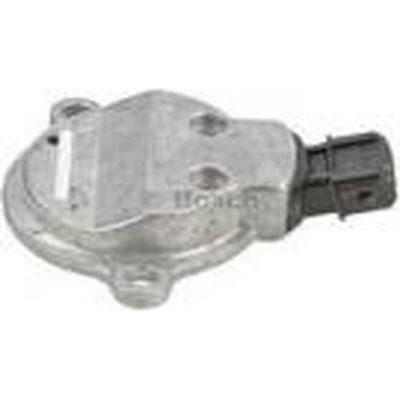
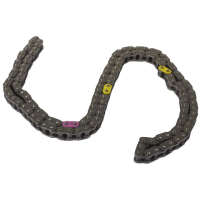
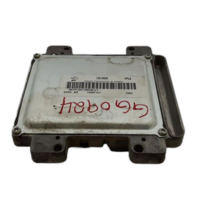
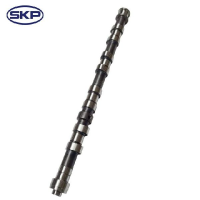
Below are the parts most often responsible for code P2615, ranked by how frequently each one is the actual culprit (per the diagnosis above). Tap any to see what we have for your vehicle.

The information in this article is provided for general reference and educational purposes only. Vehicle specifications, procedures, and part compatibility can vary by production date, trim level, and region. Always consult your vehicle's factory service manual and verify part numbers before purchasing or performing repairs. Safety-critical components such as airbags, seat belts, and braking systems should be installed by a qualified professional.
- 🧭 Diagnostic Flowchart
- 🎬 Helpful Videos
- 🛍️ Shop This Part
- What Does P2615 Mean?
- Can I Drive With P2615?
- Common Causes
- Symptoms
- Common Fixes & Costs
- Used vs. New Parts: Buying Guide
- What Happens If You Wait — Timeline
- Cost of Not Fixing It
- Diagnosis Steps
- When This Code Triggers (Freeze-Frame Conditions)
- Related Codes
- Climate & Environmental Factors
- How to Talk to a Mechanic About This Code
- Where to Take It: Dealer vs Independent vs Chain
- When to Walk Away From the Repair
- What Scan Tool You Need for This Code
- How to Clear the Code After You Fix It
- Will This Fail Emissions / State Inspection?
- Most Commonly Affected Vehicles
- Manufacturer-Specific Notes
- Real Owner Stories
- 2023 Nissan Versa (Manual) at 12K miles
- 2013 VW GTI (2.0T TSI) at 115K miles
- 2012 Chevy Cruze (1.8L) at 95K miles
- How to Prevent This Code From Triggering
- Frequently Asked Questions
- What is the most common mistake when diagnosing P2615?
- Can a bad oil level or pressure cause P2615?
- Can a bad battery cause a P2615 code?
- What is the difference between a camshaft and crankshaft sensor?
- How much does it cost to fix P2615?
- Is there a recall for code P2615?
- What is 'Bank 1'?
- Key Takeaways
- 🎟️ Get 5% Off