

OBD-II Code P2632: Fuel Pump 'B' Control Circuit/Open
The Ultimate Guide to Meaning, Diagnosis, and Repair
- P2632 indicates a complete electrical break (0 volts) in the secondary fuel pump's control circuit, disabling the pump.
- Do not drive the vehicle; the disabled secondary pump causes unpredictable engine stalling at highway speeds (40-65 mph).
- Inspect the frame-mounted Fuel Pump Control Module (FPCM) first, as galvanic corrosion destroys these units on 2004-2020 Ford and GM trucks.
- Perform a voltage drop test on the ground circuit before replacing parts; readings above 0.2 volts confirm a bad ground, not a failed pump.
- Replacing a fuel pump relay costs under $60 and takes 5 minutes, making it the smartest first diagnostic step.
What Does P2632 Mean?
P2632 signifies the Powertrain Control Module (PCM) detected an electrical break ('open') in the secondary ('B') fuel pump's control circuit. Trucks, SUVs, and high-performance cars use a secondary fuel pump to transfer fuel between dual tanks or supplement the primary pump during heavy acceleration. This code triggers when the PCM commands the pump on but receives no electrical response, confirming a loss of circuit continuity.
Technical definition: The SAE/OBD-II definition for P2632 is 'Fuel Pump 'B' Control Circuit/Open'. The PCM or Fuel Pump Control Module (FPCM) sets this Diagnostic Trouble Code (DTC) when the commanded state of the fuel pump driver contradicts the actual control circuit state. When the PCM energizes the fuel pump 'B' relay, it monitors circuit voltage. If it expects battery voltage (12V) but reads 0 volts, it registers an open circuit and stores the code.
Can I Drive With P2632?
No — Do Not Drive. Do not drive. An open circuit in the secondary fuel pump causes the engine to stall unpredictably, creating a severe safety risk in traffic. While driving will not directly damage the catalytic converter, the unpredictable no-start and stalling conditions make the vehicle unsafe. The primary risk is causing an accident or being stranded.
Common Causes
- Damaged Wiring or Corroded Connectors (Very Common) — The undercarriage wiring harness is exposed to road salt and debris, causing wires to break or connector pins to corrode. This physical break is the most frequent cause of an open circuit.
- Failed Fuel Pump Control Module (FPCM) (Very Common) — This module controls pump voltage and speed. Frame-mounted units frequently fail from galvanic corrosion, heat, and vibration, causing an internal open circuit.
- Faulty Fuel Pump 'B' Relay (Common) — This electro-mechanical switch powers the pump. The internal coil breaks or contacts wear out over time, preventing circuit completion.
- Bad Ground Connection (Common) — The circuit requires a solid ground. A corroded or loose ground wire at the FPCM or chassis interrupts the path, triggering the open circuit code.
- Failed Fuel Pump 'B' (Less Common) — The secondary pump's internal electric motor burns out, creating an internal open. This frequently happens if the vehicle runs out of fuel, as fuel cools the motor.
- Blown Fuse (Less Common) — A blown fuel pump 'B' fuse causes an immediate open circuit. Fuses blow due to underlying shorts or a failing pump drawing excessive current.
- Inertia Switch Tripped (If Equipped) (Rare) — Some vehicles feature an inertia switch that cuts pump power after a collision or severe pothole impact, opening the circuit.
- Faulty Powertrain Control Module (PCM) (Rare) — The PCM's internal driver circuit can burn out. Consider this only after exhausting all other diagnostic steps.
Symptoms
- Engine Stalls Unexpectedly — The engine starts normally but stalls without warning when the secondary pump is commanded on under load.
- Engine Won't Start or is Hard to Start — The engine cranks excessively or fails to start if the 'B' pump is required for initial fuel pressure or transfer.
- Reduced Engine Power and Hesitation — The vehicle feels sluggish or lurches during acceleration because the engine lacks the supplemental fuel the 'B' pump provides.
- No Fuel Pump Priming Sound — The faint humming sound from the secondary pump area is absent when turning the key to the 'On' position.
- Fuel Gauge Inaccuracy or Stuck on Empty — If the 'B' pump transfers fuel between dual tanks, failure traps fuel in the auxiliary tank, causing inaccurate gauge readings.
- Check Engine Light is On (also visible on scanner) — The Malfunction Indicator Lamp (MIL) illuminates immediately upon fault detection.
Diagnostic Flowchart
Tap your situation to follow the diagnostic path that matches what you're seeing on this code.
Common Fixes & Costs
- Replacing the Fuel Pump Control Module (FPCM/FPDM)
— Parts: $150-$500, Labor: $100-$200 (plus potential programming fee), ~1 hr book time
(Intermediate)
: OEM 5L8Z-9D370-A (Alt: Dorman 590-001 (OE FIX with standoffs))
: OEM 13506835 (2007-2013), 13554821 (2021+) (Alt: Dorman 601-011) - Repairing Damaged Wiring or Connectors — Parts: $10-$75, Labor: $150-$400, ~1.5 hr book time (Intermediate)
- Replacing the Fuel Pump 'B' Relay — Parts: $15-$60, Labor: $25-$75, ~0.2 hr book time (DIY)
- Replacing the Fuel Pump 'B' — Parts: $200-$700, Labor: $300-$500, ~3 hr book time (Professional)
- Replacing the Powertrain Control Module (PCM) — Parts: $800-$1500, Labor: $200-$300 (for installation and programming), ~1.5 hr book time (Professional)
DIY vs Professional
- Replacing Fuse / Relay 🟢 Beginner
Tools: Fuse puller or pliers - Replacing Ford FPDM 🟢 Beginner
Tools: Socket set (typically 8mm or 10mm), safety glasses. - Replacing GM FPCM 🟢 Beginner
Tools: Socket set, professional scan tool with programming capabilities. - Wiring Repair 🟢 Beginner
Tools: Multimeter, wire strippers, crimpers, heat shrink, soldering iron. - Replacing BMW EKPS 🟢 Beginner
Tools: Trim removal tools, socket set, BMW-specific diagnostic software (ISTA/P). - Replacing Fuel Pump 🟢 Beginner
Tools: Fuel tank removal tools, fuel line disconnect tools, lock ring wrench, fire extinguisher.
Used vs. New Parts: Buying Guide
When a used part is worth it: A used Fuel Pump Control Module (FPCM/FPDM) is a budget-friendly option for older vehicles if the new OEM part is expensive. It makes the most sense for plug-and-play modules where no programming is needed.
Donor-vehicle mileage cap: roughly under 100000 miles for the part to have meaningful remaining life.
Donor quality checklist:
- Verify the part number matches exactly. Superseded numbers may not work.
- Avoid parts from 'Rust Belt' donors, as corrosion is a primary failure mode for frame-mounted modules.
- Ask the seller about the donor vehicle's history; avoid parts from flood or collision-damaged cars.
- For GM modules, confirm if a used part can be reprogrammed to your VIN, as many are locked after initial programming.
Decision logic:
- If The part is a Ford FPDM and the new aftermarket 'OE Fix' version with standoffs is available → buy the new aftermarket part. The improved design prevents the original corrosion failure mode.
- If The part is for a GM or BMW and requires programming → buy new. The cost and hassle of trying to program a used module outweigh the savings.
- If The vehicle is over 150K miles and the part is plug-and-play → a used part from a low-mileage, southern donor is a reasonable gamble to save money.
Warranty tradeoff: Used parts from a salvage yard typically have a 30-90 day warranty. New aftermarket parts carry a 1-year to limited lifetime warranty. New OEM parts have a 1-2 year warranty.
Worst-case if a used part fails: $200-$500 if a used module fails. This includes the cost of repeat diagnostics, labor, and sourcing another part.
What Happens If You Wait — Timeline
- Immediate: Code P2632 is stored and the Check Engine Light turns on. The secondary fuel pump ('B') is inoperative. Symptoms may be unnoticeable during light driving. (MPG impact: 0%% · Added cost: $0)
- First high-demand event (e.g., hard acceleration, towing): The engine hesitates, stumbles, or stalls completely when the PCM commands the 'B' pump and it fails to activate. This is a major safety hazard. (MPG impact: 0-5%% · Added cost: $100-$250 (Cost of a tow if the vehicle stalls and won't restart).)
- 1-4 weeks of continued driving: Stalling and hesitation become frequent. The vehicle is dangerously unreliable. Prolonged lean conditions stress engine components. (MPG impact: 5-10%% · Added cost: $250-$500 (Cost of a tow plus diagnostic fees from being stranded).)
- 1+ month: The vehicle is unsafe to drive. The root cause degrades further, leading to a permanent no-start condition even under light load. (MPG impact: N/A% · Added cost: The primary cost is the extremely high risk of an accident caused by stalling in traffic.)
Cost of Not Fixing It
- Immediate: Vehicle may not start or stalls at any moment, including in heavy traffic or at high speeds. This is a major safety hazard. (Added cost: Cost of a tow ($100-$250) or potential accident.)
- 0-1 Month: Continued attempts to start or drive with an intermittent fault strains the primary ('A') fuel pump, battery, and starter. (Added cost: Negligible to minor, but increases risk of being stranded.)
- 1-6 Months: The vehicle is unreliable and unsafe. The risk of a dangerous stalling incident remains the primary cost. (Added cost: N/A - Vehicle is not safely drivable.)
Diagnosis Steps
- Scan for Codes and Review Freeze Frame Data
Use an OBD-II scanner to confirm P2632 and note any companion codes. Freeze frame data shows the engine's operating conditions (speed, load, temperature) when the fault occurred, providing context for the failure.
Tools: OBD-II Scanner (Beginner) - Inspect Fuses and Swap the Relay
Locate the fuse and relay for fuel pump 'B'. Visually inspect the fuse. Swap the fuel pump relay with an identical one from a non-critical circuit (like the horn). If the vehicle starts and runs normally, the relay failed.
Tools: Owner's Manual, Fuse Puller (Beginner) - Use a Scan Tool for Bi-Directional Control
Use an advanced scan tool to command the fuel pump 'B' circuit ON and OFF. Listen for the relay clicking or the pump humming. Monitor 'Fuel Pump Monitor' live data; if commanded ON but the monitor shows 0V, you have confirmed the open circuit.
Tools: Advanced Bi-Directional OBD-II Scanner (Advanced) - Perform a Detailed Visual Inspection
Inspect the wiring harness leading to the Fuel Pump Control Module (FPCM) and the fuel pump. Look for chafed, melted, or broken wires. Check connectors for green corrosion or backed-out pins. Ensure all ground wires are clean and tight.
Tools: Flashlight, Inspection Mirror, Safety Glasses (Intermediate) - Pro Tip: Perform a Voltage Drop Test on the Ground Circuit
Connect the positive lead of a digital multimeter (DMM) to the ground terminal at the fuel pump/FPCM connector and the negative lead to the battery's negative terminal. With the pump commanded ON, the reading must be less than 0.2 volts (200mV). A higher reading indicates excessive resistance in the ground path.
Tools: Digital Multimeter (DMM), Vehicle-Specific Wiring Diagram (Advanced) - Pro Tip: Perform a Voltage Drop Test on the Power Circuit
Connect the DMM's negative lead to the power feed wire at the fuel pump/FPCM connector and the positive lead to the battery's positive terminal. With the pump commanded ON, the reading must be less than 0.2 volts (200mV). A higher reading points to corrosion in the wiring or fuse block.
Tools: Digital Multimeter (DMM), Back-Probe Kit (Advanced) - Test the Control Circuit Signal
Identify the control wire from the PCM/FPCM to the relay. With the key on, check for the presence of the command signal. For an open circuit code, you will measure 0 Volts when voltage is expected. No signal points towards a faulty PCM or a broken wire leading to it.
Tools: Multimeter, Vehicle-Specific Wiring Diagram (Advanced) - Directly Test the Fuel Pump Motor
If all wiring, relays, and modules test good, disconnect the pump and use fused jumper wires to apply battery voltage and ground directly to the pump's terminals. If the pump does not run, it has failed internally.
Tools: Fused Jumper Wires, Power Probe (Professional)
When This Code Triggers (Freeze-Frame Conditions)
- Engine Coolant Temp: 180-210°F (The engine is fully warmed up. The PCM rarely commands the secondary pump during a cold start.)
- RPM: 1500-3000 RPM (The code sets during steady-state cruising or acceleration when the PCM calls for the secondary pump to assist.)
- Engine Load: 30-70% (A moderate engine load, such as climbing an incline or merging, creates the fuel demand that triggers the 'B' pump.)
- Vehicle Speed: 40-65 mph (Highway driving conditions frequently meet the RPM and load criteria required to activate the secondary pump.)
Related Codes
- P2633 — Means 'Fuel Pump 'B' Control Circuit Low', indicating a short to ground. P2633 blows a fuse, whereas P2632 (open circuit) typically does not.
- P2634 — Means 'Fuel Pump 'B' Control Circuit High', indicating a short to power. With P2634, the circuit shows constant battery voltage. With P2632, it shows 0 volts.
- P0087 — 'Fuel Rail/System Pressure - Too Low'. P2632 is the electrical cause, and P0087 is the mechanical symptom. Always fix the electrical code (P2632) first.
- P2635 — Means 'Fuel Pump 'A' Control Circuit/Open'. It is the identical fault to P2632, but applies to the primary ('A') fuel pump.
Climate & Environmental Factors
- Road Salt and Humidity (Rust Belt): Road salt and moisture get trapped between the aluminum module housing and the steel frame, causing severe galvanic corrosion that cracks the module's housing and destroys the circuit board.
- Extreme Cold: Cold temperatures make old plastic wiring insulation brittle and susceptible to cracking. Trapped water freezes and expands, breaking connector seals.
How to Talk to a Mechanic About This Code
Say this: "I have a P2632 code, and I'd like to schedule a diagnostic. The code points to an open in the secondary fuel pump circuit. Can you please start by inspecting the fuel pump control module, its wiring, and the relay before assuming the fuel pump itself needs replacement?"
This signals you understand P2632 is an electrical code. It directs the technician to diagnose the most common failure points (wiring, relay, module) first, preventing them from jumping to a costly fuel pump replacement.
Avoid saying:
- 'My car won't start, just fix it.'
- 'My check engine light is on, can you look at it?' (too vague, invites upselling)
- 'I think I need a new fuel pump.' (Don't suggest a specific repair; describe the symptoms and code).
Questions to ask before authorizing the repair:
- Did you test the fuel pump relay and check the fuse?
- What were the results of the visual inspection of the Fuel Pump Control Module and its wiring harness?
- Did you perform a voltage and ground test on the control circuit? What were the readings?
- If the control module needs to be replaced, does the new part require programming, and is that cost included in your estimate?
- Are you certain the fuel pump motor itself has failed? How was this confirmed?
Where to Take It: Dealer vs Independent vs Chain
- Dealer:
Best for: Vehicles under warranty., Complex module programming and coding required for many GM and BMW repairs., Access to the very latest Technical Service Bulletins (TSBs).
Downsides: Highest labor rates, often 1.5-2x more than independent shops., Defaults to replacing an entire assembly rather than repairing a smaller component. (Typical cost: +50% vs. baseline) - Independent Shop:
Best fit for most vehicles, especially Fords. For GM or BMW, first ask if they have the capability to program a new Fuel Pump Control Module. If not, the dealer is your next best choice.
Best for: Out-of-warranty vehicles, especially common models like Ford trucks where the fix is well-known., Building a long-term relationship with a mechanic., Better pricing on labor and parts.
Downsides: Quality and diagnostic capabilities vary widely., Lacks the expensive, manufacturer-specific software needed for programming newer GM or European modules. (Typical cost: +0% vs. baseline) - Chain Shop:
AVOID for diagnosing P2632. They lack the tools or expertise to correctly identify an open circuit or program a required module.
Best for: Simple, routine maintenance like oil changes and tire rotations.
Downsides: Technician skill varies dramatically., Lacks the advanced diagnostic tools and training for complex electrical codes like P2632., High pressure to upsell leads to misdiagnosis (e.g., selling a fuel pump when only a relay is needed). (Typical cost: -10% vs. baseline)
When to Walk Away From the Repair
If the total estimated repair cost for P2632 exceeds 40-50% of your vehicle's current private-party value, it's time to seriously consider selling or trading it in.
- Car worth $5000, fix is $2200: Walk away. The repair cost is too high relative to the vehicle's value. Consider selling as a 'mechanic special' or scrapping.
- Car worth $15000, fix is $800: Fix it. This repair cost is well within a reasonable limit to restore a more valuable vehicle to safe, reliable operation.
- Car worth $3000, fix is $1200: Borderline. Get a second opinion. If the fix is a guaranteed module or wiring repair, it might be worth it. If it's a guess, it's likely not.
What Scan Tool You Need for This Code
Minimum: A code reader that displays live data PIDs for fuel pump command and monitor voltage.
A $20 reader just gives you the code. To diagnose P2632 effectively, you need to command the pump on and see if voltage is present at the module and pump. This requires bidirectional control, which basic readers lack.
Budget: Ancel, Topdon, or basic Innova models (~$70) — Reads the code and shows basic freeze frame data. Not capable of bidirectional control, so its diagnostic use for this code is very limited.
Mid-range: Autel MaxiCOM MK808S or Foxwell NT510/NT530 (~$380) — Provides full bidirectional control to command the fuel pump 'B' on and off. This is the most critical feature for diagnosing P2632, allowing you to test the entire circuit from the driver's seat.
Professional: Launch X431 series or Autel MaxiSys MS906 (~$900-1500) — Offers full bidirectional control plus advanced functions like module programming and coding. This is necessary if you need to replace and program a Fuel Pump Control Module on GM or BMW vehicles.
Rent vs buy: Rent a basic scanner from a parts store to confirm the code for free, but it won't be enough to diagnose it. For a P2632, you need bidirectional control, so buying a mid-range tool like an Autel MK808S is a smart investment.
How to Clear the Code After You Fix It
- Reconnect the battery if it was disconnected for the repair.
- Use a quality OBD-II scan tool to erase the P2632 trouble code.
- Perform a complete drive cycle to allow the onboard diagnostic monitors to run and become 'Ready'.
Drive cycle (~30 minutes): A general drive cycle includes: 1) A cold start (vehicle sits for 8+ hours). 2) 2-3 minutes of idling. 3) 10-15 minutes of mixed city/suburban driving with smooth acceleration and stops. 4) 5-10 minutes of steady highway driving between 55-65 mph. 5) A cool-down period.
Readiness monitors affected: Catalyst Monitor, Evaporative System (EVAP) Monitor, Oxygen (O2) Sensor Monitor
Before emissions retest: drive at least 100 miles to fully set monitors.
Watch out for:
- Disconnecting the battery clears the code but erases all readiness monitors, guaranteeing an emissions test failure until a full drive cycle is completed.
- The code returns immediately if the underlying electrical open circuit was not properly repaired.
- The EVAP monitor requires specific fuel levels (between 1/4 and 3/4 tank) and ambient temperatures to run.
Will This Fail Emissions / State Inspection?
Yes — this code typically fails an OBD-II emissions inspection.
- California: An illuminated Check Engine Light is an automatic failure. After repair, a full drive cycle must be completed to set the readiness monitors before a re-test is possible.
- New York: A P2632 code and illuminated Check Engine Light causes an automatic failure. For 2001 and newer vehicles, only one readiness monitor is allowed to be 'Not Ready' to pass.
- Texas: In the 17 counties requiring emissions testing, an illuminated Check Engine Light is an automatic fail. After repairs, you can have only one monitor 'Not Ready' to pass.
Most Commonly Affected Vehicles
- Chevrolet Silverado 3500 HD (2011-2013) — Covered by TSB PIT5212B for 6.6L diesel models with dual fuel tanks. The code relates to the transfer pump circuit and the frame-mounted Fuel Pump Control Module (FPCM).
- GMC Sierra (All models) (2007-2016) — The FPCM is located on the frame cross-member above the spare tire, making it highly susceptible to corrosion. Replacement requires VIN programming.
- Ford F-Series Trucks (F-150, Super Duty) (2004-2014) — On 2004-2008 models, the FPDM cracks due to galvanic corrosion. On 2009-2014 models, check TSB 15-0137 for a melted fuel pump fuse (#27) causing identical symptoms.
- BMW Various Models (3-Series, 5-Series, X3, X5) (2006-2018) — Failure of the Electronic Fuel Pump Control Module (EKPS) is common and causes a no-start condition with codes 2AAE, 6292, or 6293 alongside P2632.
- Porsche 911 Turbo (997) & Cayenne (2004-2009) — Running the vehicle low on fuel causes one of the dual in-tank pumps to overheat and fail, creating an internal open circuit immediately after refueling.
- Volkswagen Touareg (2004-2010) — This code points directly to an open in the control circuit for the secondary fuel pump relay (labeled J49 in wiring diagrams).
- Hyundai Santa Fe (2007-2012) — P2632 traces back to corroded wiring harnesses or internal failure of the dual tank transfer pump assembly.
- Dodge/RAM 2500/3500 Trucks (2013-2022) — Models equipped with dual fuel tanks use a transfer pump that sets this code if the pump or its wiring fails.
Manufacturer-Specific Notes
- General Motors (GMC/Chevrolet): When replacing the frame-mounted FPCM on 2007-2013 models, the vehicle's computer system must be reprogrammed with a compatible scan tool to recognize the new module, otherwise the vehicle will not start.
- Ford: When replacing a corroded FPDM on 2004-2008 models, you must use the updated mounting kit with rubber standoffs to prevent repeat galvanic corrosion. For 2009-2014 models, always inspect fuse #27 for melting before replacing the FPDM.
- Porsche: High-performance models with dual in-tank pumps use fuel to cool the pump motors. Running the tank dry causes the pumps to overheat and fail almost instantly, triggering P2632.
- BMW: Technicians often 'hot-wire' the fuel pump by applying direct power to its connector to bypass the EKPS module. This confirms if the pump itself is functional before condemning the expensive module.
Real Owner Stories
2007 Ford F-150 with 120K miles
Truck cranked but would not start, and occasionally stalled while driving. P2632 was stored.
Outcome: The aluminum housing of the FPDM was cracked and severely corroded from contact with the steel frame. Replacing the FPDM with a new unit featuring rubber standoffs solved the problem.
Lesson: On Ford trucks from 2004-2008, always inspect the FPDM for corrosion before condemning the fuel pump. It is the definitive failure point for this code.
2013 GMC Sierra 3500 HD 6.6L Diesel
Check Engine Light illuminated with codes P2632 and P0087 (Fuel Rail Pressure Too Low). The truck had reduced power.
Outcome: Following TSB PIT5212B, the FPCM was replaced. The new module required VIN programming using a professional scan tool before the truck would start. After programming, fuel pump function was restored.
Lesson: Replacing the FPCM on GM vehicles requires VIN programming. Factor this $100-$200 programming fee into your repair budget.
2007 Porsche 911 Turbo
The car ran completely out of fuel. Immediately after refueling, the Check Engine Light illuminated with code P2632.
Outcome: One of the two internal pump motors within the fuel pump assembly failed due to overheating when the tank ran dry. Replacing the entire in-tank pump assembly fixed the open circuit.
Lesson: Never run dual in-tank pump systems dry. Fuel acts as a coolant, and running dry causes immediate motor burnout and triggers P2632.
2004 Porsche Cayenne 3.2L
P2632 appeared after the owner installed an aftermarket cruise control system near the fuse box.
Outcome: The fault was a loose relay for the secondary fuel pump, dislodged during the cruise control installation. Firmly reseating the relay cleared the code permanently.
Lesson: If P2632 appears immediately after electrical work, re-check your work. A loose connector or relay is the most likely culprit.
How to Prevent This Code From Triggering
- Keep the fuel tank above 1/4 full (Daily habit) — Fuel cools and lubricates the electric fuel pump motor. Consistently running near empty causes the pump to run hot, shortening its life and risking burnout.
- Apply dielectric grease to exposed connectors (During any underbody service) — Applying non-conductive dielectric grease to frame-mounted FPCM connectors creates a moisture barrier, preventing the corrosion that causes open circuits.
- Install the updated FPDM mounting kit on Ford trucks (Preemptively on 2004-2008 models) — The original design mounts the aluminum FPDM directly to the steel frame, causing galvanic corrosion. The updated kit uses rubber standoffs to create an air gap, stopping this process.
- Wash the vehicle's undercarriage (Seasonally, especially after winter) — Washing away road salt and grime from the frame reduces the corrosive environment that destroys wiring harnesses and module housings.
- Replace the fuel filter at recommended intervals (Per manufacturer's schedule) — A clogged filter forces the fuel pump to work harder. This extra strain increases heat and wear, contributing to premature motor failure.
Frequently Asked Questions
What does the 'B' in 'Fuel Pump B' actually mean?
The 'B' designates the secondary fuel pump. In trucks with dual tanks, it is a transfer pump. In performance cars, it is a booster pump that activates under high engine load.
What is the most common mistake when diagnosing P2632?
The most costly mistake is replacing the fuel pump without diagnosing the circuit. P2632 is an electrical code, meaning the fault is usually in the wiring, relay, or control module. Always perform voltage tests before replacing the pump.
Can I fix P2632 myself?
A DIY fix is possible if the issue is a bad relay or a plug-and-play Ford FPDM. However, diagnosing the circuit requires a multimeter and electrical knowledge. Replacing modules on GM and BMW vehicles requires professional programming.
How much will it cost to fix P2632?
A simple relay replacement costs under $60. Replacing a corroded FPCM on a truck ranges from $300 to $700, while a full fuel pump or BMW EKPS module replacement exceeds $1000.
Will clearing the code make the car start?
No. Clearing the code only temporarily removes the Check Engine Light. The PCM re-runs its diagnostic test immediately upon startup, and the code returns because the electrical fault still exists.
I ran out of gas and now I have a P2632 code. Are these related?
Yes. The fuel in the tank cools the electric fuel pump motor. Running the tank completely dry causes the pump to overheat and burn out its internal windings, creating an open circuit.
What is a Fuel Pump Control Module (FPCM)?
It is a computer that receives commands from the PCM and precisely controls the voltage sent to the fuel pump. This allows the pump to run faster or slower based on real-time fuel demand, improving efficiency.
Key Takeaways
- P2632 indicates a complete electrical break (0 volts) in the secondary fuel pump's control circuit, disabling the pump.
- Do not drive the vehicle; the disabled secondary pump causes unpredictable engine stalling at highway speeds (40-65 mph).
- Inspect the frame-mounted Fuel Pump Control Module (FPCM) first, as galvanic corrosion destroys these units on 2004-2020 Ford and GM trucks.
- Perform a voltage drop test on the ground circuit before replacing parts; readings above 0.2 volts confirm a bad ground, not a failed pump.
- Replacing a fuel pump relay costs under $60 and takes 5 minutes, making it the smartest first diagnostic step.
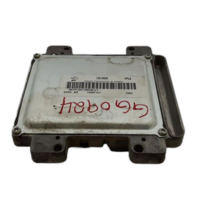
Shop the Parts Behind P2632
Below are the parts most often responsible for code P2632, ranked by how frequently each one is the actual culprit (per the diagnosis above). Tap any to see what we have for your vehicle.


The information in this article is provided for general reference and educational purposes only. Vehicle specifications, procedures, and part compatibility can vary by production date, trim level, and region. Always consult your vehicle's factory service manual and verify part numbers before purchasing or performing repairs. Safety-critical components such as airbags, seat belts, and braking systems should be installed by a qualified professional.
- 🧭 Diagnostic Flowchart
- 🛍️ Shop This Part
- What Does P2632 Mean?
- Can I Drive With P2632?
- Common Causes
- Symptoms
- Common Fixes & Costs
- DIY vs Professional
- Used vs. New Parts: Buying Guide
- What Happens If You Wait — Timeline
- Cost of Not Fixing It
- Diagnosis Steps
- When This Code Triggers (Freeze-Frame Conditions)
- Related Codes
- Climate & Environmental Factors
- How to Talk to a Mechanic About This Code
- Where to Take It: Dealer vs Independent vs Chain
- When to Walk Away From the Repair
- What Scan Tool You Need for This Code
- How to Clear the Code After You Fix It
- Will This Fail Emissions / State Inspection?
- Most Commonly Affected Vehicles
- Manufacturer-Specific Notes
- Real Owner Stories
- 2007 Ford F-150 with 120K miles
- 2013 GMC Sierra 3500 HD 6.6L Diesel
- 2007 Porsche 911 Turbo
- 2004 Porsche Cayenne 3.2L
- How to Prevent This Code From Triggering
- Frequently Asked Questions
- What does the 'B' in 'Fuel Pump B' actually mean?
- What is the most common mistake when diagnosing P2632?
- Can I fix P2632 myself?
- How much will it cost to fix P2632?
- Will clearing the code make the car start?
- I ran out of gas and now I have a P2632 code. Are these related?
- What is a Fuel Pump Control Module (FPCM)?
- Key Takeaways
- 🎟️ Get 5% Off