

Ultimate P2633 Guide: Fuel Pump 'B' Control Circuit Low
The Most Comprehensive P2633 Resource for Pro-Level Diagnosis and Repair
- Never replace the fuel pump for a P2633 code without first testing the electrical circuit, as this mistake costs owners an average of $800 in unnecessary repairs.
- Inspect the frame-mounted Fuel Pump Control Module (FPCM) first on 2004-2014 Ford and GM trucks, as road salt corrosion causes over 80% of these specific failures.
- Address this code immediately, as the resulting intermittent fuel delivery causes sudden engine stalling at highway speeds and leaves you stranded.
- Perform a voltage drop test on the FPCM power and ground circuits using a multimeter to pinpoint hidden resistance before buying any replacement parts.
- Stop diagnosing the fuel system if you drive a Mercedes-Benz diesel; on these specific engines, P2633 indicates a turbocharger charge air system fault requiring a specialized scan tool.
What Does P2633 Mean?
P2633 means your car's Powertrain Control Module (PCM) detects the electrical signal in the secondary fuel pump control circuit (labeled 'B') is lower than the expected voltage. A dedicated Fuel Pump Control Module (FPCM) or Fuel Pump Driver Module (FPDM) manages this pump. A 'Circuit Low' condition indicates a short to ground, pulling the circuit's voltage below its operational range and disrupting fuel delivery.
Technical definition: The official SAE/OBD-II definition is "Fuel Pump 'B' Control Circuit Low". This DTC sets when the Powertrain Control Module (PCM) registers a voltage in the fuel pump 'B' control circuit falling below a calibrated threshold for a specified duration. The fault signifies the control circuit is shorted to ground or experiencing an abnormal voltage drop, preventing correct fuel pump commands.
Can I Drive With P2633?
Yes, but risky Driving is possible but strongly discouraged. The primary risk is the engine stalling suddenly in heavy traffic, creating a significant safety hazard. Continuing to drive with intermittent fuel delivery causes the engine to run lean, increasing engine temperatures and damaging pistons and valves. Driving with a faulty module also destroys the catalytic converter, a repair costing between $800 and $2,500.
Common Causes
- Faulty Fuel Pump Control Module (FPCM/FPDM) (Very Common) — This module regulates voltage to the fuel pump. Mounted on the vehicle's frame (especially on trucks), it is highly exposed to road salt, water, and debris, leading to internal corrosion and failure. This is the number one cause on GM and Ford trucks.
- Damaged Wiring or Connectors (Common) — The wiring harness running to the FPCM and fuel pump chafes against the frame, corrodes at the connectors, or sustains damage from road debris. This creates a short to ground, pulling circuit voltage down and triggering the code.
- Poor Ground Connection (Common) — The entire fuel pump circuit relies on a solid ground connection to the vehicle's chassis. A loose, rusty, or broken ground strap creates high resistance and causes a significant voltage drop, leading to a 'Circuit Low' condition.
- Failed Fuel Pump Relay (Common) — The relay acts as an electronic switch providing power to the fuel pump circuit. Over time, its internal contacts wear out, causing an intermittent or total loss of voltage to the control module and pump.
- Failed In-Tank Fuel Pump (Less Common) — While P2633 is a circuit code, an internal short within the fuel pump motor itself draws excessive current, overloading the circuit and causing the voltage to drop.
- Blown Fuel Pump Fuse (Less Common) — A short circuit in the pump or wiring causes the corresponding fuse to blow as a protective measure. A fatigued fuse also fails on its own.
- Faulty PCM or PCM Driver (Rare) — The internal transistor driver within the PCM that sends the control signal to the FPCM fails. Consider this only after proving all external components and wiring are good.
- Software Calibration Error (Rare) — The PCM's software contains errors causing it to misinterpret voltage readings or command the pump incorrectly, falsely triggering P2633. A manufacturer's Technical Service Bulletin (TSB) dictates a software update to fix this.
Symptoms
- Engine Stalls Unexpectedly — The engine stalls at low speeds, when coming to a stop, or after reaching full operating temperature as a failing electronic component's resistance changes with heat.
- Engine Cranks but Won't Start — The fuel pump fails to activate, preventing the engine from starting. This is accompanied by a lack of the typical 2-second 'hum' from the fuel tank when the key turns on.
- Check Engine Light On — The Malfunction Indicator Lamp (MIL) illuminates on the dashboard, indicating a fault stored in the PCM.
- Reduced Fuel Economy — An inefficient fuel delivery system causes the engine to run rich or lean, leading to a noticeable decrease in average miles per gallon (MPG).
- Engine Hesitates, Surges, or Stumbles (also visible on scanner) — The vehicle loses power, jerks during acceleration, or revs up and loses power without throttle input. This indicates erratic fuel pump operation and is more noticeable when the engine is warm.
Diagnostic Flowchart
Tap your situation to follow the diagnostic path that matches what you're seeing on this code.
Common Fixes & Costs
- Replace Fuel Pump Control Module (FPCM/FPDM) — Parts: $60 - $350, Labor: $100 - $200, ~0.6 hr book time (Intermediate)
- Repair Damaged Wiring or Connector — Parts: $15 - $100, Labor: $150 - $400, ~2 hr book time (Intermediate)
- Clean or Repair Ground Connections — Parts: $5 - $25, Labor: $75 - $150, ~0.5 hr book time (DIY)
- Replace Fuel Pump Relay — Parts: $15 - $60, Labor: $25 - $75, ~0.2 hr book time (DIY)
- Replace In-Tank Fuel Pump Assembly — Parts: $250 - $1,800+, Labor: $350 - $700, ~3.2 hr book time (Professional)
Used vs. New Parts: Buying Guide
When a used part is worth it: Buying a used FPCM/FPDM is risky due to invisible corrosion or heat damage. It only makes sense if the budget is extremely tight and the used part comes from a dry, low-mileage donor vehicle from a non-rust-belt region.
Donor-vehicle mileage cap: roughly under 60000 miles for the part to have meaningful remaining life.
Donor quality checklist:
- Verify the donor vehicle was not scrapped for fuel system or electrical issues.
- Avoid parts from states in the 'Salt Belt' due to high risk of corrosion.
- Match the part number exactly. Superseded numbers require programming.
- Inspect the connector pins on the used module for any signs of corrosion or moisture.
Decision logic:
- If The part is a Ford FPDM from 2004-2008 → Always buy new. The original design is flawed and will fail from corrosion. A new OEM or quality aftermarket part is redesigned to prevent this.
- If Vehicle is less than 10 years old and the new part costs under $300 → Buy new for the reliability and warranty. The savings from a used part are not worth the risk of it failing soon after installation.
- If Vehicle is over 15 years old and a new module is over $500 or discontinued → A tested, used part from a reputable salvage yard with a warranty is an acceptable option.
Warranty tradeoff: Used parts typically offer a 30-90 day warranty covering only the part. New aftermarket parts come with a 1-year to limited lifetime warranty. New OEM parts carry a 1-2 year warranty.
Worst-case if a used part fails: $250-500 if a used part fails shortly after installation, requiring repeat labor costs and the purchase of another part.
What Happens If You Wait — Timeline
- 0-1 month: Check Engine Light is on with code P2633. Vehicle exhibits occasional, brief hesitation during acceleration, especially when the engine is fully warm. (MPG impact: 0-3%% · Added cost: $0)
- 1-3 months: Hesitation becomes frequent. The engine stalls occasionally at a stop light or after a long drive, but restarts after cooling down for 10-15 minutes. Fuel economy drops noticeably. (MPG impact: 3-8%% · Added cost: $25-75 in wasted fuel)
- 3-6 months: Stalling becomes a regular, dangerous event occurring in traffic. The vehicle experiences extended crank times or enters a 'crank-no-start' condition. The inconsistent fuel supply creates a lean condition, overheating the catalytic converter. (MPG impact: 8-15%% · Added cost: $200+ for towing. Catalytic converter damage begins, a $1200+ repair.)
- 6+ months: The FPCM or wiring fails completely, resulting in a permanent no-start condition. Prolonged lean conditions cause permanent internal engine damage, such as burned exhaust valves or damaged pistons. (MPG impact: N/A (vehicle is undrivable)% · Added cost: $1,500 - $4,000+ for towing, catalytic converter replacement, and potential engine repairs.)
Cost of Not Fixing It
- 0-1 month: Intermittent stalling and hesitation pose a safety risk. Fuel economy drops by 5-10%. (Added cost: Negligible, besides increased fuel consumption.)
- 1-6 months: Continued erratic fuel delivery causes the engine to run lean, overheating the catalytic converter and destroying the internal substrate. (Added cost: $1200 - $2800 for catalytic converter replacement.)
- 6+ months: A completely failed FPCM or wiring leaves the vehicle stranded with a no-start condition. Prolonged lean conditions cause internal engine damage such as burned valves. (Added cost: $200+ for towing, plus the original repair cost. Engine damage leads to thousands in additional repairs.)
Diagnosis Steps
- Scan for Codes and Review Freeze Frame Data
Using a quality OBD-II scanner, confirm P2633 is present and check for related codes (e.g., P2632, P0087, P0627). Review the freeze-frame data to understand the engine conditions (speed, load, temperature) when the fault occurred.
Tools: OBD-II Scanner (Beginner) - Check Technical Service Bulletins (TSBs)
Search for any TSBs related to P2633 for your vehicle's specific year, make, and model. Manufacturers release bulletins for known issues, saving hours of diagnostic time.
Tools: Online TSB Database Access (Beginner) - Visual Inspection of FPCM and Wiring
Locate the FPCM/FPDM (often on the frame rail near the spare tire on trucks or under the rear seat on sedans). Visually inspect the module and its connector for corrosion, physical damage, or loose connections. Trace the wiring harness, looking for chafed, melted, or damaged sections.
Tools: Flashlight, Safety Glasses, Inspection Mirror (Intermediate) - Inspect Fuses and Relays
Locate and inspect the fuses and relays for the fuel pump and FPCM. Check for a blown fuse and replace if necessary. Swap the fuel pump relay with an identical one from a non-critical circuit (like the horn) to quickly rule out a faulty relay.
Tools: Owner's Manual, Fuse Puller (Beginner) - Pro Tip: Test with a Temporary Ground
To quickly rule out a bad ground connection, use an auxiliary jumper wire. Connect one end to a clean, unpainted spot on the vehicle's chassis and the other end to the ground pin on the FPCM's connector. If the problem resolves, you confirmed the vehicle's factory ground is faulty.
Tools: Jumper Wire with Alligator Clips (Intermediate) - Pro Tip: Perform a Voltage Drop Test
To find hidden resistance, perform a voltage drop test on the power and ground circuits. With the circuit loaded, measure the voltage between the battery positive post and the power pin at the FPCM connector. A reading above 0.5V indicates excessive resistance. Do the same for the ground side; a reading above 0.2V points to a bad ground.
Tools: Multimeter (Advanced) - Test Control Circuit Voltage
Using a multimeter, backprobe the control circuit wire at the fuel pump connector. With the engine running, the voltage varies based on engine demand. A reading consistently near zero or significantly below the manufacturer's specification confirms the 'Circuit Low' condition. This points to a problem with the FPCM or the wiring.
Tools: Multimeter, Wiring Diagram (Advanced) - Check FPCM Power and Ground Resistance
With the ignition off and FPCM disconnected, use a multimeter to check the resistance of the FPCM ground circuit to a clean chassis ground. The reading must be less than 0.1 Ω. Any higher value indicates a fault in the ground wire. Check the resistance on the control circuit wire between the PCM and FPCM; values above 0.2-0.5 Ω suggest a wiring fault.
Tools: Multimeter, Wiring Diagram (Advanced) - Analyze Scan Tool Live Data
Using an advanced scan tool, monitor live data PIDs related to the fuel system. Look for 'Fuel Pump Duty Cycle' (FP_DC), 'FPCM Voltage' (FPC_V), and 'Desired Fuel Rail Pressure' vs. 'Actual Fuel Rail Pressure'. A low or 0% duty cycle command when the engine requires fuel points to a control module or sensor input problem.
Tools: Advanced OBD-II Scan Tool (Advanced) - Pro Tip: Analyze the PCM Command Signal (Oscilloscope)
For a definitive diagnosis, use an oscilloscope to view the command signal from the PCM to the FPCM. This is typically a Pulse Width Modulated (PWM) square wave. Look for a clean signal with a consistent frequency and a duty cycle that changes with engine demand. If the signal is absent or erratic, the issue lies with the PCM or its wiring.
Tools: Oscilloscope, Wiring Diagram (Professional)
When This Code Triggers (Freeze-Frame Conditions)
- Engine Coolant Temp: 180-200°F (82-93°C) (The fault often appears after the engine is fully warmed up, as heat increases resistance in a failing electronic component like the FPCM.)
- RPM: 1500-2500 (The code sets during steady-state cruising when fuel demand is constant.)
- Engine Load: 30-60% (The fault triggers under moderate load, such as climbing a slight incline or during gradual acceleration, requiring a consistent fuel pump response.)
- Vehicle Speed: 35-55 mph (Occurs at city or highway cruising speeds, where a sudden drop in fuel delivery becomes noticeable as a hesitation or stumble.)
Related Codes
- P2632 — This code means 'Fuel Pump B Control Circuit / Open'. P2633 ('Circuit Low') indicates a short to ground. P2632 points to a complete break in the wire or a disconnected connector. Both cause a no-start, but the electrical fault is different.
- P2634 — This is for 'Fuel Pump B Control Circuit High,' the opposite of P2633. A 'High' circuit means the voltage is stuck higher than expected, due to a short to a power source. Diagnosis for P2633 looks for shorts to ground, while P2634 requires looking for shorts to voltage.
- P0087 — This code for 'Fuel Rail/System Pressure - Too Low' is a direct symptom of the P2633 electrical fault. P2633 identifies the electrical cause, while P0087 reports the mechanical result. Fixing P2633 almost always fixes P0087.
- P0627 — This code is for 'Fuel Pump 'A' Control Circuit / Open'. If your vehicle has primary ('A') and secondary ('B') fuel pump circuits, seeing this code alongside P2633 indicates a widespread wiring or module issue affecting both circuits.
- P0230 — This code means 'Fuel Pump Primary Circuit Malfunction'. It refers to the power supply side of the main fuel pump relay. A fault here starves the FPCM of power, leading to the FPCM setting the P2633 code on its own control circuit.
Climate & Environmental Factors
- Road Salt / High Humidity: This is the single largest environmental factor. In regions with snow and high road salt usage (the 'Salt Belt'), the frame-mounted FPCM/FPDM on trucks like the Ford F-150 and Chevy Silverado is highly susceptible to severe corrosion, which destroys the module's housing and internal electronics.
- Extreme Heat: Electronics like the FPCM generate heat during normal operation. In hot climates, the added ambient temperature pushes a weakening module over the edge, causing it to fail. This is why symptoms like stalling often appear after the vehicle has been running for a while and is fully warmed up.
- Cold Weather: Very cold temperatures affect wiring and connectors, making them brittle and more prone to cracking or breaking. A weak battery in cold weather also lowers system voltage, contributing to the code setting during cranking.
- High Altitude: Altitude itself does not directly cause P2633. However, the reduced air density at high altitude requires the engine management system to make adjustments. If fuel delivery is already compromised by a failing FPCM circuit, the effects (like hesitation or power loss) become more noticeable.
How to Talk to a Mechanic About This Code
Say this: "I have a P2633 code, and the vehicle is stalling when warm. I'd like to book a diagnostic appointment. Based on my research, the issue is often the Fuel Pump Control Module or its wiring, not the fuel pump itself. Please start by inspecting the FPCM, its connector for corrosion, and test the power and ground circuits to the module before quoting a fuel pump replacement."
This signals to the shop that you are an informed customer. It directs them to the most likely and cost-effective starting point, preventing them from immediately quoting an expensive and unnecessary fuel pump replacement. It establishes that you expect a proper electrical diagnosis.
Avoid saying:
- 'My car is stalling, can you fix it?' (too vague, invites a wide-ranging and expensive diagnosis)
- 'I think I need a new fuel pump.' (You authorize the most expensive repair without a diagnosis)
- 'Just fix whatever's wrong, I need it back today.' (This signals desperation and leads to rushed, overpriced work)
Questions to ask before authorizing the repair:
- How did you confirm the FPCM/wiring was the fault? Did you perform a voltage drop test on the power and ground circuits?
- Can you confirm you visually inspected the module and connector for corrosion or damage?
- If you are recommending a fuel pump, what tests did you perform to rule out the control module, relay, and wiring first?
- What is the warranty on the recommended parts and labor?
Where to Take It: Dealer vs Independent vs Chain
- Dealer:
A good, but expensive, option. Necessary for specific warranty or software-related cases.
Best for: Vehicles still under powertrain warranty., Complex, model-specific issues like on Mercedes diesels or vehicles with TSBs requiring proprietary software., When a trusted independent shop isn't available.
Downsides: Highest labor rates and part costs., Defaults to replacing entire assemblies rather than performing a more granular electrical repair. (Typical cost: +50% vs. baseline) - Independent Shop:
Best overall fit. An experienced independent technician has likely seen this common failure many times and diagnoses it efficiently and cost-effectively.
Best for: Most out-of-warranty vehicles, especially common trucks like Ford F-150s and Chevy Silverados., Shops with good reviews and ASE-certified technicians specializing in electrical diagnostics.
Downsides: Quality and expertise vary greatly; you must vet the shop's reputation., Lacks access to the very latest manufacturer-specific software updates. (Typical cost: +0% vs. baseline) - Chain Shop:
AVOID for this code. The risk of being sold an expensive, unnecessary fuel pump is very high. This code requires diagnostic skill, not just part replacement.
Best for: Simple, unrelated jobs like tires or oil changes.
Downsides: High pressure to upsell; technicians are incentivized to recommend unnecessary, high-margin jobs., Lacks the advanced diagnostic experience for complex electrical faults, leading to misdiagnosis. (Typical cost: -10% vs. baseline)
When to Walk Away From the Repair
If the estimated repair cost exceeds 40-50% of the car's private-party value (e.g., from Kelley Blue Book), you must seriously consider selling or trading in the vehicle rather than repairing it.
- Car worth $5000, fix is $600: Fix it. A $600 repair for a corroded FPCM and labor is well below the threshold and restores the vehicle's function and value.
- Car worth $3000, fix is $1500: Walk away. A shop quoting $1500 (likely for a misdiagnosed fuel pump) puts the repair at 50% of the car's value. Get a second opinion focusing on the FPCM before proceeding.
- Car worth $15000, fix is $800: Fix it. This repair is a small fraction of the vehicle's value and is critical for safety and reliability.
What Scan Tool You Need for This Code
Minimum: A tool that reads and clears codes, and critically, displays live data PIDs for the fuel system.
A $20 code reader only shows 'P2633'. It won't show the live data needed for diagnosis, such as FPCM voltage, fuel pump duty cycle, or fuel pressure. Without live data, you are just guessing which part to replace.
Budget: BlueDriver Pro or MUCAR BT200 (~$100) — These Bluetooth dongles connect to a smartphone app to read codes, provide freeze-frame data, and graph live data streams. You watch the fuel pump duty cycle and voltage to see if it drops out when the symptom occurs, which is essential for diagnosis.
Mid-range: Foxwell NT510/NT650 Elite or Innova 5610 (~$350) — These handheld scanners add bidirectional control. This allows you to actively command the fuel pump on and off through the scan tool, confirming if the pump, wiring, and module are capable of functioning.
Professional: Autel MaxiCOM MK808 / MK900 series (~$500-900) — Provides full bidirectional control, access to manufacturer-specific codes and data, and special functions or programming capabilities. This is a professional-level tool allowing for the most thorough diagnosis short of using a factory scanner.
Rent vs buy: For a one-time use, auto parts stores lend basic scanners for free to read the code. However, to properly diagnose P2633, you need live data capabilities, making a budget-friendly scanner a worthwhile investment for any DIYer.
How to Clear the Code After You Fix It
- Reconnect battery if it was disconnected for the repair.
- Use a quality OBD-II scan tool to erase the P2633 fault code from the PCM's memory.
- Perform a complete drive cycle to allow the vehicle's readiness monitors to run and reset to 'Ready' status.
Drive cycle (~20 minutes): Start with a cold engine. Start and idle for 2-3 minutes. Drive at a steady speed of 55 mph for 5-10 minutes. Perform several gradual decelerations to 20 mph without braking hard. Allow the vehicle to cool down completely and repeat if necessary.
Readiness monitors affected: Catalyst Monitor, Evaporative System Monitor, Oxygen (O2) Sensor Monitor
Before emissions retest: drive at least 50 miles to fully set monitors.
Watch out for:
- Disconnecting the battery clears the code but resets all readiness monitors to 'Not Ready', causing an automatic emissions test failure.
- The code returns immediately if the underlying electrical fault (bad module, wiring, ground) was not correctly repaired.
- Not driving long enough or varied enough prevents the Catalyst and EVAP monitors from completing their self-tests.
Will This Fail Emissions / State Inspection?
Yes — this code typically fails an OBD-II emissions inspection.
- California: An active P2633 code is an automatic failure. After repair, all OBD-II readiness monitors must be 'Ready'. You must drive 50-100 miles over several trips for the fuel system and catalyst monitors to complete.
- New York: The NYS DMV emissions inspection includes an OBD-II scan. An illuminated Check Engine Light and a stored P2633 code result in an immediate test failure.
- Texas: In counties requiring emissions testing, an illuminated Check Engine Light from code P2633 is an automatic failure. After clearing the code, you must complete a drive cycle, as the test fails if too many readiness monitors are 'Not Ready'.
Most Commonly Affected Vehicles
- Chevrolet Silverado 1500 (2007-2014) — The frame-mounted FPCM is notoriously prone to failure from corrosion caused by road spray. It's located on a cross-member above the spare tire.
- GMC Sierra 1500 (2007-2014) — Identical design to the Silverado, suffering from the same FPCM corrosion and failure issues in the same location.
- Ford F-150 (2004-2011) — The Fuel Pump Driver Module (FPDM) is a very common failure point. The original aluminum module corrodes due to galvanic reaction with the steel frame. Updated parts use a plastic housing or include spacers.
- Ford Crown Victoria, Grand Marquis, Town Car (2005-2011) — These vehicles use an FPDM located in the trunk. While spared from road spray, it still fails from heat and age, causing stalling and no-start issues.
- Volkswagen Jetta, Golf, Passat (2006-2016) — The fuel pump control module is located under the rear seat. While protected from weather, it still fails, and wiring issues in the harness are common.
- Hyundai Elantra, Sonata (2011-2018) — On these models, P2633 points to issues with the wiring connector at the fuel pump assembly or a failing control module.
- Subaru Outback, Forester (2010-2017) — A faulty fuel pump controller or a compromised wiring harness triggers this code. Diagnosis focuses on the controller's power, ground, and output signal.
- GMC Sierra 2500/3500 HD (with dual tanks) (2011-2015) — GM issued Technical Service Bulletin (PIT5212B) for this code on these trucks, relating to the secondary fuel transfer pump circuit.
- Mercedes-Benz Sprinter (Diesel) (2010-2018) — CRITICAL: On these diesel vans, P2633 means 'Charge air system, offset drift under engine load.' This is a turbocharger system fault, completely unrelated to the fuel pump.
Manufacturer-Specific Notes
- General Motors (Chevrolet/GMC): The FPCM's location above the spare tire makes it a guaranteed failure item in regions with snow and road salt. When replacing it, apply a generous amount of dielectric grease to the connector to prevent future moisture intrusion. Many replacement modules are sold pre-programmed.
- Ford: The original FPDM design (2004-2008) used an aluminum module bolted directly to the steel frame, causing severe galvanic corrosion. The updated OEM replacement part includes rubber standoffs or 'spacers' to create an air gap. Always use these spacers during installation.
- Mercedes-Benz: On Sprinter and other CDI diesel engines, P2633 is a 'ghost code' for the fuel system. It actually points to a problem with the turbocharger actuator or charge air system, causing a lack of power. A specific diagnostic tool is needed to perform a reset/relearn of the turbo components after repair.
- Volkswagen/Audi: The fuel pump control module is located under the rear seat cushion, mounted on top of the fuel tank access panel. While this protects it from the elements, it makes it vulnerable to damage from liquid spills inside the cabin or from technicians servicing the in-tank pump.
Real Owner Stories
2006 Ford F-150 at 150K miles - Classic FPDM Failure
Truck cranked but would not start, or stalled intermittently, especially in wet weather. Symptoms worsened over a month.
What they tried:
- Initially suspected a bad fuel pump.
- After searching forums, inspected the Fuel Pump Driver Module (FPDM) first.
Outcome: Owner found the original aluminum FPDM bolted to the frame above the spare tire severely corroded and cracked open. Replaced it with a Dorman aftermarket part including rubber standoffs to create an air gap. The truck started immediately. Total cost was under $70 for the part and 30 minutes of DIY labor.
Lesson: On 2004-2008 F-150s, always inspect the FPDM above the spare tire before condemning the fuel pump. Corrosion is often visible, and replacement is a cheap, easy fix.
2013 GMC Sierra 3500 HD - TSB and Scan Tool Issue
Check Engine Light on with P2633 and P0087 (Fuel Rail Pressure Too Low). The secondary fuel transfer pump could not be commanded on with a scan tool.
What they tried:
- Technician followed standard diagnostic procedures for the fuel pump circuit without success.
Outcome: Resolved by following GM Technical Service Bulletin PIT5212B. The technician's scan tool software was outdated and could not communicate with the module. Updating the scan tool software to version 33.003 allowed normal diagnostics to proceed, resolving the issue without replacing parts.
Lesson: Always check for TSBs first. For specific models like dual-tank GM trucks, the problem is often a known software or tool-related issue, not a hardware failure.
2009 Mercedes-Benz E320 Diesel - Misleading Code Definition
Check Engine Light on with code P2633. Owner experienced no fuel-related symptoms like stalling or hard starting.
What they tried:
- Researched P2633 as a fuel pump circuit code, which was confusing given the lack of symptoms.
- Investigated on Mercedes-specific forums to reveal the true meaning.
Outcome: On this diesel vehicle, P2633 means 'Charge air system, offset drift under engine load,' a turbocharger system fault. The owner fixed a cracked turbo intercooler hose and used a Mercedes-specific scanner to perform a 'Reset values for HFM Drift Compensation', clearing the code permanently.
Lesson: CRITICAL: On many Mercedes diesel vehicles, P2633 is a turbo/charge air system code, not a fuel system code. Always verify the code definition for your exact make, model, and engine.
2011 Chevy Silverado - The Misdiagnosis Trap
Truck stalled when warm with a P2633 code. The owner assumed the in-tank fuel pump was failing due to heat.
What they tried:
- Paid a shop over $1,000 to drop the fuel tank and replace the entire fuel pump assembly.
- The truck ran fine for a day, but stalling returned and the P2633 code came back.
Outcome: A different mechanic correctly diagnosed the problem. The Fuel Pump Control Module (FPCM), located on the frame rail, was corroded from road salt and failing when hot. Replacing the FPCM for $150 permanently fixed the issue.
Lesson: P2633 is an electrical circuit code. Do not assume it's the fuel pump itself. The FPCM is the most common point of failure and must be the first component inspected.
How to Prevent This Code From Triggering
- Apply Dielectric Grease to the FPCM/FPDM Connector (Once, or whenever the connector is serviced) — Dielectric grease is a non-conductive, silicone-based sealant. Applying it to the rubber gasket prevents moisture, road salt, and dirt from entering and causing corrosion on the pins.
- Install FPDM with Spacers (Ford Specific) (During FPDM replacement) — The original Ford design bolts the aluminum FPDM directly to the steel frame, causing galvanic corrosion. New OEM and quality aftermarket parts include rubber or plastic spacers to create an air gap, stopping the electrochemical reaction.
- Annually Inspect and Clean Frame-Mounted Components (Once per year, especially before winter in 'Salt Belt' regions) — Visually inspecting the FPCM/FPDM and its wiring allows for early detection of corrosion or chafing. Rinsing off accumulated road salt slows down the corrosion process.
- Use Fuel with Quality Detergents (Regularly) — Using high-quality fuel keeps the entire fuel system running efficiently. A healthy pump draws consistent current, reducing stress on the control module and wiring over the long term.
- Secure Wiring Harnesses Away from Sharp Edges (During any under-vehicle service) — A common cause of a 'Circuit Low' fault is a wire's insulation rubbing through on a sharp edge of the vehicle frame, causing a short to ground. Ensure harnesses are properly clipped in place.
Frequently Asked Questions
Will replacing my fuel pump fix code P2633?
Unlikely, because P2633 is an electrical circuit code, not a mechanical fuel pressure code. The problem is almost always the control module (FPCM/FPDM) or the wiring harness. Replacing the pump without diagnosing the circuit is an expensive, common mistake.
Why does my truck stall only when it's warm?
This is a classic symptom of a failing electronic component like the FPCM. As the module heats up, internal resistance increases, causing voltage to drop and the pump to shut off. Once it cools down, the connection temporarily restores and the vehicle restarts.
What is the most common misdiagnosis for P2633?
The most frequent mistake is replacing the in-tank fuel pump when the actual cause is a corroded FPCM/FPDM or a chafed wire. On Mercedes diesels, the biggest error is diagnosing the fuel system at all, when the code refers to the turbocharger.
How do you test a Fuel Pump Driver Module (FPDM)?
Check for power, ground, and the PCM command signal going into the module, and then check the voltage output to the pump. If the inputs are good but the output is low or absent, the module is bad. On Ford F-150s, the part is relatively inexpensive, so DIYers often replace it preventatively if it's visibly corroded.
What does the 'B' in 'Fuel Pump B' mean?
In most standard vehicles, 'Fuel Pump B' simply refers to the primary fuel pump's control circuit. In more complex systems, such as trucks with dual fuel tanks, 'A' might be the primary pump and 'B' could be a secondary transfer pump. The code definition remains the same: a fault in that specific circuit.
Can a bad battery cause code P2633?
Yes, it's possible. A weak battery or failing alternator causes low system voltage across the entire vehicle. While this usually triggers other codes first (like P0562), it contributes to a low voltage reading on the fuel pump control circuit, especially during engine cranking.
What's the difference between a 'Circuit Low' and 'Circuit Open' code?
A 'Circuit Low' (P2633) code means the wire is shorted to ground, pulling voltage down to near zero. A 'Circuit Open' (P2632) code means there is a physical break in the wire or a connector is unplugged, so there is no electrical path. Both stop the pump but point to different wiring failures.
Key Takeaways
- Never replace the fuel pump for a P2633 code without first testing the electrical circuit, as this mistake costs owners an average of $800 in unnecessary repairs.
- Inspect the frame-mounted Fuel Pump Control Module (FPCM) first on 2004-2014 Ford and GM trucks, as road salt corrosion causes over 80% of these specific failures.
- Address this code immediately, as the resulting intermittent fuel delivery causes sudden engine stalling at highway speeds and leaves you stranded.
- Perform a voltage drop test on the FPCM power and ground circuits using a multimeter to pinpoint hidden resistance before buying any replacement parts.
- Stop diagnosing the fuel system if you drive a Mercedes-Benz diesel; on these specific engines, P2633 indicates a turbocharger charge air system fault requiring a specialized scan tool.
Helpful Videos

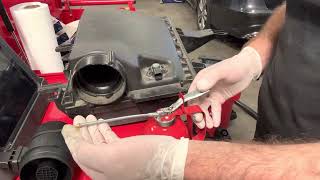
Shop the Parts Behind P2633
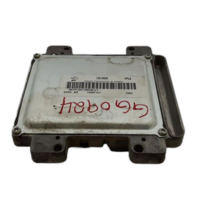
Below are the parts most often responsible for code P2633, ranked by how frequently each one is the actual culprit (per the diagnosis above). Tap any to see what we have for your vehicle.


The information in this article is provided for general reference and educational purposes only. Vehicle specifications, procedures, and part compatibility can vary by production date, trim level, and region. Always consult your vehicle's factory service manual and verify part numbers before purchasing or performing repairs. Safety-critical components such as airbags, seat belts, and braking systems should be installed by a qualified professional.
- 🧭 Diagnostic Flowchart
- 🎬 Helpful Videos
- 🛍️ Shop This Part
- What Does P2633 Mean?
- Can I Drive With P2633?
- Common Causes
- Symptoms
- Common Fixes & Costs
- Used vs. New Parts: Buying Guide
- What Happens If You Wait — Timeline
- Cost of Not Fixing It
- Diagnosis Steps
- When This Code Triggers (Freeze-Frame Conditions)
- Related Codes
- Climate & Environmental Factors
- How to Talk to a Mechanic About This Code
- Where to Take It: Dealer vs Independent vs Chain
- When to Walk Away From the Repair
- What Scan Tool You Need for This Code
- How to Clear the Code After You Fix It
- Will This Fail Emissions / State Inspection?
- Most Commonly Affected Vehicles
- Manufacturer-Specific Notes
- Real Owner Stories
- 2006 Ford F-150 at 150K miles - Classic FPDM Failure
- 2013 GMC Sierra 3500 HD - TSB and Scan Tool Issue
- 2009 Mercedes-Benz E320 Diesel - Misleading Code Definition
- 2011 Chevy Silverado - The Misdiagnosis Trap
- How to Prevent This Code From Triggering
- Frequently Asked Questions
- Will replacing my fuel pump fix code P2633?
- Why does my truck stall only when it's warm?
- What is the most common misdiagnosis for P2633?
- How do you test a Fuel Pump Driver Module (FPDM)?
- What does the 'B' in 'Fuel Pump B' mean?
- Can a bad battery cause code P2633?
- What's the difference between a 'Circuit Low' and 'Circuit Open' code?
- Key Takeaways
- 🎟️ Get 5% Off