

OBD-II Code P2635: Fuel Pump 'A' Flow Performance
An Expert Guide to Diagnosing and Fixing P2635
- Code P2635 triggers when the Engine Control Module detects the low-pressure fuel pump is failing to deliver the commanded fuel volume.
- On 2014-2019 GM trucks, P2635 is frequently caused by a faulty fuel pressure sensor getting stuck at 48.7 PSI or a vapor-locked fuel pump in temperatures over 100°F.
- Save up to $1,200 in unnecessary repairs by testing the $50 fuel pressure sensor and inspecting the Fuel Pump Control Module (FPCM) for corrosion before replacing the in-tank pump.
- Stop driving immediately; the resulting fuel starvation causes unexpected engine stalling in traffic and leads to catalytic converter damage costing over $1,500.
What Does P2635 Mean?
The Engine Control Module (ECM) or Fuel Pump Control Module (FPCM) detects the actual fuel pressure or flow from the primary in-tank fuel pump is lower than commanded. This code specifically targets the low-pressure fuel pump in the gas tank, not the engine-mounted high-pressure pump.
Technical definition: The SAE/ISO definition for P2635 is "Fuel Pump 'A' Low Flow / Performance". The ECM or FPCM has determined that fuel flow or pressure from the primary 'A' fuel pump remains below the commanded threshold for a specified duration.
Can I Drive With P2635?
No — Do Not Drive. Do not drive. The primary risk is the engine stalling unexpectedly while driving, creating a major safety hazard in traffic. Continuing to drive with low fuel pressure causes the engine to run lean, leading to misfires and destroying the catalytic converter—a repair costing between $1,000 and $2,500.
Common Causes
- Failing In-Tank Fuel Pump (Very Common) — The electric motor inside the pump wears out and fails to generate sufficient pressure. On GM vehicles, high ambient temperatures accelerate this failure, causing vapor lock and stalling.
- Faulty Low-Pressure Fuel Pressure Sensor (Common) — This sensor reports fuel pressure to the computer. It frequently fails by getting stuck on a specific reading (e.g., 48.7 PSI), tricking the computer into setting a false pump code.
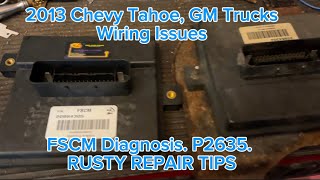
- Faulty Fuel Pump Control Module (FPCM) (Common) — This module regulates voltage to the fuel pump. Often mounted on the frame near the spare tire, it suffers from moisture intrusion and galvanic corrosion, destroying its internal circuits.
- Clogged Fuel Filter or Pump Inlet Sock (Common) — A dirty fuel filter or clogged inlet screen restricts fuel flow, forcing the pump to work harder and reducing volume enough to trigger the code.
- Wiring or Connector Issues (Less Common) — Corroded connectors or damaged wires leading to the FPCM or fuel pump cause high resistance and voltage drops, starving the pump of power.
- Faulty Fuel Pressure Regulator (Less Common) — Fails to maintain proper pressure in the fuel rail, bleeding off pressure and triggering the code.
- Restricted or Collapsed Fuel Line (Rare) — A pinched or internally collapsed fuel line physically restricts flow. On GM HD trucks, a clogged tank vent causes the rear tank to collapse under vacuum.
- Empty Fuel Tank (Rare) — An inaccurate fuel gauge causes drivers to run out of gas, causing the pump to lose pressure and set the code.
Symptoms
- Check Engine Light is On — The Malfunction Indicator Lamp (MIL) illuminates on your dashboard.
- Engine Stalls, Rough Idle, and Misfires — The engine stalls unexpectedly while driving or idling, often accompanied by a rough, shaking idle and misfires due to a lean fuel mixture.
- Hesitation and Reduced Power — The engine lags, surges, or stumbles during acceleration, especially when climbing hills or under heavy load.
- Hard Starting — The engine requires a long crank time to start because the fuel system struggles to build initial pressure.
- Abnormal Fuel Pressure Readings (scan-tool only — no driver-felt sign) — Live data shows 'Actual' fuel pressure significantly lower than 'Desired' pressure, or a sensor value that remains completely static.
Diagnostic Flowchart
Tap your situation to follow the diagnostic path that matches what you're seeing on this code.
Common Fixes & Costs
- Replace Low-Pressure Fuel Pressure Sensor — Parts: $40-$100, Labor: $60-$150, ~1.2 hr book time (DIY)
- Replace Fuel Pump Control Module (FPCM/FPDM) — Parts: $100-$300, Labor: $100-$250, ~1.0 hr book time (Intermediate)
- Replace In-Tank Fuel Pump Assembly — Parts: $250-$800, Labor: $300-$1,200, ~3.5 hr book time (Professional)
- Replace Fuel Filter — Parts: $20-$70, Labor: $50-$150, ~0.8 hr book time (DIY)
- Repair Wiring or Replace Connector — Parts: $20-$60, Labor: $100-$300, ~1.5 hr book time (Intermediate)
DIY vs Professional
- Replace Fuel Filter — Beginner: Yes
Tools: Wrenches, fuel line disconnect tool, safety glasses, gloves, drain pan. - Replace Low-Pressure Fuel Pressure Sensor — Beginner: Yes, with caution.
Tools: 16mm flare-nut wrench, safety glasses, gloves. - Replace Fuel Pump Control Module (FPCM/FPDM) — Beginner: Yes.
Tools: 8mm or 10mm sockets, extension, safety glasses. - Repair Wiring or Replace Connector — Beginner: No.
Tools: Multimeter, wire strippers, crimpers, heat shrink tubing, soldering iron, wiring diagram. - Replace In-Tank Fuel Pump Assembly — Beginner: No.
Tools: Vehicle lift, transmission jack, fuel tank lock ring tool, socket set, safety gear.
Used vs. New Parts: Buying Guide
When a used part is worth it: For a Fuel Pump Control Module (FPCM/FPDM), a used part from a low-mileage vehicle in a dry climate is cost-effective. Never buy a used in-tank fuel pump or fuel pressure sensor.
Donor-vehicle mileage cap: roughly under 60000 miles for the part to have meaningful remaining life.
Donor quality checklist:
- Verify the part number matches exactly; superseded numbers require programming.
- Inspect the FPCM housing for any signs of corrosion or water intrusion.
- Avoid parts from vehicles scrapped due to flood or fire damage.
Decision logic:
- If The part is an in-tank fuel pump or fuel pressure sensor → Always buy new. The labor to replace it is too high to risk an early failure.
- If The part is an FPCM/FPDM and the vehicle is over 10 years old → A used part from a reputable seller with a warranty is a reasonable choice.
- If The new OEM part costs less than $150 → Buy new for the longer warranty and guaranteed compatibility.
Warranty tradeoff: Used parts typically have a 30-90 day warranty. Aftermarket new parts offer a 1-year to limited lifetime warranty. OEM new parts carry a 1-2 year warranty.
Worst-case if a used part fails: 800-1500 if a used fuel pump fails after installation, requiring repeat labor costs.
What Happens If You Wait — Timeline
- 0-1 month: Check Engine Light is on with P2635. You notice occasional, subtle hesitation during acceleration or a slightly longer crank time. (MPG impact: 0-5%% · Added cost: $0-40 in wasted fuel)
- 1-3 months: Symptoms become frequent. Engine stumbling under load is obvious. Fuel economy drops. The lean fuel mixture raises combustion temperatures. (MPG impact: 5-10%% · Added cost: $40-150 in wasted fuel)
- 3-6 months: Engine stalls unexpectedly at low speeds or while driving. The prolonged lean condition overheats and damages the catalytic converter's internal structure. (MPG impact: 10-15%% · Added cost: $500-1500 (Catalytic converter damage is likely))
- 6+ months: Complete failure is imminent. The vehicle stalls constantly or won't start. The catalytic converter is destroyed, guaranteeing an emissions test failure. (MPG impact: 15-25%% · Added cost: $1500-3000+ (Full catalytic converter replacement required))
Cost of Not Fixing It
- Immediate: Unexpected engine stalling, posing a significant safety risk in traffic. Noticeable hesitation and reduced engine power. (Added cost: 0)
- 1-3 months: The engine running lean overheats the catalytic converter, leading to internal damage. Fuel economy drops by 5-15%. (Added cost: 50-200)
- 3+ months: Complete failure of the catalytic converter due to prolonged lean conditions. Extreme heat from detonation causes internal engine damage. (Added cost: 1200-2800)
Diagnosis Steps
- Analyze OBD-II Codes and Freeze Frame Data
Use an OBD-II scanner to read all stored codes. Prioritize U-codes or P018B if present. Analyze freeze-frame data to identify the exact engine load and temperature when P2635 triggered.
Tools: OBD-II Scanner (Beginner) - Check Live Fuel Pressure Data (Pro Tip)
Monitor 'Low Side Fuel Pressure' live data. Compare 'Actual' to 'Desired' pressure. A static reading (e.g., stuck at 48.7 PSI) points directly to a bad sensor, not a bad pump.
Tools: Advanced OBD-II Scanner (Intermediate) - Inspect Fuses and Relays
Check the fuel pump and FPCM fuses. On 2009-2014 Ford F-150s, inspect fuse #27 in the under-hood box for melting—a known issue that mimics a failed module.
Tools: Owner's Manual, Fuse Puller or Pliers (Beginner) - Test the Fuel Pressure Sensor (Pro Tip)
With the engine off, use bidirectional controls to depressurize the fuel system. If the pressure reading doesn't drop to 0 PSI, the sensor is faulty.
Tools: Advanced OBD-II Scanner (Intermediate) - Inspect Wiring and FPCM Connector
Visually inspect the FPCM above the spare tire for green corrosion, frayed wires, or housing damage. Poor connections here frequently cause P2635.
Tools: Flashlight, Mirror (Intermediate) - Perform Mechanical Fuel Pressure Test
Connect a mechanical gauge to the test port to verify the scan tool's reading. A discrepancy confirms a bad sensor. Typical specs: GM Trucks 50-62 PSI; Ford F-150 35-45 PSI.
Tools: Mechanical Fuel Pressure Gauge, Vehicle-Specific Adapters (Advanced) - Perform a Fuel Pump Voltage Test
Check for 12.0-12.6V at the FPCM and fuel pump connector when commanded on. Drops below 11.5V indicate wiring issues. Ground resistance must be under 0.2 Ohms.
Tools: Multimeter, Vehicle-Specific Wiring Diagram (Advanced) - Bypass the FPCM (Pro Tip)
Use jumper wires at the FPCM connector to directly power the fuel pump. If the pump runs when jumped but fails via scanner commands, the FPCM is the culprit.
Tools: Jumper Wires, Wiring Diagram (Advanced) - Analyze Fuel Pump Current Draw
Use an oscilloscope with a low-amp probe. A healthy pump draws 4-8 amps with uniform humps. Erratic waveforms indicate worn pump brushes or a failing motor.
Tools: Oscilloscope, Low-Amp Clamp (Professional)
When This Code Triggers (Freeze-Frame Conditions)
- Engine Coolant Temp: 180-200°F (82-93°C) (Engine at full operating temperature.)
- RPM: 1500-3000 (During steady cruise or moderate acceleration, not typically at idle.)
- Engine Load: 30-60% (Under moderate load, such as climbing a slight incline or accelerating to merge.)
- Vehicle Speed: 45-65 mph (72-105 km/h) (Often occurs at steady highway speeds when the fuel demand is consistent.)
Related Codes
- P018B — Fuel Pressure Sensor 'B' Circuit Range/Performance. When paired with P2635 on GM vehicles, it guarantees a faulty fuel pressure sensor. Test by depressurizing the system; if the reading doesn't hit zero, replace the sensor.
- P0087 — Fuel Rail/System Pressure - Too Low. P2635 (low pressure) starves the high-pressure pump, triggering P0087. Always fix the P2635 low-pressure root cause first.
- P2636 — Fuel Pump 'B' Low Flow. Indicates an issue with the secondary pump on dual-tank trucks. If paired with P2635, suspect a shared issue like a clogged tank vent.
- U-Codes (e.g., U0074, U0109) — Network communication codes. A communication breakdown between the ECM and FPCM prevents pump commands. Diagnose U-codes before replacing fuel system parts.
Climate & Environmental Factors
- Road Salt / High Humidity: Destroys the FPCM/FPDM. Aluminum modules mounted to steel frames suffer galvanic corrosion, exposing circuits to moisture and causing them to short out.
- Extreme Heat: Ambient temperatures above 100°F (38°C) cause fuel to vaporize in the lines of 2014-2019 GM trucks, overwhelming the pump and causing stalling.
- High Altitude: Thinner air alters fuel mixtures. A borderline weak fuel pump struggles to maintain commanded pressure under load at elevation, triggering the code.
How to Talk to a Mechanic About This Code
Say this: "I have a P2635 code. Please check the fuel pressure sensor data, FPCM connector, and related fuses before quoting a fuel pump replacement."
This directs the technician to perform a logical, cost-effective diagnosis instead of immediately jumping to the most expensive repair, saving you diagnostic time.
Avoid saying:
- 'My car is stalling, I think I need a new fuel pump.'
- 'Just fix the P2635 code.'
- 'My check engine light is on, can you look at it?'
Questions to ask before authorizing the repair:
- What were the live 'Desired' vs 'Actual' fuel pressure readings from the scan tool?
- Did you verify the scan tool's pressure reading with a mechanical gauge?
- Did you test for voltage and good ground at the fuel pump control module and the pump itself?
- If you are recommending a fuel pump, what specific tests led you to condemn the pump instead of the sensor or control module?
Where to Take It: Dealer vs Independent vs Chain
- Dealer:
Recommended if your vehicle falls under a known TSB for this specific code, as they have the exact updated parts. Otherwise, an independent shop is more cost-effective.
Best for: Vehicles under a powertrain or emissions warranty., Known manufacturer-specific issues covered by a Technical Service Bulletin (TSB), like the hot-weather stalling on GM trucks.
Downsides: Significantly higher labor rates, often 1.5x to 2x more than an independent shop., Quick to replace an entire assembly (fuel pump module) rather than a smaller component. (Typical cost: +50% vs. baseline) - Independent Shop:
Best fit for most P2635 scenarios. An experienced, ASE-certified technician accurately diagnoses the multiple potential causes without the high dealer cost.
Best for: Out-of-warranty vehicles where cost is a primary concern., Diagnosing common, well-documented problems like a corroded Ford FPDM or a bad GM fuel pressure sensor.
Downsides: Shop quality and diagnostic capabilities vary widely. Ensure they have modern diagnostic tools. (Typical cost: +0% vs. baseline) - Chain Shop:
AVOID for initial diagnosis of P2635. The complexity easily leads to an expensive misdiagnosis. Acceptable only for simple sensor replacements if you diagnosed it yourself.
Best for: Simple, straightforward repairs like replacing an accessible fuel filter.
Downsides: Technician skill varies greatly., Lacks advanced diagnostic tools needed to differentiate between a bad pump, sensor, or module., Under pressure to upsell, leading to recommendations for full fuel pump replacements. (Typical cost: -10% vs. baseline)
When to Walk Away From the Repair
If the estimated repair cost exceeds 50% of your car's private-party value, seriously consider selling or trading in the vehicle.
- Car worth $5000, fix is $2800: Walk away. The repair cost is over 50% of the car's value.
- Car worth $15000, fix is $1800: Fix it. The repair cost is well below the 50% threshold and restores a critical function.
- Car worth $3000, fix is $1600: Walk away. It's not worth investing over half the car's value when other age-related repairs are looming.
What Scan Tool You Need for This Code
Minimum: A scanner that reads and graphs live data, specifically the 'Desired' and 'Actual' low-side fuel pressure PIDs.
A basic $20 code reader only shows the P2635 code. It cannot display the live fuel pressure data needed to see if the sensor is stuck or if the pump is failing to keep up with demand.
Budget: BlueDriver Pro (~$100) — Reads codes, provides freeze-frame data, and displays live fuel pressure data on your smartphone. Sufficient for initial diagnosis to see if the pressure reading is stuck.
Mid-range: Foxwell NT510 Elite / Topdon ArtiDiag Pro (~$150-350) — Offers live data graphing and bidirectional controls. The ability to command the fuel pump on/off from the scanner isolates whether the pump, relay, or control module is failing.
Professional: Autel MaxiCOM MK808BT / XTOOL D7 (~$450-800) — Provides full bidirectional control to command the fuel pump on and off. Offers comprehensive live data, graphing, and access to manufacturer-specific codes essential for complex fuel system issues.
Rent vs buy: Auto parts stores read codes for free but cannot perform live data analysis or bidirectional tests. To diagnose the issue yourself beyond reading the code, you must buy a scanner with live data capabilities.
How to Clear the Code After You Fix It
- Use an OBD-II scan tool to clear the P2635 code.
- Perform a complete OBD-II drive cycle to allow readiness monitors to run.
- Do not simply disconnect the battery, as this resets all monitors to 'incomplete'.
Drive cycle (~30 minutes): Perform a cold start, idle for 3 minutes, followed by 15-20 minutes of mixed city and highway driving at steady speeds around 55 mph. Include periods of coasting deceleration without braking. Let the vehicle sit for 8+ hours for the EVAP monitor to run.
Readiness monitors affected: Fuel System Monitor, Catalyst (CAT) Monitor, Evaporative (EVAP) System Monitor
Before emissions retest: drive at least 50 miles to fully set monitors.
Watch out for:
- Clearing the code right before an emissions test results in a 'Not Ready' status and a failed test.
- Not having the correct amount of fuel in the tank (between 1/4 and 3/4 full) prevents the EVAP monitor from running.
- The code returns if the underlying issue was not correctly repaired.
Will This Fail Emissions / State Inspection?
Yes — this code typically fails an OBD-II emissions inspection.
- California: An illuminated Check Engine Light results in an automatic failure. California allows the EVAP monitor to be 'incomplete' on 2001+ vehicles and still pass, but all others must be 'ready'.
- New York: Any vehicle with the Check Engine Light on automatically fails. After clearing the code, you must complete a drive cycle before re-inspection.
- Texas: In the 17 counties requiring emissions testing, an active P2635 code causes an automatic failure. The vehicle cannot be tested if readiness monitors are not set.
Most Commonly Affected Vehicles
- Chevrolet Silverado, Tahoe, Suburban (2014-2019) — Extremely prone to P2635. Stalling in hot weather (>100°F) indicates a vapor-locked fuel pump (TSB 17-NA-335). Cold weather issues often point to a stuck fuel pressure sensor.
- GMC Sierra, Yukon, Yukon XL (2014-2019) — Shares the GM truck platform and experiences identical hot-weather vapor lock failures requiring an updated fuel pump.
- Ford F-150 (2011-2018) — Frequently caused by a corroded Fuel Pump Driver Module (FPDM) mounted above the spare tire, exposing it to road salt.
- Cadillac Escalade, Escalade ESV (2015-2019) — Included in GM TSBs for P2635. Experiences the same hot-weather stalling from vapor lock, requiring an updated in-tank fuel pump module.
- Chevrolet / GMC Silverado 2500/3500, Sierra 2500/3500 (Diesel) (2015-2019) — On dual-tank models, a clogged rear tank vent causes the tank to collapse under vacuum, destroying the pump (TSB 19-NA-277).
- Volkswagen Golf, Jetta, Passat (TDI & TSI) (2015-2021) — Indicates the low-pressure lift pump cannot supply the high-pressure fuel pump (HPFP), risking premature HPFP wear.
- Toyota Tacoma (2016-2020) — Triggered by a severely clogged fuel filter or sock, often linked to the massive Denso fuel pump recalls.
- Hyundai Santa Fe (2017-2020) — Often triggered by running the vehicle with a very low fuel level, causing momentary pressure loss.
Manufacturer-Specific Notes
- General Motors (Chevrolet/GMC/Cadillac): TSB 17-NA-335 addresses >100°F stalling via an updated fuel pump. TSB PIP5286B outlines a specific scan tool depressurization test for the fuel pressure sensor.
- Ford: FPDM corrosion is rampant. On 2009-2014 F-150s, always check under-hood fuse #27 first; it melts and mimics a failed FPDM (TSB 15-0137).
- GM Heavy Duty (Dual Tank): TSB 19-NA-277 notes dual-tank models suffer from clogged rear vents, causing the tank to physically collapse and crush the fuel pump.
- Volkswagen: The low-pressure pump supplies the HPFP. P2635 acts as an early warning that the expensive HPFP is starving for fuel.
Real Owner Stories
2017 Chevy Silverado 1500 with 222K miles
Check Engine Light with code P2635 appeared during a long drive. The owner reported no noticeable symptoms or performance issues.
What they tried:
- Initially cleared the code, but it returned.
- Based on forum advice, the owner suspected the fuel pressure sensor.
Outcome: The issue was resolved by replacing the low-pressure fuel pressure sensor located under the driver's door.
Lesson: On high-mileage GM trucks, a P2635 code without other symptoms is often the fuel pressure sensor. It's a common failure point and a much cheaper initial repair than the fuel pump.
2012 Ford F-150 5.0L with stalling issues
While towing a trailer at 65 mph, the engine died for 15 seconds and restarted with a wrench light. The owner took it to a dealer.
What they tried:
- The dealer checked the battery and scanned for codes, finding none.
- A mechanic inspected the under-hood fuse box and found the 20A fuel pump fuse (#27) was melted.
Outcome: The dealer installed a fuse relocation kit (Part #EL3Z-14293-A) per Ford TSB 15-0137, solving the problem permanently.
Lesson: For any 2009-2014 F-150 with stalling issues, the first check must be fuse #27. A melted fuse is a tell-tale sign that TSB 15-0137 applies.
2016 Chevy Silverado 5.3L with intermittent no-start
The truck experienced a long crank time, stalled, and set code P2635. It started normally for a day before refusing to start again, though the in-tank pump hummed.
What they tried:
- Owner confirmed 56 PSI of fuel pressure at the rail while cranking.
- Replaced the Fuel Pump Control Module (FPCM), but the problem remained.
Outcome: The owner was left with a no-start condition. The ultimate cause was a failure of the high-pressure fuel pump (HPFP). The humming low-pressure pump was misleading.
Lesson: Even if you hear the in-tank pump, a no-start on a direct-injection engine requires checking the high-pressure fuel pump (HPFP). The low-pressure pump is just the first link.
2017 GMC Sierra with stalling only in extreme heat
Truck hesitated, surged, and stalled when driven in ambient temperatures over 100°F. It threw codes P2635 and P018B.
What they tried:
- A shop replaced the FPCM, which only fixed the issue until the next heatwave.
- A technician found GM TSB 17-NA-335.
Outcome: The TSB identified vapor buildup in the fuel line. The official fix is replacing the entire in-tank fuel pump module with an updated part designed to overcome vapor lock.
Lesson: If P2635 symptoms are strictly tied to hot weather on a 2014-2019 GM truck, do not replace the FPCM or sensor. The repair requires the specific updated fuel pump module.
How to Prevent This Code From Triggering
- Never run the fuel tank below 1/4 full. (Daily habit) — Fuel acts as a coolant for the in-tank electric fuel pump. Running the tank low causes the pump to run hotter, accelerating wear and leading to premature failure.
- Use high-quality, Top Tier gasoline. (Every fill-up) — Reputable gas stations have better filtration, reducing the chance of introducing water or sediment that clogs the fuel filter and pump sock.
- Protect the FPCM/FPDM from corrosion. (Once, or every few years in salt-belt regions.) — On trucks where the module is on the frame, apply a rust inhibitor. Use spacers to create an air gap that prevents moisture from being trapped, stopping galvanic corrosion.
- Change the fuel filter at recommended intervals. (Per manufacturer schedule.) — A clogged fuel filter restricts flow, forcing the fuel pump to work harder to maintain pressure. This added strain causes the pump motor to overheat.
- Avoid filling up when the station's tanks are being refilled. (As needed) — Tanker trucks stir up sediment from the bottom of underground storage tanks, which is then pumped into your vehicle.
Frequently Asked Questions
What is the most common misdiagnosis for code P2635?
The most common mistake is replacing the fuel pump assembly without testing the low-pressure fuel pressure sensor and Fuel Pump Control Module (FPCM). A faulty sensor or corroded FPCM perfectly mimics a failed pump for a fraction of the cost.
Where is the Fuel Pump Control Module (FPCM) located?
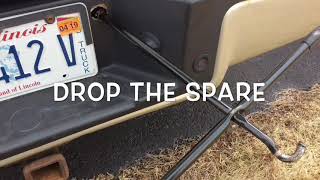
On trucks like the Chevy Silverado and Ford F-150, the FPCM is mounted to a frame crossmember above the spare tire. This location exposes it to road salt and moisture, leading to corrosion.
Why does my truck stall only when it's hot outside?
This is a classic symptom on 2014-2019 GM trucks documented in TSB 17-NA-335. Vapor builds up in the fuel line that the original fuel pump cannot overcome in temperatures over 100°F. GM released an updated fuel pump module to fix this vapor lock issue.
What is the difference between code P2635 and P0087?
P2635 refers to the low-pressure in-tank pump, while P0087 refers to the high-pressure engine pump. Because the low-pressure pump feeds the high-pressure system, a P2635 fault often causes a P0087 code. Always diagnose and repair the low-pressure P2635 code first.
Can I just replace the fuel pump to fix P2635?
Do not replace the pump without proper diagnosis. A faulty fuel pressure sensor, a corroded FPCM, or a bad wire triggers P2635 and is significantly cheaper to replace.
What does the 'A' in 'Fuel Pump A' mean?
The 'A' designates the primary fuel pump. Vehicles with multiple fuel pumps, such as heavy-duty trucks with dual tanks, utilize a 'B' pump that triggers a different code (P2636).
How much does it really cost to fix code P2635?
Costs range from $100 for a simple sensor replacement to over $1,800 for a full in-tank fuel pump assembly. Professional diagnosis typically runs $100-$180. Always test the cheaper sensor and control module before authorizing a costly pump replacement.
Key Takeaways
- Code P2635 triggers when the Engine Control Module detects the low-pressure fuel pump is failing to deliver the commanded fuel volume.
- On 2014-2019 GM trucks, P2635 is frequently caused by a faulty fuel pressure sensor getting stuck at 48.7 PSI or a vapor-locked fuel pump in temperatures over 100°F.
- Save up to $1,200 in unnecessary repairs by testing the $50 fuel pressure sensor and inspecting the Fuel Pump Control Module (FPCM) for corrosion before replacing the in-tank pump.
- Stop driving immediately; the resulting fuel starvation causes unexpected engine stalling in traffic and leads to catalytic converter damage costing over $1,500.
Helpful Videos
Shop the Parts Behind P2635
Below are the parts most often responsible for code P2635, ranked by how frequently each one is the actual culprit (per the diagnosis above). Tap any to see what we have for your vehicle.


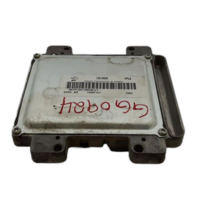



The information in this article is provided for general reference and educational purposes only. Vehicle specifications, procedures, and part compatibility can vary by production date, trim level, and region. Always consult your vehicle's factory service manual and verify part numbers before purchasing or performing repairs. Safety-critical components such as airbags, seat belts, and braking systems should be installed by a qualified professional.
- 🧭 Diagnostic Flowchart
- 🎬 Helpful Videos
- 🛍️ Shop This Part
- What Does P2635 Mean?
- Can I Drive With P2635?
- Common Causes
- Symptoms
- Common Fixes & Costs
- DIY vs Professional
- Used vs. New Parts: Buying Guide
- What Happens If You Wait — Timeline
- Cost of Not Fixing It
- Diagnosis Steps
- When This Code Triggers (Freeze-Frame Conditions)
- Related Codes
- Climate & Environmental Factors
- How to Talk to a Mechanic About This Code
- Where to Take It: Dealer vs Independent vs Chain
- When to Walk Away From the Repair
- What Scan Tool You Need for This Code
- How to Clear the Code After You Fix It
- Will This Fail Emissions / State Inspection?
- Most Commonly Affected Vehicles
- Manufacturer-Specific Notes
- Real Owner Stories
- 2017 Chevy Silverado 1500 with 222K miles
- 2012 Ford F-150 5.0L with stalling issues
- 2016 Chevy Silverado 5.3L with intermittent no-start
- 2017 GMC Sierra with stalling only in extreme heat
- How to Prevent This Code From Triggering
- Frequently Asked Questions
- What is the most common misdiagnosis for code P2635?
- Where is the Fuel Pump Control Module (FPCM) located?
- Why does my truck stall only when it's hot outside?
- What is the difference between code P2635 and P0087?
- Can I just replace the fuel pump to fix P2635?
- What does the 'A' in 'Fuel Pump A' mean?
- How much does it really cost to fix code P2635?
- Key Takeaways
- 🎟️ Get 5% Off