

P2635 on 2013-2017 Buick Encore: Fuel Pump Performance, Causes, and Fixes
On a 2013-2017 Buick Encore, code P2635 is most often caused by a failing in-tank fuel pump, especially in hot weather. A GM Technical Service Bulletin (TSB) confirms this issue and advises replacing the fuel pump module with an updated part to resolve hesitation and stalling in ambient temperatures over 100°F (37.7°C).
- P2635 on a 2013-2017 Buick Encore points to a problem with the in-tank low-pressure fuel pump's performance.
- The most likely cause is a weak fuel pump, a known issue that is especially noticeable in ambient temperatures over 100°F (37.7°C).
- GM issued a definitive Technical Service Bulletin (TSB #17-NA-335) acknowledging this problem, and the fix is to replace the fuel pump module with an updated part.
- Before replacing the pump, it's wise to rule out a less common faulty fuel pressure sensor, which can be tested with a scan tool per TSB #PIP5286B.
- This code is often accompanied by P018B, reinforcing the diagnosis of a fuel delivery issue related to vapor buildup in high heat.
What's Unique About the 2013-2017 Buick ENCORE
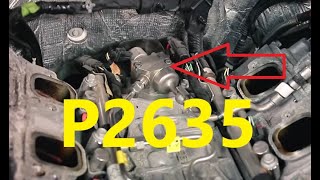
The Buick Encore, along with platform mates like the Chevy Trax and Sonic using the same 1.4L LUV engine, is known to be particularly susceptible to this code in high ambient temperatures. A General Motors TSB (#17-NA-335) specifically states that at temperatures of 100°F (37.7°C) or higher, vapor buildup in the fuel feed line can cause the original fuel pump to underperform. This leads to hesitation, stalling, and the P2635 code, often accompanied by P018B. 🎬 Watch: Understanding the causes and fixes for the P2635 code. The official fix, per the TSB, is to replace the fuel pump module with an updated design. An earlier bulletin (PIP5507B) confusingly stated that replacing the pump would *not* repair the concern and advised using higher octane fuel, but this was superseded by 17-NA-335 which mandates the pump replacement.
Diagnostic Flowchart
Tap your situation to follow the diagnostic path that matches what you're seeing on this vehicle.
Symptoms You May Notice
- Hesitation or stumbling during acceleration.
- Engine stalling, particularly when the weather is hot.
- Reduced engine power.
- Check Engine Light is on.
- Extended cranking time before the engine starts.
- Engine sputtering at high speeds.
- Surging or rough idle.
- Replacing the high-pressure fuel pump (HPFP) on the engine. This code specifically relates to 'Fuel Pump A', which on the Encore is the low-pressure pump in the tank.
Most Likely Causes
- Failing or Weak In-Tank Fuel Pump 🔴 High Probability → Shop Fuel Pump A GM Technical Service Bulletin (#17-NA-335, which supersedes PIP5411F and PIP5507B) identifies an issue with the original pump design causing vapor buildup and low performance in high ambient temperatures. This is a well-documented failure pattern on the 1.4L LUV engine platform.
How to confirm: Monitor low-side fuel pressure ('Fuel Tank Fuel Pump Pressure') with a scan tool, especially when symptoms occur (e.g., in hot weather). Compare the desired pressure with the actual pressure. If the actual pressure drops significantly below the specified range (typically 55-60 PSI at key-on, engine-off) or is erratic, the pump is likely failing.
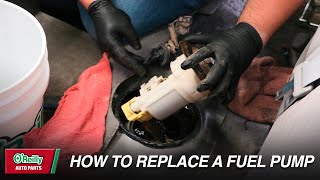
Typical fix: Replace the in-tank fuel pump module with the updated part number as recommended by GM TSB 17-NA-335. The updated ACDelco part is generally cited as the correct fix.
Est. part cost: $150-$350 - Clogged Fuel Filter 🟡 Medium Probability → Shop Fuel Filter The fuel filter is an integrated, non-serviceable part of the fuel pump module assembly. Over time, it can become clogged with debris, restricting fuel flow and causing the same symptoms as a weak pump.
How to confirm: A fuel pressure test showing low pressure is the primary indicator. Since the filter is integrated with the pump, diagnosis almost always leads to replacing the entire module.
Typical fix: Replace the fuel pump module assembly, which includes a new filter.
Est. part cost: $150-$350 - Faulty Fuel Pressure Sensor ⚪ Low Probability → Shop Fuel Pressure Sensor
How to confirm: Another TSB (#PIP5286B) provides a test: with the engine cold, use a scan tool to command the fuel system to depressurize. The sensor reading should drop to zero. If it stays at a higher reading (e.g., 30-40 PSI) after the engine stalls, the sensor is faulty. This should be checked before replacing the more expensive pump module.
Typical fix: Replace the low-side fuel pressure sensor.
Est. part cost: $40-$80
Rare But Worth Checking
- Faulty Fuel Pump Control Module (FPCM): → Shop Fuel Pump While less common than the pump itself, the FPCM (also called the Fuel Pump Driver Module) can fail, sending incorrect commands or failing to power the pump adequately. This can trigger P2635 along with other codes like P069E or U0109.
- Wiring Issues: Damaged wiring or a corroded connector at the FPCM or the fuel pump can cause intermittent power loss and trigger this code. A visual inspection of the harness, especially where it connects to the FPCM (often in the trunk or under the vehicle) and the top of the fuel tank, is recommended.
Diagnosis Steps
- Scan the vehicle's computer for trouble codes. Note if P2635 is present alone or with P018B, which strongly suggests the TSB-related issue.
- Check for relevant Technical Service Bulletins (TSBs), specifically #17-NA-335, which supersedes older bulletins like PIP5507B and PIP5411.
- If the ambient temperature is high (near or above 100°F / 37.7°C) and symptoms like hesitation or stalling are present, the fuel pump is the primary suspect per the TSBs.
- Connect a scan tool to monitor live data. Observe the 'Fuel Tank Fuel Pump Pressure' or similar low-side pressure PID. Compare the desired pressure with the actual pressure under various conditions (idle, acceleration). A significant drop in actual pressure indicates a flow problem.
- If pressure is low or drops out, inspect the wiring and connectors for the fuel pump and Fuel Pump Control Module (FPCM) for any signs of corrosion or damage.
- If wiring is intact, perform a fuel pressure sensor test as described in TSB #PIP5286B to rule out a faulty sensor providing incorrect data.
- If the sensor tests good and pressure is confirmed to be low, the in-tank fuel pump module is the confirmed cause and should be replaced with the updated part.
Parts You'll Likely Need
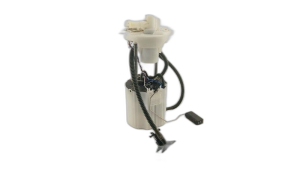
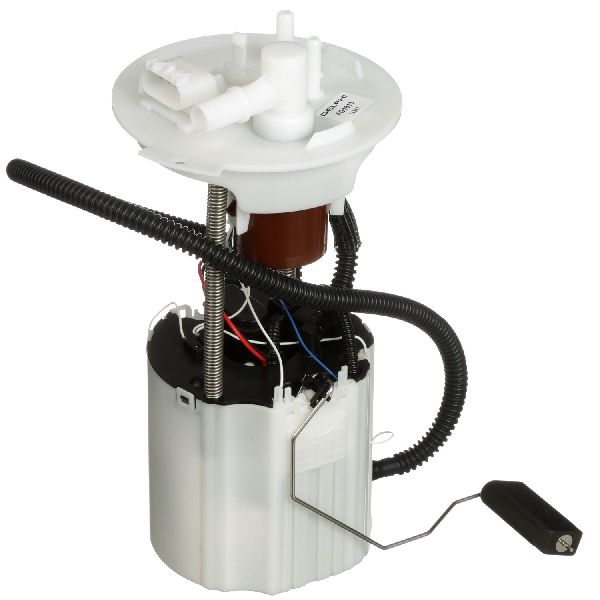
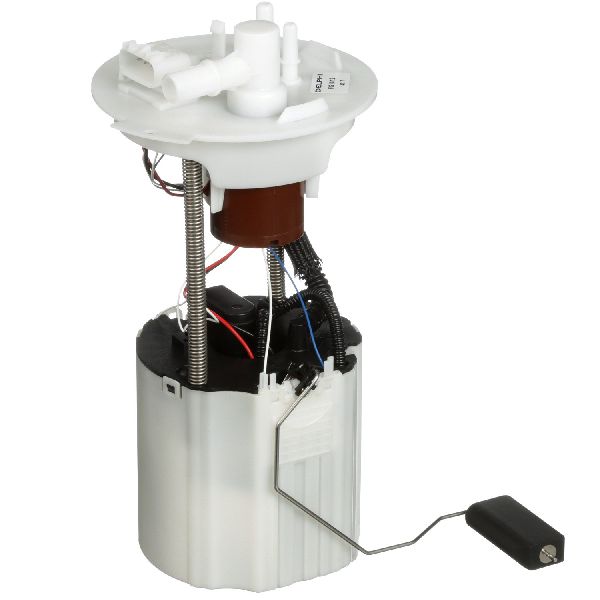
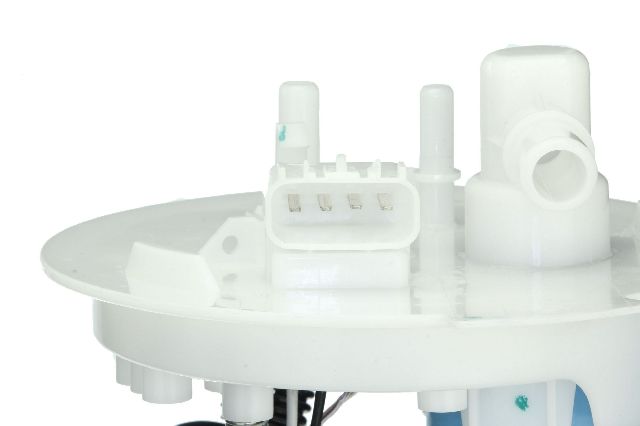
- Fuel Pump Module Assembly
(OEM #13516849 (ACDelco MU2159) is a commonly cited part number for FWD models. Always verify with VIN.)— This is the most common failure part for code P2635 on this vehicle, especially in hot climates, as documented by GM TSB #17-NA-335. The assembly includes the pump, sending unit, and fuel filter.
Trusted brands: ACDelco, Delphi
OEM price range: $250-$350
Aftermarket price range: $150-$250
Related Codes That Often Appear With This One
- P018B — This code, 'Fuel Pressure Sensor 'B' Circuit Range/Performance', is frequently set alongside P2635. GM TSBs #17-NA-335 and #PIP5507B list them together as resulting from the same fuel pump vapor buildup issue in high temperatures.
Technical Service Bulletins (TSBs) & Recalls
- 17-NA-335: The definitive bulletin that supersedes previous ones. It identifies vapor buildup in high heat as the cause for P2635/P018B and explicitly instructs to replace the fuel pump module with an updated version.
- PIP5507B: An earlier TSB that also addressed the high-temperature issue but confusingly suggested that replacing the pump would *not* fix it and instead recommended using higher octane fuel. This is now outdated.
- PIP5411F: An earlier version of the same TSB, also pointing to vapor buildup in hot weather. It was superseded by 17-NA-335.
- PIP5286B: Provides a specific diagnostic procedure to test the fuel pressure sensor when P2635 and P018B are set together, helping to rule out a bad sensor before replacing the pump.
Platform-Specific Known Issues
- A known issue, documented in TSB #17-NA-335, causes P2635 and P018B to set in ambient temperatures over 100°F (37.7°C) due to vapor buildup in the fuel line, which the original fuel pump cannot overcome. The fix is an updated fuel pump module.
- Some owners on forums report the issue is most pronounced when the fuel tank is less than half full, potentially because the pump runs hotter when not fully submerged in fuel.
Mechanic-Grade Diagnostic Values
- Low-Side Fuel Pressure (Key On, Engine Off) — expected: 55-60 PSI. Failure: Pressure significantly below this range indicates a weak in-tank pump.
- Fuel Pump Ground Circuit Voltage Drop — expected: Less than 0.5 Volts. Failure: Voltage drop greater than 0.5V indicates a poor ground connection, which can cause the pump to underperform.
- Low-Side Fuel Pressure (Engine Idling) — expected: Generally 5-10 PSI below the key-on, engine-off pressure.. Failure: Pressure that is erratic or does not respond as expected to changes in engine load (e.g., snapping the throttle) can indicate a failing pump or regulator issue.
Scan Tool Commands That Help
- GDS2 (GM Global Diagnostic System 2): Fuel Pump Control Module - Fuel Pump Pressure Control — This bidirectional control allows a technician to command the fuel pump to different duty cycles to verify the FPCM is responding and the pump is capable of building pressure. It is a key step in differentiating an FPCM failure from a fuel pump failure.
- GDS2 (GM Global Diagnostic System 2): FPCM Programming/Setup — When replacing the Fuel Pump Control Module, the new module must be programmed with the vehicle's VIN and specific software. A blank module from a parts store will not work without this step.
Wiring & Ground Locations
- Fuel Pump Control Module (FPCM) — In the trunk, located behind the passenger side interior trim panel.. This is the module that controls the in-tank fuel pump. A failure of this module, its connector, or its ground can directly cause code P2635. Accessing it is necessary for testing power, ground, and communication signals.
- Fuel Pump Connector — On top of the fuel tank, accessible by removing the rear seat bottom cushion and an access panel.. The connector provides power and ground to the fuel pump motor. Corrosion or damage at this connector is a common failure point that can mimic a failed pump. The gray wire is typically the power feed from the FPCM, and the black wire is the ground.
OEM Part Supersession History
13579895, 13592490→13516849— Part has been updated by the manufacturer. The TSB for the hot-weather stalling issue recommends using the updated pump design.
Heads up: The part number 13516849 is for Front-Wheel Drive (FWD) models. Always verify the correct part number with the vehicle's VIN, as AWD models may use a different pump.13516849→19540616— Part has been updated by the manufacturer.
Heads up: This is the latest supersession. When ordering, this new number should be provided.
Model Year Variations Within This Range
- 2017-2021: The Fuel Pump Control Module (FPCM) part number for later models is different (e.g., 84082495). While the function is the same, the specific part may not be interchangeable with earlier 2013-2016 models. Always verify by VIN.
Helpful Videos
Used OEM Parts in Stock
New Aftermarket Parts Available


The information in this article is provided for general reference and educational purposes only. Vehicle specifications, procedures, and part compatibility can vary by production date, trim level, and region. Always consult your vehicle's factory service manual and verify part numbers before purchasing or performing repairs. Safety-critical components such as airbags, seat belts, and braking systems should be installed by a qualified professional.
- Buick ENCORE:
- 🧭 Diagnostic Flowchart
- 🎬 Helpful Videos
- 🛍️ Shop This Part
- What's Unique About the 2013-2017 Buick ENCORE
- Symptoms You May Notice
- Most Likely Causes
- Rare But Worth Checking
- Diagnosis Steps
- Parts You'll Likely Need
- Related Codes That Often Appear With This One
- Technical Service Bulletins (TSBs) & Recalls
- Platform-Specific Known Issues
- Mechanic-Grade Diagnostic Values
- Scan Tool Commands That Help
- Wiring & Ground Locations
- OEM Part Supersession History
- Model Year Variations Within This Range
- 🎟️ Get 5% Off