

P2635 on 2013-2017 Buick LaCrosse: Fuel Pump Low Flow Causes and Fixes
On a 2013-2017 Buick LaCrosse, code P2635 indicates the fuel pump is not providing enough fuel. This is often triggered by high ambient temperatures causing vapor buildup in the fuel line, as noted in GM TSB PIP5507B. While a failing fuel pump or control module can be the cause, GM's official procedure often involves first replacing the fuel pump with an updated design (per TSB 17-NA-335/PIP5411E) before concluding the issue is purely environmental.
- P2635 on a 2013-2017 LaCrosse means the fuel pump's performance is below what's expected.
- Before replacing any parts, consider the weather. If it's over 100°F, the problem could be temporary vapor lock, as per TSB PIP5507B.
- The most common hardware failures are the in-tank fuel pump assembly or the Fuel Pump Control Module (FPCM).
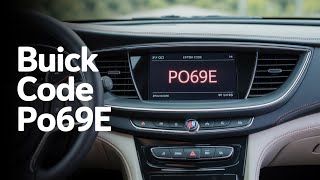
- Look for other codes. P018B points towards the high-heat TSB issue, while P069E points directly at the FPCM.
- Due to the fire risk and complexity of diagnosis, professional repair is strongly recommended.
What's Unique About the 2013-2017 Buick LACROSSE
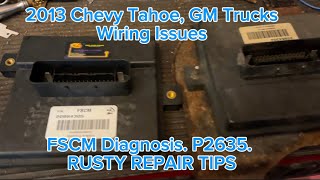
For this generation of Buick LaCrosse and other contemporary GM vehicles, P2635 is strongly linked to high ambient temperatures. A specific Technical Service Bulletin (TSB PIP5507B) was issued because many vehicles in hot climates would set this code along with P018B due to vapor buildup in the fuel feed line on days over 100°F. 🎬 Watch: Diagnosing P2635 and P018B codes on GM vehicles. However, a conflicting TSB (PIP5411E, later superseded by 17-NA-335) directs technicians to replace the in-tank fuel pump with an updated design to fix this exact issue. The official diagnostic flow is to first follow the TSB recommending pump replacement; if that has already been done and the issue persists, then the environmental factors mentioned in PIP5507B are considered the cause.
Diagnostic Flowchart
Tap your situation to follow the diagnostic path that matches what you're seeing on this vehicle.
Generation note: The 2013-2017 range covers the end of the second generation (2010-2016) and the first year of the third generation (2017). The primary issue described in TSBs PIP5507B and PIP5411E/17-NA-335 applies to the entire 2013-2017 range, suggesting the fuel system design sensitivity to heat is common to both generations covered.
Symptoms You May Notice
- Hesitation or stumbling during acceleration.
- Engine stalling, particularly in hot weather or after extended idling.
- Reduced engine power and poor performance.
- Longer than normal engine cranking time to start.
- Check Engine Light is on.
- Replacing the fuel pump when the actual cause is environmental (vapor lock from high heat), as warned against in TSB PIP5507B if the updated pump is already installed.
- Replacing the fuel pump when the root cause is a faulty Fuel Pump Control Module (FPCM) or a communication error between the FPCM and ECM.
Most Likely Causes
- Vapor Buildup in Fuel Line / Failing Fuel Pump (High Ambient Temperature) 🔴 High Probability → Shop Fuel Pump As documented in TSBs PIP5507B and 17-NA-335, these vehicles are susceptible to fuel vaporizing in the lines during sustained ambient temperatures over 100°F (37.7°C), which starves the engine of liquid fuel. GM's ultimate fix is to replace the fuel pump module with an updated design that is less prone to this issue.
How to confirm: The problem primarily occurs on very hot days and may not be present in cooler weather. The code P018B (Fuel Pressure Sensor 'B' Circuit Range/Performance) is often set at the same time. A technician can confirm by following the diagnostic path laid out in the TSBs.
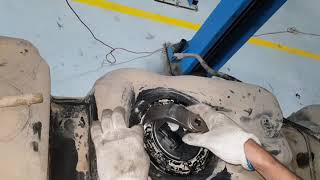
Typical fix: Per TSB 17-NA-335 (which supersedes PIP5411E), the primary fix is to replace the in-tank fuel pump module assembly with an updated part. If the pump has already been replaced with the new design, TSB PIP5507B then advises using 91+ octane fuel, avoiding long idles, and parking in the shade as a management strategy, stating another pump replacement won't help.
Est. part cost: $250-$500 - Faulty Fuel Pump Control Module (FPCM) 🟡 Medium Probability → Shop Fuel Pump The FPCM, also called the Fuel Pump Driver Module, regulates the fuel pump's speed. Like any electronic module, it can fail from heat, age, or moisture, causing it to send incorrect signals or no signal to the pump. Its failure can mimic a bad fuel pump.
How to confirm: A technician with an advanced scan tool can monitor FPCM commands, output voltage, and communication with the ECM. If codes like U0074 or U18A2 are present with P2635, it strongly points to a communication issue with the FPCM, which should be diagnosed first.
Typical fix: Replace the Fuel Pump Control Module. On many GM vehicles, this module requires programming to the vehicle's VIN. Aftermarket 'OE FIX' modules may come pre-programmed.
Est. part cost: $80-$250 - Clogged Fuel Filter ⚪ Low Probability → Shop Fuel Filter The LaCrosse has a fuel filter sock integrated with the fuel pump assembly inside the tank. It is not a separate, routinely serviced component. While not a common failure point on its own, contamination from poor fuel quality could clog it, restricting flow.
How to confirm: This is usually diagnosed during a fuel pressure and volume test or when the fuel pump is removed and the filter sock is visibly contaminated with sediment.
Typical fix: The filter is part of the fuel pump module assembly, so the entire module must be replaced.
Est. part cost: $250-$500
Rare But Worth Checking
- Damaged Wiring or Connectors:
Diagnosis Steps
- Check for Technical Service Bulletins (TSBs). Note TSBs 17-NA-335 (supersedes PIP5411E) and PIP5507B as they provide a specific diagnostic path.
- Scan the PCM for any other stored codes, paying close attention to P018B, P069E, U0074, and U18A2.
- Consider the current ambient temperature. If it is over 100°F and the symptoms match the TSBs, the high-heat issue is highly likely.
- Using a scan tool, monitor the fuel rail pressure (low side) and compare it to the desired fuel rail pressure. Check the fuel pump duty cycle commanded by the FPCM.
- If communication codes (U-codes) are present, diagnose and resolve the communication failure between the ECM and FPCM before addressing P2635.
- Perform a fuel pressure and volume test to directly measure the pump's output. This will determine if the pump is weak or if there is a restriction.
- Inspect the wiring and connectors for the Fuel Pump Control Module (FPCM) and the fuel pump for any signs of damage, corrosion, or looseness.
- If the fuel pump and wiring test good but the code persists, test the FPCM for proper operation. This may require a specialized scan tool to command the module and check its response.
Parts You'll Likely Need
- Fuel Pump Module Assembly
(OEM #13575136 (example, check catalog for specific VIN))— If the pump is confirmed to be weak or failing, or if following TSB 17-NA-335, the entire in-tank module (which includes the pump, level sender, and filter) must be replaced with the updated design.
Trusted brands: ACDelco, Delphi, GM Genuine Parts
OEM price range: $350-$550
Aftermarket price range: $200-$400 - Fuel Pump Control Module (FPCM)
(OEM #23231860 (for 2013-2016 models))— This module controls the fuel pump and is a common point of failure. If the pump itself is good, the FPCM is the next logical component to test and replace.
Trusted brands: ACDelco, Dorman (OE FIX), GM Genuine Parts
OEM price range: $150-$250
Aftermarket price range: $80-$150
Related Codes That Often Appear With This One
- P018B — This code for 'Fuel Pressure Sensor 'B' Circuit Range/Performance' is frequently set with P2635, especially under the high-heat conditions described in TSBs PIP5507B and 17-NA-335.
- P069E — This code indicates a fault within the Fuel Pump Control Module itself. Its presence strongly suggests the FPCM is the root cause of the fuel delivery issue, rather than the pump.
- U0074 / U18A2 — These are communication codes indicating a loss of communication between the ECM and the FPCM. A specific GM bulletin advises diagnosing these codes first, as the communication fault can induce a false P2635. Replacing fuel system parts will not fix this.
Technical Service Bulletins (TSBs) & Recalls
- PIP5507B: Stalling - Hesitation - Lack Of Performance P018B And/Or P2635 Setting In High Ambient Temperatures.
- PIP5411E (Superseded by 17-NA-335): SES light with DTC's P2635 and/or P018B setting in high ambient temperatures, which recommends replacing the in-tank fuel pump module with a new design.
- 17-NA-335: The superseding bulletin for PIP5411, confirming the fix
Platform-Specific Known Issues
- A known issue documented in TSBs 17-NA-335 and PIP5507B describes how high ambient temperatures (over 100°F) can cause vapor buildup in the fuel line, triggering codes P2635 and P018B. The primary fix is to install an updated fuel pump module. If the issue persists after the new pump is installed, GM's only other advice is to use higher octane fuel and avoid extended idling.
Mechanic-Grade Diagnostic Values
- Low-side fuel pressure (pump running, commanded ON via scan tool) — expected: 345-690 kPa (50-100 psi). Failure: Pressure below 345 kPa (50 psi) indicates a weak pump or restriction. Pressure above 690 kPa (100 psi) may indicate a faulty pump module.
- Low-side fuel pressure (engine idling at normal operating temp) — expected: 300-400 kPa (43-58 psi). Failure: Pressure outside this range indicates a problem with the FPCM's ability to regulate pressure.
- Fuel Pressure Sensor 5V Reference at FPCM — expected: 4.8-5.2 V. Failure: Voltage outside this range suggests a short or open in the reference circuit or a faulty FPCM.
- Fuel Pressure Sensor Low Reference Circuit to Ground — expected: Less than 1.0 ohm. Failure: Resistance greater than 1.0 ohm indicates an open or high resistance in the ground circuit for the sensor.
- Desired vs. Actual Fuel Pressure (Scan Tool) — expected: Within 45 kPa (6.5 PSI) at a 300 kPa request; within 60 kPa (8.7 PSI) at a 400 kPa request.. Failure: If the discrepancy between desired and actual pressure exceeds these limits under various loads, it confirms the low flow condition reported by P2635.
- Voltage drop test on fuel pump power/ground circuits — expected: No more than 0.1V per connection (typically 0.2V to 0.5V total for the circuit).. Failure: Excessive voltage drop under load (tested with a sealed beam headlamp) indicates high resistance in the wiring or connectors, which can starve the pump of current.
Scan Tool Commands That Help
- GDS2 (GM Global Diagnostic System 2): Module Diagnostics > FPCM > Live Data — Use this to monitor FPCM-specific parameters like 'Desired Fuel Pressure' vs. 'Fuel Pressure Sensor' readings and pump duty cycle to see if the module is commanding the pump correctly and if the sensor readings are rational.
- GDS2: Fuel System Depressurize — Per TSB PIP5286B, this test is used to identify a faulty fuel pressure sensor. With the engine cold, command the system to depressurize. The fuel pressure reading should drop to zero. If it remains high (e.g., 30-40 PSI) after the engine stalls, the sensor is faulty.
- GDS2: Service Programming System (SPS) — This function is required after replacing the Fuel Pump Control Module (FPCM) to program the new module with the correct vehicle VIN and software calibration.
Wiring & Ground Locations
- K27 Fuel Pump Control Module (FPCM) — Typically mounted on the vehicle's frame rail, near the rear axle or spare tire. On some models, it may be located in a more protected area like under the rear seat or carpet.. This is the brain controlling the fuel pump. Its exposed location on many GM vehicles makes its housing, connector, and wiring susceptible to corrosion and physical damage, which is a direct cause of P2635 and related codes.
- FPCM Connector Pin 13 (D-GN/WH wire) — At the main connector for the Fuel Pump Control Module.. This is the serial data line from the ECM that commands the FPCM. Checking for a signal on this wire with a test light or scope during key-on confirms the FPCM is receiving the command to turn on.
- FPCM Connector Pin 32 (RD/WH wire) & Pin 47 (GY wire) — At the main connector for the Fuel Pump Control Module.. Pin 32 is the main battery positive voltage feed to the module, and Pin 47 is the variable voltage output from the module to the fuel pump. Technicians can jump these pins to bypass the module and directly power the pump, confirming if the pump itself works.
Real Owner Repair Stories
- Reddit user in r/MechanicAdvice (Buick LaCrosse (year not specified, but behavior matches 2013-2017)) — Car stalled on the road, codes P069E and P2635 appeared.
❌ Tried (didn't work) Replaced the in-tank fuel pump a few months prior to the incident.
✅ What actually fixed it The consensus from technicians was that the combination of P069E and P2635 strongly points to a failure of the Fuel Pump Control Module (FPCM) itself, not the recently replaced pump.
OEM Part Supersession History
20867261, 22819495→23482933, 23231860 (example for 2013-2016)— Standard part evolution and potential internal revisions to improve reliability.
Heads up: The FPCM is a programmable module. A replacement module must be programmed to the vehicle's VIN using the GM Service Programming System (SPS) to function correctly.
Helpful Videos
Used OEM Parts in Stock
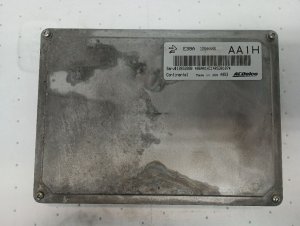
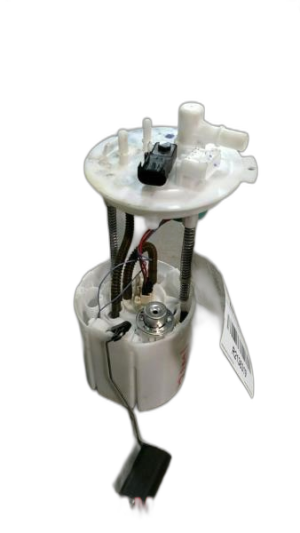
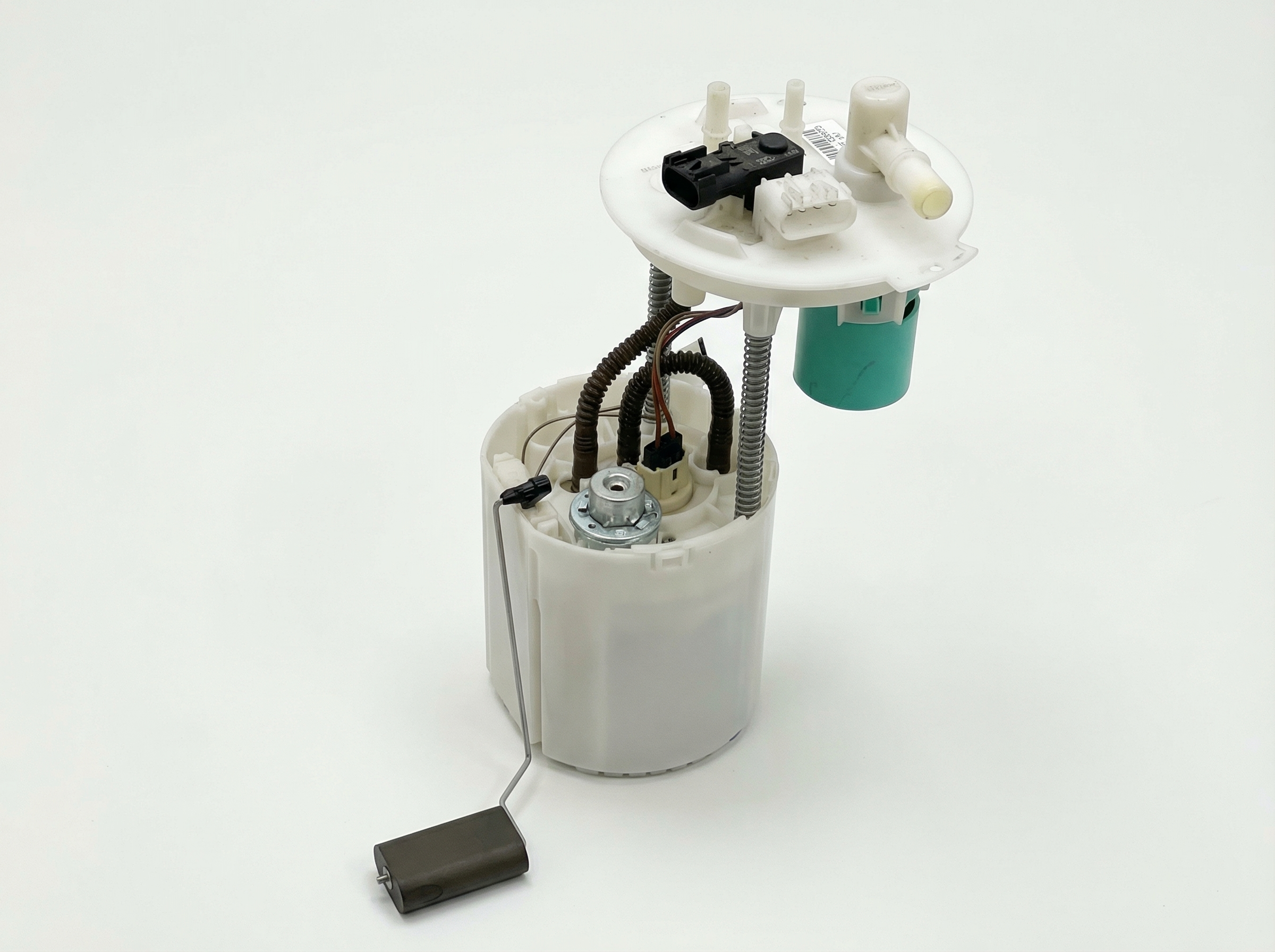
New Aftermarket Parts Available
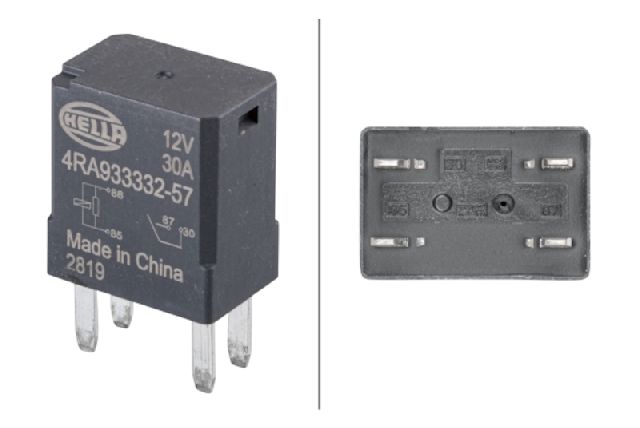




The information in this article is provided for general reference and educational purposes only. Vehicle specifications, procedures, and part compatibility can vary by production date, trim level, and region. Always consult your vehicle's factory service manual and verify part numbers before purchasing or performing repairs. Safety-critical components such as airbags, seat belts, and braking systems should be installed by a qualified professional.
- Buick LACROSSE:
- 🧭 Diagnostic Flowchart
- 🎬 Helpful Videos
- 🛍️ Shop This Part
- What's Unique About the 2013-2017 Buick LACROSSE
- Symptoms You May Notice
- Most Likely Causes
- Rare But Worth Checking
- Diagnosis Steps
- Parts You'll Likely Need
- Related Codes That Often Appear With This One
- Technical Service Bulletins (TSBs) & Recalls
- Platform-Specific Known Issues
- Mechanic-Grade Diagnostic Values
- Scan Tool Commands That Help
- Wiring & Ground Locations
- Real Owner Repair Stories
- OEM Part Supersession History
- 🎟️ Get 5% Off