

P2635 on 2013-2017 Buick Regal: Fuel Pump Low Flow, Stalling, and Fixes
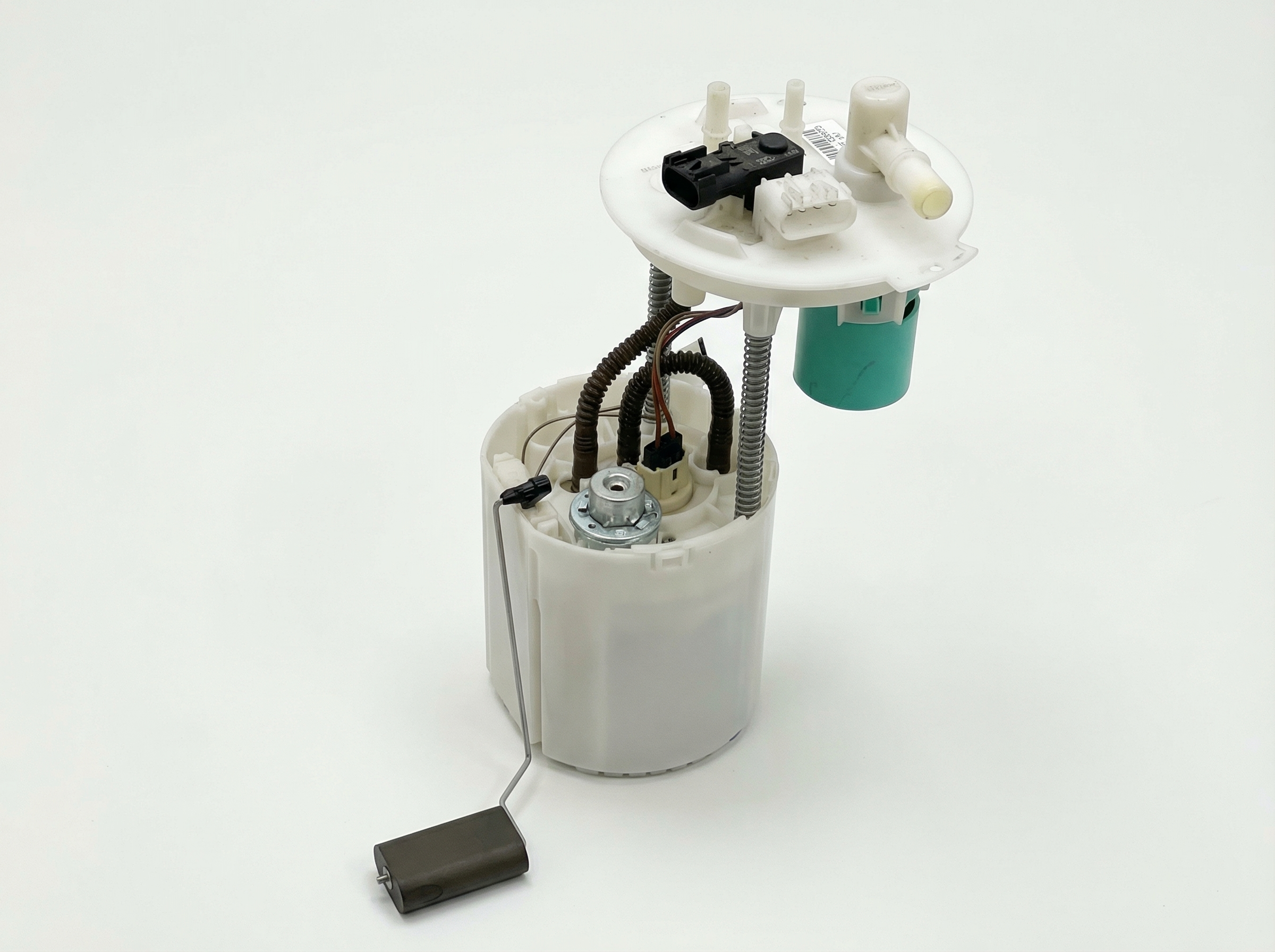
On a 2013-2017 Buick Regal, P2635 almost always indicates a failing in-tank fuel pump module, especially if you experience stalling or hesitation in hot weather. GM issued technical service bulletins (TSB 17-NA-335) recommending replacement with an updated fuel pump module (GM Part #13595835) to fix the issue. Before replacing the pump, test the fuel pressure sensor, as it is also a common point of failure. Expect to pay $300-$500 for the OEM replacement pump.
- P2635 on a 2013-2017 Regal is most often caused by a faulty fuel pump, especially if stalling occurs in hot weather.
- GM is aware of this issue and issued service bulletins (like #17-NA-335) recommending the installation of an updated fuel pump module.
- Always check for code P018B, as it commonly appears with P2635 and points to the same fuel delivery problem.
- Before replacing the expensive fuel pump, it's wise to rule out a cheaper, faulty fuel pressure sensor, which can cause similar symptoms.
What's Unique About the 2013-2017 Buick REGAL
On this generation of Buick Regal and other similar GM platforms like the Chevy Malibu and Cadillac XTS, P2635 is strongly linked to a specific design issue. In high ambient temperatures, typically above 100°F (38°C), the original fuel pump module is prone to causing a vapor buildup in the fuel feed line. This vapor prevents liquid fuel from flowing correctly, leading to fuel starvation symptoms like stalling and hesitation, which triggers the P2635 and often a P018B code. GM acknowledged this by releasing updated fuel pump modules to correct the problem.
Diagnostic Flowchart
Tap your situation to follow the diagnostic path that matches what you're seeing on this vehicle.
Symptoms You May Notice
- Engine hesitation or stumbling during acceleration.
- Engine stalling, especially in hot weather or after a hot soak.
- Engine surging.
- Reduced engine power or entering 'limp mode'.
- Extended cranking time before the engine starts.
- Illuminated Check Engine Light.
- Replacing the Fuel Pump Control Module (FPCM) when the in-tank fuel pump or the fuel pressure sensor is the actual cause of the problem.
- Replacing the high-pressure fuel pump (for turbo models) when the P2635 code refers to the low-pressure in-tank pump ('Pump A').
- Replacing fuel injectors when the issue is low pressure from the tank, not a clogged injector.
Most Likely Causes
- Failing In-Tank Fuel Pump Module 🔴 High Probability → Shop Fuel Pump The original-design fuel pump is known to cause vapor buildup in the fuel line during high ambient heat, leading to low flow. GM released TSBs #PIP5507B and #17-NA-335 to address this specific failure.
How to confirm: Monitor low-side fuel pressure with a scan tool or mechanical gauge. A significant pressure drop that coincides with hesitation or stalling, especially in hot weather, points to the pump. Confirming the vehicle has the original part number also increases confidence.
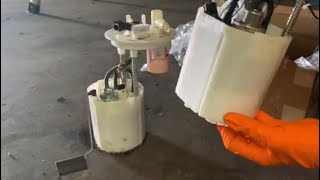
Typical fix: Replace the entire in-tank fuel pump module with the updated GM-recommended part, GM #13595835 or equivalent ACDelco part.
Est. part cost: $300-$500 - Faulty Fuel Pressure Sensor 🟡 Medium Probability → Shop Fuel Pressure Sensor This sensor, located on the fuel line between the tank and the engine, can fail to read correctly, especially at lower pressures. It often gets stuck reporting a fixed pressure value even when the system is depressurized, leading the computer to incorrectly flag a flow issue.
How to confirm: Check the fuel pressure reading on a scan tool. If the reading is erratic, stuck at a specific value (e.g., 48 PSI), or clearly incorrect compared to a mechanical gauge, the sensor is likely bad. TSB #PIP5286B provides a specific test: with a cold engine, command the fuel system to depressurize via a scan tool. The pressure reading should drop to zero and the engine should stall. If the reading remains high (e.g., 30-40 PSI) after the stall, the sensor is faulty.
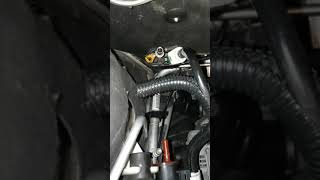
Typical fix: Replace the fuel pressure sensor located on the fuel line. 🎬 Watch: How to locate and remove the fuel pressure sensor. The O-ring seal may need to be ordered separately.
Est. part cost: $40-$80 - Failed Fuel Pump Control Module (FPCM) ⚪ Low Probability → Shop Fuel Pump
How to confirm: Requires advanced diagnostics. A technician would verify power and ground to the module, then check the command signal from the PCM and the output signal to the fuel pump. If the FPCM receives a valid command but fails to operate the pump correctly (and the pump and sensor are known to be good), the module is faulty.
Typical fix: Replace the Fuel Pump Control Module. This may require programming. 🎬 Watch: Fast and easy fuel pump control module replacement.
Est. part cost: $100-$200 - Wiring or Connector Issues ⚪ Low Probability
How to confirm: Visually inspect the wiring harness and connectors for the fuel pump, FPCM, and fuel pressure sensor. Check for corrosion (especially at the connector on top of the fuel tank), loose pins, or physical damage. Perform a voltage drop test on the power and ground circuits.
Typical fix: Repair the damaged section of the wiring harness or replace the faulty connector.
Est. part cost: $10-$50
Diagnosis Steps
- Connect an OBD-II scanner and confirm P2635 is present. Check for any other codes, paying close attention to P018B. 🎬 See a technician diagnose these specific fuel pressure codes.
- Review the freeze-frame data. Note the ambient temperature, engine temperature, and fuel pressure readings at the time the code was set. High temperatures would point towards the TSB-related issue.
- With the engine cold, perform the test outlined in TSB #PIP5286B. Using a scan tool, command the fuel system to depressurize while the engine is at idle. The fuel pressure reading should drop to zero and the engine will stall. If the pressure reading remains high after the stall, the fuel pressure sensor is faulty and should be replaced.
- If the sensor tests good, connect a fuel pressure gauge to the low-pressure fuel system's service port (if available) or monitor fuel pressure via live data on the scan tool.
- Compare the readings to the manufacturer's specifications (typically 30-65 PSI, variable by demand). Observe the pressure during idle, under load, and while recreating the symptom (e.g., driving in hot weather). A sharp drop in pressure indicates a flow problem.
- Inspect the wiring and connectors at the Fuel Pump Control Module (FPCM), the fuel pressure sensor, and the fuel pump module for any signs of damage, corrosion, or looseness.
- If the fuel pressure drops, the sensor is good, and wiring is intact, the in-tank fuel pump module is the most likely culprit, especially if symptoms align with the high-heat conditions described in TSBs.
Parts You'll Likely Need
- Fuel Pump Module Assembly
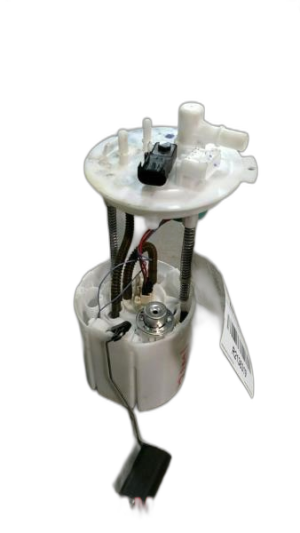
(OEM #13595835)— This is the most common failure for P2635 on this vehicle, as documented by GM's own service bulletins. This is the updated part designed to prevent vapor buildup.
Trusted brands: ACDelco, GM Genuine Parts
OEM price range: $350-$500
Aftermarket price range: $200-$400 - Fuel Pressure Sensor — This is a common secondary cause and a frequent misdiagnosis. It should be tested specifically using the TSB #PIP5286B procedure before replacing the more expensive fuel pump module.
Trusted brands: ACDelco, Bosch
OEM price range: $60-$90
Aftermarket price range: $30-$60
Related Codes That Often Appear With This One
- P018B — This code for 'Fuel Pressure Sensor 'B' Circuit Range/Performance' is frequently set with P2635. GM Technical Service Bulletins explicitly link these two codes to the same root causes: vapor buildup from a faulty pump in high heat, or a faulty fuel pressure sensor giving incorrect readings.
- P069E — This code, 'Fuel System Control Module Requested MIL Illumination', often indicates the FPCM itself has detected an internal or system fault and has asked the main engine computer to turn on the Check Engine Light. It strongly points towards a failure in the FPCM or the circuits it controls.
Technical Service Bulletins (TSBs) & Recalls
- 17-NA-335: Supersedes earlier bulletins. Identifies the cause as vapor buildup in the fuel line and recommends replacing the fuel pump module with an updated part to correct hesitation, surging, and stalling.
- PIP5507B: Preliminary information identifying P2635 and P018B setting in high ambient temperatures. Also notes that if the updated pump is installed and the issue persists in extreme heat, using high-octane fuel is advised.
- PIP5411E: An earlier, now superseded, bulletin also describing the P2635/P018B issue in high heat and pointing to vapor buildup as the cause. It listed specific updated part numbers for various GM trucks and SUVs.
- PIP5286B: Provides a specific diagnostic test for the low-side fuel pressure sensor when P2635 and P018B are set together, involving a cold engine and commanding fuel system depressurization via a scan tool.
Platform-Specific Known Issues
- A GM Technical Service Bulletin (#PIP5507B) notes that in ambient temperatures of 100°F (37.7°C) or higher, P2635 and/or P018B may set, accompanied by hesitation or stalling. Another bulletin (#17-NA-335) confirms this condition may be caused by vapor buildup in the fuel feed line and advises replacing the fuel pump module with an updated version.
Mechanic-Grade Diagnostic Values
- Low-Side Fuel Pressure (General) — expected: 30-45 PSI at idle, 55-65 PSI under load.. Failure: Pressure that is consistently below 30 PSI or fails to increase under load.
- Low-Side Fuel Pressure (KOEO - Key On, Engine Off) — expected: 40-47 PSI (based on similar GM platforms).. Failure: Pressure significantly below this range indicates a weak pump or a leak.
- Fuel Pressure Sensor Resistance — expected: 2 to 10 ohms.. Failure: A reading outside this range indicates a faulty sensor.
- Fuel Pressure Sensor 5V Reference Voltage — expected: Approximately 5.0 Volts with key on.. Failure: No voltage or low voltage indicates a wiring or PCM issue.
- Fuel Pressure Sensor Ground Wire Voltage — expected: Less than 500mV.. Failure: Voltage significantly higher than this indicates a poor ground connection.
- Fuel Pressure Sensor Signal Wire Voltage — expected: Variable voltage, e.g., ~2.2V at idle, increasing with pressure/load (~3.4V when revved).. Failure: A stuck, erratic, or non-responsive voltage reading.
Scan Tool Commands That Help
- GDS2 / Tech2 (or equivalent professional scanner): FPCM Duty Cycle Command — Use this bidirectional test to command the ECM to request a specific fuel pump duty cycle. Monitor the response from the FPCM. An inconsistent or absent response, when power and ground are verified, strongly suggests a faulty FPCM.
- GM SPS (Service Programming System): FPCM Programming/Setup — This is required after replacing the Fuel Pump Control Module (FPCM). The new module must be programmed to the vehicle's VIN to function correctly. Failure to program the new module will likely result in a no-start condition or immediate setting of fault codes.
Wiring & Ground Locations
- Fuel Pump Control Module (FPCM) — Typically located on the driver's side of the vehicle, mounted to the frame rail. On SUVs and trucks of this era, it is often found above the spare tire or in front of the gas tank. Access may require lowering the spare tire.. This module is a key failure point. Its location exposes it to road debris and corrosion, which can damage the module itself or its wiring connectors, leading to P2635.
- FPCM Connector Pinout (Typical GM) — The main electrical connector on the Fuel Pump Control Module.. Knowing the pinout is essential for testing power, ground, and signal integrity without guesswork. Key pins to test include: Pin 32 (RD/WH) for Battery Positive Voltage, Pin 1 (BLK) for Ground, Pin 13 (D-GN/WH) for the command signal from the PCM, and Pin 47 (GY) for the voltage supply to the fuel pump.
Real Owner Repair Stories
- YouTube video on a 2016 Chevrolet Tahoe (2016 Chevrolet Tahoe (similar GM platform)) — Engine cuts off while driving, codes P2635 and P018B.
✅ What actually fixed it The technician identified the cause as vapor buildup in the fuel line, consistent with GM TSBs. The fix was to replace the original fuel pump with the updated design, which incorporates a one-way breather valve to prevent this issue. - YouTube video on a 2013 Chevrolet Tahoe (2013 Chevrolet Tahoe (similar GM platform)) — No start, then rough running. Code P2635.
❌ Tried (didn't work) Initial diagnosis pointed to the FPCM, but simply replacing it would not have solved the entire problem.
✅ What actually fixed it The technician found two separate issues. First, there was significant corrosion in the underhood fuse box causing a poor power supply to the FPCM. After repairing the wiring, the P2635 code persisted. Further diagnosis confirmed the FPCM itself had also failed. The final fix was both repairing the corroded wiring and replacing the FPCM.
"I Checked Everything" — The Actual Cause
- In a common scenario for this code on GM platforms, a technician may find multiple compounding issues. For example, a vehicle may have a corroded power wire to the Fuel Pump Control Module (FPCM) located in the underhood fuse box. After this wiring is repaired, the P2635 code may still persist. This is because the intermittent voltage from the bad connection may have damaged the FPCM itself. The root cause is not just one component, but a sequence of failures, requiring both a wiring repair and a module replacement to fully resolve the issue.
OEM Part Supersession History
13578102, 13580932, 13583979, 13584323, 13594163→13595835— The original fuel pump module design was prone to causing vapor lock in high ambient temperatures. The updated part (13595835) was engineered to correct this flaw, as noted in GM service bulletins.23103795, 23172742, 23200138→23482933— Updated part for the Fuel Pump Control Module (FPCM). Reasons for supersession often include improved internal components for reliability or manufacturing process changes.
Heads up: A replacement FPCM requires programming to the vehicle using GM's Service Programming System (SPS) to function.
Helpful Videos


Used OEM Parts in Stock
New Aftermarket Parts Available


The information in this article is provided for general reference and educational purposes only. Vehicle specifications, procedures, and part compatibility can vary by production date, trim level, and region. Always consult your vehicle's factory service manual and verify part numbers before purchasing or performing repairs. Safety-critical components such as airbags, seat belts, and braking systems should be installed by a qualified professional.
- Buick REGAL:
- 🧭 Diagnostic Flowchart
- 🎬 Helpful Videos
- 🛍️ Shop This Part
- What's Unique About the 2013-2017 Buick REGAL
- Symptoms You May Notice
- Most Likely Causes
- Diagnosis Steps
- Parts You'll Likely Need
- Related Codes That Often Appear With This One
- Technical Service Bulletins (TSBs) & Recalls
- Platform-Specific Known Issues
- Mechanic-Grade Diagnostic Values
- Scan Tool Commands That Help
- Wiring & Ground Locations
- Real Owner Repair Stories
- "I Checked Everything" — The Actual Cause
- OEM Part Supersession History
- 🎟️ Get 5% Off