

P2635 on 2013-2017 Cadillac ATS: Fuel Pump Low Flow Causes and Fixes
On a 2013-2017 Cadillac ATS, code P2635 indicates the fuel pump is not providing enough flow. This is often triggered by high ambient temperatures (over 100°F) due to vapor buildup in the fuel line, a known issue cited in GM Technical Service Bulletin #PIP5507B. The most common causes are a failing in-tank fuel pump or a faulty Fuel Pump Control Module (FPCM), a component known to fail on this platform.
- P2635 on a Cadillac ATS is a serious code indicating a fuel delivery problem that can cause dangerous stalling.
- Be aware of the specific issue noted in TSB #PIP5507B: if symptoms are worse in hot weather (100°F+), the cause is likely heat-related vapor lock.
- The code is often accompanied by P018B; this pair strongly points to the fuel delivery issue described in the TSB.
- The most common culprits are the in-tank fuel pump and the Fuel Pump Control Module (FPCM). Diagnosis should aim to differentiate between these two parts.
- Due to the risk of stalling and the complexities of fuel system repair, professional diagnosis and service are highly recommended.
What's Unique About the 2013-2017 Cadillac ATS
The Cadillac ATS, built on the GM Alpha platform, is particularly susceptible to setting a P2635 code in high ambient temperatures. A manufacturer TSB confirms that temperatures over 100°F (37.7°C) can cause fuel vapor buildup in the fuel feed line, leading to hesitation, stalling, and this specific trouble code. This indicates a sensitivity in the fuel delivery system design to heat. The bulletin explicitly states that simply replacing the fuel pump may not fix this specific heat-related concern and suggests using higher octane fuel as a temporary mitigation strategy.
Diagnostic Flowchart
Tap your situation to follow the diagnostic path that matches what you're seeing on this vehicle.
Symptoms You May Notice
- Check Engine Light is on
- Hesitation or stumbling during acceleration
- Engine stalling, especially in hot weather or during high load (e.g., track driving).
- Reduced engine power or 'limp mode'
- Extended cranking time before the engine starts
- Rough idle or misfires
- Inability to restart the engine after stalling.
- Replacing the fuel pump when the Fuel Pump Control Module (FPCM) is the actual cause.
- Replacing the fuel pressure sensor without first verifying its readings with a mechanical gauge or testing its response at zero pressure.
- Ignoring the TSB related to high ambient temperatures, which points to a specific condition of vapor buildup rather than a simple component failure. The TSB explicitly states replacing the pump may not fix this specific issue.
Most Likely Causes
- Failing In-Tank Fuel Pump 🔴 High Probability → Shop Fuel Pump As noted in TSB #PIP5507B, the fuel system is prone to issues in high heat, which can be exacerbated by a weak fuel pump unable to overcome vapor buildup. Wear and tear is also a common factor, with failures reported after around 10 years of service.
How to confirm: Use a scan tool (like a GDS2 for GM vehicles) to monitor desired vs. actual fuel rail pressure. If actual pressure drops significantly under load or during high-temperature conditions, the pump is likely weak. A fuel volume and pressure test with a mechanical gauge can provide definitive proof. Normal low-side pressure should be around 45-65 PSI.
Typical fix: Replace the in-tank fuel pump module assembly. This requires dropping the fuel tank. It is critical to use the updated part number if one is specified by a TSB.
Est. part cost: $250-$500 - Faulty Fuel Pump Control Module (FPCM) 🟡 Medium Probability → Shop Fuel Pump The FPCM regulates voltage to the fuel pump. These modules can fail from heat stress or internal component degradation. On the ATS, the FPCM is typically mounted on the driver's side frame rail, ahead of the rear wheel, where it can be exposed to road salt and moisture, leading to corrosion and failure.
How to confirm: Check for communication with the FPCM using a scan tool. Inspect the module and its connector for corrosion or damage. A scan tool may also be able to command the pump duty cycle to test the module's response. A user on cadillacforums.com confirmed that replacing the FPCM solved their P2635 and stalling issue.
Typical fix: Replace the Fuel Pump Control Module. While OEM modules require programming, some aftermarket suppliers sell pre-programmed modules that are plug-and-play.
Est. part cost: $100-$200 - Clogged Fuel Filter or Inlet Sock ⚪ Low Probability → Shop Fuel Filter
How to confirm: If the fuel pump is being replaced, inspect the old pump's inlet sock for heavy contamination or debris. The main fuel filter on the ATS is typically integrated into the fuel pump module assembly and is not serviced separately.
Typical fix: The inlet sock is replaced as part of the fuel pump module assembly.
Est. part cost: $0 (included with pump) - Faulty Low-Side Fuel Pressure Sensor ⚪ Low Probability → Shop Fuel Pressure Sensor
How to confirm: This code is often seen with P018B (Fuel Pressure Sensor 'B' Circuit Range/Performance). A faulty sensor can report incorrect pressure, triggering P2635 even if the pump is healthy. Monitor the sensor's readings on a scan tool; it should fluctuate and not be stuck on a single value (e.g., stuck at 48.7 PSI). A key diagnostic test is to command the fuel pump off and watch the sensor reading; a faulty sensor may get stuck at 30-40 PSI instead of dropping to zero.
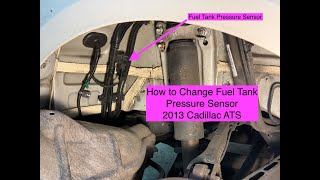
Typical fix: Replace the low-side fuel pressure sensor, which is typically located on the fuel line under the vehicle, near the tank.
Est. part cost: $40-$80
Rare But Worth Checking
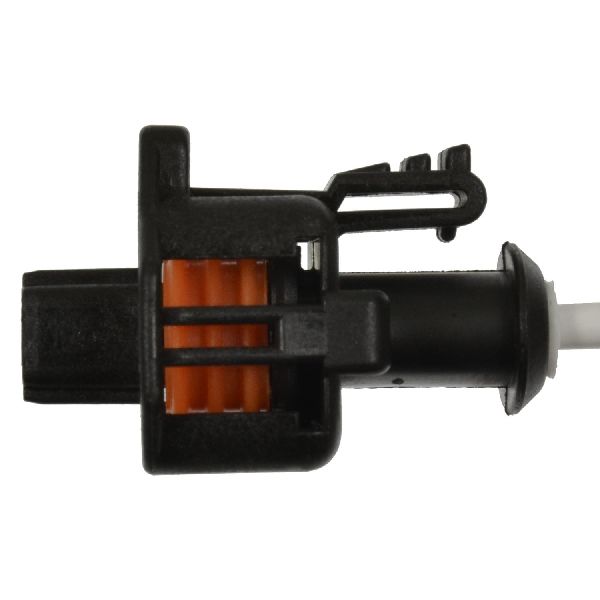
- Wiring or Connector Issues: Corrosion or damage to the wiring or connectors for the FPCM or the fuel pump can cause high resistance (above 0.2 Ohms) and reduce voltage to the pump, mimicking a pump failure. This is worth checking before replacing expensive components, especially the FPCM connector given its location on the frame rail.
Diagnosis Steps
- Scan the vehicle for all stored DTCs. Note P2635 and any accompanying codes like P018B or P069E.
- Review the freeze-frame data to see the conditions (engine speed, load, ambient temperature) when the code was set. Note if the temperature was above 100°F.
- Check for applicable Technical Service Bulletins (TSBs), specifically #PIP5507B for this model and issue.
- Visually inspect the Fuel Pump Control Module (FPCM) and its wiring harness for any signs of corrosion, damage, or loose connections. The FPCM is located on the driver's side frame rail, forward of the rear wheel.
- Using a capable scan tool, monitor both the 'Desired Fuel Rail Pressure' and 'Actual Fuel Rail Pressure' data PIDs. Also monitor the low-side fuel pressure sensor reading. Perform a road test under load to see if the actual pressure drops significantly below the desired pressure.
- If symptoms are temperature-dependent, try to replicate the high-heat conditions noted in the TSB.
- If a scan tool shows the low-side fuel pressure sensor reading is stuck or erratic, perform a specific test: command the fuel pump OFF and watch the pressure reading. If it does not drop to near-zero PSI and instead hangs at a value like 30-40 PSI, the sensor is faulty per TSB #PIP5286B.
- If the FPCM is accessible and tests are inconclusive, some technicians may tap the module to see if it induces a failure, indicating an internal fault. Check for proper voltage (12.0-12.6V) and ground at the FPCM connector.
- If the FPCM, sensor, and wiring are confirmed to be good, the in-tank fuel pump is the most likely cause of the low flow condition.
Parts You'll Likely Need
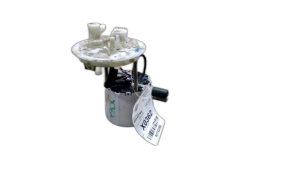
- Fuel Pump Module Assembly — This is the most common failure part, especially when symptoms occur in high heat as described in GM service bulletins.
Trusted brands: ACDelco, Delphi
OEM price range: $350-$500
Aftermarket price range: $250-$400 - Fuel Pump Control Module (FPCM)
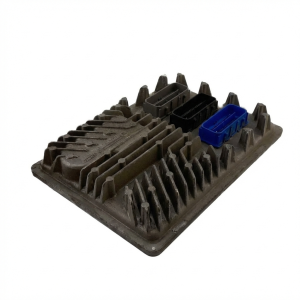
(OEM #84402225 (Verify by VIN))— This module controls the fuel pump and is a known failure point on many GM vehicles, causing low flow conditions. Its location on the frame makes it susceptible to damage.
Trusted brands: ACDelco, Dorman (601-048), Standard Motor Products
OEM price range: $150-$200
Aftermarket price range: $100-$150 - Low-Side Fuel Pressure Sensor
(OEM #13577394 (verify by VIN))— A faulty sensor can send incorrect data, causing the ECM to set P2635 erroneously. It's a common companion code with P018B and is the subject of a specific GM diagnostic procedure (PIP5286B).
Trusted brands: ACDelco, Bosch
OEM price range: $50-$80
Aftermarket price range: $30-$60
Related Codes That Often Appear With This One
- P018B — This code for 'Fuel Pressure Sensor 'B' Circuit Range/Performance' is frequently set alongside P2635. TSB #PIP5507B explicitly mentions that these two codes often appear together as a result of vapor buildup in the fuel line in high temperatures.
- P069E — This code indicates a 'Fuel Pump Control Module Requested MIL Illumination'. It means the FPCM has detected a fault (like the low flow of P2635) and has asked the main engine computer to turn on the Check Engine Light. It's a confirmation that the fault originates within the FPCM's monitored system.
Technical Service Bulletins (TSBs) & Recalls
- PIP5507B: Addresses DTCs P2635 and/or P018B setting in high ambient temperatures, causing hesitation or stalling. Explicitly states replacing the fuel pump may not repair this specific concern and suggests advising customers to use higher octane fuel.
- PIP5286B: Provides a specific diagnostic tip for vehicles setting both P2635 and P018B, focusing on identifying a faulty fuel pressure sensor that fails to read near-zero pressure when the pump is commanded off.
Platform-Specific Known Issues
- High Temperature Stalling: Per TSB #PIP5507B, these vehicles can experience hesitation and stalling with codes P2635 and P018B in ambient temperatures of 100°F (37.7°C) or higher due to vapor buildup in the fuel line. The bulletin notes that simply replacing the fuel pump may not fix this concern and advises using higher octane fuel (greater than 91) or parking in the shade as temporary measures.
Mechanic-Grade Diagnostic Values
- Low-Side Fuel Pressure (Idle) — expected: 45-65 PSI (approx. 310-450 kPa). Failure: Pressure consistently drops below 40 PSI under load or in high heat.
- Low-Side Fuel Pressure Sensor Voltage (Signal Wire) — expected: 0.5V - 4.5V (fluctuating with pressure). Failure: Voltage is stuck at 0V, 5V, or a fixed value that doesn't change (e.g., 48.7 PSI).
- Low-Side Fuel Pressure Sensor Reading (Pump Commanded OFF) — expected: Should drop to near 0 PSI.. Failure: Reading gets stuck at a residual value, such as 30-40 PSI, even after the engine stalls.
- FPCM / Fuel Pump Wiring Harness Resistance — expected: Below 0.2 Ohms. Failure: Resistance values higher than 0.2 Ohms indicate a poor connection or corrosion, which can reduce voltage to the pump.
Scan Tool Commands That Help
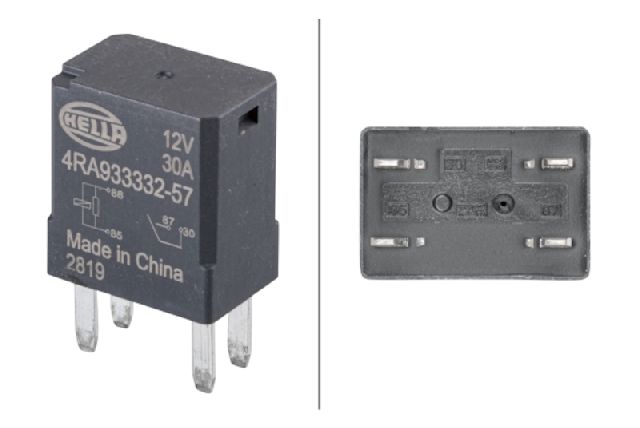
- GDS2 / Professional Scan Tool: Fuel Pump Relay/Control Command — Use this to command the fuel pump OFF to test the low-side pressure sensor's ability to return to a zero reading. Per TSB #PIP5286B, if the sensor reading hangs at 30-40 PSI after the pump is commanded off, the sensor is faulty.
- GDS2 / Professional Scan Tool: Live Data: Desired vs. Actual Fuel Pressure — This is the primary data to monitor during a road test. A significant and consistent deviation where 'Actual' pressure is lower than 'Desired' pressure points directly to a low-flow condition caused by the pump or FPCM.
Wiring & Ground Locations
- FPCM Connector — On the Fuel Pump Control Module, located on the driver's side frame rail, forward of the rear wheel.. This connector is in a location exposed to road salt and moisture, making it a common point for corrosion that can cause high resistance and lead to P2635.
- Main Engine Ground Stud — On similar GM Gen V architectures, a critical ground stud is located on the back of the engine near the top of the flywheel housing.. A poor ground connection at this or other primary locations can cause fluctuating voltage to various modules and sensors, including the FPCM and ECM, leading to intermittent and hard-to-diagnose electrical faults that can trigger P2635.
Real Owner Repair Stories
- Reddit user Big_Comparison2849 (2013 Cadillac ATS 2.0T Manual, 110,000 miles) — Not specified, but part of general maintenance/repair history.
✅ What actually fixed it The owner reported having to replace a 'weak fuel pump' after the car was 10 years old.
"I Checked Everything" — The Actual Cause
- A common misdiagnosis pattern for P2635 involves the low-side fuel pressure sensor. A technician may test the fuel pump and see what appears to be a normal pressure reading at idle. However, the actual cause can be a faulty sensor that is unable to read the low end of its range. GM TSB #PIP5286B outlines a specific test for this: command the fuel pump off and watch the sensor data. If the reading hangs at 30-40 PSI instead of dropping to zero, the sensor is bad, not the pump. This is missed by technicians who only check for pressure under load and don't verify the sensor's full range of operation.
OEM Part Supersession History
Various→84402225 (Verify by VIN)— Module updates for reliability.
Heads up: The original part number for the FPCM cited in Pass 2, 23180074, appears to be for a side view mirror, not a fuel module. Aftermarket suppliers like Dorman (601-048) and others offer pre-programmed modules that do not require dealer calibration, which can be a significant cost and time saver.
Model Year Variations Within This Range
- 2013-2015: The 2.0L Turbo (LTG) engine in early ATS models is noted in owner communities for having a higher incidence of piston cracking issues. While not directly related to the P2635 fuel code, prospective buyers often recommend seeking a 2016+ model to avoid this potential engine problem.
Helpful Videos

Used OEM Parts in Stock
New Aftermarket Parts Available


The information in this article is provided for general reference and educational purposes only. Vehicle specifications, procedures, and part compatibility can vary by production date, trim level, and region. Always consult your vehicle's factory service manual and verify part numbers before purchasing or performing repairs. Safety-critical components such as airbags, seat belts, and braking systems should be installed by a qualified professional.
- Cadillac ATS:
- 🧭 Diagnostic Flowchart
- 🎬 Helpful Videos
- 🛍️ Shop This Part
- What's Unique About the 2013-2017 Cadillac ATS
- Symptoms You May Notice
- Most Likely Causes
- Rare But Worth Checking
- Diagnosis Steps
- Parts You'll Likely Need
- Related Codes That Often Appear With This One
- Technical Service Bulletins (TSBs) & Recalls
- Platform-Specific Known Issues
- Mechanic-Grade Diagnostic Values
- Scan Tool Commands That Help
- Wiring & Ground Locations
- Real Owner Repair Stories
- "I Checked Everything" — The Actual Cause
- OEM Part Supersession History
- Model Year Variations Within This Range
- 🎟️ Get 5% Off