

P2635 on 2013-2017 Cadillac CTS: Fuel Pump Low Flow Causes and Fixes
On a 2013-2017 Cadillac CTS, code P2635 almost always indicates a failing in-tank fuel pump module, especially if you experience hesitation or stalling in hot weather. The official fix is an updated fuel pump module, which is a costly repair requiring the fuel tank to be removed.
- P2635 on a 2013-2017 CTS is very likely caused by a design flaw in the original fuel pump that makes it fail in high heat, as documented in GM TSBs.
- The official fix is to replace the in-tank fuel pump module with a redesigned part (per TSB PIP5411E), not just any replacement pump.
- This is a serious issue that can cause dangerous stalling and is an expensive, labor-intensive repair requiring the fuel tank to be dropped.
- The issue is widespread across many GM vehicles from this era, including Camaros, Silverados, and other Cadillacs.
- Do not be misled by the confusing wording in TSB PIP5507B; the pump replacement is the accepted engineering solution to the root cause.
What's Unique About the 2013-2017 Cadillac CTS
For this specific generation of Cadillac CTS and its GM platform mates, the P2635 code is strongly linked to a known issue outlined in GM Technical Service Bulletins PIP5507B and PIP5411E. The problem is often triggered by high ambient temperatures (over 100°F), causing the original fuel pump to fail and create a vapor buildup in the fuel line. While TSB PIP5507B offers customer advice like using higher octane fuel, the root cause fix is detailed in TSB PIP5411E, which instructs technicians to replace the original fuel pump with a redesigned module.
Diagnostic Flowchart
Tap your situation to follow the diagnostic path that matches what you're seeing on this vehicle.
Generation note: This range covers the end of the second generation (2013) and the beginning of the third generation (2014-2017) of the Cadillac CTS. The TSB from GM covers this entire period, indicating that the fuel system components and the associated heat-related failure are common to both generations.
Symptoms You May Notice
- Engine hesitation or surging, especially under acceleration.
- Engine stalling, particularly on hot days or after the vehicle has been running for a while.
- Check Engine Light illuminated.
- Reduced engine power.
- Extended cranking time before the engine starts.
- Difficulty starting the engine.
- Noticeable lurching or 'cutting out' during wide-open throttle or heavy acceleration.
- Replacing only the fuel pressure sensor without testing the pump. While the sensor can fail, the pump module is the much more common culprit for these symptoms on this platform.
- Replacing the high-pressure fuel pump (if equipped). P2635 refers to 'Pump A', which is the low-pressure in-tank pump, not the engine-mounted high-pressure pump.
- Believing the issue cannot be the fuel pump because TSB PIP5507B confusingly states 'Replacing the fuel pump will not repair this concern'. This is often taken out of context.
Most Likely Causes
- Failing In-Tank Fuel Pump Module 🔴 High Probability → Shop Fuel Pump A GM Technical Service Bulletin (PIP5411E) identifies a known issue where the original fuel pump can fail in high ambient temperatures, leading to vapor lock and low fuel flow. This is the primary cause.
How to confirm: Monitor low-side fuel pressure using a scan tool. Compare the desired pressure to the actual pressure. The pressure will often drop significantly when the symptoms occur, especially in hot weather. The problem may not be reproducible in a cool shop environment, which is a common source of diagnostic frustration for owners.
Typical fix: Replace the entire in-tank fuel pump module with the updated, redesigned part number specified by GM in TSB PIP5411E. This requires removing the fuel tank.
Est. part cost: $350-$600 - Faulty Fuel Pump Control Module (FPCM) 🟡 Medium Probability → Shop Fuel Pump The FPCM regulates the fuel pump's speed. Like any electronic module, it can fail from heat, vibration, or age, causing it to improperly command the fuel pump. Some owners have had this module replaced by dealers in an attempt to fix the P2635 code, sometimes unsuccessfully.
How to confirm: A professional technician can use a bidirectional scan tool to command the fuel pump on and monitor its duty cycle and the resulting fuel pressure. If the pump doesn't respond correctly to FPCM commands, and the wiring is good, the module may be at fault.
Typical fix: Replace the Fuel Pump Control Module. It may require programming to the vehicle. An example part number for some GM vehicles is ACDelco 22872266.
Est. part cost: $100-$250 - Clogged Fuel Filter ⚪ Low Probability → Shop Fuel Filter The fuel filter is integrated into the fuel pump module assembly. While not typically the primary point of failure for this specific code, a severely clogged filter can restrict flow and cause the pump to work harder, leading to low performance. One owner on a Camaro forum was told by a dealer that a partially clogged filter was the cause of multiple codes including P2635.
How to confirm: This is difficult to confirm without removing the fuel pump module. It is typically replaced as part of the entire module assembly during the repair for the more common pump failure.
Typical fix: Replace the fuel pump module assembly, which includes a new filter.
Est. part cost: $350-$600
Rare But Worth Checking
- Faulty Fuel Pressure Sensor: → Shop Fuel Pressure Sensor A bad sensor can report incorrect low pressure to the FPCM, triggering the code even if the pump is working correctly. This often sets code P018B alongside P2635. TSB PIP5286B provides specific diagnostic steps for this sensor.
- Wiring Harness Damage: Corrosion or damage to the wiring for the fuel pump or FPCM can cause a loss of power or signal, leading to low flow. Check connectors for corrosion, especially if the vehicle is from a region with heavy road salt use.
Diagnosis Steps
- Verify the code with an OBD-II scanner. Check for any other accompanying codes, especially P018B and P069E.
- Using the scanner's live data function, monitor the 'Desired Fuel Rail Pressure' and 'Actual Fuel Rail Pressure' (or similar PIDs).
- Attempt to replicate the symptoms. The issue is most likely to occur in ambient temperatures above 100°F or after the vehicle is fully warmed up and driven hard.
- Observe the fuel pressure data when the hesitation or stalling occurs. A significant drop in actual pressure compared to desired pressure points to a fuel delivery issue.
- If the pressure drops, the next step is to inspect the fuel system. Check the FPCM and fuel pump wiring and connectors for any visible damage or corrosion.
- Given the known TSBs, if the symptoms and codes match the description (hot weather failure), the in-tank fuel pump module is the primary suspect.
- Confirm the diagnosis with a fuel pressure gauge if necessary, but be aware the issue is intermittent and heat-dependent, making it hard to replicate in a shop.
- Before replacing the pump, a technician should check TSB PIP5411E to confirm the vehicle qualifies and to obtain the latest redesigned part number.
Parts You'll Likely Need
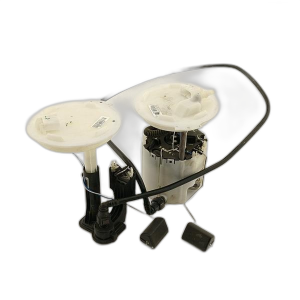
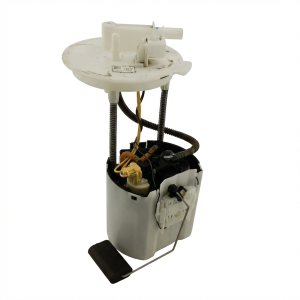
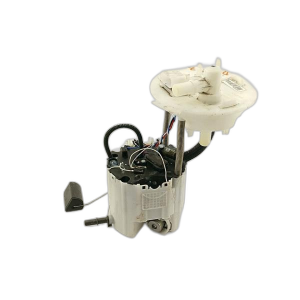
- Fuel Pump and Sender Assembly
(OEM #Varies, must check by VIN. See TSB PIP5411E for examples like 13512934 or 13513407 for other GM models.)— This is the most common cause of P2635 on this vehicle, as documented in GM TSB PIP5411E. The entire module, which includes the pump, filter, and level sender, must be replaced with a redesigned version to resolve the heat-related failure.
Trusted brands: ACDelco (OEM), Delphi
OEM price range: $450-$600
Aftermarket price range: $300-$450
Related Codes That Often Appear With This One
- P018B — This code for 'Fuel Pressure Sensor 'B' Circuit Range/Performance' is frequently set with P2635. The TSBs #PIP5507B and #PIP5411E explicitly mention that both codes may set together under high-temperature conditions.
- P069E — This code for 'Fuel Pump Control Module Requested MIL Illumination' often accompanies P2635, as seen in owner forums. It indicates the FPCM has detected a fault (like the low flow of P2635) and has asked the main engine computer to turn on the Check Engine Light.
Technical Service Bulletins (TSBs) & Recalls
- PIP5507B: Addresses DTCs P2635 and/or P018B setting in high ambient temperatures. It confusingly suggests pump replacement won't fix the issue and offers workarounds, but it directs technicians to follow PIP5411 if the pump hasn't been replaced yet.
- PIP5411E: This is the key TSB. It identifies vapor buildup as the cause and explicitly instructs technicians to 'Replace the in tank fuel pump module assembly with the new design part' and provides part numbers for various affected GM models.
Platform-Specific Known Issues
- A known issue, documented in TSBs #PIP5507B and #PIP5411E, causes the fuel pump to perform poorly in ambient temperatures of 100°F (37.7°C) or higher, leading to hesitation, stalling, and the P2635 code.
- Owner experiences from forums highlight extreme frustration with this issue. One 2017 ZL1 owner reported their car was in the shop six times, with the dealer replacing the fuel pump, tank, FPCM, and BCM, yet the code still returned in hot weather, leading them to call it a 'nuisance code'.
- The problem is not always resolved on the first attempt, even by dealerships, due to its intermittent and heat-dependent nature.
Mechanic-Grade Diagnostic Values
- Scan Tool Desired vs. Actual Fuel Pressure — expected: Actual pressure should be within 45 kPa (6.5 PSI) of desired pressure.. Failure: A deviation greater than 45 kPa (6.5 PSI) indicates a performance issue.
- Voltage at Fuel Pump Control Module (FPCM) — expected: 12.0–12.6 V with the ignition on.. Failure: A voltage drop below 11.5 V suggests a problem with the power supply wiring or the module's voltage regulation.
- Fuel Pressure Sensor Live Data — expected: The pressure reading (e.g., in PSI) should fluctuate slightly during engine operation.. Failure: A value that is completely static and does not change (e.g., stuck at 48.7 PSI) strongly suggests a failed sensor rather than a pump issue.
- Fuel Pump Wiring Resistance — expected: Close to 0 ohms on power and ground circuits.. Failure: Any resistance reading above 0.2 Ω can indicate a poor connection or corrosion, leading to reduced current flow to the pump.
Scan Tool Commands That Help
- GM GDS2 (or equivalent professional scanner): Fuel Pump Enable / Fuel Pump Control — This bidirectional control allows a technician to command the fuel pump ON and OFF manually to test its operation and check for pressure response. This helps isolate a failed pump from a control-side issue. Note: The vehicle may need to be in 'Service Only Mode' (press and hold the start button for 5+ seconds without depressing the brake) for the command to execute.
- GM GDS2 (or equivalent professional scanner): FPCM Live Data Stream — Accessing the Fuel Pump Control Module directly allows viewing of module-specific data, such as desired vs. actual fuel pressure and pump duty cycle. This is more precise than viewing generic ECM data and can confirm if the FPCM itself is seeing the pressure drop.
Wiring & Ground Locations
- Fuel Pump Control Module (FPCM) — Located in the luggage compartment on the left side, behind the trim panel.. This is the module that controls the fuel pump and sets the P2635 code. Physical access is required to test its wiring, connectors, and ground, or to replace it.
- G401 / G402 (Rear Grounds) — Located at the rear shock towers (G401 right, G402 left) on related performance models. General GM ground locations in the G4xx series are in the rear of the vehicle.. The FPCM and fuel pump are located in the rear of the vehicle and rely on a clean chassis ground. A corroded or loose rear ground point can cause high resistance, starving the pump for current and mimicking a pump failure.
- Battery to Chassis Ground — The main ground strap from the battery negative terminal to the vehicle's chassis.. On some GM platforms, this primary ground connection can be a weak point. An aftermarket upgrade is available, suggesting the factory setup can be insufficient for high-performance pumps or can degrade over time, causing system-wide low voltage issues that could affect the fuel pump.
OEM Part Supersession History
13582493→13512934— This is a common supersession for the in-tank fuel pump module on related GM SUV platforms that suffer from the same heat-related P2635 issue. The new part is intended to be the redesigned unit mentioned in TSBs.
Heads up: While listed for SUVs like the Tahoe/Yukon, this part is frequently referenced for the platform-wide issue. Always confirm the correct part number for the specific CTS VIN via the dealer or parts catalog, as multiple pump designs exist.N/A→20892932— This is the specific Fuel Pump Power Control Module for the 2014-2018 Cadillac CTS.
Heads up: This part requires programming and/or special setup procedures after installation to ensure proper operation in the vehicle.
Model Year Variations Within This Range
- 2013 vs 2014-2017: The 2013 model is the final year of the second generation, while 2014 marked the start of the third generation on a new platform. However, the P2635 issue and the associated TSBs span this change, indicating the fundamental fuel delivery system design (in-tank low-pressure pump controlled by an FPCM) and its heat-related failure mode are common to both generations within this range.
Helpful Videos

Used OEM Parts in Stock
New Aftermarket Parts Available




The information in this article is provided for general reference and educational purposes only. Vehicle specifications, procedures, and part compatibility can vary by production date, trim level, and region. Always consult your vehicle's factory service manual and verify part numbers before purchasing or performing repairs. Safety-critical components such as airbags, seat belts, and braking systems should be installed by a qualified professional.
- Cadillac CTS:
- 🧭 Diagnostic Flowchart
- 🎬 Helpful Videos
- 🛍️ Shop This Part
- What's Unique About the 2013-2017 Cadillac CTS
- Symptoms You May Notice
- Most Likely Causes
- Rare But Worth Checking
- Diagnosis Steps
- Parts You'll Likely Need
- Related Codes That Often Appear With This One
- Technical Service Bulletins (TSBs) & Recalls
- Platform-Specific Known Issues
- Mechanic-Grade Diagnostic Values
- Scan Tool Commands That Help
- Wiring & Ground Locations
- OEM Part Supersession History
- Model Year Variations Within This Range
- 🎟️ Get 5% Off