

P2635 on 2013-2017 Cadillac Escalade ESV: Fuel Pump Low Flow Causes and Fixes
On a 2013-2017 Cadillac Escalade ESV, code P2635 almost always points to a failing in-tank fuel pump module, especially if you experience stalling or hesitation in hot weather. GM has acknowledged this widespread issue with multiple TSBs. The fix is an updated fuel pump module, but expect a significant repair cost due to the part price and labor to drop the fuel tank.
- P2635 on a 2013-2017 Escalade ESV indicates a fuel delivery problem, not just a sensor issue.
- The most likely cause is a failing in-tank fuel pump, especially if symptoms worsen in hot weather.
- GM has acknowledged this issue in several TSBs and recommends replacing the fuel pump module with an updated part.
- Due to the complexity and safety risks of dropping the fuel tank, this repair is recommended for professional mechanics.
- Always check for communication codes (U-codes) first, as they can indicate a module or wiring issue that mimics a fuel pump failure.
What's Unique About the 2013-2017 Cadillac ESCALADE ESV
This generation of Cadillac Escalade and its sister GM SUVs/trucks are known for this specific failure mode, particularly in high ambient temperatures. General Motors issued multiple Technical Service Bulletins (TSBs) acknowledging that heat can cause a vapor buildup in the fuel feed line, which the original fuel pump design could not overcome, leading to fuel starvation, stalling, and hesitation. The official fix involves replacing the original fuel pump with an updated part (e.g., GM Part #13512935 for long-wheelbase models) designed with a different breather system to better handle these vaporous conditions.
Diagnostic Flowchart
Tap your situation to follow the diagnostic path that matches what you're seeing on this vehicle.
Generation note: This year range covers the end of the third generation (2013-2014, GMT900 platform) and the beginning of the fourth generation (2015-2017, K2XX platform). The 2013-2014 models used a 6.2L L94 V8, while the 2015-2017 models used an updated 6.2L EcoTec3 L86 V8. However, the fuel delivery issue indicated by P2635 is well-documented in TSBs for the K2XX platform vehicles (2015+), suggesting a persistent problem with the fuel system design or components that became prominent with the newer generation.
🎬 Watch: A mechanic explains the P2635 fuel flow performance issue.Symptoms You May Notice
- Check Engine Light is on
- Engine hesitation or stumbling on acceleration
- Engine surging
- Stalling, especially in hot weather or when the engine is warm
- Extended cranking time before the engine starts
- Reduced engine power, feeling sluggish under load
- Shuddering or rough running, especially after a fill-up or when fuel is low
- Replacing the fuel pressure sensor when the fuel pump itself is weak.
- Replacing the FPCM without first verifying that the fuel pump is receiving proper voltage and is mechanically sound.
- Clearing the code without addressing the underlying cause. A Reddit user with a 2017 Escalade ESV asked if they could just reset the code after it appeared when the tank was run nearly empty; this is ill-advised as the low fuel level likely exacerbated a pre-existing weak pump condition.
Most Likely Causes
- Failing In-Tank Fuel Pump Module 🔴 High Probability → Shop Fuel Pump Multiple GM TSBs (e.g., #17-NA-335, #PIP5411F) directly point to this as the primary cause, especially in ambient temperatures over 100°F (38°C). The bulletins state the condition is caused by 'vapor buildup in fuel feed line' and advise replacing the fuel pump module with an updated part to correct the condition.
How to confirm: Use a scan tool to monitor desired vs. actual fuel rail pressure. If actual pressure drops significantly under load or during the symptomatic high-heat conditions, the pump is likely weak. A user on Tahoe Yukon Forum noted the commanded pressure should be around 43.5 psi once warm, and if the pump can't maintain it, it's failing.
Typical fix: Replace the entire in-tank fuel pump module assembly with the updated GM part. For the Escalade ESV (long wheelbase), this is GM part #13512935.
Est. part cost: $350-$1600 - Clogged Fuel Filter or Pump Inlet Sock 🟡 Medium Probability → Shop Fuel Filter The fuel filter is integrated into the fuel pump module assembly and is not separately serviceable. Debris in the fuel tank from poor quality fuel or age can clog the inlet sock, restricting flow and causing the pump to underperform and eventually fail.
How to confirm: This is usually discovered during the replacement of the fuel pump. If the fuel tank is dropped and the old pump's inlet sock is visibly dirty or clogged, this was a contributing factor. It is best practice to clean the tank thoroughly when replacing the pump.
Typical fix: Replace the fuel pump module, which includes a new filter and sock. Cleaning the fuel tank is highly recommended if significant debris is found.
Est. part cost: $350-$1600 - Faulty Fuel Pump Control Module (FPCM) ⚪ Low Probability → Shop Fuel Pump
How to confirm: Requires advanced diagnostics. TSB #PIP5427 specifically advises diagnosing communication codes like U0074 first, as a communication loss between the ECM and FPCM can induce a P2635 code. A technician can monitor FPCM commands and output voltage to see if it's commanding the pump correctly. A diagnostic guide suggests checking for 12V at the pink wire (Pin 15) and a command signal on the dark green/white wire (Pin 13) at the FPCM connector.
Typical fix: Replace the Fuel Pump Control Module. A user on a Tahoe/Yukon forum mentioned this as a possible cause, but the dealer ultimately replaced the pump and sensor for a similar set of codes.
Est. part cost: $80-$200 - Faulty Fuel Pressure Sensor ⚪ Low Probability → Shop Fuel Pressure Sensor
How to confirm: TSB #PIP5286 mentions this possibility. Compare the sensor's readings on a scan tool with a manual pressure gauge connected to the fuel rail. If the readings differ significantly, the sensor is likely faulty. A Reddit user with a 2017 Silverado reported their P2635 was ultimately fixed by replacing a fuel pressure sensor located under the driver's door. A YouTube video shows a 2017 Silverado with a stuck fuel pressure sensor reading 48.7 PSI; a healthy sensor should fluctuate between 30 and 60 PSI with the engine running.
Typical fix: Replace the fuel pressure sensor.
Est. part cost: $50-$150
Rare But Worth Checking
- Wiring or Connector Issue: A damaged wire or corroded connector for the fuel pump or FPCM can cause low voltage, leading to reduced pump performance. This should be checked before replacing expensive components. A user on a Tahoe/Yukon forum suggested checking the FPCM harness for corrosion or damage as a first step.
Diagnosis Steps
- Check for other DTCs. If communication codes like U0074 or U18A2 are present, diagnose them first as per TSB #PIP5427, as fixing the communication issue may resolve the P2635.
- Review freeze frame data to identify the conditions (ambient temperature, engine load, fuel level) when the code was set. Note if ambient temp was high, as this strongly points to the TSB-identified issue.
- Use a scan tool to monitor 'Commanded Fuel Rail Pressure' vs. 'Actual Fuel Rail Pressure'. Perform this test under load (e.g., during a test drive with hard acceleration) and at idle, especially when the vehicle is warm.
- Visually inspect the wiring and connectors at the Fuel Pump Control Module (FPCM), often located on the frame rail under the driver's side of the vehicle, for any signs of damage, corrosion, or looseness.
- If symptoms are most prominent in hot weather and code P018B is also present, the fuel pump module is highly suspect per multiple TSBs.
- If the pump is suspected, confirm by performing a fuel pressure and volume test according to the service manual. Verify it can maintain pressure (e.g., >42 psi) under Wide Open Throttle (WOT).
- Before condemning the pump, verify it is receiving the correct voltage from the FPCM.
Parts You'll Likely Need
- Fuel Pump Module Assembly
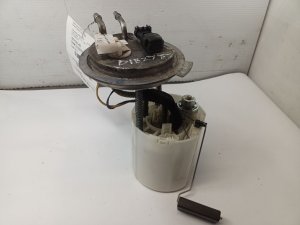
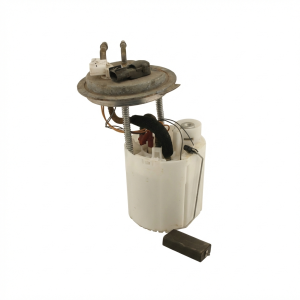
(OEM #13512935)— This is the most common failure part for code P2635 on this vehicle, as confirmed by numerous Technical Service Bulletins. It contains the pump, motor, sending unit, and fuel filter. Part #13512935 is the updated module for long-wheelbase utilities like the Escalade ESV.
Trusted brands: GM Genuine Parts, ACDelco
OEM price range: $1300-$1650
Aftermarket price range: $350-$600
Related Codes That Often Appear With This One
- P018B — This code for 'Fuel Pressure Sensor 'B' Circuit Range/Performance' is almost always cited alongside P2635 in GM's technical service bulletins for this exact high-temperature stalling issue. They are considered companion codes for this problem.
- U0074 — TSB #PIP5427 notes that this code, 'Control Module Communication Bus 'A' Off', can appear with P2635. The TSB explicitly states to diagnose and fix the U-code first, as a communication problem can falsely trigger the P2635 code.
- U18A2 — Also mentioned in TSB #PIP5427 as a code that can accompany P2635, pointing towards a communication issue that must be prioritized in diagnosis.
- P069E — Mentioned in a forum thread alongside P2635 and P018B. This code relates to 'Fuel Pump Control Module Requested MIL Illumination' and confirms the FPCM is the source of the fault report.
Technical Service Bulletins (TSBs) & Recalls
- 17-NA-335: Directly links P2635 and P018B to hesitation, surging, and stalling in high ambient temperatures, recommending fuel pump module replacement with an updated version.
- PIP5411C / PIP5411E / PIP5411F: An evolving TSB series that advises replacing the in-tank fuel pump module to correct P2635/P018B with hesitation/stalling in high temperatures. Version F was superseded by 17-NA-335.
Platform-Specific Known Issues
- A well-documented issue where high ambient temperatures (over 100°F / 38°C) can cause vapor buildup in the fuel system, causing the original-design fuel pump to fail, resulting in hesitation, surging, and stalling. (TSB #17-NA-335, #PIP5507B)
- GM released updated fuel pump modules to address the high-temperature performance issue. TSB #PIP5411F identifies the updated part for long wheelbase utilities (like the Escalade ESV) as GM #13512935.
- The issue is so common that a user on Tahoe Yukon Forum reported a dealer quoting $1500 for the repair, which involves dropping the tank to replace the pump and sensor.
Mechanic-Grade Diagnostic Values
- Low-Side Fuel Pressure (at sensor) — expected: Fluctuating between 30-60 PSI with engine on.. Failure: Pressure is stuck at a fixed value (e.g., 48.7 PSI) and does not change.
- Desired vs. Actual Fuel Pressure (Scan Tool) — expected: Actual pressure should be within 6.5 PSI (45 kPa) of desired pressure at 43.5 PSI (300 kPa).. Failure: The difference between actual and desired pressure exceeds 6.5 PSI.
- FPCM Power Supply Voltage (at module connector) — expected: 12.0 - 12.6 V at the pink wire (Pin 15) with ignition on.. Failure: Voltage is below 11.5 V, indicating a wiring or power supply issue.
- FPCM Command Signal (at module connector) — expected: A signal from the PCM on the dark green/white wire (Pin 13) when the key is turned on (may be constant, for 3-6 seconds, or while cranking).. Failure: No voltage or signal present on the command wire, suggesting a PCM or wiring fault.
Scan Tool Commands That Help
- GDS2 (GM Diagnostic Software): Fuel Pump Enable / Fuel Pump ON/OFF — This bidirectional control allows a technician to command the fuel pump on with the engine off. It's used to verify if the FPCM, wiring, and fuel pump are capable of operating, and to check for fuel pressure buildup without starting the engine.
- GDS2 (GM Diagnostic Software): Fuel System Data List — To monitor live data parameters such as 'Desired Fuel Pressure', 'Fuel Pressure Sensor', and 'Fuel Pump Command' to see how the system is responding to engine demands.
- GDS2 (GM Diagnostic Software): Fuel Pump Trim Reset — After replacing the fuel pump or FPCM, this function should be performed to clear learned values and allow the system to adapt to the new components.
Wiring & Ground Locations
- Fuel Pump Control Module (FPCM) — On the driver's side frame rail, often near or just forward of the spare tire.. This is the brain that controls the fuel pump. Its location makes it susceptible to corrosion and wiring damage, which can mimic a failed fuel pump.
- FPCM Connector Pin 13 (D-GN/WH) — In the main connector for the Fuel Pump Control Module.. This is the command signal wire from the PCM. A lack of signal here means the FPCM is never being told to turn the pump on, pointing the diagnosis away from the pump itself and towards the PCM or wiring.
- FPCM Connector Pin 15 (PK) — In the main connector for the Fuel Pump Control Module.. This is the ignition voltage supply to the module. Low or no voltage on this pin will prevent the FPCM from operating correctly.
- Low-Side Fuel Pressure Sensor — On the frame rail under the driver's side of the vehicle, often near the ABS module.. This sensor provides the pressure reading that the FPCM uses to diagnose low flow. A faulty sensor can send incorrect data, causing a P2635 code even if the pump is healthy.
Real Owner Repair Stories
- YouTube channel 'mechanicRHP' (2017 Chevy Silverado 4.3L V6) — Check Engine Light with codes P2635 and P018B.
❌ Tried (didn't work) The narrator notes that many videos suggest replacing the fuel pump first.
✅ What actually fixed it Replacing the low-side fuel pressure sensor located on the frame rail under the driver's side. The old sensor was stuck reading a constant 48.7 PSI, while the new sensor correctly fluctuated between 30-60 PSI. - YouTube channel '4 Realz' (Chevy Silverado (year not specified, but K2XX platform)) — Check Engine Light with codes P2635 and P018B. Code would return instantly after clearing.
❌ Tried (didn't work) The narrator saw other people replace the fuel pump without success.
✅ What actually fixed it Replacing the low-side fuel pressure sensor on the frame rail, located between the front and rear driver-side doors. The part cost about $40 and took only a few minutes to change.
OEM Part Supersession History
13582497→13512935— The new part is an updated design to address vapor buildup in the fuel feed line that occurs in high ambient temperatures, which caused the original pump design to fail.
Heads up: The old design pump (and its breather system) is prone to the failure described in the TSBs. Installing another old design part will likely lead to a repeat failure.
Model Year Variations Within This Range
- 2013-2014 (GMT900): These models use a different Fuel Pump Control Module (e.g., part #20964305) which requires VIN-specific programming before installation. A 'blank' module from a dealer will not work out of the box.
- 2015-2017 (K2XX): The high-temperature stalling issue and the associated TSBs (#17-NA-335, etc.) primarily apply to this newer platform. The FPCM is typically located on the driver's side frame rail and may not require programming upon replacement, though a fuel trim reset is recommended.
Helpful Videos

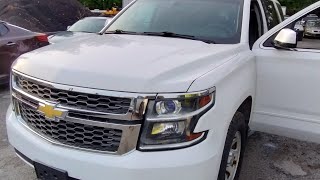
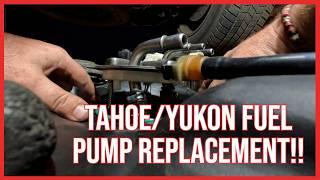
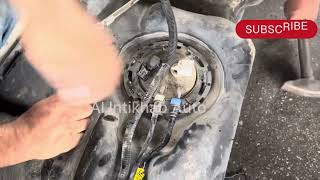
Used OEM Parts in Stock
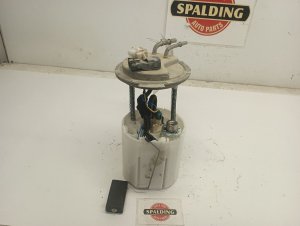
New Aftermarket Parts Available



The information in this article is provided for general reference and educational purposes only. Vehicle specifications, procedures, and part compatibility can vary by production date, trim level, and region. Always consult your vehicle's factory service manual and verify part numbers before purchasing or performing repairs. Safety-critical components such as airbags, seat belts, and braking systems should be installed by a qualified professional.
- Cadillac ESCALADE ESV:
- 🧭 Diagnostic Flowchart
- 🎬 Helpful Videos
- 🛍️ Shop This Part
- What's Unique About the 2013-2017 Cadillac ESCALADE ESV
- Symptoms You May Notice
- Most Likely Causes
- Rare But Worth Checking
- Diagnosis Steps
- Parts You'll Likely Need
- Related Codes That Often Appear With This One
- Technical Service Bulletins (TSBs) & Recalls
- Platform-Specific Known Issues
- Mechanic-Grade Diagnostic Values
- Scan Tool Commands That Help
- Wiring & Ground Locations
- Real Owner Repair Stories
- OEM Part Supersession History
- Model Year Variations Within This Range
- 🎟️ Get 5% Off