

P2635 on 2017 Cadillac XT5: Fuel Pump Performance Causes and Fixes
On a 2017 Cadillac XT5, code P2635 indicates a problem with the fuel pump's performance, often triggered by high ambient temperatures (over 100°F). This can cause stalling and hesitation. The issue is well-documented in GM Technical Service Bulletins (TSBs). The definitive fix is replacing the in-tank fuel pump module assembly with an updated part designed to prevent vapor lock, which can cost between $1,051 and $1,466 at a shop.
- P2635 on a 2017 XT5 means the fuel pump is underperforming.
- The issue is strongly linked to stalling and hesitation in hot weather (100°F+), as confirmed by multiple GM service bulletins.
- The definitive fix is to replace the in-tank fuel pump module assembly, preferably with an updated part number designed to mitigate the heat-related issue.
- This code is often accompanied by P018B (Fuel Pressure Sensor Performance).
- Due to the risk of stalling, this issue should be addressed promptly. The repair is complex and best handled by a professional.
What's Unique About the 2017-2017 Cadillac XT5
For the 2017 Cadillac XT5 and its platform mates (like the GMC Acadia and Chevrolet Traverse), P2635 is uniquely tied to environmental conditions. A known issue, documented across a series of GM Technical Service Bulletins, shows that high ambient temperatures (above 100°F) can cause fuel vapor to build up in the fuel feed line. This vapor buildup, or vapor lock, restricts liquid fuel flow, mimicking a failing pump and causing the engine to hesitate or stall, which then triggers the P2635 code. There was initial confusion in early bulletins like PIP5507B, which suggested a pump replacement would *not* fix the issue. However, this was superseded by TSB 17-NA-335, which clarified that the solution is to replace the original module with a specifically *updated* fuel pump module designed to better handle these high-temperature, vapor-prone conditions.
Diagnostic Flowchart
Tap your situation to follow the diagnostic path that matches what you're seeing on this vehicle.
Symptoms You May Notice
- Check Engine Light is on
- Engine hesitation or surging, especially during acceleration
- Engine stalling, particularly in hot weather or after extended idling
- Reduced engine power or 'limp mode'
- Extended cranking time before the engine starts
- Rough idle
- Replacing only the fuel pressure sensor. While code P018B often accompanies P2635, the sensor is usually reporting the low-pressure condition correctly; the root cause is the lack of fuel flow from the pump, not a bad sensor.
Most Likely Causes
- Failing Fuel Pump Module Assembly (Heat-Related Vapor Lock) 🔴 High Probability → Shop Fuel Pump As documented in GM TSB #17-NA-335, the original fuel pump module design is susceptible to vapor buildup in the fuel line in ambient temperatures over 100°F. This is a widespread issue across GM's C1XX platform vehicles. The official fix is an updated pump module designed to mitigate this specific vapor lock problem.
How to confirm: A technician will monitor the low-side fuel pressure using a scan tool. If pressure drops significantly during hesitation or stalling events, particularly in hot weather, it confirms the vapor lock issue. The problem may not be reproducible in a cooler shop environment.
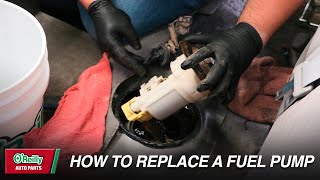
Typical fix: Replace the entire in-tank fuel pump module assembly with the updated GM part. TSB #17-NA-335, which supersedes earlier bulletins, specifies this as the definitive correction. The updated pump better handles vapor.
Est. part cost: $170-$971 - Fuel System Vapor Lock (Environmental Condition) 🟡 Medium Probability TSB #PIP5507B specifically calls out that in ambient temperatures of 100°F or higher, vapor can build up in the fuel feed line, causing P2635 and stalling. This bulletin was a preliminary attempt to address the symptom before the root cause was fully understood and the updated part was released.
How to confirm: The issue primarily occurs in very hot weather and may not be reproducible in a cooler shop environment. If the symptoms disappear in cooler temperatures, this is a strong indicator. The problem is most prevalent in hot southern states like AZ, TX, NV, and CA.
Typical fix: The initial advice from GM in TSB #PIP5507B was to use fuel with an octane rating greater than 91, avoid long idle periods, and park in the shade. However, this is now considered a mitigation strategy, not a fix. The accepted permanent repair is replacing the fuel pump with the updated part from TSB #17-NA-335.
Est. part cost: $0 - Faulty Fuel Pump Control Module (FPCM) ⚪ Low Probability → Shop Fuel Pump
How to confirm: Requires a diagnostic scan tool to check for communication with the FPCM and to monitor its commands to the fuel pump. A technician can verify if the module is sending the correct voltage/duty cycle and check for any fault codes specific to the FPCM itself.
Typical fix: Replace the Fuel Pump Control Module. In some cases, a software update for the FPCM may be available.
Est. part cost: $50-$150
Rare But Worth Checking
- Clogged Fuel Filter: → Shop Fuel Filter The fuel filter is integrated into the fuel pump module assembly on this vehicle. While not a separate part to replace, a prematurely clogged filter can cause the entire module to fail, leading to P2635.
- Wiring Issues: A damaged wire or poor connection in the circuit between the FPCM and the fuel pump can cause low voltage, leading to reduced pump performance. This can be caused by corrosion or physical damage to the harness.
- Faulty Fuel Pressure Sensor: → Shop Fuel Pressure Sensor While less common than the pump itself, the fuel pressure sensor that reports the data to the FPCM can fail. A Silverado owner with a similar engine reported their P2635 issue was resolved by replacing the fuel pressure sensor located under the driver's door. However, this should be properly diagnosed, as the sensor is often correctly reporting a problem caused by the pump.
Diagnosis Steps
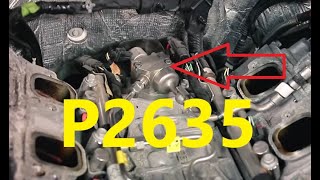
- Verify the code with a professional OBD-II scanner. 🎬 Watch: A breakdown of common causes and fixes for P2635.
- Check for other related DTCs, especially P018B, which strongly points to the heat-related TSB issue.
- Note the ambient temperature and driving conditions when the code was set. If it was over 100°F, suspect the heat-related vapor lock issue described in TSB #17-NA-335.
- Using a scan tool, monitor the low-side fuel pressure. Compare the desired pressure commanded by the FPCM to the actual pressure reported by the sensor, especially during a hot-weather drive if possible.
- Inspect the wiring and connectors for the Fuel Pump Control Module (FPCM) and the fuel pump for any visible damage or corrosion.
- Check for any available software updates for the FPCM or ECM.
- If fuel pressure is confirmed to drop significantly under load or in high heat, and all wiring is intact, the fuel pump module is the confirmed culprit and should be replaced with the updated part number as per TSB #17-NA-335.
Parts You'll Likely Need
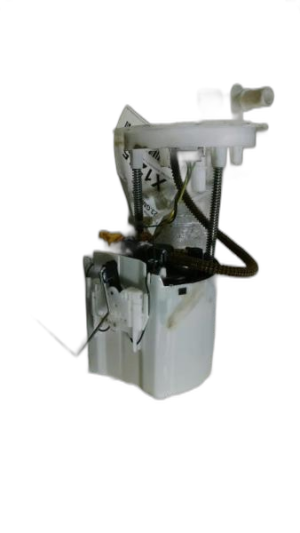
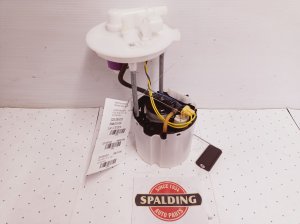
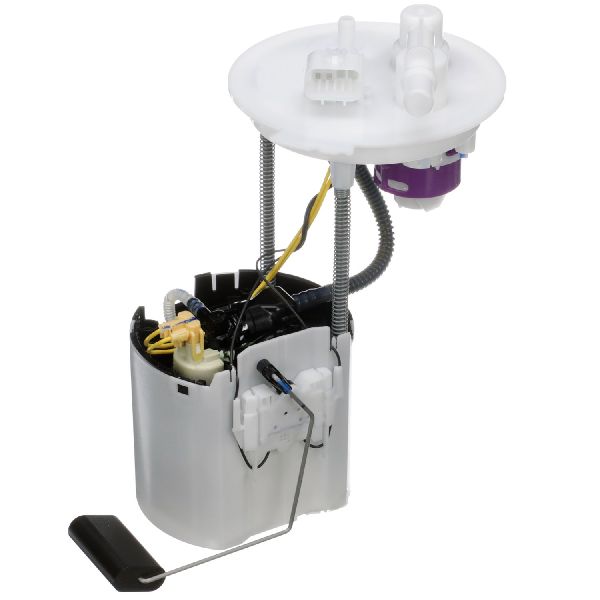
- Fuel Pump Module Assembly
(OEM #13516835 (Example - verify with VIN))— This is the primary component identified in GM Technical Service Bulletin #17-NA-335 as the solution for the P2635 code when related to stalling in high heat. It is crucial to use the updated part number specified by GM for the repair. The part number can vary, so always confirm with a dealer using the vehicle's VIN.
Trusted brands: ACDelco (GM Genuine), Delphi
OEM price range: $757-$971
Aftermarket price range: $170-$350
Related Codes That Often Appear With This One
- P018B — This code means "Fuel Pressure Sensor 'B' Circuit Range/Performance." Both TSBs #PIP5507B and #17-NA-335 explicitly state that P018B may be set along with P2635, as the sensor detects the low fuel pressure caused by the pump's performance issue.
Technical Service Bulletins (TSBs) & Recalls
- PIP5507B: Notes that P2635 and P018B can set in ambient temperatures over 100°F, causing hesitation or stalling due to vapor buildup. It initially suggested replacing the pump will not fix this specific issue and advised using higher octane fuel.
- 16-NA-225: Provides a procedure to replace the fuel pump module assembly when DTC P2635 and/or P018B are set.
- 17-NA-335: Supersedes prior bulletins. Recommends replacing the fuel pump module with an updated version if the vehicle exhibits hesitation, surging, or stalling in high ambient temperatures with codes P2635 and/or P018B set. This is the definitive repair.
Platform-Specific Known Issues
- A known issue documented in TSB #PIP5507B where ambient temperatures over 100°F (37.7°C) can cause vapor buildup in the fuel line, leading to hesitation, stalling, and the P2635 code.
- TSB #16-NA-225 provides a procedure to replace the fuel pump module assembly to resolve DTC P2635.
- TSB #17-NA-335, which supersedes earlier bulletins, clarifies the cause is vapor buildup and specifies the correction is to replace the fuel pump module with an updated version.
Mechanic-Grade Diagnostic Values
- Low-Side Fuel Pressure (Scan Tool, Engine Running) — expected: Fluctuating between 30 and 60 PSI.. Failure: Pressure is stuck at a fixed value (e.g., 48.7 PSI) and does not change, or is consistently below 30 PSI at idle.
- High-Pressure Fuel System (Scan Tool, 3.6L LFY Engine) — expected: Approx. 750 PSI at idle, rising to 2,250 PSI at wide-open throttle.. Failure: While P2635 is a low-side code, this provides context. A failure of the high-pressure pump would present differently, but these are the expected values for the other side of the system.
- FPCM Power Supply Voltage (at FPCM connector) — expected: 12.0 - 12.6 Volts with ignition on.. Failure: Voltage below 11.5 V, suggesting a wiring or power supply issue.
- FPCM to Fuel Pump Wiring Resistance — expected: Less than 0.2 Ω.. Failure: Resistance values above 0.2 Ω indicate a poor connection or corrosion in the harness.
Scan Tool Commands That Help
- GDS2 (or compatible advanced scanner): Fuel Pump Enable / On — With the engine off (ignition on), this command manually activates the in-tank fuel pump. It is used to verify if the pump runs and to check if the low-side fuel pressure sensor reading increases to its target pressure, helping to isolate a non-responsive pump from a sensor or module issue.
- GDS2 (GM Dealer Tool): Fuel Pump Driver Control Module Configuration — This function may be required after replacing the Fuel Pump Control Module (FPCM) to ensure the new module is learned by the vehicle's other computers.
Wiring & Ground Locations
- Fuel Pump Control Module (FPCM) — On the driver's side frame rail, typically located above or near the spare tire, or behind the rear driver's side wheel.. This module directly controls the fuel pump. Its exposed location makes its connector and the module itself susceptible to corrosion from road salt and moisture, which can interrupt power or communication, directly causing P2635.
- Low-Pressure Fuel Pressure Sensor — On the driver's side frame rail, installed in the fuel line between the fuel tank and the engine.. This sensor provides the pressure reading that the FPCM and ECM use to verify pump performance. A faulty sensor or corroded connector at this location will send incorrect data, directly causing codes P2635 and P018B.
- FPCM Connector Power/Ground Pins — At the Fuel Pump Control Module on the frame rail.. For manual testing: Pin 32 (Red/White) should have battery voltage, Pin 1 (Black) is the ground. The Pink and Gray wires supply the variable voltage to the fuel pump itself.
Real Owner Repair Stories
- YouTube channel 'mechanicRHP' (2017 Chevrolet Silverado 4.3L V6 (similar GM platform and issue)) — Check Engine Light with codes P2635 and P018B.
❌ Tried (didn't work) The owner noted that many online sources suggested replacing the fuel pump first, which is an expensive and difficult job.
✅ What actually fixed it The low-pressure fuel pressure sensor, located on the frame rail, was faulty. The scan tool showed the old sensor was stuck reading a constant 48.7 PSI, while the new sensor correctly fluctuated between 30 and 60 PSI after replacement.
"I Checked Everything" — The Actual Cause
- The equivalent scenario for P2635 is when fuel pressure tests appear normal in a cool workshop, but the vehicle stalls in high heat on the road. This occurs because the root cause, fuel vaporization, only happens under specific environmental conditions (ambient temperature >100°F) as described in TSB 17-NA-335. A technician may incorrectly rule out a fuel delivery problem if they cannot replicate the high-temperature conditions during diagnosis.
OEM Part Supersession History
13579380→13516496— This is the part number trail for the Low-Pressure Fuel Pressure Sensor, a common failure point that can cause P2635. Using the updated part is recommended.13531875, 13540028, 13526238→13565641— Example of a supersession chain for a Fuel Pump Control Module (FPCM) on a similar GM truck platform, showing that these electronic modules are frequently updated.
Helpful Videos
Used OEM Parts in Stock
New Aftermarket Parts Available




The information in this article is provided for general reference and educational purposes only. Vehicle specifications, procedures, and part compatibility can vary by production date, trim level, and region. Always consult your vehicle's factory service manual and verify part numbers before purchasing or performing repairs. Safety-critical components such as airbags, seat belts, and braking systems should be installed by a qualified professional.
- Cadillac XT5:
- 🧭 Diagnostic Flowchart
- 🎬 Helpful Videos
- 🛍️ Shop This Part
- What's Unique About the 2017-2017 Cadillac XT5
- Symptoms You May Notice
- Most Likely Causes
- Rare But Worth Checking
- Diagnosis Steps
- Parts You'll Likely Need
- Related Codes That Often Appear With This One
- Technical Service Bulletins (TSBs) & Recalls
- Platform-Specific Known Issues
- Mechanic-Grade Diagnostic Values
- Scan Tool Commands That Help
- Wiring & Ground Locations
- Real Owner Repair Stories
- "I Checked Everything" — The Actual Cause
- OEM Part Supersession History
- 🎟️ Get 5% Off