

P2635 on 2013-2017 Chevrolet Caprice: Fuel Pump Low Flow Causes & Fixes
P2635 on a Chevy Caprice indicates the fuel pump is not delivering enough fuel. This is often caused by a failing fuel pump, a burnt fuel pump connector, or a faulty Fuel Pump Control Module (FPCM), especially in high heat. A new fuel pump assembly costs around $250-$450, while an FPCM can be $150-$275. The burnt connector is a very common and critical inspection point.
- P2635 means your Caprice's fuel pump isn't providing enough flow, which can cause stalling.
- The most likely culprits are a weak fuel pump or a bad Fuel Pump Control Module (FPCM).
- The problem is known to be worse in hot weather, as confirmed by a GM Technical Service Bulletin.
- Before replacing parts, inspect the electrical connector on top of the fuel pump for melting or burnt pins, as this is a common and cheaper fix.
- Be prepared for a difficult repair, as accessing the fuel pump requires either dropping the fuel tank or cutting an access panel under the rear seat.
What's Unique About the 2013-2017 Chevrolet CAPRICE
The 2013-2017 Caprice, used primarily as a Police Patrol Vehicle (PPV), is subject to heavy-duty use including long idle times, which can stress the fuel system. A GM Technical Service Bulletin (TSB #PIP5507B) specifically notes that P2635 can occur on these vehicles in ambient temperatures over 100°F, leading to hesitation or stalling due to vapor buildup. The FPCM is also located in the trunk under the battery tray, a location with poor ventilation that can lead to overheating and failure, a fact corroborated by owner experiences.
Diagnostic Flowchart
Tap your situation to follow the diagnostic path that matches what you're seeing on this vehicle.
Symptoms You May Notice
- Hesitation or stumbling on acceleration.
- Engine stalling, especially when hot or under load.
- Reduced engine power or 'limp mode'.
- Extended cranking time before the engine starts.
- Engine cranks but does not start.
- Check Engine Light is on.
- Replacing only the fuel pump without inspecting the connector. A melted connector will quickly damage a new pump or prevent it from working correctly.
- Replacing the fuel pressure sensor without proper diagnosis. While this sensor can fail, it usually generates its own specific trouble codes, and P2635 is more directly related to the pump's flow performance as monitored by the FPCM. 🎬 Watch: Understanding the causes and fixes for code P2635
Most Likely Causes
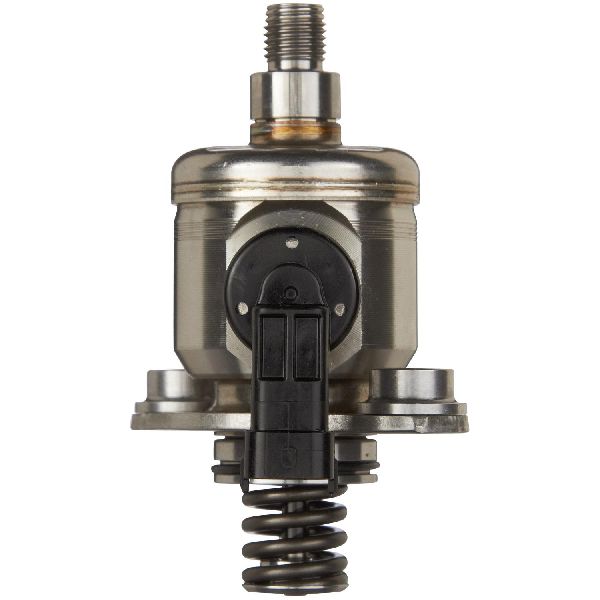
- Failing Fuel Pump 🔴 High Probability → Shop Fuel Pump The TSB for high-temperature issues suggests the pump may weaken and fail to provide adequate pressure when hot. Also, a burnt electrical connector pin on the pump assembly is a known failure point that often results from the original pump drawing too much current as it fails, overheating the connection.
How to confirm: Perform a fuel pressure and volume test using a scan tool to monitor desired vs. actual pressure. A mechanic can also bypass the FPCM to send full power to the pump; if it still cannot achieve maximum pressure (e.g., 80+ PSI), the pump is weak.
Typical fix: Replace the in-tank fuel pump module assembly. It is absolutely critical to inspect the wiring harness connector for signs of melting or corrosion and replace the pigtail if any damage is found.
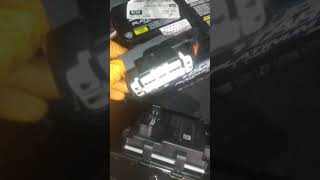
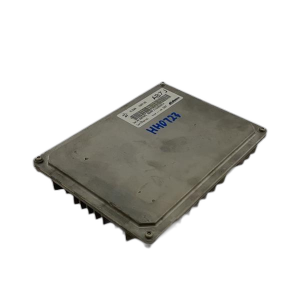
Est. part cost: $250-$450 - Faulty Fuel Pump Control Module (FPCM) 🔴 High Probability → Shop Fuel Pump The FPCM regulates voltage to the fuel pump and is located under the battery in the trunk, an area prone to heat-soak. These modules can fail from heat stress or internal electronic faults, causing them to deliver incorrect voltage. Owners on forums report the module getting extremely hot to the touch 🎬 See how to locate and inspect the fuel control module before failure.
How to confirm: Using a capable scan tool, monitor FPCM data, commanded vs. actual fuel pressure, and pump duty cycle. Check for FPCM-specific codes like P069E. Diagnosis can be difficult without swapping the part, but checking for voltage output at the module connector is a key step.
Typical fix: Replace the Fuel Pump Control Module. On 2014+ models, the new module must be programmed to the vehicle's VIN, though some vendors sell pre-programmed units. For 2011-2013 models, programming is typically not required.
Est. part cost: $150-$275 - Burnt Fuel Pump Harness Connector 🟡 Medium Probability → Shop Fuel Pump The electrical connector on top of the fuel pump assembly is a known weak point. The power or ground pin can overheat and melt due to high resistance from a failing pump or a poor terminal connection, causing low voltage to the pump.
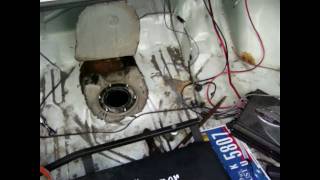
How to confirm: Visually inspect the connector on the fuel pump sending unit. This requires accessing the top of the fuel tank. A common practice in the PPV community is to cut a circular access panel under the rear seat cushion to avoid the labor-intensive process of dropping the fuel tank.
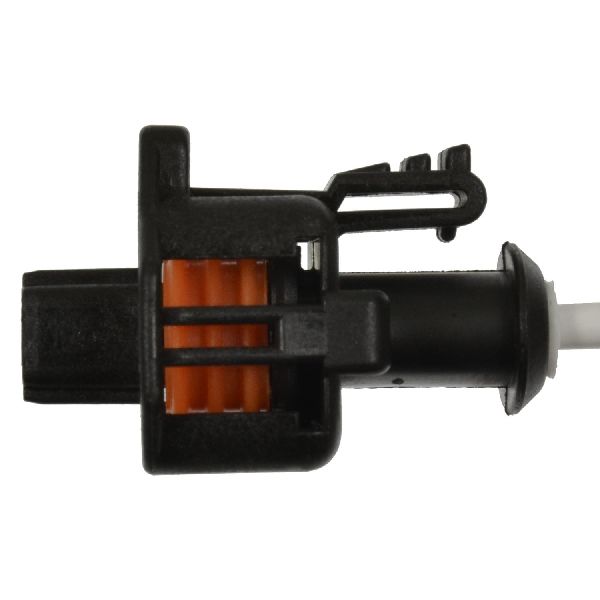
Typical fix: Replace the burnt connector with a new pigtail (part number ACDelco PT2877 / GM 13587174 is commonly cited). If the pump side of the connector is also melted, the entire fuel pump assembly must be replaced.
Est. part cost: $30-$60 - Clogged Fuel Filter ⚪ Low Probability → Shop Fuel Filter The fuel filter is integrated into the fuel pump module assembly and is not serviced separately. While not a distinct failure point, a prematurely clogged filter due to fuel contamination can restrict flow and cause this code, necessitating the replacement of the entire module.
How to confirm: This is typically a diagnosis of exclusion. If the pump motor is confirmed to be receiving correct voltage but flow is still low, and there are no external line restrictions, an internal filter blockage is presumed.
Typical fix: Replace the entire fuel pump module assembly.
Est. part cost: $250-$450
Rare But Worth Checking
- Faulty Fuel Pressure Sensor: → Shop Fuel Pressure Sensor
Diagnosis Steps
- Scan for all DTCs in the ECM and FPCM. Note any codes that appear with P2635, such as P018B, P069E, or P023F, as they provide critical diagnostic context.
- Using a scan tool, monitor live data for commanded vs. actual fuel rail pressure. A significant lag or inability to meet commanded pressure points to a flow problem.
- Inspect the FPCM, located in the trunk under the battery tray. Check its connector for corrosion or damage. Feel the module (carefully) after the car has been running; excessive heat is a strong indicator of impending failure.
- If possible, command the fuel pump on with the scan tool and listen for it to prime. No sound could indicate a failed pump, FPCM, or wiring issue.
- Gain access to the top of the fuel tank. On the Caprice, this is often done by cutting an access panel under the rear seat to avoid dropping the fuel tank, a method detailed by owners in YouTube repair videos.
- Carefully disconnect and inspect the fuel pump's main electrical connector. Look for any signs of burnt pins, melting plastic, or corrosion, which is a very common failure point.
- If the connector is intact, perform a voltage drop test on the power and ground wires to the fuel pump to ensure it's receiving proper power from the FPCM.
- If wiring and the FPCM are confirmed good but fuel flow is low, the fuel pump assembly is the primary suspect.
Parts You'll Likely Need
- Fuel Pump Module Assembly
(OEM #MU2101)— This is the most common cause of P2635, where the pump motor itself has weakened or failed. TSBs indicate an updated design was released to better handle high heat conditions.
Trusted brands: ACDelco (GM Genuine), Delphi
OEM price range: $300-$400
Aftermarket price range: $250-$350 - Fuel Pump Control Module (FPCM)
(OEM #22874299)— The FPCM is a common failure point that results in low or no voltage to the fuel pump. It can fail from heat or internal faults. Note that 2014+ models often require VIN programming.
Trusted brands: ACDelco (GM Genuine)
OEM price range: $200-$275
Aftermarket price range: $150-$220 - Fuel Pump Connector Pigtail
(OEM #13587174)— The factory connector can overheat and melt, causing an open or high-resistance circuit to the pump. This must be replaced if any heat damage is visible. This is a critical inspection point during any fuel pump-related repair on this platform.
Trusted brands: ACDelco
OEM price range: $40-$60
Aftermarket price range: $30-$50
Related Codes That Often Appear With This One
- P018B — This code for 'Fuel Pressure Sensor 'B' Circuit Range/Performance' is mentioned in TSB #PIP5507B and #PIP5411E as appearing alongside P2635, especially in high heat. The low flow from the pump causes the pressure sensor to read outside its expected range.
- P069E — This code means 'Fuel Pump Control Module Requested MIL Illumination'. It is a general code set by the ECM when the FPCM has detected an internal fault (like P2635) and wants to turn on the Check Engine Light.
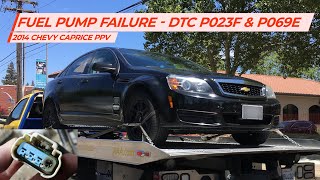
- P023F — This code for 'Fuel Pump Secondary Circuit/Open' often appears with P069E when there is a complete failure to start. It strongly points towards a wiring issue, a dead FPCM, or a completely failed fuel pump with a burnt connector creating an open circuit. 🎬 Watch: Diagnosing fuel pump failure and related trouble codes
Technical Service Bulletins (TSBs) & Recalls
- PIP5507B: Notes that in high ambient temperatures, DTCs P2635 and/or P018B may set, leading to hesitation or stalling. It attributes this to vapor buildup and suggests advising customers to use fuel with an octane rating over 91 and to avoid extended idling.
- PIP5411E: A related TSB that also discusses P2635 and P018B in high heat. It recommends replacing the in-tank fuel pump module with a new design part to resolve the issue, and if that has already been done, to then refer to PIP5507B.
- 17-NA-335: Supersedes an earlier TSB and again points to vapor buildup in the fuel line as the cause for P2635/P018B in high heat, recommending replacement with an updated fuel pump module.
- PIP5286B: Provides diagnostic advice for when P2635 and P018B are set together, suggesting a method to test if a faulty fuel pressure sensor is the root cause.
Platform-Specific Known Issues
- A known issue, documented in TSB #PIP5507B, is the setting of codes P2635 and/or P018B in ambient temperatures of 100°F (37.7°C) or higher. This can cause hesitation or stalling. The TSB suggests the cause is vapor buildup in the fuel feed line, and the prescribed fix is to install an updated fuel pump module with a revised design.
Mechanic-Grade Diagnostic Values
- Low-Side Fuel Pressure (at idle) — expected: 30-45 PSI (207-310 kPa). Failure: Pressure is consistently below spec or drops significantly under load.
- Low-Side Fuel Pressure (under load) — expected: 55-65 PSI (379-448 kPa). Failure: Pressure fails to reach or maintain this range when commanded.
- Scan Tool: Desired vs. Actual Fuel Pressure — expected: Actual should be within 60 kPa (8.7 PSI) of desired at a 400 kPa (58 PSI) request.. Failure: The deviation between actual and desired pressure exceeds the threshold.
- FPCM Power Supply Voltage — expected: 12.0V - 12.6V with ignition on.. Failure: Voltage drops below 11.5V, indicating a wiring or supply issue.
Scan Tool Commands That Help
- GDS2 / Professional Scan Tool: Fuel Pump Enable / On — With the engine off, this command activates the fuel pump to pressurize the system. It's used to check if the pump runs audibly and if the fuel pressure sensor reading changes accordingly, helping to isolate a dead pump from a sensor or module issue.
- GDS2 / Professional Scan Tool: Fuel Pump Duty Cycle Command — Allows a technician to manually command the FPCM to operate the pump at a specific percentage (e.g., 100%). If the pump is commanded to 100% but fuel pressure remains low, it strongly suggests a weak pump or a significant leak/restriction.
- GDS2: Fuel System Depressurize — Used to test the fuel pressure sensor as per TSB PIP5286B. After running this command with a cold engine, the sensor's pressure reading should drop to zero. If it doesn't, the sensor is likely faulty or stuck.
- GDS2: Fuel Pump Trim Reset — This procedure must be performed after replacing the fuel pump or FPCM. It resets the learned trim values, allowing the module to adapt to the new component's flow characteristics.
Wiring & Ground Locations
- G401 / G402 — In the luggage compartment (trunk). G401 is on the left side, and G402 is on the right side rear panel.. The Fuel Pump Control Module (FPCM) is grounded at one of these points. A corroded or loose ground here can cause intermittent or low voltage to the FPCM, leading to incorrect pump operation and triggering P2635.
- FPCM Connector — Under the battery tray in the trunk.. This connector is a known point of failure. Forum users have reported the ground terminal on this connector can burn or melt, causing codes P023F and P069E along with P2635.
- Fuel Pump Connector (at tank) — On top of the fuel tank, under the rear passenger-side seat cushion.. This is the most common wiring failure point. The main 12V power pin (Pin 1) is notorious for overheating and melting the connector, causing an open or high-resistance circuit that starves the pump of power.
Real Owner Repair Stories
- YouTube channel 'RetroCarGuy530' (2014 Chevrolet Caprice PPV 6.0L L77) — Engine cranks but will not start. No sound from the fuel pump priming. Codes P069E and P023F were present.
❌ Tried (didn't work) Initial inspection of the FPCM in the trunk showed no signs of burning or corrosion on its connector.
✅ What actually fixed it The owner cut an access hole under the rear seat and found the main electrical connector on top of the fuel pump was burnt at the 12-volt supply pin. The final fix was replacing both the entire fuel pump module (ACDelco MU2101) and the burnt connector pigtail (ACDelco PT2877). This resolved the no-start condition and cleared the codes.
OEM Part Supersession History
Unknown→22874299, 22874300— Standard part evolution and potential updates.
Heads up: Part number 22874300 is often listed as a compatible replacement for 22874299. Crucially, modules for 2014 and newer vehicles must be programmed to the car's VIN to function.Unknown→ACDelco MU2101— The updated fuel pump module was released to address the high-temperature stalling issue documented in TSBs. The new design includes a one-way breather valve to prevent vapor buildup.
Model Year Variations Within This Range
- 2014-2017 only: The Fuel Pump Control Module (FPCM) on 2014 and newer models requires VIN-specific programming upon replacement. Installing a blank or used module from another vehicle will result in a no-start condition. 2011-2013 models typically do not require this programming. This is likely due to a change in the vehicle's electrical architecture between model years.
Helpful Videos
Used OEM Parts in Stock
New Aftermarket Parts Available


The information in this article is provided for general reference and educational purposes only. Vehicle specifications, procedures, and part compatibility can vary by production date, trim level, and region. Always consult your vehicle's factory service manual and verify part numbers before purchasing or performing repairs. Safety-critical components such as airbags, seat belts, and braking systems should be installed by a qualified professional.
- Chevrolet CAPRICE:
- 🧭 Diagnostic Flowchart
- 🎬 Helpful Videos
- 🛍️ Shop This Part
- What's Unique About the 2013-2017 Chevrolet CAPRICE
- Symptoms You May Notice
- Most Likely Causes
- Rare But Worth Checking
- Diagnosis Steps
- Parts You'll Likely Need
- Related Codes That Often Appear With This One
- Technical Service Bulletins (TSBs) & Recalls
- Platform-Specific Known Issues
- Mechanic-Grade Diagnostic Values
- Scan Tool Commands That Help
- Wiring & Ground Locations
- Real Owner Repair Stories
- OEM Part Supersession History
- Model Year Variations Within This Range
- 🎟️ Get 5% Off