

P2635 on 2010-2014 Chevrolet Express: Fuel Pump Performance Causes and Fixes
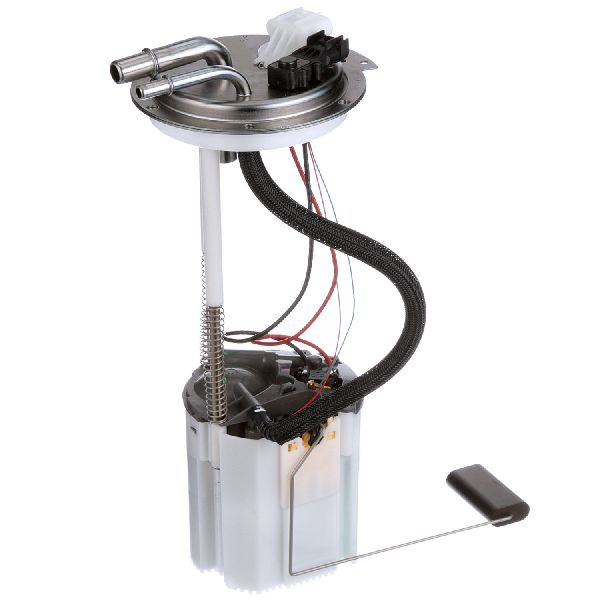
On a 2010-2014 Chevy Express, code P2635 usually points to a failing in-tank fuel pump or a faulty Fuel Pump Control Module (FPCM). The fuel system is notoriously sensitive to extreme hot or cold weather, as documented in GM TSBs. The fix is often an updated fuel pump module (ACDelco M10235) or a new FPCM (ACDelco 23487338). Expect to pay $250-$500 for a new fuel pump assembly and $80-$150 for an FPCM.
- P2635 on a 2010-2014 Express indicates a fuel flow problem, not just low pressure.
- The issue is strongly linked to extreme weather; check if symptoms worsen in high heat or deep cold.
- The most likely culprits are the in-tank fuel pump or the frame-mounted Fuel Pump Control Module (FPCM).
- GM issued service bulletins (PIP5507B, 18NA103, 17-NA-335) that directly address this code and recommend replacing the fuel pump with an updated part for high-temp issues.
- Due to the need to drop the fuel tank, replacing the fuel pump is a difficult DIY job and professional repair is recommended.
What's Unique About the 2010-2014 Chevrolet EXPRESS
For this generation of Chevrolet Express and its GM platform mates, code P2635 is uniquely and strongly linked to performance in extreme temperatures, a fact documented in official Technical Service Bulletins (TSBs). TSB #PIP5507B and its successor #17-NA-335 explicitly state the code can set in ambient temperatures above 100°F due to vapor buildup in the fuel line, requiring an updated fuel pump. Conversely, TSB #18NA103 links the same code to starting and power loss issues in temperatures below 20°F. Furthermore, the frame-mounted Fuel Pump Control Module (FPCM) is highly susceptible to corrosion from road spray, a well-documented failure point on these vans and related trucks.
Diagnostic Flowchart
Tap your situation to follow the diagnostic path that matches what you're seeing on this vehicle.
Symptoms You May Notice
- Check Engine Light is on
- Engine hesitation or surging, especially under acceleration or on the highway.
- Stalling, particularly in very hot weather after a period of driving.
- Difficulty starting or no-start condition, especially in very cold weather or after the vehicle has sat.
- Reduced engine power or 'limp mode'.
- Extended engine cranking time before starting.
- A whining noise from the fuel pump in the tank, which may be more noticeable in cold weather.
- Replacing only the fuel pressure sensor without confirming the fuel pump's performance under load.
- Replacing the ECM, which is rarely the cause of this specific code.
- On related platforms, some owners have chased this code only to find it was triggered by an unrelated system like failing active grill shutters, which can cause confusing diagnostic trouble codes to appear.
Most Likely Causes
- Failing In-Tank Fuel Pump 🔴 High Probability → Shop Fuel Pump As per TSBs #PIP5507B and #17-NA-335, the original fuel pumps are susceptible to creating a vapor lock condition in high heat, and can also struggle in extreme cold. An updated fuel pump module was released to address this vapor buildup issue.
How to confirm: Monitor fuel pressure with a scan tool while driving. A significant drop in actual pressure compared to desired pressure under load or in high heat points to a weak pump. A physical fuel pressure gauge can also be used if a port is available. Expected pressure at idle is 55-62 PSI.
Typical fix: Replace the in-tank fuel pump module assembly with the updated part, such as ACDelco M10235.
Est. part cost: $250-$500 - Faulty Fuel Pump Control Module (FPCM) 🟡 Medium Probability → Shop Fuel Pump The FPCM on GM trucks and vans of this era is notoriously mounted on the frame rail near the spare tire, where it is directly exposed to road spray, salt, and moisture. This leads to severe corrosion of the module's housing, connector pins, and internal circuitry, causing intermittent or total failure.
How to confirm: Inspect the FPCM and its connector for green or white corrosion, or a swollen case. Use a high-end scan tool to check for communication with the module (a common failure is a U-code like U18A2). Check for power and ground at the FPCM connector pins as specified in service manuals. A failed FPCM is a very common cause of code P069E, which may be present.
Typical fix: Replace the Fuel Pump Control Module (e.g., ACDelco 23487338). It is highly recommended to apply dielectric grease to the new module's connector and consider installing a GM ground relocation kit to move the ground wire to a cleaner, more protected location on the frame to prevent repeat failures.
Est. part cost: $80-$150 - Clogged Internal Fuel Filter/Strainer ⚪ Low Probability → Shop Fuel Filter
How to confirm: The fuel filter is not a separately serviceable part on these models; it is an integrated strainer sock on the bottom of the fuel pump module. If it becomes clogged with debris from a contaminated fuel tank, it will restrict flow. This can only be confirmed by removing the fuel pump assembly from the tank and inspecting the strainer.
Typical fix: The only fix is to replace the entire fuel pump module assembly, as the filter is not sold separately.
Est. part cost: $250-$500 (for the entire pump assembly) - Wiring or Connector Issues ⚪ Low Probability The wiring harness to the FPCM is vulnerable due to its location. The main connector on top of the fuel tank can also become corroded or damaged. A poor ground connection for the FPCM is a common failure point.
How to confirm: Visually inspect the wiring harness leading to the FPCM and the fuel tank for any chafing, breaks, or corrosion. Perform a continuity and voltage drop test on the power, ground, and signal wires between the FPCM and the fuel pump.
Typical fix: Repair the damaged section of the wiring harness or clean/replace the corroded connector.
Est. part cost: $10-$100
Rare But Worth Checking
- Faulty Fuel Pressure Sensor: → Shop Fuel Pressure Sensor While less common than the pump or FPCM, a faulty inline fuel pressure sensor can send incorrect data to the ECM, causing it to set P2635 erroneously. On these vans, the sensor is typically part of the fuel pump module inside the tank. Watching live data on a scan tool can show if the sensor readings are stuck or erratic instead of fluctuating normally. Expected pressure is typically 58-64 PSI.
Diagnosis Steps
- Scan the ECM for P2635 and any other stored codes (especially P018B, P0087, or U-codes). Note the freeze-frame data to see the conditions (ambient temperature, engine load) when the code was set.
- Visually inspect the Fuel Pump Control Module (FPCM), located on the driver's side frame rail near the spare tire, for heavy corrosion, swelling, or damage to the connector.
- Inspect the wiring and connectors between the ECM, FPCM, and the fuel tank for any signs of damage, chafing, or corrosion. Pay special attention to the FPCM ground wire, as a bad ground is a common point of failure.
- Using a capable scan tool, monitor both 'Desired Fuel Rail Pressure' and 'Actual Fuel Rail Pressure' PIDs. Perform a road test under heavy acceleration to see if the actual pressure drops significantly below the desired pressure. At idle, pressure should be around 55-62 PSI.
- If pressure drops, the issue is likely the in-tank fuel pump or a restriction.
- If pressure readings are stuck or erratic, investigate the inline fuel pressure sensor. With the key on and engine off, command the fuel pump on with the scan tool and watch for the pressure reading to rise appropriately.
- If the scan tool cannot communicate with the FPCM, test the power and ground circuits at the FPCM connector. If circuits are good, the FPCM itself has likely failed.
- If all else checks out, the in-tank fuel pump is the most probable cause, especially if the symptoms are strongly correlated with very hot or cold weather.
Parts You'll Likely Need
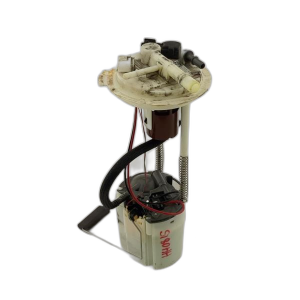
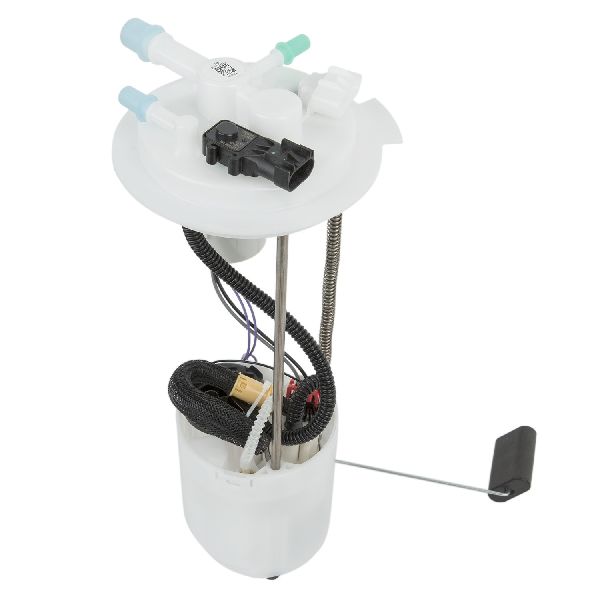
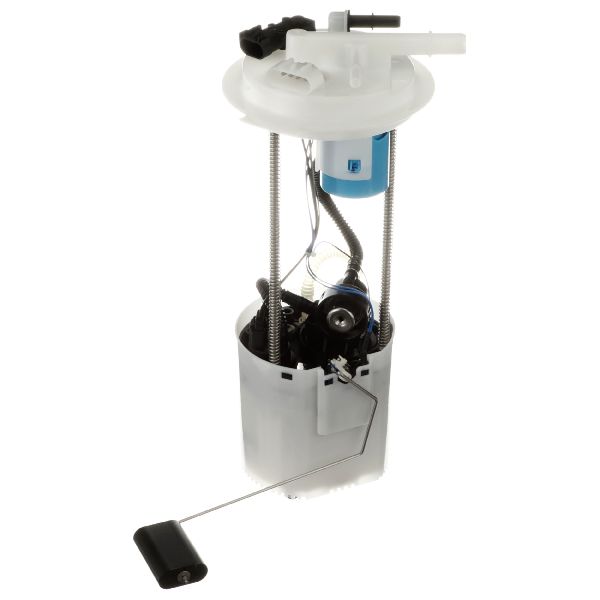
- Fuel Pump Module Assembly
(OEM #ACDelco M10235 (Updated design))— This is the most common failure, especially related to the symptoms described in GM's service bulletins for extreme temperatures. The updated design is intended to prevent vapor lock in high heat.
Trusted brands: ACDelco, Delphi
OEM price range: $350-$500
Aftermarket price range: $250-$400 - Fuel Pump Control Module (FPCM)
(OEM #ACDelco 23487338)— A very common failure point due to its exposed mounting location, causing corrosion that leads to a loss of communication or incorrect commands to the fuel pump.
Trusted brands: ACDelco, Dorman
OEM price range: $100-$150
Aftermarket price range: $80-$120
Related Codes That Often Appear With This One
- P018B — This code for 'Fuel Pressure Sensor 'B' Circuit Range/Performance' is often set alongside P2635, especially in high-temperature situations, as noted in TSB #PIP5507B and #17-NA-335.
- P0087 — This code means 'Fuel Rail/System Pressure - Too Low' and directly relates to the low flow condition detected by P2635. It is mentioned as a related code in TSB #18NA103 for cold weather issues.
- U18A2 — This communication code often appears when the Fuel Pump Control Module (FPCM) fails due to corrosion, indicating a loss of communication between it and other modules.
- P069E — This code, 'Fuel System Control Module Requested MIL Illumination', is a very strong indicator that the FPCM itself has detected an internal fault or a problem with the circuit it controls. It often points directly to a failed FPCM.
Technical Service Bulletins (TSBs) & Recalls
- PIP5507B: Addresses P2635 and P018B in high ambient temperatures causing hesitation/stalling due to vapor lock.
- 18NA103: Addresses P2635, P0087, and P018B in extreme cold weather causing no-start or loss of power.
Platform-Specific Known Issues
- TSB #PIP5507B / #17-NA-335: In ambient temperatures of 100°F (37.7°C) or higher, the vehicle may set P2635 and/or P018B and exhibit hesitation or stalling due to vapor buildup in the fuel feed line. The official fix is to replace the fuel pump module with an updated design.
- TSB #18NA103: In ambient temperatures below 20°F (-6°C), the vehicle may experience a start and stall, no start, or loss of power, setting codes P0087, P018B, or P2635. This also points to a fuel delivery issue in extreme cold.
- FPCM Corrosion: Owners and technicians widely report failure of the frame-mounted FPCM due to corrosion. A DIY replacement video for a related GM truck shows the typical location and replacement process, which is nearly identical for the Express van.
Mechanic-Grade Diagnostic Values
- Low-Side Fuel Pressure (KOEO or Idle, Gasoline Engine) — expected: 55-62 PSI. Failure: Pressure is below 45 PSI or is slow to build when the pump is commanded on.
- FPCM Fuel Pump Command Signal Voltage (at FPCM connector) — expected: 12V present for 2-6 seconds with key on, or constant 12V while cranking/running.. Failure: No voltage at the Dark Green/White wire (Pin 13) indicates a problem with the ECM or the wiring from the ECM.
- FPCM Ground Circuit Voltage Drop — expected: Less than 0.1 Volts. Failure: Voltage reading significantly higher than 0.1V when testing between the ground pin at the FPCM connector and a known good chassis ground, indicating high resistance in the ground circuit.
Scan Tool Commands That Help
- GDS2 (GM Global Diagnostic System 2): Fuel Pump Output Control / Fuel Pump Relay Command — This bidirectional command allows a technician to turn the fuel pump ON and OFF directly from the scan tool. It is essential for verifying if the FPCM and the fuel pump itself are capable of functioning. If the pump runs with this command, the issue is likely intermittent or related to sensor inputs rather than a hard failure of the pump or module.
Wiring & Ground Locations
- FPCM Location — On the driver's side frame rail, typically located underneath the area of the driver's door or fuel door.. This exposed location makes the module and its connector highly vulnerable to corrosion from road spray and salt, which is a primary cause of FPCM failure leading to P2635.
- FPCM Ground Connection — The ground wire from the FPCM harness is typically bolted directly to the chassis frame near the module itself.. Corrosion at this single ground point is a very common point of failure. A high-resistance ground will cause the FPCM to malfunction and set fuel pressure codes. A voltage drop test at this location is a critical diagnostic step.
- FPCM Fuel Pump Command Wire — Pin 13 (Dark Green/White wire) at the FPCM connector.. This is the signal wire from the ECM that tells the FPCM to turn on. Testing for 12V at this pin when the key is turned on confirms the ECM is attempting to activate the fuel system. Lack of voltage points the diagnosis toward the ECM or the wiring between the modules.
- Fuel Pump Supply Voltage Wire (at FPCM) — Pin 47 (Gray wire) at the FPCM connector.. This is the power output from the FPCM to the fuel pump. Technicians can jump battery voltage (Pin 32, Red/White) to this pin to bypass the FPCM and directly power the fuel pump, confirming if the pump itself is functional.
Real Owner Repair Stories
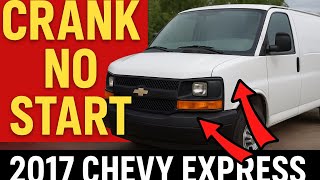
- YouTube channel 'A Fab Work's Life' (2017 Chevrolet Express 3500 6.0L) — Crank no start, no fuel pressure, fuel pump not priming.
❌ Tried (didn't work) Initial check showed no power or ground at the FPCM connector.
✅ What actually fixed it The ground wire for the Fuel Pump Control Module (FPCM), which was bolted to the frame, was severely corroded and had no continuity. Cleaning the frame connection point and the wire's terminal restored the ground, fixed the no-start condition, and cleared the fuel system codes.
Helpful Videos
Used OEM Parts in Stock
New Aftermarket Parts Available



The information in this article is provided for general reference and educational purposes only. Vehicle specifications, procedures, and part compatibility can vary by production date, trim level, and region. Always consult your vehicle's factory service manual and verify part numbers before purchasing or performing repairs. Safety-critical components such as airbags, seat belts, and braking systems should be installed by a qualified professional.
- Chevrolet EXPRESS:
- 🧭 Diagnostic Flowchart
- 🎬 Helpful Videos
- 🛍️ Shop This Part
- What's Unique About the 2010-2014 Chevrolet EXPRESS
- Symptoms You May Notice
- Most Likely Causes
- Rare But Worth Checking
- Diagnosis Steps
- Parts You'll Likely Need
- Related Codes That Often Appear With This One
- Technical Service Bulletins (TSBs) & Recalls
- Platform-Specific Known Issues
- Mechanic-Grade Diagnostic Values
- Scan Tool Commands That Help
- Wiring & Ground Locations
- Real Owner Repair Stories
- 🎟️ Get 5% Off