

P2635 on 2013-2017 Chevrolet Impala: Causes and Fixes for Fuel Pump Performance
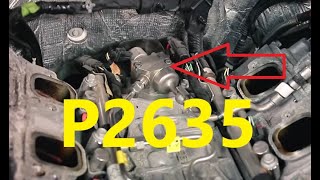
This code indicates a problem with fuel pump flow. On the 2013-2017 Impala, it is often triggered in hot weather, causing hesitation or stalling, as noted in GM Technical Service Bulletin #PIP5507B. The most common fixes are replacing the Fuel Pump Control Module (FPCM) or, more definitively, replacing the in-tank fuel pump with an updated part number as per TSB #17-NA-335 to resolve a known vapor buildup issue.
- P2635 on a 2013-2017 Impala is a serious code, often causing stalling in hot weather due to a known design flaw.
- The issue is officially recognized by GM in TSBs, with the primary fix being an updated in-tank fuel pump module.
- Before replacing the pump, the Fuel Pump Control Module (FPCM) and its wiring should be thoroughly checked, as they are also common failure points.
- This is not just an Impala problem; it affects a wide range of GM cars, trucks, and SUVs from the same era.
What's Unique About the 2013-2017 Chevrolet IMPALA

The 2013-2017 Impala, along with many other GM vehicles from this era, is specifically mentioned in General Motors TSBs for setting code P2635, often alongside P018B, during high ambient temperatures (above 100°F). This condition is caused by a design weakness where vapor buildup in the fuel line can starve the pump, leading to a dangerous hesitation or stalling situation. This makes the issue a documented drivability and safety concern for this specific vehicle range, with a manufacturer-prescribed fix involving an updated fuel pump module.
🎬 Watch: Understanding P2635 causes and how to fix it.Diagnostic Flowchart

Tap your situation to follow the diagnostic path that matches what you're seeing on this vehicle.
Generation note: The 2013-2017 year range covers two Impala generations: the end of the 9th generation (2013, sold as the 'Impala Limited' through 2016 for fleets) and the 10th generation (2014-2020). The provided TSBs cover this entire range, indicating the fuel system design flaw is common to both. However, part locations and numbers may differ slightly, with the FPCM being located in the trunk on the 10th generation.
Symptoms You May Notice

- Engine hesitation or surging, especially on acceleration.
- Engine stalling, particularly in hot weather, sometimes after 10-15 minutes of driving.
- Check Engine Light is on.
- Extended cranking time before the engine starts.
- Reduced engine power or 'limp mode'.
- Engine refuses to start.
- Audible buzzing or whining from the fuel tank area may change or stop unexpectedly.
- Replacing the fuel pump when the Fuel Pump Control Module (FPCM) is the actual cause. The FPCM is a common failure point and should be diagnosed before undertaking the more labor-intensive fuel pump replacement.
- Replacing the FPCM when the actual issue is a corroded connector or poor pin tension, which can be a much cheaper fix.
- Replacing the fuel pump with another original-spec part instead of the updated part number required by TSB 17-NA-335, leading to a recurrence of the problem in hot weather.
- Replacing the fuel pump or FPCM when the actual fault is a failed low-pressure fuel sensor on the frame rail, which can present with identical codes (P2635 and P018B).
Most Likely Causes

- Failing In-Tank Fuel Pump 🔴 High Probability → Shop Fuel Pump As noted in GM TSB #17-NA-335, an updated fuel pump module was released to address vapor buildup issues in high heat, proving the original pump design was a weak point. The pump motor can also weaken with age, or an internal hose within the module can leak, causing a loss of pressure before the fuel even leaves the tank.
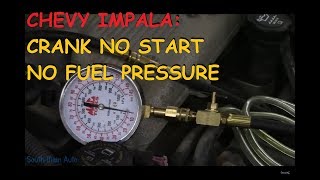
How to confirm: Perform a fuel pressure and flow test at the fuel rail. Use a scan tool to monitor commanded vs. actual fuel pressure. If commanded pressure is high but actual pressure is low or erratic, and the FPCM and wiring are confirmed good, the pump is the cause.
Typical fix: Replace the in-tank fuel pump assembly with the updated GM part number to permanently resolve the vapor-lock issue. This requires dropping the fuel tank.
Est. part cost: $200-$450 - Failing Fuel Pump Control Module (FPCM) 🟡 Medium Probability → Shop Fuel Pump The FPCM is the electronic brain for the fuel pump. It can fail from heat, moisture, and electrical stress, leading to erratic or no voltage to the fuel pump, which mimics a bad pump. It's a very common failure point on many GM vehicles.
How to confirm: Use a scan tool to check for communication with the FPCM. If there are U-codes or no communication, the module is suspect. Test for power and ground at the FPCM connector. If inputs are good but the module doesn't send voltage to the pump, it has likely failed.
Typical fix: Replace the Fuel Pump Control Module. Note: The new module MUST be programmed to the vehicle's VIN to function correctly.
Est. part cost: $100-$250 for a pre-programmed module. - Damaged Wiring or Connectors ⚪ Low Probability The wiring harness and connector for the FPCM can be exposed to moisture and corrosion, especially on vehicles where it's mounted on the frame rail. This can cause intermittent connection and voltage drops, leading to low flow. Poor pin tension within the connector is also a known issue.
How to confirm: Visually inspect the wiring harness and connectors leading to the FPCM (in the trunk) and the fuel pump. Check for voltage and ground at the FPCM connector with a multimeter. Disconnect the connector and check for corrosion or backed-out pins.
Typical fix: Repair the damaged section of the wiring harness or replace the faulty connector. Ensure pins have proper tension.
Est. part cost: $20-$100 - Clogged Fuel Filter ⚪ Low Probability → Shop Fuel Filter The fuel filter is integrated into the fuel pump module on these cars. While not a standalone failure point, a severely clogged filter sock from contaminated fuel can restrict flow, overwork the pump, and cause this code.
How to confirm: A fuel flow test will show a restriction. Visual inspection of the filter sock after removing the pump assembly will confirm. This is usually diagnosed after ruling out the FPCM and pump electronics.
Typical fix: The filter is part of the fuel pump assembly, so the entire unit is replaced.
Est. part cost: $200-$450 (as part of the pump)
Rare But Worth Checking
- Faulty Fuel Rail Pressure Sensor: → Shop Fuel Pressure Sensor
Diagnosis Steps
- Scan for Codes: Use an OBD-II scanner to confirm P2635 and check for any other related codes, especially P018B (fuel pressure sensor) or U-codes (communication failure).
- Check Conditions: Note the ambient temperature and driving conditions when the code was set. The issue is most likely to occur in heat above 100°F (38°C), pointing towards the TSB-related vapor issue.
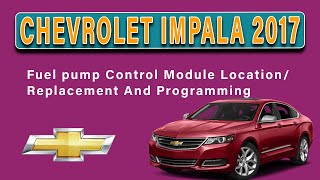
- Inspect FPCM and Wiring: Locate the Fuel Pump Control Module (FPCM) in the trunk on the passenger side, behind the trim panel near the wheel well. Visually inspect the module and its connector for any signs of corrosion, water intrusion, or physical damage. Check for proper pin tension in the connector.
- Monitor with Scan Tool: Use a capable scan tool to monitor live data. Observe 'Commanded Fuel Pressure' vs. 'Actual Fuel Pressure' and 'Fuel Pump Duty Cycle'. A high duty cycle with low actual pressure suggests a weak pump or restriction. Also, monitor the 'Fuel Pressure Sensor' PID; if the value is stuck (e.g., 48.7 PSI) and does not fluctuate between 30-60 PSI with the engine running, the sensor itself is likely faulty.
- Test FPCM: If there are communication codes (U-codes) or the FPCM is unresponsive, test for power (Pin 32, Red/White wire), ground (Pin 1, Black wire), and the ECM command signal (Pin 13, Dark Green/White wire) at the module's connector. If inputs are good but the module is dead, it has failed.
- Test Fuel Pump: If the FPCM appears to be sending correct signals but pressure is low, a manual fuel pressure and flow test is needed to verify the health of the in-tank pump. A weak pump or an internal leak in the module assembly can be the cause. A technician can also bypass the FPCM to power the pump directly as a test.
- Consult TSBs: If symptoms match the high-heat stalling scenario, refer to TSB #17-NA-335. The prescribed fix is to replace the fuel pump module with the updated part.
- Final Verification: After replacing a component, clear the codes, program the new module if required, and perform a test drive under similar conditions (e.g., high heat) that caused the fault to ensure the repair was successful.
Parts You'll Likely Need
- Fuel Pump Control Module (FPCM)
(OEM #20964305 / 22874299)— This electronic module is a very common failure point for this code on GM vehicles. It controls the fuel pump and can fail, causing the low flow condition. Part number 22874299 is cited for the 2014-2018 Impala. Must be programmed to the VIN.
Trusted brands: ACDelco, Dorman
OEM price range: $150-$250
Aftermarket price range: $100-$180 - Fuel Pump and Sender Assembly
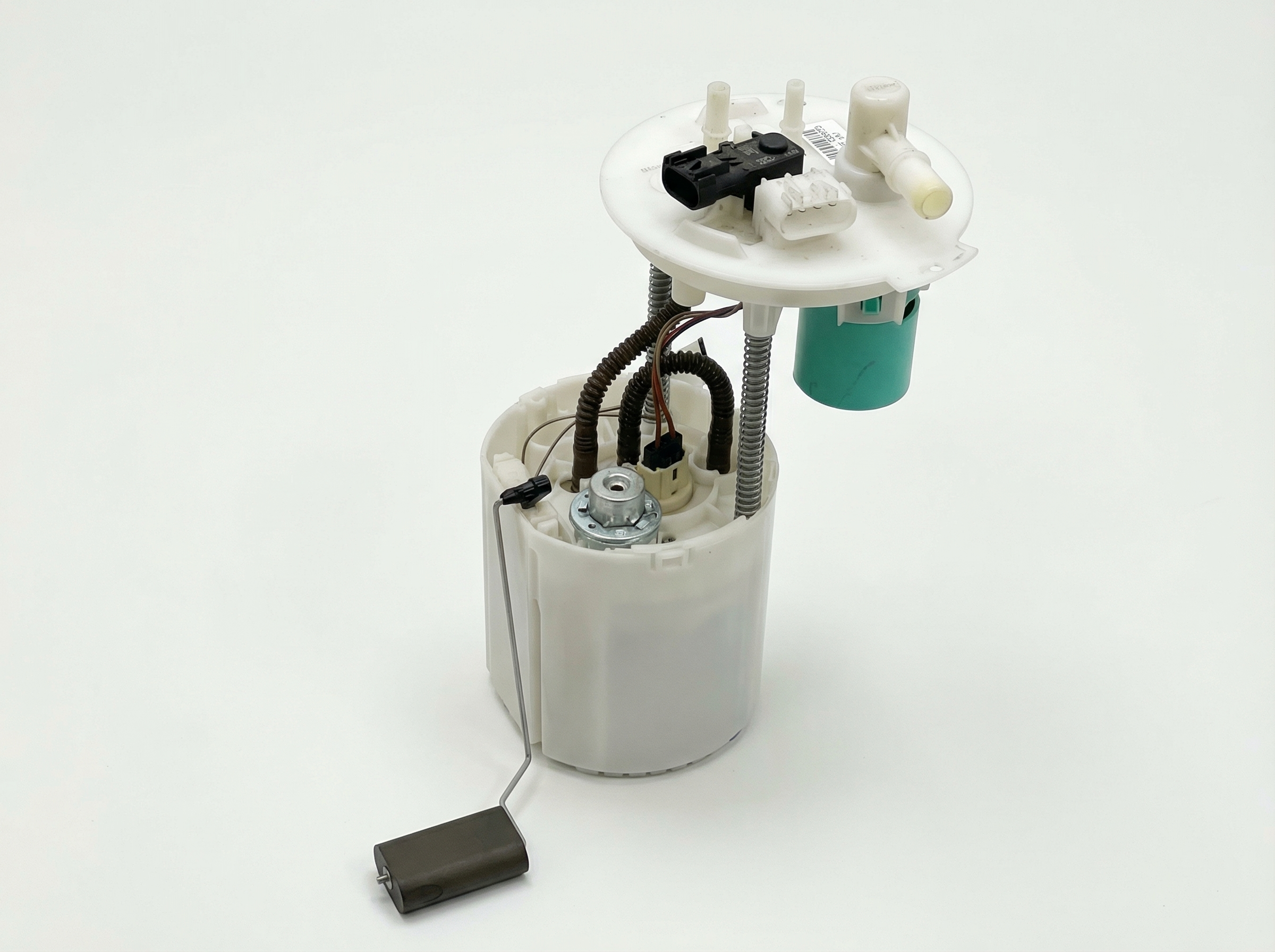
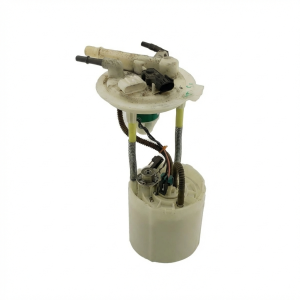
(OEM #Varies, check VIN. Must be updated version.)— If the FPCM is working correctly, the pump itself is the likely cause, especially under high heat as described in GM TSB #17-NA-335. It is critical to use the updated part number specified by GM to permanently fix the vapor buildup issue. The correct part must be verified using the vehicle's VIN.
Trusted brands: ACDelco, Delphi
OEM price range: $250-$450
Aftermarket price range: $200-$350
Related Codes That Often Appear With This One
- P018B — GM Technical Service Bulletins #PIP5507B and #17-NA-335 explicitly state that P2635 and P018B ('Fuel Pressure Sensor 'B' Circuit Range/Performance') often set together on this vehicle under high ambient temperatures, pointing to the same underlying issue of vapor buildup or fuel delivery problems.
- P069E — This code ('Fuel Pump Control Module Commanded On') often appears with P2635, indicating a fault within the FPCM's control circuit or the module itself. A faulty FPCM is the most common cause of this code.
Technical Service Bulletins (TSBs) & Recalls
- 17-NA-335: Supersedes earlier bulletins like PIP5411F. This is the definitive repair guide, which instructs technicians to replace the fuel pump module with an updated version to correct the vapor buildup condition causing hesitation and stalling.
- PIP5507B: A preliminary bulletin that first widely documented the P2635/P018B codes setting in high ambient temperatures. It identified the cause as vapor buildup but initially stated that replacing the fuel pump would *not* repair the concern, suggesting other mitigation strategies like using high-octane fuel.
Platform-Specific Known Issues
- A known issue, documented in TSB #17-NA-335, causes hesitation, surging, and stalling in ambient temperatures over 100°F, which sets codes P2635 and/or P018B. The recommended fix is to replace the fuel pump module with an updated part designed to handle vapor buildup.
- In cases where the updated fuel pump has already been installed but the issue persists in extreme heat, the earlier TSB #PIP5507B advises customers to use fuel with an octane rating greater than 91 and to avoid extended idling periods.
Mechanic-Grade Diagnostic Values
- Low-Pressure Fuel Sensor Reading (Engine On) — expected: Fluctuating between 30-60 PSI.. Failure: The reading is stuck on a single value (e.g., 48.7 PSI) and does not change with engine load or drop to zero when the system is depressurized.
- FPCM Power Supply at Connector — expected: 12V+ at Pin 32 (Red/White wire).. Failure: No voltage indicates a problem with the fuse or wiring from the main fuse box.
- FPCM Ground at Connector — expected: Good ground continuity at Pin 1 (Black wire).. Failure: High resistance or an open circuit indicates a bad ground connection.
- FPCM Turn-On Signal from ECM — expected: 12V+ at Pin 13 (Dark Green/White wire) for 3-6 seconds with key-on-engine-off, or constant 12V+ while cranking.. Failure: No voltage indicates a wiring break between the ECM and FPCM, or a faulty ECM driver.
Scan Tool Commands That Help
- GDS2 or equivalent professional scanner: Fuel Pump Enable / ECM Fuel Pump Output Control — Use this bidirectional control with the engine off to command the fuel pump ON and OFF. This verifies the integrity of the FPCM, wiring, and the pump itself. If the pump runs with this command, the issue may be with the trigger signal or sensor inputs.
- GDS2 or equivalent professional scanner: Fuel Pump Module Matching / Self Learning Process — After replacing the Fuel Pump Control Module (FPCM), this function must be run to clear old data and allow the ECM to learn the parameters of the new module. Failure to do so can result in a no-start or continued performance issues.
Wiring & Ground Locations
- FPCM Connector — In the trunk, passenger side, behind the trim panel near the wheel well on 10th Gen Impalas (2014+).. This is the central point for testing power (Pin 32), ground (Pin 1), ECM signal (Pin 13), and output to the pump. Corrosion or poor pin tension here is a common cause of failure.
- G301 — On the floor, to the left of the driver's seat (for 2014 Impala Limited).. This is a major body ground point. While not the direct ground for the FPCM, a poor connection here can cause a host of difficult-to-diagnose electrical issues in related systems that could mimic a component failure.
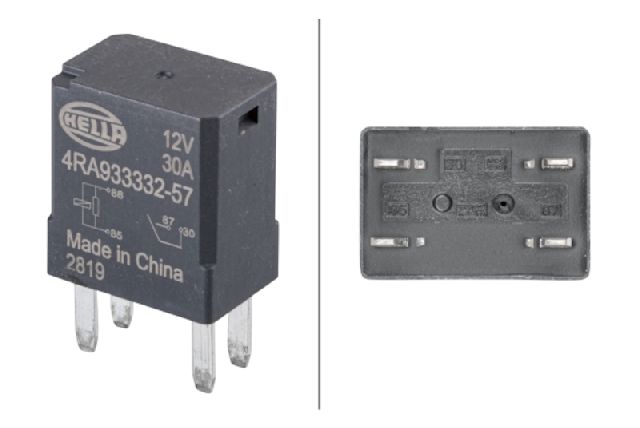
- Fuel Pump Fuse/Relay (9th Gen 'Limited') — In the underhood fuse box. The relay is located just under the 15A fuel pump fuse in the top-left corner of the box. A second 15A fuse for the FPCM is also in this box.. On the Impala Limited, these are the first and easiest items to check. A bad relay or blown fuse will cut power to the entire system, causing a no-start and setting this code.
Real Owner Repair Stories
- monosabio mobile road service LLC on YouTube (2016 Chevrolet Impala) — No start, code for fuel pump module.
❌ Tried (didn't work) Initially assumed the FPCM had just lost its programming.
✅ What actually fixed it After reprogramming the FPCM, the technician tested the module's output with a test light, which worked correctly. However, the car still would not start when the fuel pump was connected. This confirmed that the original fuel pump had failed electrically, which in turn caused the FPCM to malfunction. Both the fuel pump and the FPCM had to be replaced. - mechanicRHP on YouTube (2017 Chevrolet Silverado 4.3L V6 (contemporary GM vehicle)) — Check engine light with codes P2635 and P018B.
❌ Tried (didn't work) Considered replacing the fuel pump first, as suggested by some online videos.
✅ What actually fixed it The technician monitored the low-side fuel pressure sensor with a scan tool and noticed the reading was stuck at 48.7 PSI, never fluctuating as it should. Replacing the fuel pressure sensor, located on the frame rail, resolved both codes. This was a much cheaper and faster fix than a fuel pump or FPCM.
"I Checked Everything" — The Actual Cause
- A standard fuel pressure test in a climate-controlled shop may show normal results, failing to replicate the problem. The root cause documented in TSB #17-NA-335 is vapor buildup in the fuel lines that only occurs in ambient temperatures over 100°F (38°C). The system appears to function correctly until it gets heat-soaked, at which point the vapor causes fuel starvation, hesitation, and stalling, triggering the P2635 code.
When the Usual Fixes Don't Work
- While the TSB and common wisdom point to the fuel pump or FPCM as the cause for P2635, especially when paired with P018B in hot weather, there is documented evidence that a faulty low-pressure fuel sensor can be the sole cause. Before committing to an expensive pump or module replacement, a critical diagnostic step is to monitor the fuel pressure sensor's live data. If the reading is frozen or does not change with engine load, the sensor itself is the most likely culprit and is a significantly cheaper and easier repair.
OEM Part Supersession History
Varies by VIN→Updated Fuel Pump Module (PN varies by VIN)— The original design was prone to causing vapor buildup in the fuel feed line in high ambient temperatures.
Heads up: Per TSB #17-NA-335, it is critical to replace the fuel pump with the updated part number found in the GM Electronic Parts Catalog. Installing another original-spec pump will not fix the hot-weather stalling issue.20964304→20964305, 22874299— Part consolidation and revision.
Heads up: Part numbers 20964305 and 22874299 are both cited for the 2013-2017 Impala range. Always verify the correct part number with the vehicle's VIN before ordering, as there can be variations based on model year and options. All replacements require VIN programming.
Model Year Variations Within This Range
- 2013-2016 ('Impala Limited' 9th Gen): The fuel pump relay and two related fuses (one for the pump, one for the FPCM) are located in the underhood fuse box. This provides an easy initial diagnostic check not available in the same configuration on the 10th Gen Impala.
- 2014-2017 (10th Gen): The Fuel Pump Control Module (FPCM) is located in the trunk on the passenger side, behind the trim panel. Access requires removing interior trim rather than accessing it from under the vehicle as on some other GM platforms.
Helpful Videos

Used OEM Parts in Stock
New Aftermarket Parts Available



The information in this article is provided for general reference and educational purposes only. Vehicle specifications, procedures, and part compatibility can vary by production date, trim level, and region. Always consult your vehicle's factory service manual and verify part numbers before purchasing or performing repairs. Safety-critical components such as airbags, seat belts, and braking systems should be installed by a qualified professional.
- Chevrolet IMPALA:
- 🧭 Diagnostic Flowchart
- 🎬 Helpful Videos
- 🛍️ Shop This Part
- What's Unique About the 2013-2017 Chevrolet IMPALA
- Symptoms You May Notice
- Most Likely Causes
- Rare But Worth Checking
- Diagnosis Steps
- Parts You'll Likely Need
- Related Codes That Often Appear With This One
- Technical Service Bulletins (TSBs) & Recalls
- Platform-Specific Known Issues
- Mechanic-Grade Diagnostic Values
- Scan Tool Commands That Help
- Wiring & Ground Locations
- Real Owner Repair Stories
- "I Checked Everything" — The Actual Cause
- When the Usual Fixes Don't Work
- OEM Part Supersession History
- Model Year Variations Within This Range
- 🎟️ Get 5% Off