

P2635 on 2013-2017 Chevrolet Malibu: Fuel Pump Low Flow Causes and Fixes
On a 2013-2017 Malibu, code P2635 almost always points to a failing in-tank fuel pump module or a faulty Fuel Pump Control Module (FPCM). Stalling in hot weather (over 100°F) is a key symptom, often addressed by TSBs recommending a fuel pump replacement. Expect to pay $300-$600 for a replacement fuel pump module and $100-$200 for an FPCM, plus potential programming fees.
- P2635 on a 2013-2017 Malibu indicates a fuel flow problem, not just a sensor fault.
- The most common culprits are the in-tank fuel pump module and the Fuel Pump Control Module (FPCM).
- Symptoms like stalling and hesitation are often worse in hot weather, a known issue for this car.
- Always check for code P018B, as it frequently appears with P2635 and points to the same root cause.
- Diagnosis should involve checking actual vs. desired fuel pressure with a scan tool before replacing parts.
What's Unique About the 2013-2017 Chevrolet MALIBU

The 2013-2017 Malibu, particularly across the 8th and 9th generations, is known for this specific issue, which is often exacerbated by high ambient temperatures. Manufacturer documents specifically note that P2635, often paired with P018B, can be triggered by vapor buildup in the fuel line when temperatures exceed 100°F (37.7°C), leading to hesitation or stalling. 🎬 Watch: Understanding P2635 fuel flow performance codes and fixes. This indicates a design sensitivity in the fuel delivery system to heat. TSB PIP5507B even notes that if an updated fuel pump has already been installed and the issue persists in high heat, replacing the pump again will not fix the concern; in this case, GM advises using fuel with an octane rating over 91 and avoiding extended idling.
Diagnostic Flowchart

Tap your situation to follow the diagnostic path that matches what you're seeing on this vehicle.
Generation note: This year range covers the end of the 8th generation (2013-2015) and the beginning of the 9th generation (2016-2017) Malibu. The P2635 code and its common causes, particularly the fuel pump module, are relevant to both generations, as confirmed by GM Technical Service Bulletins that cover models from both eras.
Symptoms You May Notice
- Check Engine Light is on
- Engine hesitation or stumbling on acceleration
- Vehicle stalls, especially in hot weather
- Reduced engine power or 'limp mode'
- Vehicle lunges or surges during driving.
- Car revs but fails to move or accelerate properly.
- Longer crank time to start the engine
- Engine refuses to start at all.
- Replacing only the fuel pressure sensor without testing the fuel pump and FPCM first. The sensor can be a cause, but it's more often a symptom of a failing pump or module.
- Replacing the fuel pump when the FPCM is the actual point of failure. Verifying power and command signals at the FPCM is a critical diagnostic step to avoid this.
Most Likely Causes

- Failing Fuel Pump Module Assembly 🔴 High Probability → Shop Fuel Pump GM has issued multiple Technical Service Bulletins (TSBs) advising the replacement of the fuel pump module to fix P2635. TSB 16-NA-225 suggests the cause may be a loss of retention causing leakage between the fuel pump and the upper manifold assembly inside the tank. This is often exacerbated by vapor buildup in hot weather.
How to confirm: Perform a fuel pressure test using a scan tool to compare desired vs. actual fuel pressure. If actual pressure is consistently low and the Fuel Pump Control Module (FPCM) is functioning correctly, the pump is the likely failure point. A professional technique involves bypassing the FPCM to send full power to the pump; if pressure remains low, the pump is confirmed bad.
Typical fix: Replace the entire in-tank fuel pump module assembly. Per TSB 16-NA-225, this is the direct corrective action for P2635.
Est. part cost: $300-$600 - Faulty Fuel Pump Control Module (FPCM) 🔴 High Probability → Shop Fuel Pump The FPCM, also known as the fuel pump driver module, regulates voltage to the fuel pump. These modules are a common failure point on many GM vehicles, leading to incorrect pump speed and low fuel flow.
How to confirm: Check for power, ground, and command signals at the FPCM connector. A scan tool may show communication errors or show that the FPCM is not commanding the pump correctly. If the pump runs when the FPCM is bypassed but not otherwise, the module is faulty.
Typical fix: Replace the Fuel Pump Control Module. The new module must be programmed to the vehicle's VIN using GM's SPS software, which may require a dealer or properly equipped independent shop.
Est. part cost: $100-$200 - Clogged Fuel Filter 🟡 Medium Probability → Shop Fuel Filter The fuel filter is integrated into the fuel pump module on this vehicle. While not a separate part to replace, a clogged filter sock can restrict flow and cause the entire module to fail, triggering P2635.
How to confirm: This is typically confirmed during the replacement of the fuel pump module. Visual inspection of the old filter sock will show heavy contamination.
Typical fix: Replace the fuel pump module assembly, which includes a new fuel filter sock.
Est. part cost: $300-$600 - Wiring Issues ⚪ Low Probability
How to confirm: Visually inspect the wiring harness and connectors between the FPCM and the fuel pump module for any signs of damage, corrosion, or loose connections. Pay close attention to the main connector on top of the fuel tank.
Typical fix: Repair or replace the damaged section of the wiring harness or connector.
Est. part cost: $20-$100
Rare But Worth Checking
- Faulty Fuel Pressure Sensor: → Shop Fuel Pressure Sensor While less common, a faulty fuel pressure sensor can send incorrect low-pressure readings to the ECM, triggering P2635 even if the pump is working correctly. This is more likely if code P018B is also present. A popular YouTube video from South Main Auto documents this exact scenario on a Malibu.
- Running the Fuel Tank Extremely Low: → Shop Fuel Tank Some owners have reported the P2635 code appearing immediately after running the vehicle until the fuel tank was nearly empty. The theory is that the pump may have momentarily sucked in air instead of fuel, causing a pressure drop that the system detected as a fault.
- Clogged Fuel Tank Vent: → Shop Fuel Tank Though documented on other GM vehicles like the Colorado/Canyon in TSB 19-NA-277, it's a plausible rare cause. Debris can clog the fuel tank's vent system, creating a vacuum inside the tank as fuel is consumed. This vacuum can cause the tank to physically collapse, damaging the fuel pump module and triggering P2635.
Diagnosis Steps
- Check for other stored DTCs, paying close attention to P018B.
- Use a scan tool to monitor live data for 'Desired Fuel Rail Pressure' and 'Actual Fuel Rail Pressure'. Note any significant discrepancies, especially under load or when the engine is warm.
- Inspect the wiring and connectors for the Fuel Pump Control Module (FPCM) and the fuel pump assembly for any visible damage, corrosion, or loose pins.
- If possible with your scan tool, command the fuel pump on and listen for its operation. A weak or inconsistent sound can indicate a failing pump.
- If pressures are low, test the FPCM by verifying it has proper power, ground, and is receiving a command signal from the ECM. Consider bypassing the FPCM to power the pump directly as a definitive test.
- If the FPCM and its wiring are confirmed to be good but fuel pressure remains low, the fuel pump module assembly is the most likely cause of the problem and should be replaced.
- After repair, clear the DTCs and operate the vehicle under the conditions that previously set the code. A diagnostic document suggests verifying that the product of 'Short Term Fuel Pump Trim' and 'Long Term Fuel Pump Trim' is less than 1.5 to confirm a successful repair.
Parts You'll Likely Need
- Fuel Pump Module Assembly
(OEM #Varies by engine. Per TSB 16-NA-225: 23406970 (for LTG, LKN engines), 23406971 (for LFV engine), 84100549 (for LCV engine). Always verify with VIN.)— This is the most common fix according to multiple GM Technical Service Bulletins. It contains the pump, level sender, and filter, which are the primary failure points.
Trusted brands: ACDelco, Delphi
OEM price range: $400-$600
Aftermarket price range: $250-$450 - Fuel Pump Control Module (FPCM) — This module controls the fuel pump's speed and is a known failure point on GM vehicles, causing low flow and triggering P2635. Requires VIN programming after installation.
Trusted brands: ACDelco, Dorman
OEM price range: $150-$250
Aftermarket price range: $80-$150
Related Codes That Often Appear With This One
- P018B — This code relates to 'Fuel Pressure Sensor 'B' Circuit Range/Performance.' GM TSBs frequently mention P2635 and P018B appearing together, as both are triggered by the same underlying fuel delivery problem, especially in high heat.
Technical Service Bulletins (TSBs) & Recalls
- 16-NA-225: Recommends replacing the fuel pump module assembly for DTC P2635 and/or P018B. Provides specific part numbers based on engine RPO codes for 2016-2017 models.
- PIP5507B: Links DTCs P2635 and P018B to hesitation or stalling in ambient temperatures over 100°F (37.7°C). Importantly, it advises that if a new pump doesn't fix it, use higher octane fuel and avoid long idles, as another pump won't help.
- 17-NA-335: Supersedes a previous bulletin (PIP5411), also pointing to vapor buildup in the fuel line in high heat as a cause and recommending fuel pump module replacement with an updated version.
Platform-Specific Known Issues
- A known issue, documented in TSB #PIP5507B, is the setting of codes P2635 and P018B in ambient temperatures of 100°F (37.7°C) or higher, which can cause hesitation or stalling due to vapor buildup in the fuel line.
- TSB #16-NA-225 directly advises replacing the fuel pump module assembly if DTC P2635 and/or P018B are set, noting the cause may be a 'loss of retention resulting in leakage between the fuel pump and upper manifold assembly'.
- TSB #17-NA-335 supersedes a previous bulletin, also pointing to vapor buildup in the fuel line in high heat as a cause and recommending fuel pump module replacement with an updated version.
Mechanic-Grade Diagnostic Values
- Scan Tool: Actual vs. Desired Low-Side Fuel Pressure — expected: Actual pressure should be within 45 kPa (6.5 PSI) of desired pressure at a 300 kPa (43.5 PSI) request, or within 60 kPa (8.7 PSI) at a 400 kPa (58 PSI) request.. Failure: The deviation between actual and desired pressure consistently exceeds the specified thresholds, indicating a flow problem.
- FPCM Power Supply Voltage (at module connector) — expected: 12.0V - 12.6V with ignition on, engine off.. Failure: Voltage below 11.5V suggests a problem with the supply circuit, fuse, or wiring from the main power distribution center.
- Fuel Pump Ground Circuit Resistance — expected: Less than 1.0 Ohm, ideally close to 0.2 Ω.. Failure: High resistance indicates a poor ground connection, which can cause the pump to run slow and underperform.
Scan Tool Commands That Help
- GDS2 (GM Techline Connect): Fuel Pump On/Off Command — Used to manually activate the fuel pump to listen for its operation and to verify the integrity of the control circuit from the FPCM to the pump. If the pump doesn't run when commanded, it points to a pump, wiring, or FPCM output failure.
- GDS2 (GM Techline Connect): Fuel Pump Duty Cycle Command — Allows a technician to manually vary the speed of the fuel pump while monitoring the 'Actual' and 'Desired' fuel pressure PIDs. This helps determine if the FPCM can control the pump and if the pump can respond across its operational range.
Wiring & Ground Locations

- Fuel Pump Control Module (FPCM) - 2013-2015 (8th Gen) — Located in the trunk, on the right (passenger) side, behind the trunk liner panel.. This is the control unit for the fuel pump. Access is required to test power, ground, and command signals, or to replace the module if it's faulty.
- Fuel Pump Control Module (FPCM) - 2016-2017 (9th Gen) — Typically located under the vehicle, mounted to the frame rail near the fuel tank.. Its location under the car makes it more susceptible to corrosion and wiring damage from road debris and weather, which can cause P2635.
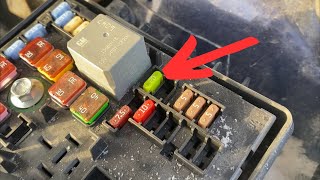
- F26 or F67 (Under-hood Fuse Block) — In the under-hood fuse block. For 2013-2016 models, it's often a 20A fuse in position F67. For 2016+ models, it may be fuse F28 or F35.. This fuse supplies power to the Fuel Pump Control Module (FPCM). A blown fuse will cut all power to the module and pump, directly causing a no-start and setting a P2635 or related circuit code.
- Fuel Pump Ground — The main ground for the fuel pump assembly is typically located behind the right rear seat back.. A poor or corroded ground connection here will increase resistance in the fuel pump circuit, causing the pump to run slower and with less power, leading to a low flow condition.
Real Owner Repair Stories
- YouTube video (Chevrolet Malibu (year not specified, but within the 8th gen body style)) — Check engine light on, codes stored.
❌ Tried (didn't work) The previous mechanic had bypassed the Fuel Pump Control Module entirely, hardwiring the pump to run at full power whenever the key was on.
✅ What actually fixed it The technician removed the improper bypass wiring and installed a new, functional Fuel Pump Control Module (FPCM), restoring normal operation and clearing the check engine light. This fixed the issue of the pump running constantly and addressed the underlying control problem. - YouTube video (2014 Chevrolet Malibu) — Multiple codes including P2635, P018B, and P018C.
✅ What actually fixed it The technician diagnosed and replaced the low-pressure fuel pressure sensor located on the fuel line. The sensor was providing incorrect readings, which caused the computer to believe there was a fuel flow performance issue.
OEM Part Supersession History
23314204→23406970— Part number update by the manufacturer for the fuel pump module assembly.
Heads up: The TSBs for high-heat issues recommend using the latest available part number to ensure the fix is effective. Using an older stock part may not resolve the vapor buildup issue.
Model Year Variations Within This Range
- 2013-2015 (8th Gen): The Fuel Pump Control Module (FPCM) is located inside the trunk on the passenger side.
- 2016-2017 (9th Gen): The Fuel Pump Control Module (FPCM) is typically mounted underneath the vehicle near the fuel tank, making it more exposed to the elements. Additionally, the 9th generation introduced the 1.5L Turbo (LFV) engine, which has its own specific fuel pump part number per TSB 16-NA-225.
- 2013-2015 (Eco model): The Malibu Eco model uses a 2.4-liter four-cylinder engine with a mild-hybrid system. While the low-pressure fuel system operates similarly, diagnostics should account for the auto-stop/start system's operation.
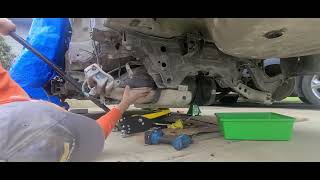
Helpful Videos



Used OEM Parts in Stock
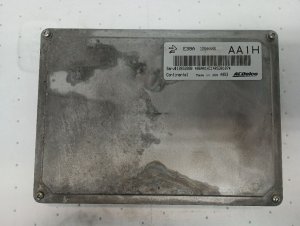
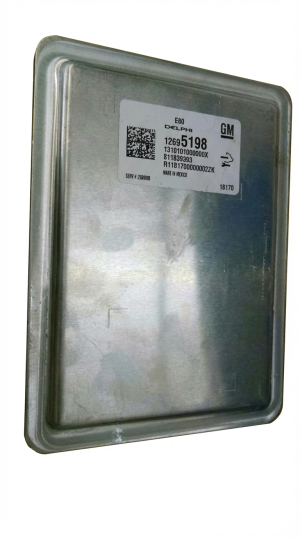
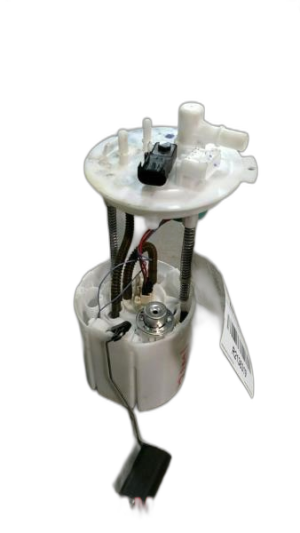
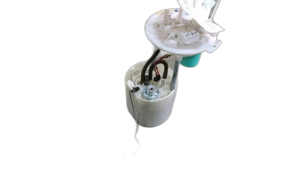
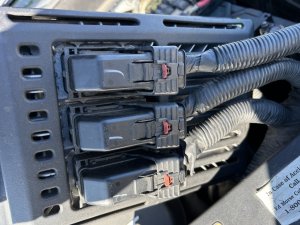
New Aftermarket Parts Available

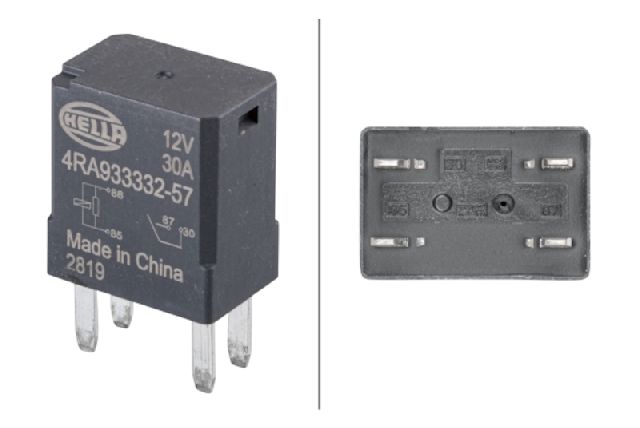



The information in this article is provided for general reference and educational purposes only. Vehicle specifications, procedures, and part compatibility can vary by production date, trim level, and region. Always consult your vehicle's factory service manual and verify part numbers before purchasing or performing repairs. Safety-critical components such as airbags, seat belts, and braking systems should be installed by a qualified professional.
- Chevrolet MALIBU:
- 🧭 Diagnostic Flowchart
- 🎬 Helpful Videos
- 🛍️ Shop This Part
- What's Unique About the 2013-2017 Chevrolet MALIBU
- Symptoms You May Notice
- Most Likely Causes
- Rare But Worth Checking
- Diagnosis Steps
- Parts You'll Likely Need
- Related Codes That Often Appear With This One
- Technical Service Bulletins (TSBs) & Recalls
- Platform-Specific Known Issues
- Mechanic-Grade Diagnostic Values
- Scan Tool Commands That Help
- Wiring & Ground Locations
- Real Owner Repair Stories
- OEM Part Supersession History
- Model Year Variations Within This Range
- 🎟️ Get 5% Off