

P2635 on 2010-2017 Chevrolet Silverado 1500: Fuel Pump Low Flow Causes & Fixes
On 2010-2017 Silverados, especially 2014 and newer models, code P2635 usually points to a failing in-tank fuel pump or a faulty Fuel Pump Control Module (FPCM). This is often triggered by high ambient temperatures (above 100°F), causing stalling and hesitation due to vapor buildup in the fuel line, a condition addressed by a GM TSB.
- P2635 on a 2010-2017 Silverado indicates a fuel flow problem, not an oil pressure issue.
- For 2014-2017 models, stalling in hot weather is a classic symptom pointing to a known issue fixed with an updated fuel pump module.
- The code is very often paired with P018B, which strongly suggests checking the fuel pressure sensor's live data for a stuck reading.
- The Fuel Pump Control Module (FPCM) is a common failure point and should be inspected for corrosion or tested for communication, especially if you also have a U0109 code.
- Proper diagnosis is key to avoid replacing an expensive fuel pump when a cheaper sensor or module is the real problem.
What's Unique About the 2010-2017 Chevrolet SILVERADO 1500

The 2010-2017 Silverado range spans two generations: the GMT900 (through 2013) and the K2XX (2014+). The K2XX trucks feature a more complex fuel delivery system that is prone to specific issues. Manufacturer bulletins specifically highlight that 2014-2017 models can experience hesitation, surging, and stalling in high ambient temperatures (above 100°F/38°C), which triggers code P2635 due to vapor buildup in the fuel line. This often points to a specific issue with the fuel pump design or the Fuel Pump Control Module (FPCM) on this platform, prompting GM to release an updated fuel pump module.
Diagnostic Flowchart

Tap your situation to follow the diagnostic path that matches what you're seeing on this vehicle.
Generation note: This range covers the end of the second generation (GMT900, 2010-2013) and the beginning of the third generation (K2XX, 2014-2017). The most well-documented issues for P2635, including multiple Technical Service Bulletins (TSBs), apply specifically to the 2014-2017 K2XX models which suffer from a vapor lock condition in high heat. Issues on GMT900 models are more likely related to general FPCM or pump failure.
Symptoms You May Notice
- Malfunction Indicator Lamp (Check Engine Light) is on.
- Engine hesitation or surging, particularly under acceleration or on a light throttle up a hill.
- Engine stalling, which may be more frequent in high ambient temperatures.
- Loss of engine power and overall sluggishness.
- Extended cranking time before the engine starts, or a no-start condition.
- Rough idle or engine misfires.
- Replacing the fuel pump when the Fuel Pump Control Module (FPCM) is the actual cause.
- Replacing the FPCM when the in-tank fuel pump is weak or failing.
- Overlooking a faulty fuel pressure sensor that is providing incorrect data to the control modules, leading to unnecessary fuel pump replacement.
Most Likely Causes

- Failing In-Tank Fuel Pump 🔴 High Probability → Shop Fuel Pump A GM Technical Service Bulletin (TSB 17-NA-335) identifies a condition caused by vapor buildup in the fuel line on 2014-2017 models, especially in high heat. The official fix is to replace the fuel pump module with an updated design that includes a one-way breather valve to prevent this.
How to confirm: Perform a fuel pressure and flow test. If the pressure is below the specification of 55-65 PSI, especially when commanded by a scan tool, the pump is likely weak. The issue is most likely to occur in ambient temperatures over 100°F (38°C).
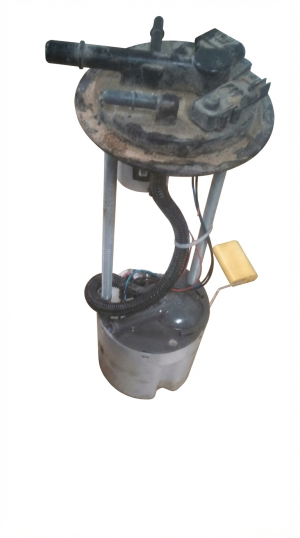
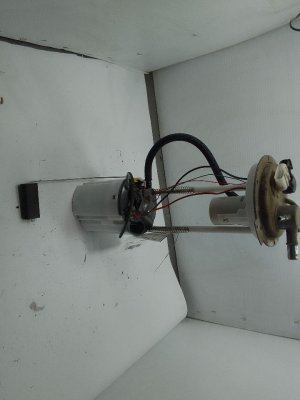
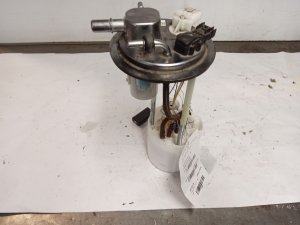
Typical fix: Replace the in-tank fuel pump module assembly. 🎬 Watch this 10-minute walkthrough for replacing the fuel pump It is highly recommended to use the updated part number specified by GM to permanently correct the vapor lock issue.
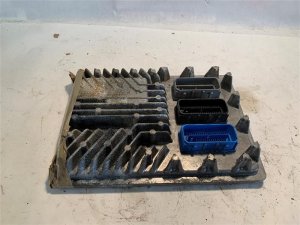
Est. part cost: $200-$450 - Faulty Fuel Pump Control Module (FPCM) 🔴 High Probability → Shop Fuel Pump The FPCM is mounted on the frame rail above the spare tire, exposing it to weather, road salt, and corrosion. It is a very common failure point on many GM trucks, causing a loss of communication or erratic fuel pump operation.
How to confirm: Check for communication with the FPCM using a scan tool (a U0109 code is a dead giveaway). Verify power and ground at the module's connector. If inputs are good but the pump doesn't run or runs erratically, the FPCM is suspect.
Typical fix: Replace the Fuel Pump Control Module. OEM modules (like ACDelco P/N 23482933) require programming to the vehicle's VIN. Some aftermarket modules (like Dorman 601-048) are advertised as pre-programmed and plug-and-play.
Est. part cost: $70-$200 - Faulty Fuel Pressure Sensor 🟡 Medium Probability → Shop Fuel Pressure Sensor TSB PIP5286B specifically notes 🎬 Watch: Diagnosing P018B and P2635 on a 4.3L Silverado that a fuel pressure sensor that is not reading the low end of its range correctly can trigger both P2635 and P018B. The sensor can get stuck on a reading (e.g., 48.7 PSI), providing false data to the ECM.
How to confirm: Monitor the fuel pressure sensor reading on a scan tool. A healthy sensor's reading should fluctuate slightly (e.g., between 30-60 PSI). If it's stuck at a fixed value, it's likely faulty. A diagnostic test involves depressurizing the fuel system on a cold engine and watching if the sensor's reading drops to zero. If it stays elevated, the sensor is bad.
Typical fix: Replace the fuel pressure sensor, which is typically located on the fuel line along the frame rail under the driver's side. The OEM part number is commonly GM 13577394 (which replaces 13575050).
Est. part cost: $40-$80 - Clogged Fuel Filter ⚪ Low Probability → Shop Fuel Filter The fuel filter is integrated into the fuel pump module on these models. While not a separate part to replace, a clogged filter sock inside the tank can restrict flow and cause this code, necessitating the replacement of the entire pump module.
How to confirm: This is typically confirmed during a fuel pump replacement when low pressure is diagnosed and the pump's inlet sock is found to be heavily contaminated.
Typical fix: Replace the complete fuel pump module assembly.
Est. part cost: $200-$450
Rare But Worth Checking
- Wiring Issue: Corrosion or damage to the wiring or connectors for the FPCM or fuel pressure sensor can cause intermittent signal loss, leading to this code. This is especially relevant given the FPCM's location under the truck.
- Contaminated Mass Airflow (MAF) Sensor: In at least one documented case on a 2012 Silverado, a MAF sensor contaminated with oil residue and dirt caused a P2635 code with misfiring under load. The owner replaced the fuel pump and FPCM with no success before discovering the dirty MAF. Cleaning the MAF sensor resolved the issue completely.
Diagnosis Steps
- Check for other DTCs. Codes like P018B or U0109 are strong clues pointing to the fuel pressure sensor or FPCM, respectively.
- Use a scan tool to observe live data for the fuel pressure sensor. With the engine running, the pressure should fluctuate slightly. A stuck value indicates a bad sensor.
- Perform the fuel system depressurization test as outlined in TSB PIP5286B on a cold engine. Use a scan tool to command the system to depressurize. The sensor's PSI reading should drop to zero. If it remains elevated, the sensor is faulty.
- Inspect the Fuel Pump Control Module (FPCM) and its connector, located on the frame rail above the spare tire, for corrosion, moisture, or physical damage.
- Test for power and ground at the FPCM connector. If power and ground are present but the module is unresponsive (especially with a U0109 code), the FPCM has failed.
- If the FPCM has power but fuel pressure is low, you can command the fuel pump on/off using a bi-directional scan tool. If the pump doesn't respond but the FPCM is confirmed good, the issue is likely the in-tank pump or its wiring.
- If all electrical components test good but pressure/flow is low, especially in high heat, the issue is mechanical, pointing to a weak or vapor-locking fuel pump.
Parts You'll Likely Need

- Fuel Pump Module Assembly
(OEM #Varies by configuration (e.g., 13513407 for Short Box Crew Cab). Refer to EPC for specific vehicle.)— This is the primary fix recommended by GM's TSB for the common high-temperature stalling issue on 2014-2017 models. The pump itself can also wear out, causing low flow.
Trusted brands: ACDelco, Delphi
OEM price range: $300-$450
Aftermarket price range: $200-$350 - Fuel Pump Control Module (FPCM)
(OEM #23482933 (ACDelco))— This module is a very common failure point. It controls the voltage to the fuel pump and can fail due to its exposed location, causing a no-start or stalling condition.
Trusted brands: ACDelco, Dorman (e.g., 601-048)
OEM price range: $120-$200
Aftermarket price range: $70-$150 - Fuel Pressure Sensor
(OEM #13577394 (replaces 13575050))— A faulty sensor can send incorrect readings to the ECM, tricking it into setting a P2635 code even if the pump is working correctly. This is a specific cause identified in TSB PIP5286B.
Trusted brands: ACDelco, Bosch
OEM price range: $60-$80
Aftermarket price range: $40-$60
Related Codes That Often Appear With This One
- P018B — This code, for "Fuel Pressure Sensor 'B' Circuit Range/Performance," is frequently set alongside P2635. Multiple TSBs (17-NA-335, PIP5286B) mention them appearing together, indicating the diagnostic system is seeing a conflict between the commanded fuel pressure and the sensor's reading.
- U0109 — This communication code means "Lost Communication With Fuel Pump Control Module." If you see this code, the FPCM is almost certainly the primary fault, due to either internal failure or a wiring issue.
- P0087 — This code for "Fuel Rail/System Pressure - Too Low" can appear with P2635, especially in cold weather conditions that cause starting issues, as noted in TSB 18NA103.
Technical Service Bulletins (TSBs) & Recalls

- 17-NA-335: Addresses MIL on with P2635/P018B in high ambient temps, recommends updated fuel pump.
- PIP5286B: Provides diagnostic steps for a faulty fuel pressure sensor causing P2635/P018B.
- PIP5411F: Predecessor to 17-NA-335, also pointing to fuel pump replacement for hot weather stalling.
- 18NA103: Mentions P2635 in conjunction with P0087 and other codes for cold weather start/stall issues.
Platform-Specific Known Issues
- A known issue on 2014-2017 models is hesitation, surging, and stalling in ambient temperatures over 100°F (38°C), which sets codes P2635 and P018B. The cause is cited as vapor buildup in the fuel feed line, and the fix is an updated fuel pump module with a one-way breather valve.
Mechanic-Grade Diagnostic Values
- Low-Pressure Fuel System (In-tank pump output) — expected: Fluctuating between 30-60 PSI with engine on. Should pressurize to ~60 PSI when commanded on with a scan tool (engine off).. Failure: A reading stuck at a fixed value (e.g., 48.7 PSI) indicates a faulty sensor. A reading below 30 PSI or that doesn't respond to commands suggests a weak pump or FPCM issue.
- High-Pressure Fuel System (Direct Injection Rail Pressure) at Idle — expected: Approximately 500-700 PSI.. Failure: Significantly lower pressure can indicate an issue with the high-pressure fuel pump (HPFP), though this is less commonly associated with P2635 alone.
- Fuel Pressure Sensor Voltage — expected: 0.4V to 4.5V. Failure: Voltage outside this range indicates a sensor or wiring fault.
- FPCM Power Supply (at connector) — expected: Battery voltage at Pin 32 (Red/White wire).. Failure: No voltage indicates a wiring or fuse issue before the module.
- FPCM Ground (at connector) — expected: Good ground continuity at Pin 16 (Black wire).. Failure: High resistance or an open circuit points to a bad ground connection, a common issue.
Scan Tool Commands That Help
- GDS2 (or equivalent high-end scan tool): Fuel Pump Enable/Disable — Used with the engine off to command the in-tank fuel pump on. This allows for testing the pump's ability to build pressure (~60 PSI) and checking for voltage at the pump, isolating the pump from the FPCM and wiring.
- GDS2 (or equivalent high-end scan tool): Fuel System Depressurization Test — This function is used to test the fuel pressure sensor. On a cold engine, commanding the system to depressurize should cause the sensor's PSI reading to drop to zero. If it stays at an elevated value, the sensor is faulty.
- GDS2 / Techline Connect: FPCM Programming/Setup — Required after replacing the Fuel Pump Control Module with a new OEM unit. The module must be programmed with the vehicle's VIN to function. Failure to program will result in a crank/no-start or start-and-stall condition.
Wiring & Ground Locations
- FPCM Location — On the frame rail, typically above the spare tire. The spare tire often needs to be lowered for access.. This exposed location makes the FPCM and its connector highly susceptible to corrosion from road salt and moisture, which is a primary cause of failure leading to P2635 and U0109 codes.
- G300 — On the back of the first outrigger (body mount) behind the left front tire, under the truck below the driver's door hinge area.. This is a critical chassis ground. Poor connection due to rust or fatigue can cause various electrical issues, including problems with engine control devices like the FPCM.
- G102 — On the driver's side of the engine block, just above the pan rail and in front of the motor mount.. This is a primary engine ground. A poor connection here can affect the performance and reference signals for multiple engine sensors and modules.
- G103 — On the front corner of the passenger side cylinder head, just below the valve cover.. Another essential engine ground that ensures stable operation of the electronic control systems.
- FPCM Connector — The large electrical plug connecting to the Fuel Pump Control Module.. Key pins to test are Pin 32 (Red/White) for battery power, Pin 16 (Black) for ground, and Pin 13 (Dark Green/White) for the control signal to the pump.
Real Owner Repair Stories
- YouTube user, video title 'P018B, P2635 Diag and Fix Chevy Silverado 4.3 V6' (2017 Chevrolet Silverado with 4.3L V6) — Codes P2635 and P018B. Scan tool showed the fuel pressure sensor was stuck at 48.7 PSI and not fluctuating.
❌ Tried (didn't work) The narrator notes that many online videos suggest replacing the fuel pump first, which is often incorrect.
✅ What actually fixed it Replacing the fuel pressure sensor located on the fuel line under the driver's side of the truck. After replacement, the live data showed the pressure correctly fluctuating between 30 and 60 PSI. - CK5 Forums user (2014 Chevrolet Silverado 5.3L) — Persistent P2635 code after rust repair and transfer case work. Also had P018B initially.
❌ Tried (didn't work) Replacing the in-tank fuel pump was done, but the P2635 code remained.
✅ What actually fixed it The P018B code was resolved by replacing the fuel pressure sensor on the fuel line. The P2635 code persisted, and the user was still diagnosing, suspecting a leaking injector due to negative long-term fuel trims, but the sensor replacement was a confirmed fix for P018B which is commonly paired with P2635.
OEM Part Supersession History
23103795, 23172742, 23200138→23482933— Standard part update and consolidation by GM.
Heads up: This part (23482933) requires programming to the vehicle's VIN when installed. It is not a plug-and-play part unless an aftermarket pre-programmed version is used.
Model Year Variations Within This Range
- 2014-2017 (K2XX Generation): These models are specifically called out in TSBs 17-NA-335 and PIP5411F for stalling/hesitation in high heat (>100°F) due to fuel vapor buildup. The fix is an updated fuel pump module with a new design featuring a one-way breather valve to mitigate this. Older GMT900 models (2010-2013) do not have this specific, well-documented issue.
- 2014+: The 2014+ K2XX trucks use a direct injection fuel system, which includes both a low-pressure in-tank pump (related to P2635) and a high-pressure, engine-mounted pump (HPFP). While P2635 points to the low-pressure side, diagnostics must differentiate between the two systems. GMT900 trucks (2010-2013) use a conventional port fuel injection system without an HPFP.
Helpful Videos

![Easy Fix for Common Chevy Problem [Fuel Pump Control Module]](https://img.youtube.com/vi/38Xeo1uLBoU/mqdefault.jpg)
Used OEM Parts in Stock
New Aftermarket Parts Available




The information in this article is provided for general reference and educational purposes only. Vehicle specifications, procedures, and part compatibility can vary by production date, trim level, and region. Always consult your vehicle's factory service manual and verify part numbers before purchasing or performing repairs. Safety-critical components such as airbags, seat belts, and braking systems should be installed by a qualified professional.
- Chevrolet SILVERADO 1500:
- 🧭 Diagnostic Flowchart
- 🎬 Helpful Videos
- 🛍️ Shop This Part
- What's Unique About the 2010-2017 Chevrolet SILVERADO 1500
- Symptoms You May Notice
- Most Likely Causes
- Rare But Worth Checking
- Diagnosis Steps
- Parts You'll Likely Need
- Related Codes That Often Appear With This One
- Technical Service Bulletins (TSBs) & Recalls
- Platform-Specific Known Issues
- Mechanic-Grade Diagnostic Values
- Scan Tool Commands That Help
- Wiring & Ground Locations
- Real Owner Repair Stories
- OEM Part Supersession History
- Model Year Variations Within This Range
- 🎟️ Get 5% Off