

P2635 on 2014-2018 Chevrolet Silverado 1500: Fuel Pump Low Flow Causes and Fixes
On a 2014-2018 Silverado, P2635 most often points to a faulty Fuel Pump Control Module (FPCM) or a bad low-pressure fuel sensor, especially if code P018B is also present. Before replacing the expensive in-tank fuel pump, test these less expensive components first. The hot-weather stalling symptom is a well-documented issue addressed by a GM TSB requiring an updated fuel pump.
- Do not immediately replace the fuel pump. A faulty Fuel Pump Control Module (FPCM) or a bad low-pressure fuel sensor are more likely culprits and are cheaper to fix.
- If code P018B is present alongside P2635, the fuel pressure sensor is highly suspect. Test it using a scan tool before buying parts.
- If you experience stalling primarily in hot weather, your truck may be affected by TSB 17-NA-335, which requires an updated fuel pump module to fix a vapor lock issue.
- Always check for and diagnose communication codes (like U0109) first, as they can cause the P2635 code to be set incorrectly.
What's Unique About the 2014-2018 Chevrolet Silverado 1500
The 2014-2018 (K2XX generation) Silverado and its platform mates are particularly susceptible to this code due to a few well-documented issues. GM issued Technical Service Bulletin (TSB) 17-NA-335 for a condition where high ambient heat (over 100°F) causes vapor buildup in the fuel lines, leading to stalling and this code, with the fix being an updated fuel pump module with an improved breather valve. Furthermore, TSB PIP5286B highlights a common failure of the low-pressure fuel sensor, which can get stuck and send false readings, tricking the computer into setting the P2635 code, often along with P018B.
Symptoms You May Notice
- Check Engine Light is on
- Engine hesitation, surging, or stumbling on acceleration.
- Engine stalling, especially in very hot weather (over 100°F / 38°C).
- Reduced engine power or 'limp mode'.
- Extended cranking time before the engine starts.
- No-start condition
- Hard restart after a hot soak (engine shut off for a short period and restarted while hot).
- Replacing the in-tank fuel pump without first testing the Fuel Pump Control Module (FPCM) and the low-pressure fuel sensor. These components are more common failure points and are significantly less expensive and easier to replace.
Most Likely Causes
- Faulty Fuel Pump Control Module (FPCM) 🔴 High Probability → Shop Fuel Pump The FPCM is mounted on a frame crossmember above the spare tire, leaving it exposed to moisture, road salt, and corrosion, which can lead to internal failure or corroded connector pins.
How to confirm: Check for communication codes like U0109 ('Lost Communication With Fuel Pump Control Module'). Visually inspect the module and its connector for green or white corrosion. Use a scan tool to monitor FPCM-related PIDs. If communication codes are present, diagnose them first as per GM TSBs. Check for 12V power at Pin 32 (Red/White wire) and a good ground at Pin 1 (Black wire) of the FPCM connector.
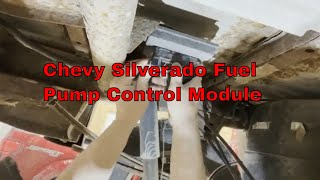
Typical fix: Replace the Fuel Pump Control Module. 🎬 Watch: How to replace and locate the FPCM The new module requires programming and setup procedures using GM service information (SPS) to ensure proper operation.
Est. part cost: $70-$200 - Faulty Low-Pressure Fuel Sensor 🔴 High Probability → Shop Fuel Pressure Sensor This is a known issue documented in GM TSB PIP5286B, especially when code P018B is also present. The sensor can fail and provide incorrect readings to the ECM.
How to confirm: Use a scan tool to monitor the fuel pressure sensor's live data. A healthy sensor will show pressure fluctuating (e.g., between 30-60 PSI) while the engine is running. If the reading is stuck at a fixed value (like 48.7 PSI), the sensor is likely bad. TSB PIP5286B provides the definitive test: with a cold engine at idle, command the fuel system to depressurize via a scan tool. The pressure reading should drop to zero as the engine stalls; if it stays high (e.g., 30-40 PSI), the sensor is faulty.
Typical fix: Replace the fuel pressure sensor, which is located on the fuel line under the driver's side of the truck, near the ABS module. The O-ring seal is a separate part and must also be replaced. 🎬 See this diagnostic and sensor replacement walkthrough
Est. part cost: $40-$80 - Failing In-Tank Fuel Pump Module 🟡 Medium Probability → Shop Fuel Pump GM TSB 17-NA-335 identifies an issue on 2014-2017 models where high ambient temperatures can cause vapor buildup in the fuel line, which the original pump design cannot handle. The pump can also fail from normal wear.
How to confirm: If the FPCM and fuel pressure sensor are confirmed to be good, the pump is the next likely culprit. A fuel pressure test using a mechanical gauge can verify low output, though these trucks lack a standard Schrader valve, requiring a special adapter. Symptoms are often worse in hot weather, leading to stalling.
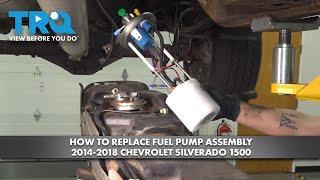
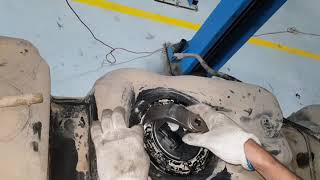
Typical fix: Replace the entire in-tank fuel pump module, which requires dropping the fuel tank. 🎬 Watch: Step-by-step fuel pump replacement guide GM recommends an updated part number to address the vapor lock issue described in TSB 17-NA-335.
Est. part cost: $200-$450
Rare But Worth Checking
- Binding Active Grille Shutters: In at least one documented case on a 2018 model, a binding active grille shutter caused a communication fault on the LIN-Bus, which in turn triggered code P2635. This is highly unusual but worth considering if communication codes are also present.
- Wiring Issues: Damage or corrosion to the wiring harness for the FPCM or the fuel pressure sensor can cause intermittent power loss or signal issues, leading to this code. One owner reported the issue started after an undercarriage wash, suggesting water intrusion into a connector. A known chafe point exists where the harness passes through the square tube frame rail under the driver's side, which can cause an internal break in the power wire to the FPCM.
- Cold Weather Operation: Manufacturer Bulletin #18NA103 notes that in temperatures below -6C or 20F, the vehicle may experience a start and stall, no start, or loss of power with P2635 set in the ECM.
- Steering Vibration and Buzzing: TSB Bulletin #17-NA-171 describes a condition where P2635 may set alongside various other DTCs, potentially accompanied by vibration, buzz, or humming from the steering wheel.
Diagnosis Steps
- Scan for all DTCs. If communication codes like U0109, U0074, or U18A2 are present, diagnose and resolve them before proceeding with P2635 diagnostics, focusing on the FPCM and its wiring.
- If P018B is also present, prioritize testing the low-pressure fuel sensor. Use a scan tool to observe the 'Fuel Pressure Sensor' PID. A healthy sensor should fluctuate between ~30-60 PSI while running. A value that is completely static (e.g., stuck at 48.7 PSI) indicates a failed sensor.
- Perform the fuel pressure sensor test outlined in TSB PIP5286B: With a cold engine, command fuel system depressurization via a scan tool. The pressure reading should drop to zero. If it doesn't, the sensor is bad.
- Inspect the Fuel Pump Control Module (FPCM), located on the frame crossmember above the spare tire, and its electrical connector for any signs of green or white corrosion, or water damage.
- Use a scan tool to monitor the commanded fuel pressure vs. the actual fuel pressure. A significant and persistent discrepancy points to a flow problem (either a bad pump or a bad sensor giving false 'actual' readings). A discrepancy greater than 45 kPa (6.5 PSI) at a 300 kPa request can trigger the code.
- If the sensor and FPCM are deemed functional, test the fuel pump itself. This can be done by checking for proper voltage and ground at the pump connector or by performing a fuel pressure test with a mechanical gauge to verify the scan tool data.
- If all else fails, inspect the wiring harness between the ECM, FPCM, and fuel pump for any breaks, shorts, or corrosion, paying special attention to the chassis ground point for the FPCM (under the driver's door area) and the harness pass-through in the frame rail under the driver's side.
Parts You'll Likely Need
- Fuel Pump Control Module
(OEM #23482933)— This module is a very common failure point due to its exposed location under the truck leading to corrosion. It can fail internally or lose communication, causing the P2635 code. This part requires programming after installation.
Trusted brands: ACDelco GM Genuine, Dorman
OEM price range: $120-$200
Aftermarket price range: $70-$150 - Fuel Pressure Sensor (Low Pressure)
(OEM #13577394)— A faulty sensor sending incorrect data is a primary cause for P2635, especially when paired with P018B, as documented in TSB PIP5286B. Note: Some parts catalogs incorrectly label this as a 'Flex Fuel Sensor', but it functions as the low-pressure sensor on these trucks.
Trusted brands: ACDelco, Bosch
OEM price range: $60-$80
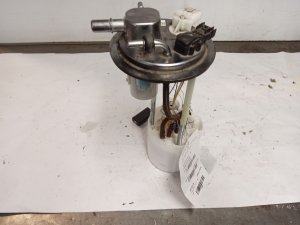
Aftermarket price range: $40-$60 - Fuel Pump Module Assembly — The pump itself can fail. An updated pump is the official GM fix for the common high-temperature stalling issue described in TSB 17-NA-335. Replacement requires dropping the fuel tank.
Trusted brands: ACDelco, Delphi
OEM price range: $300-$450
Aftermarket price range: $200-$350
Related Codes That Often Appear With This One
- P018B — This code for 'Fuel Pressure Sensor 'B' Circuit Range/Performance' is very frequently set with P2635. Multiple TSBs confirm that a faulty fuel pressure sensor is a primary cause for this code combination.
- U0109 — This code means 'Lost Communication With Fuel Pump Control Module.' If you see this, the FPCM itself or its wiring is almost certainly the root cause of the problem.
- P069E — This code, 'Fuel Pump Control Module Requested MIL Illumination', is a direct flag from the FPCM that it has detected an internal fault or a problem with the pump circuit. It strongly points towards the FPCM or pump.
- U0074 / U18A2 — These are general communication bus codes. A GM TSB advises that these codes should be diagnosed first, as a loss of communication between the ECM and FPCM can cause P2635 to be set incorrectly.
Technical Service Bulletins (TSBs) & Recalls
- Malfunction Indicator Lamp Illuminated (MIL) - DTC P2635 and/or P018B Set In High Ambient Temperatures With Hesitation, Surging and Stalling: This bulletin, which supersedes PIP5411F, addresses hesitation, surging, and stalling in ambient temperatures of 100°F (38°C) or higher. It identifies the cause as vapor buildup in the fuel feed line and instructs technicians to replace the fuel pump module with an updated version.
- Diagnostic Information For DTC P2635 With P018B: This Preliminary Information bulletin provides a specific diagnostic test for when P2635 and P018B are set together. It directs technicians to perform a fuel system depressurization test on a cold engine. If the scan tool shows the fuel pressure sensor reading does not drop to zero, the sensor is faulty and should be replaced. It explicitly notes the O-ring seal must be ordered separately.
- Various Communication Or Networking DTCs: While not directly about P2635, TSBs like PIP5427 advise that general communication codes on the chassis expansion bus should be diagnosed first, as a network problem can cause modules like the FPCM to report false errors.
- Bulletin #PIP5286B: This Preliminary Information communication provides guidance for vehicles setting both P2635 and P018B, helping technicians determine if the issue is caused by a fuel pressure sensor failing to read the low end of the pressure range.
- Bulletin #17-NA-171: This bulletin addresses a Malfunction Indicator Lamp (MIL) illuminated with DTC P2635 and others, which may be accompanied by vibration or humming from the steering wheel.
- Bulletin #18NA103: This bulletin notes that P2635 may set in the ECM during cold weather (below 20F), accompanied by a start and stall, no start, or loss of power.
Platform-Specific Known Issues
- A known issue documented in TSB 17-NA-335 involves vapor buildup in the fuel line during high ambient temperatures (above 100°F / 38°C), causing hesitation, stalling, and codes P2635 and P018B. The fix is an updated fuel pump module with a better breather design.
Mechanic-Grade Diagnostic Values
- Low-Pressure Fuel System Pressure (Scan Tool) — expected: Fluctuating between 30-60 PSI (207-414 kPa) at idle.. Failure: A reading stuck at a fixed value (e.g., 48.7 PSI) or a value that does not drop to zero during a commanded depressurization test.
- Low-Pressure Fuel Sensor Signal Voltage (Engine Off, Ignition On) — expected: ~0.5V. Failure: Voltage significantly different from 0.5V with no pressure in the line.
- Low-Pressure Fuel Sensor Signal Voltage (Engine at Idle) — expected: ~1.2V to 1.5V. Failure: Voltage stuck at 0V or 5V, or not corresponding to pressure changes.
- FPCM Power Supply at Connector Pin 32 (Red/White wire) — expected: 12.0 - 12.6V with ignition on.. Failure: Voltage below 11.5V or no voltage indicates a wiring issue between the fuse box and the module.
- FPCM Ground at Connector Pin 1 (Black wire) — expected: Less than 0.2 Ω resistance to a clean chassis ground point.. Failure: High resistance indicates a bad ground connection, a common issue.
- Desired vs. Actual Fuel Pressure (Scan Tool) — expected: Actual pressure should remain within 45 kPa (6.5 PSI) of desired pressure.. Failure: A consistent difference greater than 45 kPa (6.5 PSI) at a 300 kPa request, or 60 kPa (8.7 PSI) at a 400 kPa request.
Scan Tool Commands That Help
- GDS2 (or equivalent professional scan tool): Fuel System Depressurize — Used to test the low-pressure fuel sensor per TSB PIP5286B. With a cold engine at idle, commanding depressurization should cause the sensor's PSI reading to drop to zero as the engine stalls. If it remains high, the sensor is faulty.
- GDS2 (or equivalent professional scan tool): Fuel Pump Enable — With the engine off and ignition on, this command activates the in-tank fuel pump. You can monitor the fuel pressure sensor PID to see if pressure builds. If the pressure reading doesn't change, it points to a faulty sensor, pump, or FPCM.
- GDS2 with SPS (Service Programming System): FSCM/FPCM Programming and Setup — This is a mandatory procedure after replacing the Fuel Pump Control Module. A new or used module will not function until it is programmed with the vehicle's specific VIN and configuration. Failure to program will result in a no-start condition.
Wiring & Ground Locations
- FPCM (Fuel Pump Control Module) — Mounted to a frame crossmember, located above the spare tire.. This is the location of the control module itself. Its exposed position makes it highly susceptible to corrosion from road salt and moisture, a primary cause of failure.
- FPCM Ground — The main ground for the FPCM is typically located on the body frame mount under the driver's door area.. A poor ground connection at this point will prevent the FPCM from operating correctly, mimicking a failed module and causing P2635.
- FPCM Power Wire Chafe Point — Inside the square tube frame rail, where the wiring harness makes a turn directly under the driver's side underhood fuse panel.. The power wire (often Red/Violet) for the FPCM can chafe and break internally at this location, causing a loss of power to the module and triggering P2635, even though the fuse, module, and pump are all good.
- Low-Pressure Fuel Sensor — On the fuel line under the driver's side of the truck, near the ABS module.. This is the location of the sensor that provides the pressure reading to the ECM. Knowing its location is critical for testing and replacement.
Real Owner Repair Stories
- CK5 Forums user (2014 Chevrolet Silverado 5.3L) — Persistent P2635 code after rust repair and replacing the fuel tank/pump.
❌ Tried (didn't work) Replacing the in-tank fuel pump assembly.
✅ What actually fixed it The companion code P018B was resolved by replacing the low-pressure fuel sensor on the fuel line. However, the P2635 code remained, and the user was continuing to diagnose, suspecting a different issue like a leaking injector. This story confirms the sensor is a valid fix for P018B but may not always clear P2635 if other issues exist. - 2CarPros Forum user (2016 Chevrolet Silverado 5.3L, 80,000 miles) — No communication with FPCM, no-start condition.
❌ Tried (didn't work) Checking fuses (they were good)., Checking ground wires (they were good).
✅ What actually fixed it The power wire (Red/Violet) to the FPCM was broken internally. The break was located inside the square tube frame rail where the harness makes a turn under the driver's side fuse panel. Running a jumper wire around the damaged section restored power and fixed the problem. - NHTSA ODI #11574052 — An owner reported that the P2635 code for fuel pump ‘A’ low flow/performance only occurs when it is warm outside, noting it happened during the summer.
OEM Part Supersession History
23103795, 23172742, 23200138→23482933— Standard part evolution and consolidation across multiple GM platforms.
Heads up: The replacement part 23482933 is a direct replacement but requires mandatory VIN programming via GM's SPS software to function. It is not plug-and-play.Varies by configuration (original pump from 2014-2017 models)→Updated Fuel Pump Module (specific P/N varies, consult dealer EPC)— The original pump design was susceptible to vapor lock in high ambient temperatures. The updated part has a revised design with a one-way breather valve to mitigate this.
Diagnostic Flowchart
Other Known Issues on This Vehicle
Issues unrelated to this code that are worth knowing about as an owner of this generation:
- AFM/DFM Lifter Failure 🔴 High — Common issue, especially on L83 and L86 engines, often occurring between 80,000 and 160,000 miles. Can cause misfires, ticking noises, and eventually catastrophic engine damage if not addressed.
- 8-Speed Transmission Shudder (Chevy Shake) 🟠 Medium — Widespread problem on vehicles with the 8L90 transmission, typically appearing between 30-70 mph. Feels like driving over rumble strips. (Ref: TSB 18-NA-355 recommends a fluid flush with an updated Mobil 1 Blue Label ATF. If that fails, torque converter replacement is often necessary.)
- A/C Condenser Leak 🟠 Medium — Extremely common failure where the A/C condenser develops leaks at its welded seams, causing the A/C to blow warm air. Can occur at relatively low mileage. (Ref: Special Coverage Adjustment 17336 was issued for some SUVs on the platform, but many Silverado/Sierra owners report having the same failure without coverage.)
Used vs. New Parts: Buying Guide for This Vehicle
When a used part is the smart pick: A used Fuel Pump Control Module (FPCM) can be a cost-effective option if sourced from a known-good, low-mileage donor vehicle from a dry climate to minimize corrosion risk. However, it will still require professional programming to your vehicle's VIN, which adds cost and complexity.
Donor-vehicle mileage cap: roughly under 80000 miles for the part to have meaningful remaining life.
What to inspect on the donor part:
- Inspect the FPCM housing for any signs of swelling, cracking, or physical damage.
- Examine the electrical connector pins on the module for any green or white powder (corrosion) or bent pins.
- If possible, ask for the donor vehicle's history to ensure it wasn't from a flood-damaged or heavy salt-belt vehicle.
OEM-only on this vehicle (don't cheap out):
- In-Tank Fuel Pump Module: The primary cause of hot-weather stalling is a design flaw fixed by an UPDATED GM part (per TSB 17-NA-335). A used pump will likely have the same original flaw and is not recommended.
Aftermarket brands forum-validated for this vehicle:
- ACDelco (GM Genuine for all parts)
- Bosch (For Fuel Pressure Sensor)
- Delphi (For Fuel Pump Module)
- Dorman (For FPCM, some Dorman modules are advertised as pre-programmed, which could be a benefit for DIY repair).
Real Owner Stories
Aggregated from forums and TSBs cited above. Mileages and costs reflect what owners reported in those sources.
2017 Chevrolet Silverado 1500
Symptoms: Codes P018B and P2635 appeared immediately after an undercarriage car wash.
What fixed it: The owner suspected wiring or sensor issues due to the vulnerability of under-truck components to moisture.
Source hint: GM-Trucks.com: 2017 Silverado with P018B and P2635 Codes
2014 Chevrolet Silverado 1500 5.3L
Symptoms: P2635 and P018B codes present. Replacing the fuel pressure sensor cleared the P018B, but the P2635 remained.
What fixed it: Further diagnosis of the high-pressure fuel system and injectors was required as the codes had separate root causes.
Source hint: CK5.com: 2014 Silverado 5.3 - P2635 & P018B Code - Fuel System
2015 Chevrolet Silverado 1500 4.3L V6
Symptoms: Check engine light with live data PID for fuel pressure stuck at exactly 48.7 PSI.
What fixed it: Replacement of the low-pressure fuel sensor (located on the fuel line near the ABS module).
Source hint: YouTube: P018B, P2635 Diag and Fix Chevy Silverado 4.3 V6
2016 Chevrolet Silverado 1500
Symptoms: P2635 code triggered during moderate acceleration, specifically when the alternator voltage dropped to approximately 12.6V.
What fixed it: The owner investigated the link between the charging system state and the fuel system code after cleaning grounds and replacing the sensor.
Source hint: GM-Trucks.com: P2635 Code
2017 Chevrolet Silverado 1500
Symptoms: An owner reported in NHTSA ODI #11574052 that the P2635 code for fuel pump ‘A’ low flow/performance only occurs when it is warm outside.
What fixed it: The owner noted the issue was persistent during the summer months.
Source hint: NHTSA ODI #11574052
Related OBD-II Codes
Frequently Asked Questions
My 2017 Silverado stalls when it's over 100°F outside. Is there a specific fix for this?
I have codes P2635 and P018B appearing together on my 4.3L Silverado. What is the first thing I should check?
Where is the Fuel Pump Control Module (FPCM) located on my 2014-2018 Silverado 1500?
My scan tool shows a constant fuel pressure of 48.7 PSI regardless of engine load. Does this mean my pump is bad?
Does the new fuel pressure sensor come with the necessary seal?
I'm seeing U0109 and P2635. Which one should I fix first?
Helpful Videos

Used OEM Parts in Stock
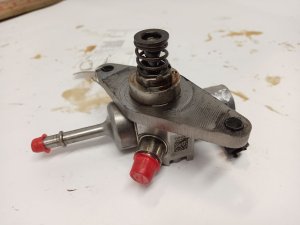
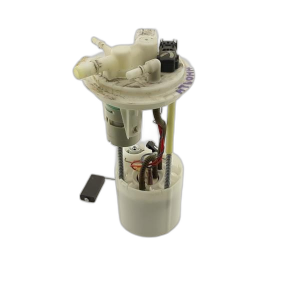
New Aftermarket Parts Available
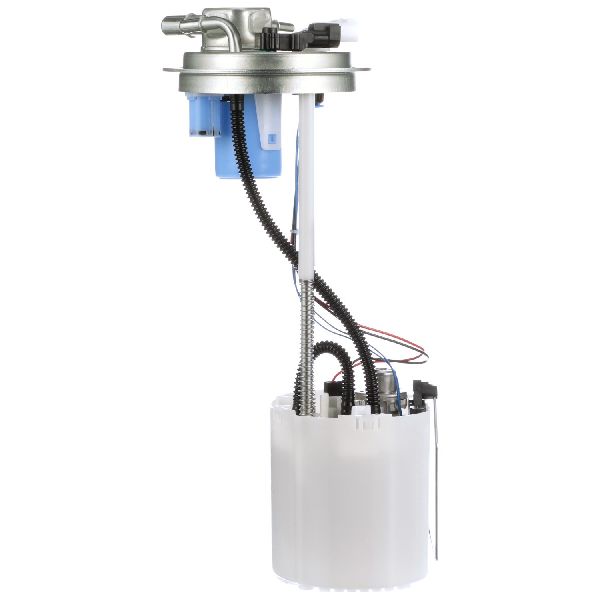

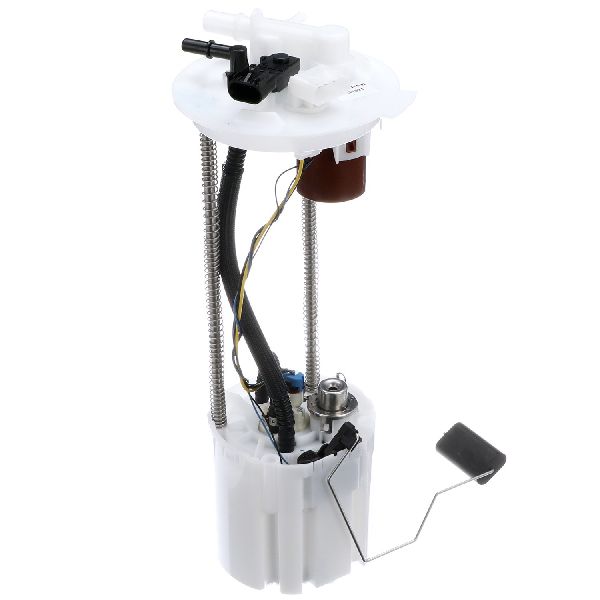

The information in this article is provided for general reference and educational purposes only. Vehicle specifications, procedures, and part compatibility can vary by production date, trim level, and region. Always consult your vehicle's factory service manual and verify part numbers before purchasing or performing repairs. Safety-critical components such as airbags, seat belts, and braking systems should be installed by a qualified professional.
- Chevrolet Silverado 1500:
- 🧭 Diagnostic Flowchart
- 🎬 Helpful Videos
- 🛍️ Shop This Part
- What's Unique About the 2014-2018 Chevrolet Silverado 1500
- Symptoms You May Notice
- Most Likely Causes
- Rare But Worth Checking
- Diagnosis Steps
- Parts You'll Likely Need
- Related Codes That Often Appear With This One
- Technical Service Bulletins (TSBs) & Recalls
- Platform-Specific Known Issues
- Mechanic-Grade Diagnostic Values
- Scan Tool Commands That Help
- Wiring & Ground Locations
- Real Owner Repair Stories
- OEM Part Supersession History
- Other Known Issues on This Vehicle
- Used vs. New Parts: Buying Guide for This Vehicle
- Real Owner Stories
- 2017 Chevrolet Silverado 1500
- 2014 Chevrolet Silverado 1500 5.3L
- 2015 Chevrolet Silverado 1500 4.3L V6
- 2016 Chevrolet Silverado 1500
- 2017 Chevrolet Silverado 1500
- Related OBD-II Codes
- Frequently Asked Questions
- 🎟️ Get 5% Off