

P2635 on 2016-2017 Chevrolet Spark: Fuel Pump Performance, Causes, and Fixes
On a 2016-2017 Chevy Spark, code P2635 is most often caused by a failing fuel pump that underperforms in high heat, as noted in a GM Technical Service Bulletin. Expect to replace the in-tank fuel pump assembly, costing around $85-$285 for the part. In some cases, this is a vapor lock issue caused by extreme heat, and GM states a new pump will not fix it.
- P2635 on a 2016-2017 Spark strongly points to a fuel delivery problem, not a sensor issue.
- The issue is very likely to appear or worsen during hot weather (100°F+), as confirmed by a GM Technical Service Bulletin.
- The most probable fix is replacing the in-tank fuel pump module assembly, preferably with an updated OEM part.
- Always check for the companion code P018B, as its presence further confirms the diagnosis related to the TSB.
- Be aware of conflicting TSB information: one suggests a new pump won't help the hot-weather issue, while a later one for other models recommends an updated pump as the fix.
What's Unique About the 2016-2017 Chevrolet SPARK
The 2016-2017 Chevrolet Spark is specifically known to set code P2635 in high ambient temperatures. A General Motors Technical Service Bulletin (TSB #PIP5507B) directly addresses this, noting that in temperatures of 100°F (37.7°C) or higher, the vehicle may experience hesitation, stalling, and set codes P2635 and P018B. This is often due to vapor buildup in the fuel line that the original fuel pump struggles to overcome. Confusingly, the TSB states that for this specific vapor lock condition, "Replacing the fuel pump will not repair this concern" and instead advises using higher octane fuel and avoiding extended idling. However, a superseding TSB for other GM vehicles with the same issue (17-NA-335) *does* recommend replacing the fuel pump module with an updated version.
Diagnostic Flowchart
Tap your situation to follow the diagnostic path that matches what you're seeing on this vehicle.
Symptoms You May Notice
- Check Engine Light illuminated
- Hesitation or stumbling during acceleration
- Engine stalling, particularly in hot weather
- Reduced engine power and poor performance
- Extended cranking time before the engine starts
- Engine surging
- Replacing the fuel pressure sensor without proper diagnosis. While code P018B may be present, the root cause is often the pump's inability to generate pressure, not a faulty sensor.
- Replacing the fuel pump based on the TSB without understanding the nuance. TSB PIP5507B explicitly says a new pump won't fix the vapor lock issue, but a later TSB for other models (17-NA-335) recommends an updated pump. The correct fix depends on whether the issue is vapor lock or outright pump failure.
Most Likely Causes
- Failing In-Tank Fuel Pump 🔴 High Probability → Shop Fuel Pump As documented in GM TSB #PIP5507B and related bulletins, the original fuel pump can struggle to provide adequate flow in high ambient temperatures, leading to vapor lock and this specific code. While the TSB is contradictory, owner experiences on similar platforms confirm that an updated pump often resolves the issue.
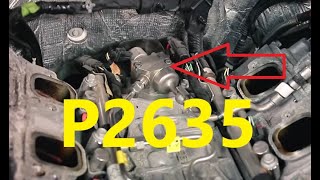
How to confirm: Use a scan tool to monitor desired versus actual fuel rail pressure. 🎬 Watch: A breakdown of P2635 causes and common fixes. If the Fuel Pump Control Module is commanding a higher pressure than the pump is delivering, especially when symptoms occur, the pump is likely faulty. Expected low-side pressure is around 58-61 PSI (400-420 kPa).
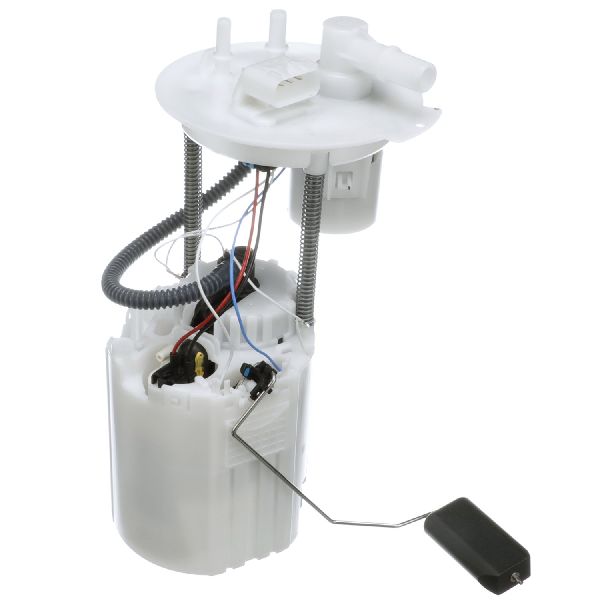
Typical fix: Replace the entire in-tank fuel pump module assembly. It is recommended to use an updated OEM part (ACDelco is the GM original brand) to address the high-temp issue. The fuel pump is located inside the fuel tank and is accessible by removing an access panel under the rear seat.
Est. part cost: $85-$285 - Faulty Fuel Pump Control Module (FPCM) 🟡 Medium Probability → Shop Fuel Pump The FPCM regulates the voltage and speed of the fuel pump. These modules can fail from heat, age, or moisture, causing them to send incorrect signals or insufficient power to the pump. On similar GM vehicles like the Trax, the FPCM is located at the rear of the vehicle on the passenger side frame rail 🎬 Watch: How to replace a faulty fuel pump control module., exposed to the elements.
How to confirm: Check for communication with the FPCM using a capable scan tool. Inspect the module and its connector for corrosion or damage. A diagnostic warning exists not to replace the FPCM based solely on a history P2635 code, as a communication fault can induce the code.
Typical fix: Replace the Fuel Pump Control Module. The new module may require programming to the vehicle, often requiring a professional-grade scan tool.
Est. part cost: $80-$150 - Clogged Fuel Filter ⚪ Low Probability → Shop Fuel Filter The fuel filter is integrated into the fuel pump module assembly on the Spark. While not a separate failure point, a prematurely clogged filter can cause the same symptoms as a weak pump, leading to low flow and the P2635 code.
How to confirm: This is difficult to confirm without removing the pump. It is typically diagnosed by observing low fuel pressure after ruling out the FPCM and wiring. A good practice is to always clean the fuel tank when replacing the pump to avoid contaminating the new filter.
Typical fix: Replace the entire fuel pump module, as the filter is not serviced separately.
Est. part cost: $85-$285 - Wiring Issues ⚪ Low Probability Wiring to the FPCM or the fuel pump connector can become damaged or corroded, leading to intermittent power loss and low fuel flow. A communication issue between the FPCM and ECM can also induce a P2635 code without a fuel system component failure.
How to confirm: Perform a visual inspection of the wiring harness leading to the fuel tank and FPCM. Check for proper voltage and ground at the FPCM and fuel pump connectors. Check for related communication DTCs like U0074.
Typical fix: Repair the damaged section of the wiring harness and ensure the connectors are clean and secure.
Est. part cost: $5-$50
Diagnosis Steps
- Connect a diagnostic scan tool and check for any stored trouble codes. Note if P018B is present along with P2635, as this strongly points to the TSB-related issue.
- Review freeze frame data to see the conditions when the code was set, paying close attention to ambient temperature. If it was over 100°F (37.7°C), the issue is very likely related to TSB #PIP5507B.
- Access the live data stream on the scan tool and monitor 'Desired Fuel Rail Pressure' and 'Actual Fuel Rail Pressure'.
- Observe if the actual pressure consistently fails to meet the desired pressure (target is ~58-61 PSI), especially when revving the engine or under load.
- If pressure is low, inspect the wiring and connectors for the Fuel Pump Control Module (FPCM) and the in-tank fuel pump for any signs of damage, corrosion, or loose connections. The FPCM on similar GM models is often on the frame rail near the rear passenger side.
- Check for a blown fuse or faulty relay for the fuel pump in the vehicle's fuse box.
- If wiring, fuses, and relays are good, the two most likely culprits are the FPCM and the fuel pump itself.
- Given the multiple TSBs for this exact issue on GM vehicles, the fuel pump is the most probable cause of failure, especially if symptoms are worse in hot weather.
Parts You'll Likely Need
- Fuel Pump Module Assembly
(OEM #ACDelco MU2367 (or GM 42628063))— This is the most common failure part for code P2635 on this vehicle, especially in high-heat conditions, as identified by manufacturer TSBs on multiple GM platforms. The assembly includes the pump, filter, and level sensor.
Trusted brands: ACDelco, Delphi, US Motor Works
OEM price range: $85-$300
Aftermarket price range: $75-$150 - Fuel Pump Control Module — If the fuel pump itself is not the issue, the module that controls it is the next most likely component to fail, causing low flow conditions. It is susceptible to corrosion and damage due to its typical mounting location on the vehicle's frame.
Trusted brands: ACDelco, Dorman
OEM price range: $120-$180
Aftermarket price range: $80-$150
Related Codes That Often Appear With This One
- P018B — This code for 'Fuel Pressure Sensor 'B' Circuit Range/Performance' is explicitly mentioned in TSB #PIP5507B and 17-NA-335 as appearing with P2635. It is triggered because the sensor reports the low pressure that the failing pump or vapor lock is creating.
- P069E — This code indicates the Fuel Pump Control Module (FPCM) has requested the Check Engine Light. It's a general fault code that points toward the FPCM, where the more specific P2635 code is often stored.
Technical Service Bulletins (TSBs) & Recalls
- PIP5507B: Addresses DTCs P2635 and/or P018B setting in high ambient temperatures (100°F+), possibly accompanied by hesitation or stalling. States this is due to vapor buildup and that replacing the pump will not fix the concern, recommending higher octane fuel instead.
- 17-NA-335: Supersedes earlier bulletins for other GM vehicles (like Silverado, Suburban) with the same P2635/P018B codes and symptoms. This TSB's recommended fix is to replace the fuel pump module with an updated version to combat vapor buildup.
Platform-Specific Known Issues
- A known issue, documented in TSB #PIP5507B, causes this code to set along with symptoms of hesitation and stalling in ambient temperatures at or above 100°F (37.7°C). The TSB confusingly suggests that replacing the pump will not fix this specific vapor lock condition and recommends using high-octane fuel as a mitigation strategy.
- A later TSB for other GM vehicles, #17-NA-335, addresses the same codes and symptoms by recommending the installation of an updated fuel pump module, suggesting the original design was flawed.
Mechanic-Grade Diagnostic Values
- Low-Pressure Fuel System Pressure (at fuel rail) — expected: 43.5 to 58 PSI (300 to 400 kPa). Failure: Pressure is significantly below 43.5 PSI during cranking or while running, or does not increase from a low baseline when the pump is commanded on.
- FPCM Fuel Pump Command Signal (at FPCM connector) — expected: A pulsing 12V signal on the Dark Green/White wire (Pin 13 on many GM models) for 2-3 seconds with key-on, or constantly while cranking/running.. Failure: No voltage present on the command wire when the ECM should be requesting fuel, indicating a wiring break or faulty ECM.
Scan Tool Commands That Help
- GDS2 (GM Global Diagnostic System 2): Fuel Pump On/Off Command — Used in the 'ECM Output Control' menu to manually activate and deactivate the fuel pump. This helps verify if the pump and its relay/FPCM are responding to commands from the ECM, isolating electrical faults from mechanical pump failures.
- GDS2 or other professional J2534 tool: Fuel Pump Control Module Configuration / Programming — Required after replacing the Fuel Pump Control Module (FPCM). The new module must be programmed with the correct calibration software to function properly with the vehicle. This function is found under the Service Programming System (SPS).
Wiring & Ground Locations
- Fuel Pump Access Panel — Under the rear seat, beneath the carpet. It is a circular cover held by several screws.. This is the primary access point for testing voltage at the fuel pump connector and for replacing the in-tank fuel pump module assembly.
- FPCM Location (General GM) — On many similar GM vehicles, the FPCM is mounted to the vehicle's frame rail, often near the rear axle or spare tire, exposing it to road debris and moisture. On some newer models, it may be moved to a more protected area like under the rear seat.. Its exposed location makes the module and its connector a common point of failure due to corrosion or physical damage, which can directly cause the P2635 code.
- FPCM Connector Pin 13 (Dark Green/White) — At the Fuel Pump Control Module electrical connector.. This is the fuel pump relay control signal wire from the ECM. A technician can back-probe this pin to verify if the ECM is commanding the fuel pump to turn on. No signal here points to an issue upstream (ECM or wiring), while a signal present with no pump action points to the FPCM or pump itself.
OEM Part Supersession History
13582544, 13582546→13582557— Standard part evolution and potential design updates by the manufacturer.
Heads up: The 13582557 fuel pump assembly is specified for 2012-2016 Chevrolet Spark models. It is not compatible with 2017 and newer models, which use a redesigned fuel system.
Model Year Variations Within This Range
- 2017: In 2017, Chevrolet introduced the 'Spark Activ' trim, which featured a slightly raised suspension (0.4 inches), unique bodywork, and roof rails. While the 1.4L LV7 engine remained the same, any diagnostics or repairs involving underbody components like the FPCM or fuel lines should account for potential minor routing or clearance differences.
Helpful Videos
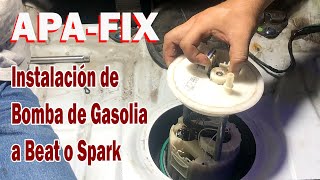
![Easy Fix for Common Chevy Problem [Fuel Pump Control Module]](https://img.youtube.com/vi/38Xeo1uLBoU/mqdefault.jpg)
Used OEM Parts in Stock
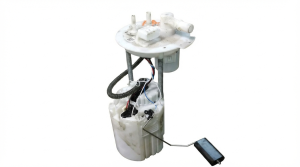
New Aftermarket Parts Available

The information in this article is provided for general reference and educational purposes only. Vehicle specifications, procedures, and part compatibility can vary by production date, trim level, and region. Always consult your vehicle's factory service manual and verify part numbers before purchasing or performing repairs. Safety-critical components such as airbags, seat belts, and braking systems should be installed by a qualified professional.
- Chevrolet SPARK:
- 🧭 Diagnostic Flowchart
- 🎬 Helpful Videos
- 🛍️ Shop This Part
- What's Unique About the 2016-2017 Chevrolet SPARK
- Symptoms You May Notice
- Most Likely Causes
- Diagnosis Steps
- Parts You'll Likely Need
- Related Codes That Often Appear With This One
- Technical Service Bulletins (TSBs) & Recalls
- Platform-Specific Known Issues
- Mechanic-Grade Diagnostic Values
- Scan Tool Commands That Help
- Wiring & Ground Locations
- OEM Part Supersession History
- Model Year Variations Within This Range
- 🎟️ Get 5% Off