

P2635 on 2016-2017 Chevrolet Volt: Fuel Pump Low Flow, Stalling Causes and Fixes
On a 2016-2017 Chevy Volt, code P2635 almost always means the in-tank fuel pump is failing, especially in hot weather. This is a known issue acknowledged by GM. The fix is to replace the entire fuel pump module with an updated part to prevent stalling.
- P2635 on a 2016-2017 Volt is a serious code that points directly to a known fuel pump issue that can cause dangerous stalling.
- The problem is almost always triggered by hot weather (above 100°F / 37.7°C) due to a design flaw in the original fuel pump.
- Do not waste money on temporary fixes like different fuel types; the official and permanent repair is to replace the in-tank fuel pump module with an updated GM part, likely part n
What's Unique About the 2016-2017 Chevrolet Volt
The 2016-2017 Volt is a second-generation plug-in hybrid where the gas engine acts as a range extender. While the fuel system can sit dormant for long periods, the P2635 code on this vehicle is most famous for a specific design flaw. GM has issued multiple Technical Service Bulletins (TSBs) confirming that high ambient temperatures (above 100°F) can cause vapor to form in the fuel line. The original fuel pump struggles to overcome this vapor lock, leading to fuel starvation, stalling, and the P2635 code. The official fix involves an updated fuel pump module specifically designed to correct this heat-related issue.
Symptoms You May Notice
- Engine stalling, particularly in hot weather (above 100°F / 37.7°C)
- Engine hesitation or surging during acceleration
- Reduced engine power or 'Propulsion Power Reduced' message
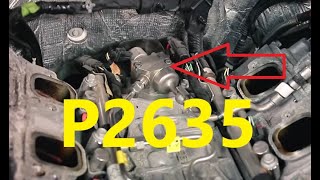
- Check Engine Light illuminated 🎬 Watch: Understanding P2635 causes and fixes
- Engine is hard to restart after stalling, especially when hot
- Following outdated advice to use higher octane fuel. An early TSB (PIP5507B) suggested this but was later superseded by bulletins that mandate replacing the fuel pump.
- Replacing the Fuel Pump Control Module (FPCM) when the pump is the actual point of failure. While the FPCM can fail, the heat-related stalling issue is overwhelmingly traced back to the pump module itself.
- Replacing the fuel pressure sensor. Code P018B often accompanies P2635, but the sensor is usually correctly reporting the low pressure caused by the pump, not failing itself.
Most Likely Causes
- Failing In-Tank Fuel Pump Module (Heat-Related Failure) 🔴 High Probability → Shop Fuel Pump As per GM Technical Service Bulletins (TSBs) #PIP5507B and #17-NA-335, the original pump design is susceptible to vapor lock in ambient temperatures over 100°F (37.7°C), causing fuel flow to drop. This is a widely documented pattern failure for this vehicle.
How to confirm: A technician can monitor desired vs. actual fuel pressure using a scan tool. A significant drop in actual pressure that coincides with hesitation or stalling, especially when the weather is hot, confirms the issue. The presence of TSBs for this exact condition is strong evidence.
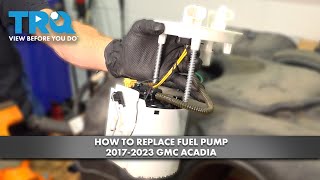
Typical fix: Replace the entire in-tank fuel pump module assembly with the updated GM-specified part number. TSB 17-NA-335 explicitly states this is the correction.
Est. part cost: $250-$500
Rare But Worth Checking
- Faulty Fuel Pump Control Module (FPCM): → Shop Fuel Pump While the pump itself is the most common culprit for this specific issue on the Volt, the FPCM is responsible for powering the pump. A module failure can mimic a pump failure. It's less likely but worth considering if a new pump doesn't resolve the code.
- Wiring or Connector Issue: A damaged wire or loose connector at the FPCM or the fuel pump module can interrupt power or communication, causing a low flow condition. TSB 16-NA-225 mentions checking for loose connectors inside the tank.
Diagnosis Steps
- Connect a professional OBD-II scan tool to confirm P2635 is present and check for other codes, especially P018B.
- Check for relevant TSBs (PIP5507B, 16-NA-225, 17-NA-335) based on the vehicle's VIN.
- Using the scan tool's live data function, monitor 'Desired Fuel Pressure' vs. 'Actual Fuel Pressure'.
- Attempt to replicate the failure conditions, if safe to do so (often occurs in hot weather during city driving or after an extended idle).
- Observe if the actual fuel pressure drops significantly below the desired pressure just before or during a hesitation or stall event. This is the key diagnostic indicator.
- If the pressure drop is confirmed, the diagnosis points to a failing fuel pump module, as outlined in TSB 17-NA-335.
- If pressure readings are stable but the code persists, inspect the wiring and connectors for the Fuel Pump Control Module (FPCM) and the fuel pump module for any signs of damage or corrosion.
Parts You'll Likely Need
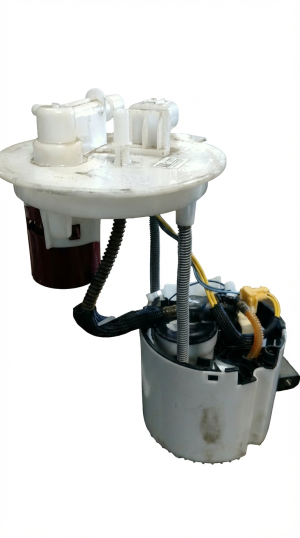
- Fuel Pump Module Assembly
(OEM #12673525 (supersedes 12666611))— This is the complete assembly in the fuel tank. The original part has a design flaw causing heat-related failure. GM has released updated versions to correct the problem. TSB 17-NA-335 advises consulting the GM Electronic Parts Catalog (EPC) with the vehicle's VIN to get the correct, most current part number, but 12673525 is the widely accepted updated part.
Trusted brands: ACDelco, GM Genuine Parts
OEM price range: $300-$500
Aftermarket price range: $250-$400 - Fuel Pump Control Module
(OEM #23382564)— This module controls the fuel pump. While it is not the most common cause for this specific P2635 issue on the Volt, it can fail and cause similar symptoms. It is a potential, but less likely, replacement part.
Trusted brands: ACDelco, GM Genuine Parts
OEM price range: $70-$120
Aftermarket price range: $50-$90
Related Codes That Often Appear With This One
- P018B — This code for 'Fuel Pressure Sensor 'B' Circuit Range/Performance' is frequently set alongside P2635. The TSBs from GM for the hot-weather stalling issue list both codes together as primary indicators of the failing fuel pump.
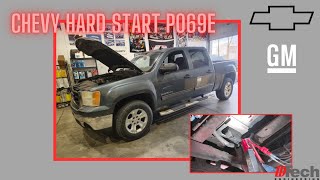
- P069E — This code, 'Fuel Pump Control Module Requested MIL Illumination', may be stored. It signifies that the FPCM has detected a fault (like the low flow condition of P2635) and has requested the ECM to turn on the Check Engine Light. 🎬 See how to diagnose P069E and P2635 codes
Technical Service Bulletins (TSBs) & Recalls
- PIP5507B: Preliminary information noting that P2635 and P018B may set in ambient temperatures of 100°F or higher, causing hesitation or stalling. It notes that excessively hot and sustained ambient temperatures over 100F can trigger these conditions.
- 16-NA-225: Details the procedure for replacing the fuel pump module and advises checking for loose in-tank connectors if the DTC P2635 and/or P018B are set.
- 17-NA-335: Supersedes previous bulletins, confirms the cause is vapor buildup in the fuel feed line, and directs technicians to replace the fuel pump module with an updated version.
Platform-Specific Known Issues
- A well-documented pattern failure where high ambient temperatures (100°F+) cause the original-equipment fuel pump to fail, resulting in engine stalling. This is acknowledged by GM in multiple service bulletins.
- Owners on forums like gm-volt.com describe the failure as happening in summer heat, often after the car has been sitting for a short period (heat soak) and then restarted, leading to a stall within minutes of driving.
Mechanic-Grade Diagnostic Values
- Low-Pressure Fuel System Pressure (Desired vs. Actual) — expected: Actual pressure should be within 45 kPa (6.5 PSI) of desired pressure at a 300 kPa (43.5 PSI) request, or within 60 kPa (8.7 PSI) at a 400 kPa (58 PSI) request.. Failure: A deviation greater than the specified values, especially a significant drop in actual pressure under load or in hot weather, points to a failing pump.
- FPCM Power Supply Voltage — expected: Should be close to battery voltage (12.0-12.6V) at the module connector with the ignition on.. Failure: Voltage below 11.5V indicates a problem in the power supply wiring or fuse block before the module.
- FPCM Ground Circuit Voltage Drop — expected: Less than 0.2V (200mV).. Failure: A reading higher than 0.2V indicates high resistance in the ground circuit, which can cause the module to operate incorrectly.
- FPCM Fuel Pump Command Signal (Dark Green/White wire) — expected: A pulsing 12V signal for 2-3 seconds at key-on, and constantly while cranking or running.. Failure: No voltage on this wire when the ECM should be requesting fuel points to a wiring break between the ECM and FPCM, or a faulty ECM.
Scan Tool Commands That Help
- GDS2 (GM Dealer Tool): Fuel Pump Trim Reset — This procedure must be performed after replacing the fuel pump module or FPCM to clear learned values and allow the system to adapt to the new components.
- GDS2 (GM Dealer Tool): Fuel Pump Enable/Disable — Allows a technician to manually command the fuel pump on and off to verify its operation and check fuel pressure without starting the engine.
- GDS2 (GM Dealer Tool): Module Programming (FPCM) — If the Fuel Pump Control Module is replaced, it must be programmed with the correct software for the vehicle's VIN. An unprogrammed module will result in a no-start condition.
Wiring & Ground Locations
- Fuel Pump Control Module (FPCM) — Located in the rear of the vehicle, typically under trim panels near the fuel tank area. On similar GM platforms, it's often on the frame rail near the spare tire.. This module directly controls the fuel pump. A failure of the module or its wiring can cause low fuel flow, mimicking a bad pump.
- FPCM Ground — The FPCM ground wire (typically black) attaches to a chassis ground point near the module's location in the rear of the vehicle.. A loose or corroded ground is a common failure point that can cause intermittent or complete loss of fuel pump operation, triggering P2635.
- Fuel Pump Module Connector — On top of the fuel tank, connecting the vehicle harness to the in-tank fuel pump module assembly. The harness part number is GM 23142154.. Corrosion or damage to this connector or its pins can cause a voltage drop to the pump motor, resulting in low flow.
- ECM to FPCM Command Wire (Dark Green/White) — Runs from the Engine Control Module (ECM) to Pin 13 of the FPCM connector. At the ECM, it is often in Pin 50 of one of the main connectors.. A break or short in this wire will prevent the FPCM from receiving the 'on' signal from the ECM, leading to a no-fuel-flow condition.
Real Owner Repair Stories
- gm-volt.com forum user (2017 Chevrolet Volt) — Check Engine Light with codes P2635 and P018B, engine stalling in hot weather (100°F+), especially after a short stop and restart (heat soak).
❌ Tried (didn't work) Initial dealer diagnosis was inconclusive as the problem would not replicate in their shop.
✅ What actually fixed it The owner referenced TSB 17-NA-335. The dealer then agreed to replace the in-tank fuel pump module assembly with the updated part. The problem was resolved and did not return.
OEM Part Supersession History
12666611→12673525— The original fuel pump module design was susceptible to vapor lock in high temperatures. The updated part (12673525) and its ACDelco equivalent (M10239) are designed to mitigate this issue.
Heads up: Using an old-stock original part (12666611) or a used pump from a salvage yard will likely lead to a repeat failure.
Model Year Variations Within This Range
- 2016 vs. 2017: The 2016 model year had a limited rollout, while the 2017 was available nationwide. The 2017 model also introduced optional Adaptive Cruise Control and complied with new Tier 3 emissions standards. However, the core 1.5L powertrain and fuel system related to the P2635 fault are identical between the two years.
Diagnostic Flowchart
Other Known Issues on This Vehicle
Issues unrelated to this code that are worth knowing about as an owner of this generation:
- Battery Energy Control Module (BECM) Failure 🔴 High — Common failure. Can cause no-start, inability to charge, and propulsion power loss messages. Often sets U26xx codes. (Ref: Special Coverage Program N232432680 extends warranty to 15 years/150,000 miles.)
- 'Shift to Park' Message Error 🟠 Medium — Very common. A faulty microswitch in the shifter assembly prevents the car from detecting it's in Park, which can drain the 12V battery. (Ref: TSB 19-NA-206 (and others) address this. Repair is often covered under the Voltec warranty.)
- EGR Valve and Cooler Clogging 🟠 Medium — Common, especially on vehicles with infrequent gas engine use. Carbon buildup clogs the EGR valve and/or cooler, leading to rough running, reduced power, and check engine lights (e.g., P0401). (Ref: No recall, but a well-known issue. Parts availability can be a problem, leading many owners to perform periodic cleaning.)
Used vs. New Parts: Buying Guide for This Vehicle
When a used part is the smart pick: For this specific repair, a used part is NEVER a smart choice. The primary cause of P2635 is a known design defect in the original fuel pump. A used pump from a donor vehicle will either have the same defect or be close to failure.
What to inspect on the donor part:
- Not applicable. Do not purchase a used fuel pump for this repair.
OEM-only on this vehicle (don't cheap out):
- Fuel Pump Module Assembly
Aftermarket brands forum-validated for this vehicle:
- ACDelco (This is the GM Original Equipment brand)
Brands owners have reported issues with on this vehicle:
- Unknown or unbranded 'white box' parts. Given the critical safety nature of this part (preventing engine stalls), using a non-reputable brand carries significant risk.
Real Owner Stories
Aggregated from forums and TSBs cited above. Mileages and costs reflect what owners reported in those sources.
2017 Chevrolet Volt 1.5L L3A
Symptoms: The owner experienced the Check Engine Light with codes P2635 and P018B during hot weather, which led to the engine stalling.
What fixed it: Replacement of the fuel pump module as per the TSB and community advice.
Source hint: gm-volt.com Forum Discussion on P2635
2017 Chevrolet Volt 1.5L L3A
Symptoms: Stalling in 100°F+ heat. The car would throw a code and stop running correctly in the summer heat.
What fixed it: Replacement of the fuel pump with the updated OEM part referenced in the TSB.
Source hint: Reddit /r/volt - Stalling in Hot Weather
Related OBD-II Codes
Frequently Asked Questions
My 2017 Volt stalls when it's over 100°F outside. Is there a specific TSB for this?
What is the recommended fix for P2635 on a 2016-2017 Chevrolet Volt?
Can I use a used fuel pump from a salvage yard to fix this issue?
I'm seeing a 'Propulsion Power Reduced' message along with P2635. Are these related?
Is there a specific brand of fuel pump I should buy for my 2016 Volt?
Could my P2635 code actually be a problem with the Battery Energy Control Module (BECM)?
Helpful Videos
Used OEM Parts in Stock
New Aftermarket Parts Available




The information in this article is provided for general reference and educational purposes only. Vehicle specifications, procedures, and part compatibility can vary by production date, trim level, and region. Always consult your vehicle's factory service manual and verify part numbers before purchasing or performing repairs. Safety-critical components such as airbags, seat belts, and braking systems should be installed by a qualified professional.
- Chevrolet Volt:
- 🧭 Diagnostic Flowchart
- 🎬 Helpful Videos
- 🛍️ Shop This Part
- What's Unique About the 2016-2017 Chevrolet Volt
- Symptoms You May Notice
- Most Likely Causes
- Rare But Worth Checking
- Diagnosis Steps
- Parts You'll Likely Need
- Related Codes That Often Appear With This One
- Technical Service Bulletins (TSBs) & Recalls
- Platform-Specific Known Issues
- Mechanic-Grade Diagnostic Values
- Scan Tool Commands That Help
- Wiring & Ground Locations
- Real Owner Repair Stories
- OEM Part Supersession History
- Model Year Variations Within This Range
- Other Known Issues on This Vehicle
- Used vs. New Parts: Buying Guide for This Vehicle
- Real Owner Stories
- 2017 Chevrolet Volt 1.5L L3A
- 2017 Chevrolet Volt 1.5L L3A
- Related OBD-II Codes
- Frequently Asked Questions
- 🎟️ Get 5% Off