

P2635 on 2009-2014 Ford F-150: Causes and Fixes for Low Fuel Flow
On a 2009-2014 F-150, code P2635 is most often caused by a corroded Fuel Pump Driver Module (FPDM) located above the spare tire. Before suspecting the expensive fuel pump, check the FPDM and the infamous Fuse 27. A new FPDM costs around $50-$100 and is a very common DIY fix.
- For a P2635 code on a 2009-2014 F-150, always check the Fuel Pump Driver Module (FPDM) and Fuse 27 before assuming the fuel pump has failed.
- The FPDM is located above the spare tire and fails due to corrosion. This is the most likely cause.
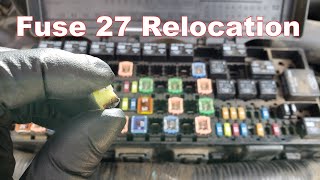
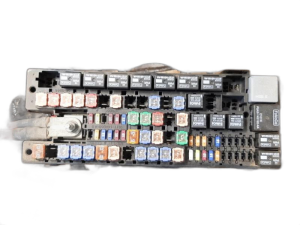
- Fuse 27, located in the under-hood fuse box, is known to melt and cause intermittent fuel pump power loss.
- This code indicates a serious fault that can cause the engine to stall in traffic. The vehicle should be repaired immediately.
What's Unique About the 2009-2014 Ford F-150
The 12th generation F-150 has a critical design flaw regarding its Fuel Pump Driver Module (FPDM). The module, which has an aluminum backplate, is mounted directly against the truck's steel frame crossmember, just above the spare tire. This direct contact between dissimilar metals, combined with exposure to road salt and moisture, causes severe galvanic corrosion that cracks the module's housing, allowing water to destroy the internal electronics. This is an extremely common and well-documented failure that is the primary cause for code P2635 on these trucks.
Symptoms You May Notice
- Engine stalls unexpectedly, sometimes while driving at speed
- Engine will not start or has a long cranking time
- Hesitation or stumbling during acceleration
- Noticeable loss of engine power
- Illuminated Check Engine Light
- Replacing the in-tank fuel pump assembly before inspecting the Fuel Pump Driver Module (FPDM) and Fuse 27. The FPDM and fuse issue are significantly more common points of failure and are much cheaper and easier to replace.
Most Likely Causes
- Faulty Fuel Pump Driver Module (FPDM) 🔴 High Probability → Shop Fuel Pump The module's aluminum casing corrodes due to being mounted directly against the steel frame, trapping moisture and road salt. This is a notorious design flaw on this F-150 generation.
How to confirm: Lower the spare tire to gain access. Visually inspect the back of the module where it contacts the frame. Look for white, crusty corrosion, swelling, or cracks in the housing. In some cases, the module may look intact but be failed internally; if it rattles when shaken, it is bad.
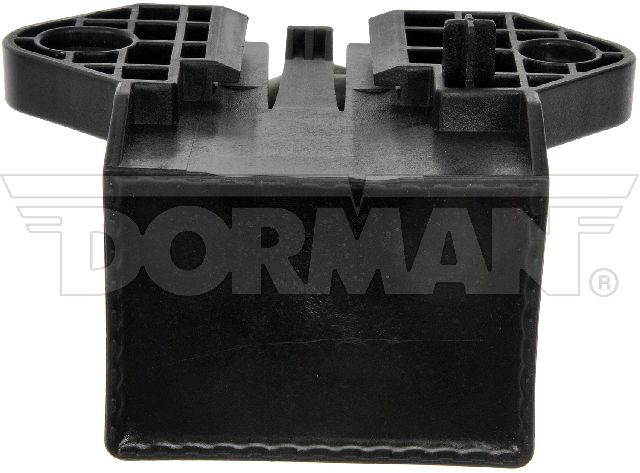
Typical fix: Replace the Fuel Pump Driver Module. New modules from brands like Dorman often come with rubber spacers or longer studs to create an air gap and prevent future corrosion.
Est. part cost: $50-$100 - Melted Fuel Pump Fuse (Fuse 27) 🟡 Medium Probability → Shop Fuel Pump The fuel pump circuit can draw more amperage than the 20A mini-fuse terminal was designed for, causing the fuse and its housing in the under-hood fuse box to overheat and melt. This creates a poor, intermittent connection and is the subject of Ford TSB 15-0137.
How to confirm: Open the under-hood fuse box and locate fuse #27. Carefully remove it and inspect the fuse and the slot for any signs of melted plastic, discoloration, or heat damage.
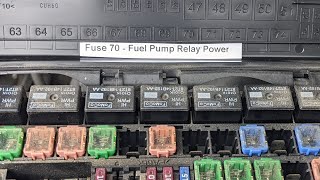
Typical fix: Install a fuse relocation kit, such as Ford's part number EL3Z-14293-A. This moves the circuit to a more robust, heavy-duty fuse location (typically slot 70) within the same fuse box.
Est. part cost: $20-$30 - Failed In-Tank Fuel Pump ⚪ Low Probability → Shop Fuel Pump
How to confirm: This should only be suspected after confirming the FPDM and Fuse 27 are in good condition. A definitive diagnosis requires a fuel pressure test with a gauge connected to the fuel rail. Low or erratic pressure (below 35-45 PSI at idle) points to a weak pump.
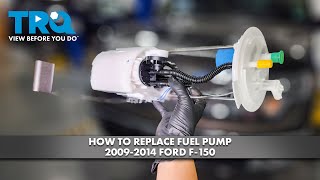
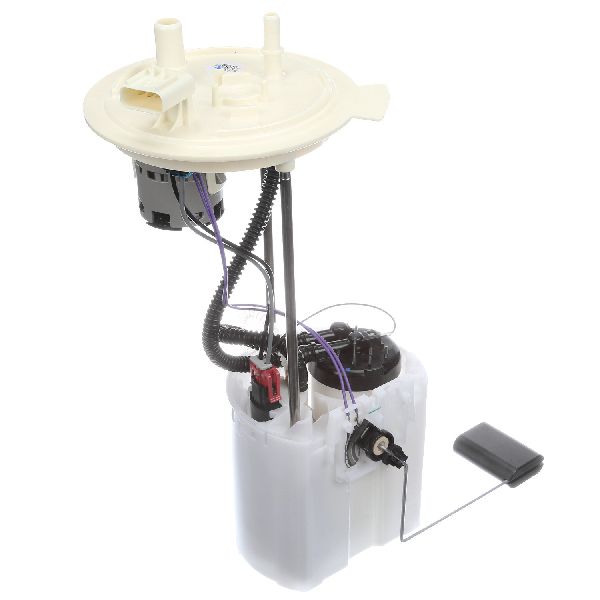
Typical fix: Replace the entire in-tank fuel pump assembly. This is a significant job that requires either lifting the truck bed or dropping the fuel tank 🎬 Watch: How to replace the in-tank fuel pump for access.
Est. part cost: $250-$500
Rare But Worth Checking
- Damaged Wiring or Connectors: The wiring harness leading to the FPDM is exposed under the truck. Check for chafed wires or corrosion in the connector, especially if the FPDM itself looks fine.
Diagnosis Steps
- Scan for any other stored trouble codes. Pay close attention to P0627, U0109, and P025A.
- Inspect Fuse 27 in the fuse box under the hood. If there are any signs of melting or heat damage, install a fuse relocation kit (TSB 15-0137) before proceeding.
- Lower the spare tire to get a clear view of the frame crossmember.
- Locate the Fuel Pump Driver Module (FPDM) mounted to the crossmember. It's a small black or aluminum box.
- Disconnect the electrical connector and unbolt the two bolts (often 8mm or 10mm) holding the module to the frame.
- Thoroughly inspect the back of the module for corrosion, cracks, or holes. If any damage is present, it has failed and must be replaced. Even if it looks good, internal failure is possible.
- If the FPDM and fuse are good, the next step is to perform a fuel pressure test to verify the in-tank pump's output.
- If fuel pressure is confirmed to be below specification (typically 35-45 PSI at idle), the in-tank fuel pump assembly is likely faulty and requires replacement.
Parts You'll Likely Need
- Fuel Pump Driver Module
(OEM #9L3Z-9D370-B (supersedes older versions))— This is the most common failure point for code P2635 on this truck due to corrosion from its mounting location.
Trusted brands: Motorcraft (9L3Z-9D370-B), Dorman (590-001), NAPA (600-5477)
OEM price range: $80-$120
Aftermarket price range: $50-$90 - Fuel Pump Fuse Relocation Kit
(OEM #EL3Z-14293-A)— This is the official Ford fix (TSB 15-0137) for the common problem of the fuel pump fuse (Fuse 27) overheating and melting its terminal in the fuse box.
Trusted brands: Ford / Motorcraft
OEM price range: $20-$30
Aftermarket price range: $15-$25
Related Codes That Often Appear With This One
- P0627 — This code means "Fuel Pump 'A' Control Circuit/Open" and is often triggered alongside P2635 because a failed FPDM or a melted Fuse 27 creates an open electrical circuit, which the PCM detects. TSB 15-0137 lists this as a common related code.
- U0109 — "Lost Communication With Fuel Pump Control Module". This code directly points to an FPDM failure, either from internal corrosion or a wiring/fuse issue preventing the PCM from communicating with it. It is also listed in TSB 15-0137.
- P025A — "Fuel Pump Module Control Circuit/Open". Similar to P0627, this indicates an open circuit in the FPDM's control system, often caused by the same Fuse 27 or FPDM failure. It is also listed in TSB 15-0137.
Technical Service Bulletins (TSBs) & Recalls
- TSB 15-0137: Addresses the crank no-start or stalling condition caused by overheating at the Fuse 27 terminal in the battery junction box. The fix involves installing a fuse relocation kit. This TSB applies to 2009-2014 F-150s and lists associated DTCs including P0627, U0109, and P025A.
Platform-Specific Known Issues
- FPDM Corrosion Failure: The design of mounting the aluminum-backed FPDM directly to the steel frame rail traps moisture and causes galvanic corrosion, leading to module failure. Aftermarket replacement kits often include rubber standoffs or longer mounting studs to create an air gap and prevent this from happening again.
- Fuse 27 Overheating: A widespread issue where the fuel pump circuit overloads the standard 20A mini-fuse terminal, causing it to melt and create an intermittent open circuit. Ford released Technical Service Bulletin 15-0137 and a relocation kit (EL3Z-14293-A) to address this.
Mechanic-Grade Diagnostic Values
- Fuel Pressure at Idle (Low-Pressure System) — expected: 35-45 PSI. Failure: Pressure consistently below 35 PSI after confirming FPDM and Fuse 27 are good.
- Fuel Pressure vs. Desired Pressure (Scan Tool) — expected: Actual pressure should be within 45 kPa (6.5 PSI) of desired pressure at a 300 kPa (43.5 PSI) command.. Failure: A variance greater than the specified amount, or a static 'Actual Pressure' reading that never changes (indicates a bad sensor).
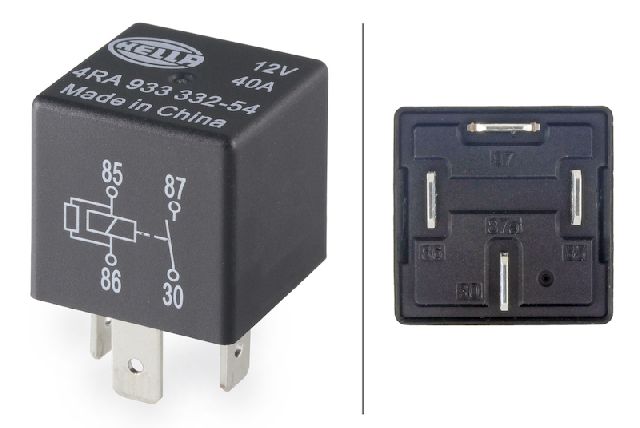
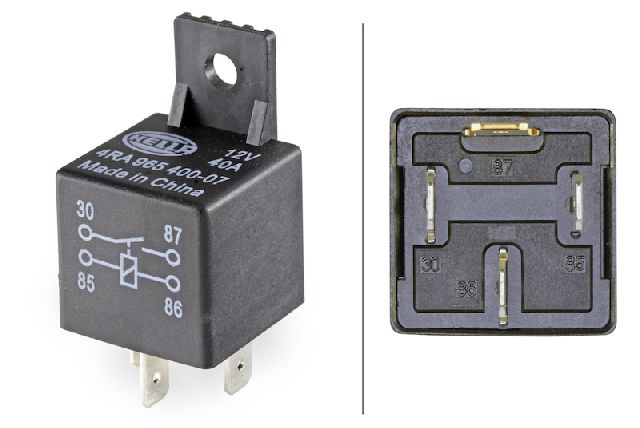
- Voltage at FPDM Connector (Power & Ground Pins) — expected: ~12V (Battery Voltage) with Key On, Engine Off.. Failure: Voltage below 11.5V suggests a wiring issue, bad relay, or poor connection upstream.
- Fuel Pump Current Draw — expected: 4-8 Amps with a uniform waveform on an oscilloscope.. Failure: Erratic or spiky waveform indicates worn pump motor brushes. High, flat current indicates a seized pump. Low or no current indicates an open circuit.
- Fuel Pump Trim (Scan Tool) — expected: The product of 'Short Term Fuel Pump Trim' multiplied by 'Long Term Fuel Pump Trim' should be less than 1.5.. Failure: A value greater than 1.5 indicates the system is struggling to maintain pressure.
Scan Tool Commands That Help
- Ford IDS (or equivalent professional scanner): Fuel Pump Duty Cycle Command — To manually command the FPDM to operate the fuel pump at a specific speed, verifying the function of the module and pump independently of the PCM's automatic requests.
- Ford IDS (or equivalent professional scanner): Fuel Pump Trim Reset — This procedure should be performed after replacing a fuel system component like the pump or FPDM to clear learned values and allow the system to recalibrate.
- Ford IDS (or equivalent professional scanner): Depressurize Fuel System — As a safety measure before physically opening the fuel system (e.g., replacing the pump or pressure sensor) to safely release high-pressure fuel.
Wiring & Ground Locations
- FPDM Connector — At the Fuel Pump Driver Module, located on the frame crossmember above the spare tire.. This is the primary point for testing power, ground, and command signals to the module. Pin 5 (Power) and Pin 3 (Ground) are the larger gauge wires and should show battery voltage. Pin 1 (Violet/Green wire) is the command signal from the PCM.
- G100 — On the left-hand side of the radiator support.. Cited as a potential ground point for the fuel pump and sender circuit. A poor ground here could cause low voltage to the entire fuel pump system.
- Passenger Kick Panel Grounds — Behind the plastic kick panel in the front passenger footwell.. This area is a common location for multiple chassis grounds and is prone to moisture and corrosion, especially in salt-belt regions. While not exclusive to the fuel pump, a bad ground here can cause various electrical issues.
Real Owner Repair Stories
- Advance Auto Parts Reviewer (Ford F-150 (year not specified, but within generation)) — No start, then after part replacement, the truck ran but failed state inspection.
❌ Tried (didn't work) Replacing the original corroded FPDM with a new Dorman aftermarket module got the truck running., Replacing the PCM based on a friend's advice did not solve the inspection failure.
✅ What actually fixed it A professional garage diagnosed the new Dorman FPDM as faulty, as it was preventing the truck's computer from setting its emissions readiness monitors. Replacing the Dorman part with a genuine Motorcraft FPDM allowed the truck to pass inspection. - YouTube Commenter on 'Ollie on Wheels llc' video (Ford F-150 (Dad's truck)) — No start, owner suspected fuel pump.
❌ Tried (didn't work) Initial diagnosis pointed towards the in-tank fuel pump.
✅ What actually fixed it Performed voltage tests and found 12.15V at the fuel pump relay and 11.89V at the FPDM connector. Based on these sufficient voltages, they replaced the FPDM with a Dorman part. The fuel pump could be heard priming immediately, and the truck started and ran great.
OEM Part Supersession History
Various older part numbers→9L3Z-9D370-B (Motorcraft)— The original FPDM design had an aluminum back that was mounted directly to the steel frame, causing galvanic corrosion and premature failure.
Heads up: While aftermarket parts like the Dorman 590-001 physically fit and function, there are isolated reports of them causing issues with emissions readiness monitors, which an OEM part may resolve.
Model Year Variations Within This Range
- 2009-2014: Starting in 2009, Ford eliminated the physical, button-activated inertia switch (fuel pump cutoff switch) that was located in the passenger kick panel on previous generations. The function is now controlled by the Restraints Control Module (RCM). After a collision event, the fuel pump is reset by cycling the ignition switch, not by pressing a physical button.
Diagnostic Flowchart
Other Known Issues on This Vehicle
Issues unrelated to this code that are worth knowing about as an owner of this generation:
- 6R80 Transmission Molded Lead Frame Failure 🔴 High — Widespread issue affecting 2011-2014 models, often leading to recalls (e.g., 24S37). Symptoms include sudden, violent downshifts to 1st gear at highway speeds, speedometer dropping to zero, and transmission warning lights. (Ref: Ford Customer Satisfaction Program & Recalls (e.g., 19N01, 24S37))
- 5.0L V8 Coolant Leaks (T-Connector & Reservoir Hose) 🟠 Medium — Very common on 2011-2014 models with the 5.0L 'Coyote' V8. The plastic T-connector in the upper radiator hose (Part DR3Z-8566-B) and the o-rings degrade and leak. The coolant reservoir hose elbow is also a frequent failure point.
- Electronic Power Assist Steering (EPAS) Failure 🔴 High — Common on 2011-2014 models. Can result in a sudden and complete loss of power steering, making the truck extremely difficult to steer. Often requires replacement of the entire steering rack assembly. (Ref: Recall 14S09 for some 2014 models due to an incorrectly installed sensor magnet.)
- 3.5L EcoBoost Brake Vacuum Pump Failure 🟠 Medium — Affects 2011-2014 models with the 3.5L EcoBoost engine. The pump provides vacuum for the brake booster and becomes very noisy (grinding or loud humming) before failing, which can lead to reduced braking assist. (Ref: TSB 15-0026 (updated WSM procedure))
- 5.4L 3V Cam Phasers / Timing Components 🔴 High — Primarily affects 2009-2010 models with the 5.4L 3V V8. Causes a characteristic 'diesel-like' ticking or rattling noise at idle. Failure to address can lead to catastrophic engine damage.
- 3.5L EcoBoost Intercooler Condensation 🟠 Medium — Common on 2011-2012 models, especially in humid climates. Moisture can build up in the intercooler during steady highway driving, and then be ingested by the engine during sudden acceleration, causing a stumble or misfire. (Ref: Ford issued a TSB with a fix that involved adding a deflector shield to the intercooler.)
Used vs. New Parts: Buying Guide for This Vehicle
When a used part is the smart pick: For this specific repair, using used parts is strongly discouraged. The primary failure points are due to design flaws (FPDM corrosion) or electrical wear (Fuse 27), making used parts from a junkyard highly likely to have the same issue or fail shortly after installation.
What to inspect on the donor part:
- Not applicable, as new parts are the only reliable option for the most common causes.
OEM-only on this vehicle (don't cheap out):
- Fuel Pump Driver Module (FPDM): While aftermarket is an option, at least one detailed case reported an aftermarket Dorman module prevented emissions readiness monitors from setting, a problem that was solved by installing a genuine Motorcraft part. For guaranteed compatibility, OEM is the safest choice.
Aftermarket brands forum-validated for this vehicle:
- Dorman (590-001 for FPDM): Widely used and includes the updated standoff design to prevent corrosion. It is a viable, cost-effective alternative to OEM, but be aware of the potential for rare electronic incompatibility issues.
Brands owners have reported issues with on this vehicle:
- No-name or unbranded FPDMs and fuel pumps should be avoided. The complexity of the module's communication with the PCM and the labor involved in replacing the in-tank pump make using low-quality parts a significant risk.
Real Owner Stories
Aggregated from forums and TSBs cited above. Mileages and costs reflect what owners reported in those sources.
2014 Ford F-150
Symptoms: Truck experienced stalling issues due to a melted fuse in the under-hood fuse box.
What fixed it: Installed the TSB 15-0137 relocation kit to move the fuel pump circuit to a heavy-duty fuse location.
Source hint: f150forum.com thread titled '2014 Fuse 27 Melting Issue'
2009-2014 Ford F-150
Symptoms: Intermittent surging issues; the old module was corroded internally but the housing was not cracked open.
What fixed it: Replacement of the Fuel Pump Driver Module (FPDM).
Source hint: f150forum.com thread titled 'Fuel Pump Driver Module (FPDM) - My Symptoms'
2009-2014 Ford F-150
Symptoms: Stalling and no-start issues; visual inspection showed the aluminum-backed module was corroded from being mounted against the steel frame.
What fixed it: Replaced the Fuel Pump Driver Module and used updated mounting hardware to create an air gap.
Source hint: f150forum.com thread titled 'Fuel Pump Driver Module- Check yours!!'
Related OBD-II Codes
Frequently Asked Questions
Does TSB 15-0137 apply to my 2014 Ford F-150 if it keeps stalling?
What part do I need to fix the Fuse 27 melting issue on my F-150?
I heard the Fuel Pump Driver Module (FPDM) on these trucks is prone to corrosion. How can I prevent this?
Where is the Fuel Pump Driver Module located on a 2009-2014 F-150?
My FPDM looks fine on the outside; could it still be the cause of my P2635 code?
What is the typical fuel pressure for a healthy 2009-2014 F-150 at idle?
Helpful Videos
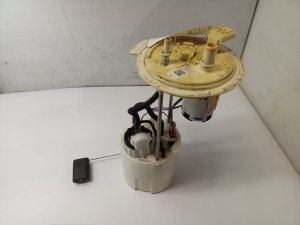
Used OEM Parts in Stock
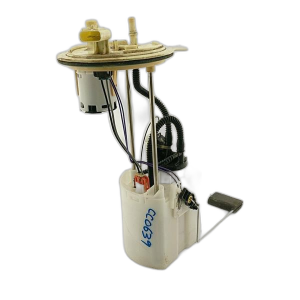
New Aftermarket Parts Available


The information in this article is provided for general reference and educational purposes only. Vehicle specifications, procedures, and part compatibility can vary by production date, trim level, and region. Always consult your vehicle's factory service manual and verify part numbers before purchasing or performing repairs. Safety-critical components such as airbags, seat belts, and braking systems should be installed by a qualified professional.
- Ford F-150:
- 🧭 Diagnostic Flowchart
- 🎬 Helpful Videos
- 🛍️ Shop This Part
- What's Unique About the 2009-2014 Ford F-150
- Symptoms You May Notice
- Most Likely Causes
- Rare But Worth Checking
- Diagnosis Steps
- Parts You'll Likely Need
- Related Codes That Often Appear With This One
- Technical Service Bulletins (TSBs) & Recalls
- Platform-Specific Known Issues
- Mechanic-Grade Diagnostic Values
- Scan Tool Commands That Help
- Wiring & Ground Locations
- Real Owner Repair Stories
- OEM Part Supersession History
- Model Year Variations Within This Range
- Other Known Issues on This Vehicle
- Used vs. New Parts: Buying Guide for This Vehicle
- Real Owner Stories
- 2014 Ford F-150
- 2009-2014 Ford F-150
- 2009-2014 Ford F-150
- Related OBD-II Codes
- Frequently Asked Questions
- 🎟️ Get 5% Off