

P2635 on 2015-2020 Ford F-150: Fuel Pump Low Flow Causes and Fixes
P2635 on a 2015-2020 F-150 means the fuel pump isn't delivering enough fuel. The most common causes are a failing in-tank fuel pump or a faulty Fuel Pump Driver Module (FPDM). Check the FPDM and its wiring for corrosion first, as it's easier to access and a very frequent failure point on Ford trucks.
- P2635 indicates your F-150's engine isn't getting enough fuel.
- The most common causes are a bad Fuel Pump Driver Module (FPDM) or a failing fuel pump.
- Always inspect the FPDM for corrosion first. It's located on a frame crossmember above the spare tire and is a known high-failure part.
What's Unique About the 2015-2020 Ford F-150
On many Ford trucks, including the F-150, a key component is the Fuel Pump Driver Module (FPDM). This module, which regulates voltage to the fuel pump, is notoriously prone to failure. It is often mounted to the truck's frame cross-member near the spare tire, exposing it to road salt, water, and grime. This leads to the aluminum housing corroding, swelling, and cracking, which allows moisture to destroy the internal electronics. While the fuel pump itself can fail, checking the FPDM first is a common diagnostic step for experienced Ford technicians and owners.
Symptoms You May Notice
- Check Engine Light is on
- Engine hesitation or stumbling during acceleration
- Reduced engine power, especially when towing or climbing hills
- Engine stalling, sometimes intermittently when accelerating
- Extended cranking time before the engine starts
- Difficulty starting the engine
- No-start condition
- Engine surging or hesitating
- Replacing the fuel pump when the actual problem is a less expensive, easier-to-replace Fuel Pump Driver Module (FPDM).
- Replacing the fuel pump or FPDM when the issue is a simple wiring or connector corrosion problem.
Most Likely Causes
- Failing Fuel Pump 🔴 High Probability → Shop Fuel Pump Fuel pumps are wear-and-tear items. High mileage, age, or frequent operation with a low fuel level can accelerate wear and lead to failure.
How to confirm: Perform a fuel pressure test at the fuel rail. On a Ford F-150, pressure should typically be around 35-45 psi at idle. If pressure is low, and voltage to the pump (checked at the FPDM connector) is correct, the pump is faulty. A scan tool can also monitor the fuel pressure sensor data in real-time.
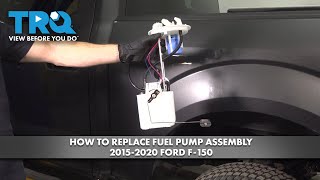
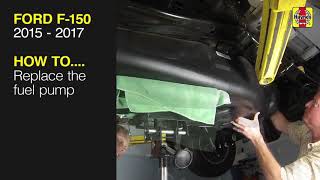
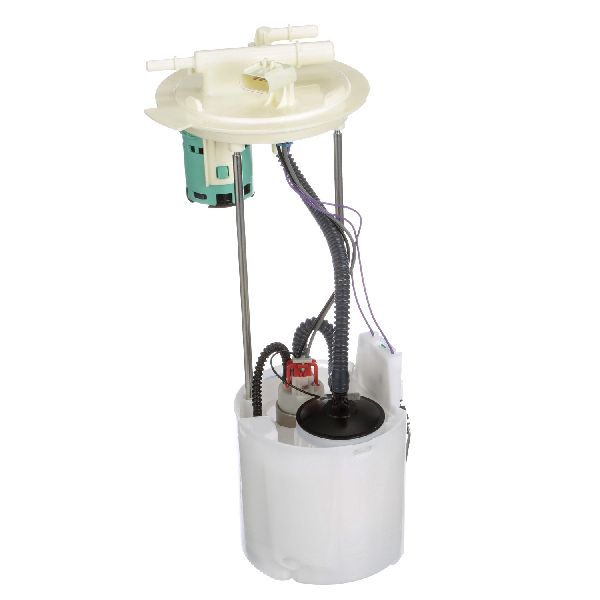
Typical fix: Replace the in-tank fuel pump assembly. 🎬 See this step-by-step fuel pump replacement walkthrough This involves dropping the fuel tank or, on some models, removing the truck bed for access.
Est. part cost: $250-$600 - Faulty Fuel Pump Driver Module (FPDM) 🔴 High Probability → Shop Fuel Pump The FPDM is mounted on the frame rail, often above the spare tire, making it highly susceptible to corrosion from road debris and moisture. The aluminum casing cracks from corrosion, allowing water to damage the internal circuit board.
How to confirm: Visually inspect the module for cracks, a swollen case, white powder (aluminum oxide), or water intrusion. Check for proper voltage output to the fuel pump using a multimeter. A scan tool can also be used to check FPDM communication and duty cycle.
Typical fix: Replace the Fuel Pump Driver Module. 🎬 Watch: How to swap the fuel pump control module The new part often comes with rubber standoffs or spacers to create an air gap between the module and the frame to prevent future corrosion.
Est. part cost: $50-$150 - Clogged Fuel Filter or In-Tank Strainer 🟡 Medium Probability → Shop Fuel Filter Fuel contaminants can clog the filter over time, restricting flow. On the 2015-2020 F-150, the primary fuel filter is integrated into the fuel pump assembly and is considered non-serviceable separately.
How to confirm: A significant drop in fuel pressure during a pressure test points to a restriction. Since the filter is integrated, this diagnosis typically leads to replacing the entire fuel pump assembly.
Typical fix: Replace the fuel pump assembly.
Est. part cost: $250-$600 - Damaged Wiring or Connectors ⚪ Low Probability Wiring to the FPDM or the fuel pump itself can become corroded or damaged due to its exposed location under the truck. The connector at the FPDM is a common point for corrosion.
How to confirm: Visually inspect the wiring harness for chafing, breaks, or corroded pins in the connectors, especially at the FPDM. Use a multimeter to check for continuity and perform a voltage drop test on the power and ground circuits.
Typical fix: Repair the damaged section of the wiring harness or replace the connector. Motorcraft sells replacement pigtail connectors like WPT-521.
Est. part cost: $20-$100
Rare But Worth Checking
- Faulty Fuel Rail Pressure Sensor (FRPS): → Shop Fuel Pressure Sensor
Diagnosis Steps
- Scan the vehicle for any other stored trouble codes to see if other issues are present.
- Check the fuel level to ensure the tank has at least 1/4 tank of fuel.
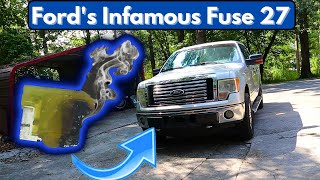
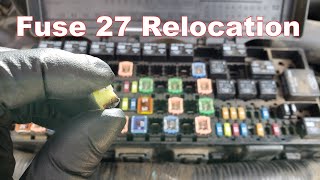
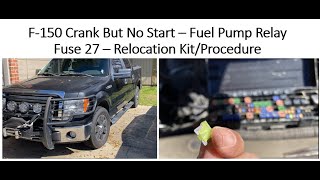
- Inspect the fuel pump fuse (typically Fuse 27 in the under-hood fuse box, which is known to melt) and the fuel pump relay. 🎬 Watch: How to install the Fuse 27 relocation kit
- Locate and visually inspect the Fuel Pump Driver Module (FPDM), typically on a frame crossmember near the spare tire. Look for cracks, swelling, or heavy corrosion on the module's housing.
- If the FPDM looks compromised, it is the most likely culprit. If it looks okay, proceed with further testing.
- Connect a scan tool and observe live data for the Fuel Rail Pressure (FRP) sensor. Compare the desired pressure with the actual pressure.
- Connect a fuel pressure gauge to the fuel rail's test port (if available). Check if the pressure is within the manufacturer's specification (typically 35-45 psi for an F-150 at idle). A low reading confirms a flow problem.
- If fuel pressure is low, use a multimeter to check for battery voltage and ground at the FPDM connector and voltage output from the FPDM to the fuel pump. This will help determine if the issue is the pump, the module, or the wiring.
- If voltage to the pump is present but pressure is low, the fuel pump or a restriction (clogged filter) is the likely cause.
- If voltage is low or absent at the pump, the problem lies upstream with the FPDM, wiring, or relay.
Parts You'll Likely Need
- Fuel Pump Driver Module (FPDM)
(OEM #FPDM-1 (This is a generic part number, specific applications may vary))— This module is a common failure point on Ford trucks due to its mounting location, which exposes it to corrosion that cracks the housing.
Trusted brands: Motorcraft, Dorman
OEM price range: $80-$120
Aftermarket price range: $50-$90 - Fuel Pump Assembly
(OEM #FL3Z-9H307-E (Example for 5.0L with extended range tank), PFS-1054 (Motorcraft number for standard tank))— This is the primary component responsible for delivering fuel. It is a wear item that can fail due to age or contamination, causing the low flow condition.
Trusted brands: Motorcraft, Bosch, Delphi
OEM price range: $400-$600
Aftermarket price range: $250-$450
Related Codes That Often Appear With This One
- P0087 — This code means "Fuel Rail/System Pressure - Too Low," which is a direct consequence of the low flow condition described by P2635.
- P0627 — This code for "Fuel Pump A Control Circuit/Open" can accompany P2635 if there is a wiring break or internal failure in the FPDM.
- U0109 — This code indicates "Lost Communication With Fuel Pump Control Module." If this code is present, the FPDM is not communicating with the PCM and is the primary fault that must be diagnosed first.
Platform-Specific Known Issues
- Owner Experience: FPDM Failure: A user on a Ford F-150 forum described a scenario where their truck would crank but not start, eventually throwing code P2635. After lowering the spare tire, they found the Fuel Pump Driver Module was severely corroded and cracked open. Replacing the module with a new Dorman unit that included stand-off bolts to prevent direct frame contact resolved the issue immediately.
- Owner Experience: Weak Fuel Pump: → Shop Fuel Pump On F150Forum.com, a member with a 2016 F-150 reported experiencing hesitation under acceleration and codes P2635 and P0087. They first replaced the FPDM with no change in symptoms. A fuel pressure test revealed pressure was on the low end of the specification at idle and dropped significantly under load. Replacing the in-tank fuel pump assembly ultimately fixed the problem.
Mechanic-Grade Diagnostic Values
- Low-Side Fuel Pressure at Idle — expected: 35-45 PSI. Failure: Pressure below 35 PSI or pressure that drops significantly under load.
- Voltage at FPDM Connector (Pin 5) — expected: 10V - 12.6V with key on, engine cranking or running.. Failure: Voltage below 11.5V suggests a wiring, fuse, or relay issue upstream.
- Ground Circuit Resistance at FPDM Connector (Pin 3) — expected: < 0.2 Ohms. Failure: Resistance higher than 0.2 Ohms indicates a poor ground connection which can cause the module to malfunction.
- FPDM Commanded Duty Cycle (Scan Tool) — expected: Should read approximately 50% during engine cranking.. Failure: A reading of 0% or 100% constantly, or no reading, points to a module or communication failure.
Scan Tool Commands That Help
- Ford IDS / FORScan / Advanced Bidirectional Scanner: Fuel Pump Command (On/Off) — After verifying power and ground to the FPDM, use this command to directly turn the fuel pump on. If the pump runs and pressure builds, it confirms the pump is functional and the issue is likely with the FPDM or PCM command signal.
- Ford IDS / FORScan / Advanced Bidirectional Scanner: Depressurize Fuel System — To test a suspected faulty Fuel Rail Pressure Sensor (FRPS). After executing the command with the engine off, the live data PID for fuel pressure should drop to 0 PSI. If it remains stuck at a value, the sensor is bad.
- Ford IDS / FORScan / Advanced Bidirectional Scanner: Monitor FPDM PIDs (e.g., FP_DUTY, FPM_F) — To check if the PCM is commanding the FPDM and if the FPDM is sending a feedback signal. Inconsistent or absent responses point to a faulty control module or wiring.
Wiring & Ground Locations
- FPDM (Fuel Pump Driver Module) — Bolted to a frame cross-member, located above the spare tire. The spare tire must be lowered for access.. This is the physical location of the most common failure point. Visual inspection for corrosion and cracking is the first step.
- FPDM Connector C433 - Pin 5 — At the FPDM harness connector.. This is the power supply wire from the fuel pump relay. It should have battery voltage (10-12.6V) when the engine is cranking or running. Lack of voltage here points to an issue with the fuse or relay, not the FPDM itself.
- FPDM Connector C433 - Pin 3 — At the FPDM harness connector.. This is the power ground wire for the module. It must have excellent continuity to the chassis ground (<0.2 ohms). A bad ground will prevent the module from operating correctly.
- Ground G404 (on older models) — On some Ford trucks, a primary rear-frame ground point is designated G404. While not explicitly confirmed for 2015+, checking major frame grounds in the vicinity of the FPDM is a valid diagnostic step if a bad ground is suspected at Pin 3.. A corroded or loose main chassis ground can cause intermittent and difficult-to-diagnose electrical issues for any component grounded nearby, including the FPDM.
Real Owner Repair Stories
- Ford F150 Forum & F150online Forums (2004-2008 F-150 (symptoms and fix are identical for 2015-2020)) — Truck cut out while driving, or crank-no-start condition.
❌ Tried (didn't work) Initially suspecting a bad fuel pump.
✅ What actually fixed it The user inspected the FPDM above the spare tire and found it severely corroded with a crack in the aluminum housing. Replacing it with a Dorman 590-001 unit, which included rubber standoffs to create an air gap from the frame, resolved the problem immediately. - YouTube / NHTSA TSB 15-0137 (2009-2014 F-150 (a known issue that can present identically on 2015+)) — Crank but no start, intermittent stalling, no sound from fuel pump priming.
❌ Tried (didn't work) Assuming the fuel pump or FPDM had failed.
✅ What actually fixed it Inspection of the under-hood fuse box revealed that Fuse 27 (for the fuel pump) had become hot, melting the fuse and its plastic housing, causing a poor connection. The fix was to install a fuse relocation kit (like Ford part EL3Z-14293-A) to move the circuit to an unused, higher-capacity slot in the fuse box.
Model Year Variations Within This Range
- 2018-2020: The 2018 model year refresh introduced a new base 3.3L V6 engine, a 3.0L Power Stroke diesel option, and wider use of the 10-speed automatic transmission. While the FPDM-based fuel system architecture is similar, specific fuel pump and module part numbers may differ from 2015-2017 models.
- 2017-2020 (EcoBoost): The 3.5L EcoBoost engine was updated to a second generation starting in 2017, which included the addition of a port fuel injection system alongside the existing direct injection system. This dual-injection setup adds complexity to the fuel system compared to the 2015-2016 direct-injection-only models.
Diagnostic Flowchart
Other Known Issues on This Vehicle
Issues unrelated to this code that are worth knowing about as an owner of this generation:
- Frozen Door Latches 🔴 High — Very common in cold climates. Affects 2015-2018 models most. (Ref: Recall 17S33, CSP 18N03.)
- 10R80 10-Speed Transmission Harsh/Delayed Shifting 🟠 Medium — Widespread on 2017-2020 models. Can occur at any mileage. (Ref: TSB 23-2123 (supersedes many others), TSB 18-2274.)
- 5.0L V8 Coyote Excessive Oil Consumption 🔴 High — Common on 2018-2020 models. Can consume over 1 quart per 3,000 miles. (Ref: TSB 19-2365.)
- IWE Grinding Noise (4WD Models) 🟠 Medium — Common issue caused by vacuum loss to the Integrated Wheel Ends, causing hubs to partially engage. (Ref: Multiple TSBs exist.)
- 3.5L EcoBoost Cam Phaser Rattle on Cold Start 🔴 High — A well-known issue, particularly on earlier 3.5L EcoBoost engines. If ignored, can lead to timing chain failure.
- Panoramic Sunroof Leaks/Rattles 🟡 Low — Often caused by clogged drain tubes or faulty seals, leading to water intrusion in the cabin.
Used vs. New Parts: Buying Guide for This Vehicle
When a used part is the smart pick: For this specific repair, obtaining used parts is generally not recommended. The primary failure points (FPDM and fuel pump) are wear-and-tear items or fail due to environmental exposure over time. A used part carries the same risk of failure with an unknown history.
Donor-vehicle mileage cap: roughly under 30000 miles for the part to have meaningful remaining life.
What to inspect on the donor part:
- For a fuel pump: Only consider from a very low-mileage, collision-damaged vehicle. Check the electrical connector for any signs of heat or corrosion.
- For an FPDM: Avoid completely. There is no reliable way to inspect for internal electronic fatigue or micro-cracks in the housing that will soon lead to water intrusion.
OEM-only on this vehicle (don't cheap out):
- No parts for this repair are strictly OEM-only; reputable aftermarket options are widely available and used.
Aftermarket brands forum-validated for this vehicle:
- Dorman (for Fuel Pump Driver Module): Frequently cited by owners as a preferred replacement because it includes redesigned mounting hardware (rubber standoffs) to prevent the corrosion that causes the original part to fail.
Brands owners have reported issues with on this vehicle:
- While some forum users express general distrust for Dorman's quality on complex parts like phasers, the FPDM is widely considered one of their reliable products. No specific brands were consistently reported as problematic for this repair.
Real Owner Stories
Aggregated from forums and TSBs cited above. Mileages and costs reflect what owners reported in those sources.
2015-2020 Ford F-150
Symptoms: The truck would crank but not start, eventually throwing code P2635.
What fixed it: Replacing the Fuel Pump Driver Module with a new Dorman unit that included stand-off bolts to prevent direct frame contact.
Source hint: vehicle_specific_issues: Owner Experience: FPDM Failure
2016 Ford F-150
Symptoms: Hesitation under acceleration and codes P2635 and P0087. Fuel pressure was on the low end at idle and dropped significantly under load.
What fixed it: Replacing the in-tank fuel pump assembly.
Source hint: vehicle_specific_issues: Owner Experience: Weak Fuel Pump
2015-2020 Ford F-150
Symptoms: A picture showed the FPDM broken in half from corrosion.
What fixed it: Dorman replacement part with spacers to prevent a recurrence.
Source hint: forum_citations: Reddit - r/Ford
Related OBD-II Codes
Frequently Asked Questions
Where is the Fuel Pump Driver Module (FPDM) located on my 2015-2020 F-150?
My F-150 is throwing P2635 and stalling; could this be related to the Fuse 27 issue?
Is there a specific replacement part recommended to prevent the FPDM from corroding again?
What should the fuel pressure be for a 2015-2020 Ford F-150 at idle?
Can I replace just the fuel filter on my 2017 F-150 to fix P2635?
Are there any other common issues I should look out for on my 2018-2020 F-150 while fixing this?
Helpful Videos
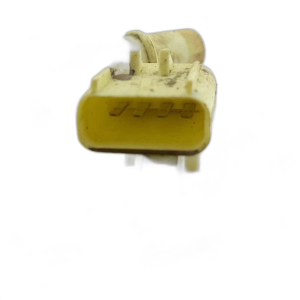
Used OEM Parts in Stock
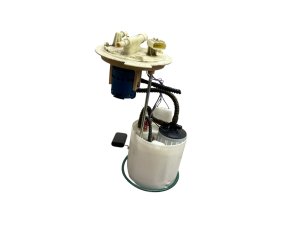
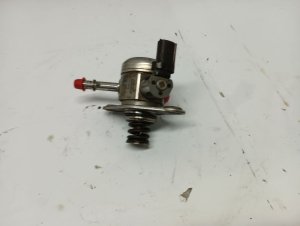
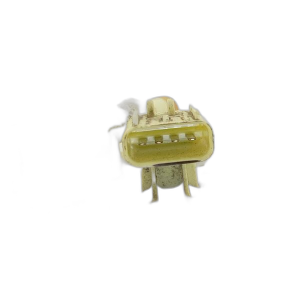
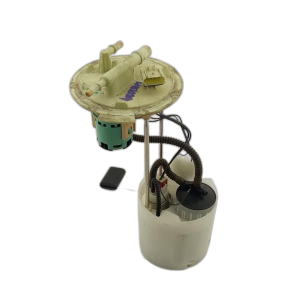
New Aftermarket Parts Available


The information in this article is provided for general reference and educational purposes only. Vehicle specifications, procedures, and part compatibility can vary by production date, trim level, and region. Always consult your vehicle's factory service manual and verify part numbers before purchasing or performing repairs. Safety-critical components such as airbags, seat belts, and braking systems should be installed by a qualified professional.
- Ford F-150:
- 🧭 Diagnostic Flowchart
- 🎬 Helpful Videos
- 🛍️ Shop This Part
- What's Unique About the 2015-2020 Ford F-150
- Symptoms You May Notice
- Most Likely Causes
- Rare But Worth Checking
- Diagnosis Steps
- Parts You'll Likely Need
- Related Codes That Often Appear With This One
- Platform-Specific Known Issues
- Mechanic-Grade Diagnostic Values
- Scan Tool Commands That Help
- Wiring & Ground Locations
- Real Owner Repair Stories
- Model Year Variations Within This Range
- Other Known Issues on This Vehicle
- Used vs. New Parts: Buying Guide for This Vehicle
- Real Owner Stories
- 2015-2020 Ford F-150
- 2016 Ford F-150
- 2015-2020 Ford F-150
- Related OBD-II Codes
- Frequently Asked Questions
- 🎟️ Get 5% Off