

P2635 on 2015-2019 GMC Canyon: Fuel Pump Low Flow Causes and Fixes
On a 2015-2019 GMC Canyon, code P2635 almost always indicates a failing in-tank fuel pump module, especially if you experience stalling in extreme hot or cold weather. The most reliable fix is replacing the entire fuel pump module assembly with an updated part, which is a known issue addressed by multiple GM Technical Service Bulletins. This problem is also common on its platform-mate, the Chevrolet Colorado.
- P2635 on a 2015-2019 GMC Canyon is a well-documented issue, not a random failure.
- The problem is almost always the in-tank fuel pump module, especially if symptoms worsen in extreme heat or cold.
- Check for companion codes like P018B and P0087, which further confirm a fuel delivery problem.
- The correct fix, recommended by GM, is to replace the entire fuel pump module assembly with an updated part.
- Due to the need to drop the fuel tank or lift the bed, this is a difficult DIY job and professional service is recommended.
What's Unique About the 2015-2019 Gmc CANYON
The GMC Canyon from this period, along with its sibling the Chevrolet Colorado, is highly susceptible to fuel pump issues specifically related to extreme ambient temperatures. General Motors has issued several Technical Service Bulletins (TSBs) acknowledging that the original fuel pump module can falter in both very hot (above 100°F) and very cold (below 20°F) conditions. In hot weather, this is often due to vapor buildup in the fuel line, while cold can cause other performance issues. This makes the P2635 code a very specific and well-documented complaint on these trucks, often pointing directly to a known part failure rather than a broad diagnostic mystery.
Diagnostic Flowchart
Tap your situation to follow the diagnostic path that matches what you're seeing on this vehicle.
Symptoms You May Notice
- Engine stalling, especially in very hot (above 100°F) or very cold (below 20°F) weather.
- Hesitation or surging during acceleration.
- Loss of engine power.
- Engine is hard to start or won't start.
- Extended cranking time before the engine starts.
- Illuminated Check Engine Light.
- Replacing only the fuel pressure sensor. While code P018B (related to the fuel pressure sensor) often appears with P2635, the sensor is usually reporting the low-pressure problem correctly, not causing it. The root cause is typically the pump itself.
- Replacing the Fuel Pump Control Module (FPCM) unnecessarily. As noted in TSBs for other GM trucks with the same issue, the FPCM is not the primary cause, and diagnostics should focus on the pump and its wiring first.
Most Likely Causes
- Failing In-Tank Fuel Pump Module 🔴 High Probability → Shop Fuel Pump As documented in GM TSBs #16-NA-225, #PIP5507B, and #18-NA-103, the original equipment fuel pump module is known to perform poorly in extreme temperatures. In high heat, it can lead to vapor buildup in the fuel feed line, starving the engine of fuel. In severe cold, it can also cause low flow, stalling, or no-start conditions.
How to confirm: A technician will use a scan tool to monitor desired vs. actual fuel pressure. If the actual pressure drops significantly, especially during the reported symptom (e.g., hot weather), it confirms the pump is failing to keep up. A fuel pressure gauge can also be used for confirmation. The issue is so common that many technicians will recommend replacement based on the code and symptoms alone, especially if a relevant TSB applies.
Typical fix: Replace the entire fuel tank fuel pump module assembly with the updated part as recommended by GM. It is critical to use the updated part number, as simply replacing it with another original-spec pump may not solve the problem.
Est. part cost: $250-$500
Rare But Worth Checking
- Faulty Fuel Pump Control Module (FPCM): → Shop Fuel Pump While less common than the pump itself, the FPCM can fail and send incorrect signals, leading to low fuel flow. A Reddit user with a 2020 Colorado reported being recommended this repair for a P2635 code. However, TSBs for similar GM trucks advise against replacing the FPCM for P2635 alone unless other diagnostics point to it.
- Wiring Issues: Corroded or damaged wiring or connectors between the FPCM and the fuel pump can cause a voltage drop, preventing the pump from running at full capacity. A thorough visual inspection of the harness near the tank and FPCM (often located under the truck near the spare tire) is a wise diagnostic step.
- Clogged Fuel Filter: → Shop Fuel Filter Although the primary filter is part of the fuel pump module, a severely clogged filter can restrict flow and trigger this code. It's typically replaced along with the pump module, so it's rarely a separate point of failure.
Diagnosis Steps
- Check for Technical Service Bulletins (TSBs). Given the known issues documented in TSBs 18-NA-103, PIP5507B, and 16-NA-225, this is the most important first step.
- Scan the ECM for P2635 and any other related codes like P018B or P0087.
- Using a capable scan tool, monitor the live data for both 'commanded' and 'actual' fuel pressure. Observe if the actual pressure drops significantly below the commanded pressure, especially under load or when symptoms occur (e.g., in high heat).
- Inspect the wiring and connectors for the fuel pump and Fuel Pump Control Module (FPCM) for any signs of damage, corrosion, or looseness. The FPCM is often located under the vehicle near the spare tire.
- If scan tool data is inconclusive, connect a mechanical fuel pressure gauge to verify 🎬 See how a pro diagnoses hard starting and fuel pressure codes. the pressure readings.
- If low pressure is confirmed and wiring is intact, the fuel pump module is the most likely culprit and should be replaced with the updated GM part.
Parts You'll Likely Need
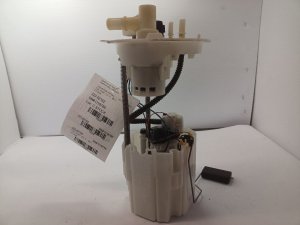
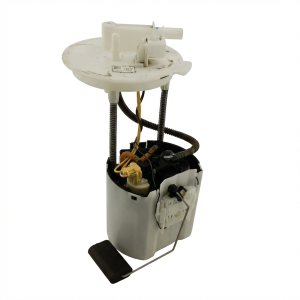
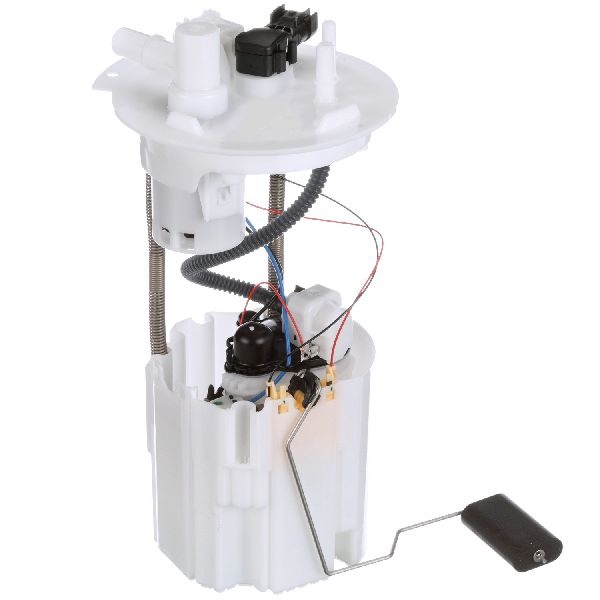
- Fuel Pump Module Assembly
(OEM #23428422 (supersedes previous numbers, always verify with VIN))— This is the direct cause of the problem in the vast majority of cases, as confirmed by multiple GM service bulletins. The entire module, which includes the pump, sending unit, and filter, should be replaced with the updated design.
Trusted brands: ACDelco (OEM), Delphi
OEM price range: $350-$500
Aftermarket price range: $250-$400
Related Codes That Often Appear With This One
- P018B — This code for 'Fuel Pressure Sensor 'B' Circuit Range/Performance' is frequently set with P2635 because the sensor is detecting the low pressure caused by the failing pump. TSBs #PIP5507B and #16-NA-225 explicitly link these two codes.
- P0087 — Stands for 'Fuel Rail/System Pressure - Too Low'. This is another code that directly indicates the symptom of low fuel pressure that the failing pump is causing, as noted in TSB #18-NA-103 for cold weather issues.
Technical Service Bulletins (TSBs) & Recalls
- 18NA103: Addresses cold weather performance issues leading to P2635.
- PIP5507B: Addresses high temperature performance issues leading to P2635.
- 16-NA-225: Provides the procedure to replace the fuel pump module to fix P2635.
- 17-NA-335: Supersedes earlier bulletins, confirming the fix for high-temp stalling is an updated fuel pump module.
Platform-Specific Known Issues
- Bulletin #PIP5507B: Notes that in ambient temperatures of 100°F (37.7°C) or higher, codes P2635 and/or P018B may set, accompanied by hesitation or stalling. The cause is identified as potential vapor buildup in the fuel feed line. Interestingly, an early version of this bulletin stated that replacing the fuel pump would *not* repair the concern and advised using higher octane fuel, but later bulletins superseded this with instructions to replace the pump with an updated design.
- Bulletin #18-NA-103: Describes a condition in cold weather (below -6°C or 20°F) where the truck may exhibit a whine from the fuel pump, start and stall, not start, or lose power, setting P2635 and other fuel-related codes. Note: A similarly numbered TSB also exists for diesel fuel gelling, so ensure you are referencing the correct gasoline engine version.
- Bulletin #16-NA-225 / 17-NA-335: These bulletins directly advise technicians to replace the fuel pump module assembly with an updated part as the corrective procedure when DTC P2635 and/or P018B are set due to the high-temperature stalling condition.
Mechanic-Grade Diagnostic Values
- Low-Side Fuel Pressure (at fuel rail test port) — expected: 30-45 psi at idle, 55-65 psi under load.. Failure: Pressure drops significantly below the expected range, especially when symptoms occur.
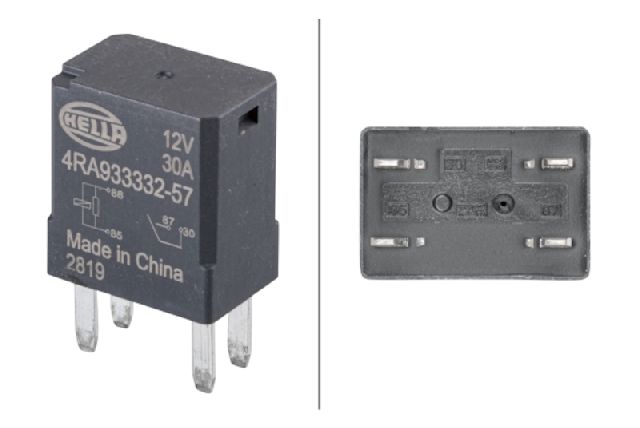
- Voltage at Fuel Pump Connector (Key-On) — expected: 12.0 - 12.6 Volts.. Failure: A reading below 11.5V suggests a problem with the wiring, FPCM, or relay.
- Voltage Drop on Power or Ground Circuit — expected: Close to 0V, no more than 0.1V per connection. A good circuit typically shows 0.2V to 0.5V total.. Failure: Excessive voltage drop (e.g., >0.5V) indicates high resistance from corrosion or a poor connection that can starve the pump of power under load.
- FPCM Enable Signal — expected: 12V present at the Dark Green/White wire (Pin 13) at the FPCM connector with the key on or cranking.. Failure: No voltage indicates a problem with the ECM or a break in the wire between the ECM and FPCM.
Scan Tool Commands That Help
- GDS2 (or equivalent professional scanner): Fuel Pump Enable / Fuel Pump On — This bidirectional command allows the technician to manually turn the fuel pump on and off to verify the function of the FPCM, the pump itself, and the integrity of the wiring circuits without the engine running.
- GDS2 (or equivalent professional scanner): Fuel Pump Duty Cycle Command — Used to command a specific speed from the fuel pump and compare the 'commanded' value to the 'actual' fuel pressure reading in live data to see if the pump can keep up.
Wiring & Ground Locations
- Fuel Pump Control Module (FPCM) — Mounted to the frame crossmember located above the spare tire.. This location makes the module and its connector highly susceptible to corrosion from road salt and moisture, which can cause a no-start or intermittent stalling condition. A visual inspection here is critical.
- FPCM Connector (Pinout) — The main electrical connector on the Fuel Pump Control Module.. Knowing the pinout allows for targeted testing. Key pins include: Pin 13 (Dark Green/White) for the ECM enable signal, Pin 47 (Gray) for voltage supply to the pump, Pin 32 (Red/White) for battery power to the module, and Pin 1 (Black) for ground.
- FPCM Enable Signal Wire Harness — The Dark Green/White wire running from the ECM along the frame to the FPCM.. This wire is known to chafe and break where it runs near the transfer case, causing a loss of the 'turn on' signal to the FPCM. This will shut down the fuel pump and can be misdiagnosed as a failed FPCM or pump.
Real Owner Repair Stories
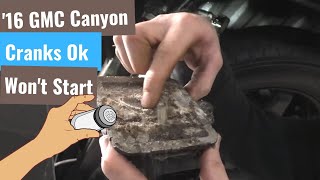
- South Main Auto Repair LLC (YouTube) (2016 GMC Canyon) — Crank, no start. Towed to the shop.
❌ Tried (didn't work) Initial diagnosis showed no fuel pressure and a code P12A6 (Fuel Pump Driver Module Enable Circuit Performance).
✅ What actually fixed it The Fuel Pump Control Module (FPCM), located above the spare tire, was severely corroded from road salt. The module housing had swollen and failed internally. Replacing the FPCM restored power to the fuel pump and fixed the no-start condition.
OEM Part Supersession History
Various→Updated Fuel Pump Module Assembly (e.g., ACDelco M100276)— The original design was prone to failure in extreme hot and cold temperatures. The updated design, mentioned in TSBs, incorporates changes to mitigate this, such as a one-way breather valve to prevent vapor lock in high heat.
Heads up: Using a non-updated or old-stock part may result in the problem returning. It is critical to source the latest revised part from GM/ACDelco or a quality aftermarket equivalent like Delphi.
Model Year Variations Within This Range
- 2016-2018: A subset of these vehicles were subject to GM Safety Recall 18268 (NHTSA 18V-358) for a potentially defective weld on the separate high-pressure fuel pump (for the direct injection system). This is a different part than the in-tank low-pressure pump that causes P2635, but a failure could lead to a fuel leak and fire risk. A dealer can check VIN for recall status.
Helpful Videos
Used OEM Parts in Stock
New Aftermarket Parts Available


The information in this article is provided for general reference and educational purposes only. Vehicle specifications, procedures, and part compatibility can vary by production date, trim level, and region. Always consult your vehicle's factory service manual and verify part numbers before purchasing or performing repairs. Safety-critical components such as airbags, seat belts, and braking systems should be installed by a qualified professional.
- Gmc CANYON:
- 🧭 Diagnostic Flowchart
- 🎬 Helpful Videos
- 🛍️ Shop This Part
- What's Unique About the 2015-2019 Gmc CANYON
- Symptoms You May Notice
- Most Likely Causes
- Rare But Worth Checking
- Diagnosis Steps
- Parts You'll Likely Need
- Related Codes That Often Appear With This One
- Technical Service Bulletins (TSBs) & Recalls
- Platform-Specific Known Issues
- Mechanic-Grade Diagnostic Values
- Scan Tool Commands That Help
- Wiring & Ground Locations
- Real Owner Repair Stories
- OEM Part Supersession History
- Model Year Variations Within This Range
- 🎟️ Get 5% Off