

P2635 on 2014-2018 GMC Sierra 1500: Fuel Pump Low Flow Causes & Fixes
On a 2014-2018 Sierra 1500, P2635 almost always points to a failing in-tank fuel pump, especially if the truck stalls in hot weather. This is a known issue addressed by GM TSB #17-NA-335. The fix is an updated fuel pump module, costing $250-$600 for the part. Before replacing the pump, consider testing the cheaper low-pressure fuel sensor on the frame rail, as it can also be the culprit.
- If your truck stalls when it's hot outside, the P2635 code is almost certainly caused by the original-design in-tank fuel pump failing; this is a known issue confirmed by GM.
- Before replacing the expensive fuel pump, consider testing the much cheaper low-pressure fuel sensor, especially if code P018B is also present. A specific GM test procedure (TSB #PIP5286B) exists for this.
- Always check for communication codes (U-codes). If present, they must be fixed first, as a communication error can falsely trigger the P2635 code.
- When replacing the fuel pump, ensure you are using the updated part number specified by GM to permanently fix the hot-weather stalling issue.
What's Unique About the 2014-2018 GMC Sierra 1500
The 2014-2018 Sierra (K2XX platform) has a well-documented history of fuel pump issues directly linked to high ambient temperatures. GM issued Technical Service Bulletin (TSB) #17-NA-335 because the original fuel pump modules can cause hesitation and stalling when it gets hot outside, often above 100°F (38°C). The problem is identified by GM as vapor buildup in the fuel feed line, and the official fix is an updated fuel pump module assembly designed to prevent this issue.
Symptoms You May Notice
- Engine stalling, especially in hot weather or after a long drive.
- Hesitation or stumbling during acceleration.
- Engine surging.
- Loss of engine power, particularly under load.
- Extended cranking time before the engine starts.
- No-start or start-and-stall condition.
- Illuminated Check Engine Light.
- Stalling when coming to a stop or after refueling.
- Replacing the Fuel Pump Control Module (FPCM) without proper diagnosis. While the FPCM can fail, TSBs and owner reports for this platform strongly point towards the in-tank pump or the pressure sensor as the primary culprits for the hot-stall symptom.
Most Likely Causes
- Failing In-Tank Fuel Pump Module 🔴 High Probability → Shop Fuel Pump The original-design pump is known to cause vapor lock in high ambient temperatures, as documented in GM TSB #17-NA-335. The updated pump has an improved design to mitigate this.
How to confirm: Use a scan tool to monitor 'Low Fuel System Pressure' vs. 'Commanded Low Fuel System Pressure'. A significant drop in actual pressure that coincides with hesitation or stalling, especially in hot weather, points to a failing pump.
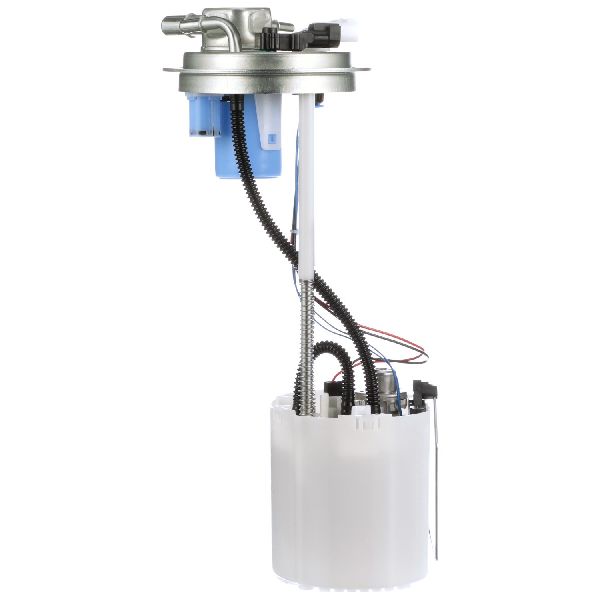
Typical fix: Replace the entire in-tank fuel pump module assembly with the updated part specified by GM (e.g., ACDelco M100153). This requires dropping the fuel tank or lifting the truck bed.
Est. part cost: $250-$600 - Faulty Low-Pressure Fuel Pressure Sensor 🟡 Medium Probability → Shop Fuel Pressure Sensor This sensor can fail to read correctly at low pressures, tricking the computer into thinking there's a flow problem. This is common enough that GM issued TSB #PIP5286B to diagnose it.
How to confirm: Follow the test in TSB #PIP5286B: With a COLD engine, use a scan tool to command 'Fuel System Depressurize' at idle. The pressure reading should drop to zero and the engine will stall. If the sensor reading gets stuck (e.g., at 30-40 PSI), the sensor is faulty.
Typical fix: Replace the fuel pressure sensor (e.g., ACDelco 13516496), which is located on the frame rail under the driver's side of the vehicle. The O-ring seal is often a separate part number and must be replaced as well.
Est. part cost: $40-$80 - Faulty Fuel Pump Control Module (FPCM) ⚪ Low Probability → Shop Fuel Pump The FPCM is mounted on the frame rail above the spare tire, making it susceptible to corrosion from road salt and moisture, which can damage the module or its connector.
How to confirm: Visually inspect the FPCM and its connector for corrosion or physical damage. Check the ground wire for the module (often G403), which is typically located on the frame near the driver's door area. If communication DTCs like U0074 or U0109 are present, diagnose those first as they can trigger P2635.
Typical fix: Clean the ground connection or replace the FPCM if it is corroded or has failed internally. A new module may need to be programmed.
Est. part cost: $80-$200
Rare But Worth Checking
- CAN Bus Communication Failure: According to GM TSB #PIP5427B, a loss of communication between the Engine Control Module (ECM) and the Fuel Pump Control Module (FPCM) can trigger code P2635. If you also have codes like U0074 or U18A2, the problem is likely wiring or a module communication fault, not the fuel pump itself.
Diagnosis Steps
- Scan for all stored DTCs. Pay close attention to P018B, P069E, or any U-codes, as they provide critical diagnostic clues.
- Note the conditions when symptoms occur. If stalling or hesitation happens primarily in hot weather, the in-tank fuel pump is the primary suspect per TSB #17-NA-335.
- If P018B is present, perform the fuel pressure sensor test outlined in TSB #PIP5286B on a cold engine.
- Inspect the Fuel Pump Control Module (FPCM), its connector, and its ground wire (on the frame rail, often near the driver's door or above the spare tire) for any signs of corrosion, looseness, or damage.
- Using a capable scan tool, graph the 'Commanded Low Fuel System Pressure' and the 'Actual Low Fuel System Pressure' PIDs. Test drive the vehicle to replicate the fault. If the actual pressure drops significantly while the commanded pressure stays high, 🎬 Watch: Real-world diagnostic testing for code P2635 the in-tank fuel pump is failing.
- If all else fails and communication codes are present, diagnose the CAN bus wiring between the ECM and FPCM for breaks or shorts.
Parts You'll Likely Need
- Fuel Tank Fuel Pump Module
(OEM #ACDelco M100153 (This is the updated pump module; supersedes older versions. Verify fitment with VIN.))— This is the most common failure on this platform for code P2635, especially with hot weather stalling, as confirmed by GM TSB #17-NA-335.
Trusted brands: ACDelco, GM Genuine, Delphi
OEM price range: $350-$600
Aftermarket price range: $250-$450 - Low-Pressure Fuel Pressure Sensor
(OEM #ACDelco 13516496 (Supersedes 13579380))— A common secondary cause that can mimic a bad fuel pump. It's a known issue addressed by GM TSB #PIP5286B.
Trusted brands: ACDelco, Bosch, Standard Motor Products
OEM price range: $60-$80
Aftermarket price range: $40-$60
Related Codes That Often Appear With This One
- P018B — This code for 'Fuel Pressure Sensor 'B' Circuit Range/Performance' is frequently set alongside P2635. They are often caused by the same root problems: a failing fuel pump (especially in heat) or a faulty fuel pressure sensor.
- U0074 — This code indicates a loss of communication with the FPCM. If this code is present with P2635, the issue is likely in the communication wiring or a module, not the pump itself.
Technical Service Bulletins (TSBs) & Recalls
- 17-NA-335: Addresses engine stalling/hesitation in high ambient temperatures with codes P2635 and/or P018B, recommending an updated fuel pump module.
- PIP5286B: Provides a specific diagnostic test for a suspected faulty fuel pressure sensor when P2635 and P018B are present.
- PIP5427B: Notes that communication DTCs like U0074 can induce a P2635 code, and that the communication issue should be diagnosed first.
Platform-Specific Known Issues
- A widespread and documented issue where the engine stalls in ambient temperatures over 100°F (38°C) due to vapor lock, addressed by TSB #17-NA-335 which calls for an updated fuel pump.
Mechanic-Grade Diagnostic Values
- Low-Side Fuel Pressure (at idle) — expected: 35-70 PSI, typically around 45 PSI and fluctuating slightly.. Failure: Pressure is stuck at a specific value (e.g., 48.7 PSI) and does not change, or drops significantly under load.
- High-Side Fuel Rail Pressure (at idle, for context) — expected: Approximately 500-700 PSI.. Failure: While P2635 is a low-side code, erratic high-side pressure can indicate the low-pressure pump is failing to supply the high-pressure pump.
- FPCM Command Signal Voltage (Key On) — expected: 12 Volts at the Dark Green/White wire (Pin 13) at the FPCM connector for 3-6 seconds.. Failure: No voltage or significantly less than 12V indicates a wiring issue or a problem with the ECM.
- FPCM Power Supply Voltage — expected: Battery voltage (12.0-12.6V) at the Red/White wire (Pin 32) at the FPCM connector.. Failure: Low voltage or no voltage points to a blown fuse (FSCM Fuse 21) or a wiring problem between the fuse block and the module.
- FPCM Ground Circuit Resistance — expected: Less than 0.2 Ω between the main ground pin (Pin 1, Black wire) and a clean chassis ground.. Failure: Resistance above 0.2 Ω indicates a poor ground connection, which is a common issue.
Scan Tool Commands That Help
- GDS2 (GM Dealer Scan Tool): Fuel System Depressurize — Used on a COLD engine to test the low-pressure fuel pressure sensor as per TSB #PIP5286B. After the command is run, the engine will stall and the sensor should read 0 PSI. If it's stuck on a value, the sensor is faulty.
- GDS2 (GM Dealer Scan Tool): Fuel Pump Driver Control Module Configuration — This function is required after replacing the Fuel Pump Control Module (FPCM) to program the new module to the vehicle's VIN and ensure it communicates correctly with the ECM.
Wiring & Ground Locations
- FPCM Connector — On the frame rail, typically above the spare tire.. This connector is exposed to road spray and corrosion. Key pins for testing are Pin 13 (D-GN/WH, signal from ECM), Pin 32 (RD/WH, battery power), and Pin 1 (BLK, ground).
- G403 — On the frame rail, under the driver's door area.. This is a common ground point for several components, including the FPCM on some configurations. A corroded or loose G403 can cause intermittent FPCM operation and trigger P2635.
- Engine Block to Firewall Ground — A braided ground strap from the firewall (near the brake booster) to the rear of the engine block (driver's side).. While not directly for the FPCM, a poor engine ground can cause a host of electrical issues and voltage fluctuations that may indirectly affect the fuel system control modules. This strap is known to corrode or break.
Real Owner Repair Stories
- YouTube channel 'Mr.B' (2013 Chevrolet Tahoe (similar K2XX-era electrical architecture)) — Crank no-start, then start-and-run-poorly. P2635 code present.
❌ Tried (didn't work) Initial diagnosis pointed only to the FPCM.
✅ What actually fixed it The vehicle had two faults: a corroded power wire leading to the FPCM (not providing enough current, though voltage was present) AND a failed FPCM. Both the wiring had to be repaired and the FPCM had to be replaced to resolve the issue. - GM-Trucks.com forum user 'IASilverado' (2017 Silverado 1500) — Check Engine Light with P2635, occurring during moderate acceleration when alternator voltage drops to ~12.6V.
❌ Tried (didn't work) Replacing the fuel line pressure sensor., Cleaning the ground under the driver's door (G403)., Checking dash grounds.
✅ What actually fixed it The thread did not have a final confirmed fix from the original poster, highlighting the difficulty in diagnosing issues related to GM's variable voltage charging system interacting with fuel system faults.
OEM Part Supersession History
22916060, 23320820, 23365364→84082493— Internal revisions and updates by the manufacturer.
Heads up: A replacement FPCM must be programmed to the vehicle's VIN using a tool like GDS2. Unprogrammed modules will not function. Some aftermarket suppliers offer pre-programmed modules.13579380→13516496— Updated sensor design for improved accuracy and durability.
Model Year Variations Within This Range
- 2014+: The introduction of the K2XX platform in 2014 brought a more complex fuel system with a dedicated FPCM that actively controls pump speed based on ECM requests. This is different from older, simpler return-style systems and is the reason codes like P2635 are prevalent on these models.
Diagnostic Flowchart
Other Known Issues on This Vehicle
Issues unrelated to this code that are worth knowing about as an owner of this generation:
- AFM/DOD Lifter Failure 🔴 High — Common, can occur as early as 50,000 miles. Results in a ticking noise, misfires, and often requires camshaft replacement.
- 8-Speed (8L90) Transmission Shudder/Hard Shift 🟠 Medium — Widespread issue known as the 'Chevy Shake,' often occurring under light acceleration. Multiple TSBs exist for fluid flushes, but some cases require torque converter replacement. (Ref: Multiple TSBs related to fluid type and flushing procedures.)
- A/C Condenser Leak 🟠 Medium — Very common failure point, often due to a crack in the condenser tubing, leading to loss of refrigerant and A/C performance.
- Drivetrain Vibration 🟡 Low — Some owners report persistent vibrations at highway speeds that are difficult to balance or diagnose, sometimes related to driveshaft or axle angles.
Used vs. New Parts: Buying Guide for This Vehicle
When a used part is the smart pick: A used Fuel Pump Control Module (FPCM) from a junkyard can be a cost-effective option IF you have the ability to have it programmed by a dealer or a shop with GM's GDS2 software. However, given its known failure rate due to corrosion, a used module carries risk.
Donor-vehicle mileage cap: roughly under 80000 miles for the part to have meaningful remaining life.
What to inspect on the donor part:
- For an FPCM, inspect the case for swelling or heavy corrosion, especially around the connector pins.
- For a fuel pump, avoid any unit from a vehicle that sat for a long time, especially with old fuel in the tank.
- Check the donor vehicle's location history if possible; avoid parts from heavy salt-belt states.
OEM-only on this vehicle (don't cheap out):
- Fuel Tank Fuel Pump Module: Due to the well-documented vapor lock issue (TSB 17-NA-335), it is critical to use the updated OEM (ACDelco/GM Genuine) part M100153. Aftermarket pumps may not have the revised design and could lead to a repeat failure.
Aftermarket brands forum-validated for this vehicle:
- For the Low-Pressure Fuel Pressure Sensor, brands like Bosch and Standard Motor Products (SMP) are generally considered reliable alternatives to OEM.
Brands owners have reported issues with on this vehicle:
- Unbranded, low-cost fuel pump assemblies from online marketplaces are frequently reported on forums to fail prematurely or not meet the required pressure/flow specifications, causing the P2635 code to return.
Real Owner Stories
Aggregated from forums and TSBs cited above. Mileages and costs reflect what owners reported in those sources.
2019 GMC Sierra 1500 Limited 5.3L — 129000 miles
Symptoms: Randomly stalls out after 2 hours on the interstate, specifically when taking an exit and coming to a stop at an off-ramp light. No problems on short drives.
What fixed it: The owner reported receiving code P2635 during these stalling events.
Source hint: Reddit r/MechanicAdvice
2015 GMC Sierra 1500
Symptoms: Stalling issues specifically associated with P2635. Discussion focused on whether to try the cheaper fuel pressure sensor first or go straight to the pump.
What fixed it: Replacing the fuel pump with the updated ACDelco M100153 assembly.
Source hint: gm-trucks.com thread titled '2015 Sierra Stalling P2635'
2014 Chevrolet Silverado 5.3L
Symptoms: P2635 and P018B codes appeared after performing rust repair on the vehicle.
What fixed it: Diagnostic journey involved checking fuel pump trim values and evaluating the fuel pressure sensor versus the pump.
Source hint: silveradosierra.com thread titled '2014 Silverado 5.3 - P2635 & P018B Code'
Related OBD-II Codes
Frequently Asked Questions
My 2015 Sierra stalls only when it's over 100°F outside. Is there a specific bulletin for this?
I have P2635 and P018B on my 2014 Silverado 5.3L. How can I tell if it's the sensor or the pump?
Where is the Fuel Pump Control Module (FPCM) located on a 2016 GMC Sierra 1500?
Can a communication error cause the P2635 fuel flow code?
What is the specific part number for the updated fuel pump recommended by GM?
Where should I check for ground wire issues related to the fuel system on my Sierra?
Helpful Videos
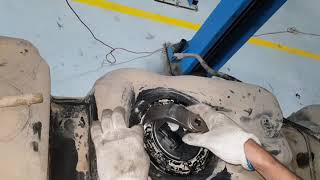
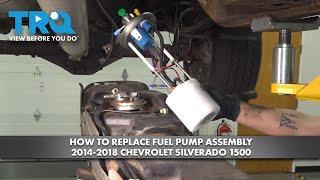
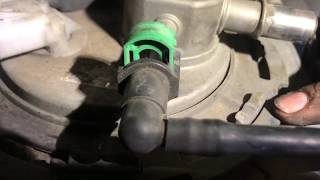
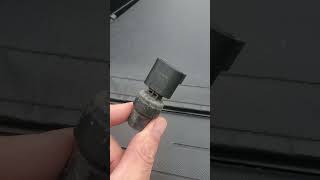
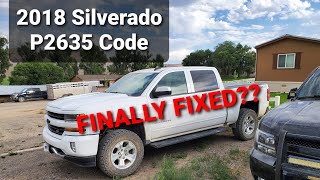
Used OEM Parts in Stock
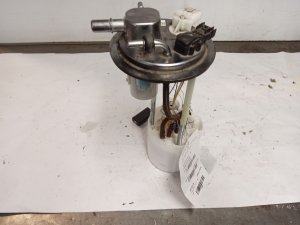
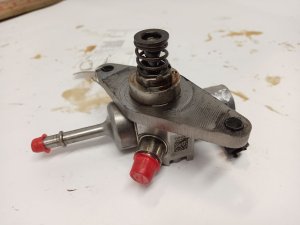
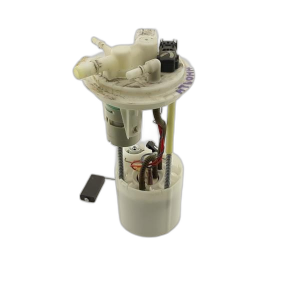
New Aftermarket Parts Available


The information in this article is provided for general reference and educational purposes only. Vehicle specifications, procedures, and part compatibility can vary by production date, trim level, and region. Always consult your vehicle's factory service manual and verify part numbers before purchasing or performing repairs. Safety-critical components such as airbags, seat belts, and braking systems should be installed by a qualified professional.
- GMC Sierra 1500:
- 🧭 Diagnostic Flowchart
- 🎬 Helpful Videos
- 🛍️ Shop This Part
- What's Unique About the 2014-2018 GMC Sierra 1500
- Symptoms You May Notice
- Most Likely Causes
- Rare But Worth Checking
- Diagnosis Steps
- Parts You'll Likely Need
- Related Codes That Often Appear With This One
- Technical Service Bulletins (TSBs) & Recalls
- Platform-Specific Known Issues
- Mechanic-Grade Diagnostic Values
- Scan Tool Commands That Help
- Wiring & Ground Locations
- Real Owner Repair Stories
- OEM Part Supersession History
- Model Year Variations Within This Range
- Other Known Issues on This Vehicle
- Used vs. New Parts: Buying Guide for This Vehicle
- Real Owner Stories
- 2019 GMC Sierra 1500 Limited 5.3L — 129000 miles
- 2015 GMC Sierra 1500
- 2014 Chevrolet Silverado 5.3L
- Related OBD-II Codes
- Frequently Asked Questions
- 🎟️ Get 5% Off