

P2635 on 2014-2021 GMC Sierra 1500: Fuel Pump & High Temp Stalling Explained
Code P2635 on a 2014-2021 Sierra 1500, especially when paired with engine stalling in hot weather, almost always points to a failing in-tank fuel pump module. This is a well-documented issue across GM's K2XX platform trucks and SUVs, confirmed by multiple TSBs. The typical fix is replacing the fuel pump assembly with an updated part, which can cost $900-$1,300 at a repair shop.
- P2635 on a 2014-2021 Sierra, especially with stalling in hot weather, is very likely a failing in-tank fuel pump.
- This is a known issue acknowledged by GM through multiple Technical Service Bulletins (TSBs).
- Always check for code P018B appearing alongside P2635, as they are commonly linked.
- While the fuel pump is the most common cause, a faulty fuel pressure sensor is a cheaper and simpler potential fix that should be diagnosed first.
- Due to the safety risk of unexpected stalling and the complexity of dropping the fuel tank, this repair is best left to a professional.
What's Unique About the 2014-2021 Gmc SIERRA 1500

These GMC Sierra 1500 trucks and their platform mates (Silverado, Tahoe, Yukon, Escalade) have a well-documented history of fuel pump issues directly linked to high ambient temperatures. Multiple GM Technical Service Bulletins (TSBs) have been issued because the original fuel pump modules can cause hesitation, surging, and stalling when the outside temperature rises above 100°F. The problem is so specific that GM identifies the cause as "vapor buildup in fuel feed line" and has released updated fuel pump module assemblies to correct the condition.
Diagnostic Flowchart

Tap your situation to follow the diagnostic path that matches what you're seeing on this vehicle.
Generation note: This issue is documented across both the K2XX (2014-2019) and T1XX (2019-2021) generations. The TSBs from GM cover models across this entire span, indicating a persistent component issue rather than a single-generation design flaw. TSB PIP5788B specifically addresses the P2635 code on 2021 models, showing the problem continued into the newer generation, though sometimes without driveability symptoms.
Symptoms You May Notice
- Engine stalling, especially in hot weather or during long drives.
- Engine hesitation or surging under acceleration.
- Difficulty starting the engine or it fails to restart after stalling (extended crank time).
- Check Engine Light (Malfunction Indicator Lamp) is illuminated.
- Reduced engine power and sluggish performance.
- Replacing only the fuel pressure sensor when the fuel pump itself is the true cause of the pressure drop, especially in high-heat conditions.
- Assuming the code is for a high-pressure fuel pump on direct-injection models, when the issue is almost always with the low-pressure in-tank pump (Fuel Pump 'A').
- Firing the 'parts cannon' by replacing the pump, sensor, and module without proper diagnosis, as the root cause can be elusive.
Most Likely Causes

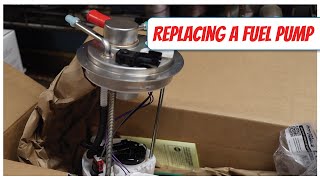
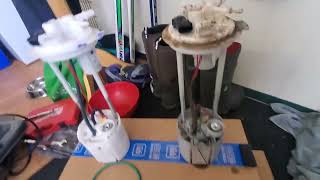
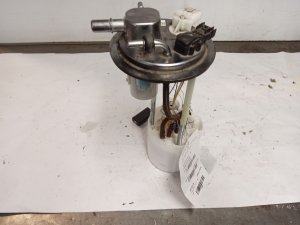
- Failing In-Tank Fuel Pump Module 🔴 High Probability → Shop Fuel Pump Multiple GM Technical Service Bulletins (including #17-NA-335, which supersedes #PIP5411F) identify a known weakness in the original fuel pump assembly that causes it to fail in high ambient temperatures due to vapor buildup in the fuel line.
How to confirm: A technician can monitor the fuel pressure using a scan tool. A sharp drop in pressure that coincides with the stalling or hesitation, especially when hot, confirms a fuel delivery problem. The commanded fuel pressure should remain steady around 30-45 PSI at idle; if it drops significantly under load, the pump is likely failing. Diagnosis can be difficult unless the high-temperature conditions can be replicated.
Typical fix: Replace the entire in-tank fuel pump module assembly with the updated part specified by GM in the Electronic Parts Catalog.
Est. part cost: $250-$900 - Faulty Fuel Pressure Sensor 🟡 Medium Probability → Shop Fuel Pressure Sensor TSB #PIP5286B specifically notes that a faulty fuel pressure sensor can trigger codes P2635 and P018B 🎬 Watch: Diagnostic and repair steps for P018B and P2635 codes. by sending incorrect readings to the computer, even if the fuel pressure is stable. The sensor reading can get stuck.
How to confirm: Compare the fuel pressure sensor reading on a scan tool with a reading from a manual fuel pressure gauge. If the readings do not match, the sensor is likely faulty. TSB #PIP5286B provides a specific diagnostic test: with the engine cold, use a GDS2 scan tool to command fuel system depressurization. The sensor value should drop to zero as the engine stalls. If it remains stuck at a higher reading (e.g., 30-40 PSI), the sensor is bad. Note that this test does not work correctly if the engine is warm.
Typical fix: Replace the fuel pressure sensor. Note that the O-ring seal may need to be ordered separately.
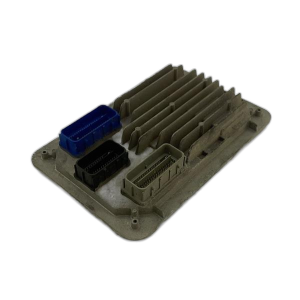
Est. part cost: $40-$100 - Fuel Pump Control Module (FPCM) Failure or Wiring Issue ⚪ Low Probability → Shop Fuel Pump Located on the frame rail near the spare tire, the FPCM and its wiring are exposed to the elements, which can lead to corrosion on the module or connector pins, causing a loss of power or signal to the fuel pump. A common failure point is a broken wire inside the harness where it runs through the square tube of the frame rail under the driver's side.
How to confirm: Visually inspect the FPCM and its connector for corrosion or damage. A technician can test for power (Red/Violet wire) and ground at the FPCM connector and check for a command signal from the ECM (Dark Green/White wire at Pin 13). If the command signal is missing, check for 12V at the corresponding ECM pin (Pin 50 in the black connector on similar GMT-900 trucks).
Typical fix: Replace the Fuel Pump Control Module and repair any corroded wiring or connectors. The module itself is typically held on by a few bolts. 🎬 Watch: How to replace and program the fuel pump control module.
Est. part cost: $80-$200
Rare But Worth Checking
- Active Grille Shutter Malfunction: In a well-documented case on a 2018 Silverado, a binding or failing active grille shutter assembly caused a cascade of network communication errors (including U-codes), which intermittently triggered the P2635 code. The issue was resolved by replacing the shutter assembly. This is a rare but possible cause if other network or Body Control Module (BCM) related codes are present.
Diagnosis Steps
- Connect an OBD-II scanner and verify P2635 is present. Note any other codes, especially P018B or P069E.
- Check for applicable Technical Service Bulletins (TSBs) for your vehicle's specific year and model, paying close attention to 17-NA-335 and PIP5286B.
- If possible, try to replicate the conditions described in the TSBs, such as driving in ambient temperatures over 100°F.
- With a scan tool connected, monitor the live data for 'Fuel Rail Pressure', 'Fuel Pump Command', and 'Fuel Pressure Sensor'. A healthy, running system should show the low-side fuel pressure fluctuating between 30 and 60 PSI.
- Observe the pressure readings during an engine stall or hesitation event. A sudden drop in actual pressure while commanded pressure remains high points to the fuel pump.
- If the pressure reading appears stuck or irrational (e.g., stuck at 48.7 PSI), perform the diagnostic test for the fuel pressure sensor as outlined in TSB #PIP5286B: with the engine cold, use a GDS2 scan tool to command the fuel system to depressurize. The reading should fall to zero. If it doesn't, the sensor is faulty.
- Inspect the Fuel Pump Control Module (FPCM) and its connector, typically on the driver's side frame rail near the spare tire, for corrosion or wiring damage. Pay special attention to the harness where it passes through the frame.
- If other seemingly unrelated codes are present (especially communication or BCM codes), investigate those systems, such as the Active Grille Shutters, as a potential source of the network fault.
- If all other components test good, the in-tank fuel pump module is the most likely cause and should be replaced with the updated GM part.
Parts You'll Likely Need
- Fuel Pump Module Assembly
(OEM #Varies by configuration (e.g., 13512934, 13512935, 13513407))— This is the primary fix recommended by GM in TSB 17-NA-335 to resolve the high-temperature stalling and hesitation issue that triggers P2635. TSB PIP5411F lists specific updated part numbers based on wheelbase and cab size.
Trusted brands: ACDelco (GM OE)
OEM price range: $400-$900
Aftermarket price range: $250-$500 - Fuel Pressure Sensor
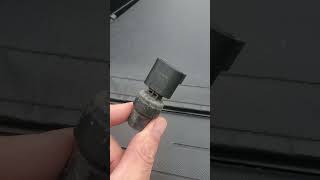
(OEM #13516496)— This can be the sole cause of the code if it's sending incorrect data to the ECU, as noted in TSB #PIP5286B. It's a much cheaper part to replace first if diagnostics point to it.
Trusted brands: ACDelco
OEM price range: $60-$100
Aftermarket price range: $40-$70 - Fuel Pump Control Module (FPCM) — A potential cause if code P069E is also present or if the module/wiring is visibly corroded. It controls the voltage to the in-tank pump.
Trusted brands: ACDelco, Dorman
OEM price range: $100-$200
Aftermarket price range: $80-$150
Related Codes That Often Appear With This One

- P018B — This code for 'Fuel Pressure Sensor 'B' Circuit Range/Performance' is frequently set with P2635. The ECU flags both the effect (low pump performance) and the potential cause (an out-of-range sensor reading) together. This is explicitly mentioned in TSBs #PIP5286B and #17-NA-335.
- P069E — This code indicates a fault with the Fuel Pump Control Module (FPCM) itself. If seen with P2635, it strongly suggests the issue lies with the FPCM or its wiring, rather than the pump.
Technical Service Bulletins (TSBs) & Recalls
- 17-NA-335: Supersedes PIP5411F. Addresses MIL illumination with P2635/P018B in high temperatures causing hesitation, surging, and stalling. Recommends replacing the fuel pump module with an updated version to fix vapor buildup.
- PIP5286B: Provides a specific diagnostic test for P2635 and P018B when a faulty fuel pressure sensor is suspected. Involves depressurizing the system when cold to see if the sensor reading drops to zero.
- PIP5411F: (Superseded by 17-NA-335) Advised replacing the in-tank fuel pump module to correct hesitation/stalling in high ambient temperatures with code P2635. Provided specific updated part numbers.
- PIP5788B: Notes P2635 on 2021 models with no driveability concerns, issue under investigation by GM engineering.
Platform-Specific Known Issues
- A well-documented issue, outlined in GM TSB #17-NA-335, describes a condition where the vehicle may hesitate or stall in ambient temperatures of 100°F or higher due to vapor buildup in the fuel line, necessitating an updated in-tank fuel pump module.
- An owner of a 2018 model reported stalling and hard restarting in high ambient temperatures in Arizona, which resulted in code P2635.
- For some 2021 models, TSB #PIP5788B notes that code P2635 may appear without any driveability concerns. The recommended procedure is to check fuel pressure data, and if pressure is not low when the code sets, the fix may be to replace a fuel feed pipe.
Mechanic-Grade Diagnostic Values
- Low-Side Fuel Pressure Sensor Reading (Engine On) — expected: Fluctuating reading between 30-60 PSI.. Failure: The reading is stuck at a specific value (e.g., 48.7 PSI) and does not change.
- Low-Side Fuel Pressure Sensor Test (Cold Engine, GDS2) — expected: Using the 'Fuel System Depressurize' command, the pressure reading should drop to 0 PSI as the engine stalls.. Failure: The engine stalls, but the pressure reading remains stuck at 30-40 PSI.
- FPCM Command Signal Voltage — expected: 12 Volts at the Dark Green/White wire (Pin 13) at the FPCM connector with the key in the run position.. Failure: No voltage present, indicating a wiring issue or a problem with the ECM.
- Wiring Harness Continuity — expected: Less than 0.2 Ω resistance on power and ground wires.. Failure: Resistance is higher than 0.2 Ω, indicating a poor connection or corrosion.
Hidden / Shadow Codes Worth Checking
- P1255: Fuel Pump Control Module Driver High Temperature. This is a manufacturer-specific code that could indicate the FPCM is overheating, which may be a precursor or related issue to a P2635. (see via May require a more advanced scan tool beyond a basic OBD-II reader.)
Scan Tool Commands That Help
- GDS2: Fuel System Depressurize — Used to test the fuel pressure sensor on a cold engine. A stuck sensor will not read zero after the system is depressurized, as outlined in TSB PIP5286B.
- GDS2 / Advanced Scan Tool: Fuel Pump Enable — With the engine off, this command activates the fuel pump to pressurize the system. It can be used to check if the pump runs and if the fuel pressure sensor reading changes accordingly, helping to isolate a bad pump or sensor.
- GDS2: Fuel Pump Driver Control Module Configuration — This function may be required after replacing the FPCM. On some 2019+ models, this function might be missing in GDS2 and requires a workaround by manually building the vehicle in the software.
Wiring & Ground Locations
- FPCM Connector — On the Fuel Pump Control Module, located on the driver's side frame rail, often near the spare tire.. This is the central point for testing power, ground, and command signals for the fuel pump system. Pin 13 (Dark Green/White) is the command signal from the ECM, and the Red/Violet wire is battery power.
- FPCM Ground — Typically on the body frame mount near the driver's door.. A poor ground connection here can cause a variety of issues with the FPCM, leading to low fuel pump performance.
- Harness Chafe Point — The wiring harness running inside the square tube of the frame, directly under the underhood fuse panel on the driver's side.. This is a known location for wires (specifically the FPCM power wire) to break or chafe, causing a voltage drop and intermittent power loss to the module.
- ECM Connector (Pin 50) — On the Engine Control Module. On similar GMT-900 trucks, the Dark Green/White wire originates at Pin 50 of the black ECM connector.. If there is no command signal at the FPCM, checking for 12V at the source (the ECM) is the next logical step to determine if the fault is the ECM or the wiring in between.
Real Owner Repair Stories
- YouTube channel 'All Things Mechanical' (2018 Chevrolet Silverado) — Persistent P2635 code, extended crank times, sluggishness on the highway, loss of power under load.
❌ Tried (didn't work) Initial dealer diagnosis led to replacing the Active Grille Shutter assembly, but the P2635 code returned.
✅ What actually fixed it After multiple dealer visits, the in-tank fuel pump module was finally replaced. The combination of the new fuel pump and the previously replaced grille shutter assembly resolved the code and symptoms permanently. - YouTube channel 'mechanicRHP' (2017 Chevrolet Silverado 4.3L V6) — Codes P2635 and P018B, scan tool showed fuel pressure sensor stuck at 48.7 PSI.
❌ Tried (didn't work) The owner noted that many videos suggest replacing the fuel pump first.
✅ What actually fixed it Replacing only the low-pressure fuel pressure sensor located on the frame rail near the ABS module. After replacement, the scan tool showed the pressure reading fluctuating correctly between 30 and 60 PSI.
OEM Part Supersession History
Varies (Old design fuel pump)→13512934, 13513407, and others depending on configuration.— The original design was prone to causing vapor buildup in the fuel feed line in high ambient temperatures, leading to stalling. The new design incorporates a one-way breather valve to mitigate this.
Heads up: TSB 17-NA-335 advises technicians to use the Electronic Parts Catalog to find the correct updated part number for the specific vehicle being serviced.
Model Year Variations Within This Range
- 2014-2018 (Primarily): These years are most commonly affected by the high-temperature stalling issue caused by vapor lock, which is resolved by replacing the in-tank fuel pump module with an updated design per TSB 17-NA-335.
- 2021: TSB PIP5788B addresses P2635 on 2021 models, where the code may set *without* any noticeable driveability issues. If diagnostics confirm fuel pressure was not low when the DTC set, the recommended fix is to replace the fuel feed pipe between the high-pressure pump and the chassis line, not the in-tank pump.
Helpful Videos

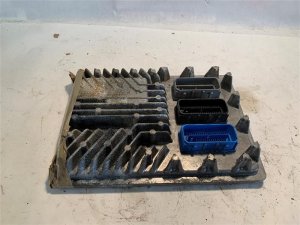
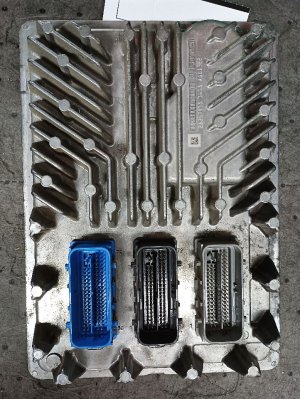
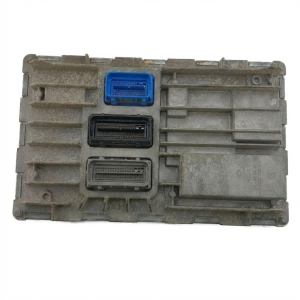
Used OEM Parts in Stock
New Aftermarket Parts Available

The information in this article is provided for general reference and educational purposes only. Vehicle specifications, procedures, and part compatibility can vary by production date, trim level, and region. Always consult your vehicle's factory service manual and verify part numbers before purchasing or performing repairs. Safety-critical components such as airbags, seat belts, and braking systems should be installed by a qualified professional.
- Gmc SIERRA 1500:
- 🧭 Diagnostic Flowchart
- 🎬 Helpful Videos
- 🛍️ Shop This Part
- What's Unique About the 2014-2021 Gmc SIERRA 1500
- Symptoms You May Notice
- Most Likely Causes
- Rare But Worth Checking
- Diagnosis Steps
- Parts You'll Likely Need
- Related Codes That Often Appear With This One
- Technical Service Bulletins (TSBs) & Recalls
- Platform-Specific Known Issues
- Mechanic-Grade Diagnostic Values
- Hidden / Shadow Codes Worth Checking
- Scan Tool Commands That Help
- Wiring & Ground Locations
- Real Owner Repair Stories
- OEM Part Supersession History
- Model Year Variations Within This Range
- 🎟️ Get 5% Off