

P2635 on 2014-2018 GMC Sierra 3500: Fuel Pump Performance, Stalling, and Fixes
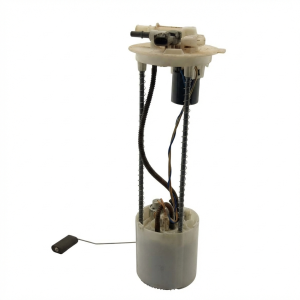
On a 2014-2018 Sierra, P2635 almost always points to a failing in-tank fuel pump, especially if the truck hesitates or stalls in hot weather. This is a known issue addressed by GM in TSB #17-NA-335. The fix is typically a new, updated fuel pump module. While less common, a faulty fuel pressure sensor can also cause this code and is a cheaper part to check and replace first. For Duramax models with dual tanks, a collapsed rear tank due to a clogged vent is another specific possibility.
- P2635 on a 2014-2018 Sierra strongly suggests a problem with fuel delivery, not a sensor in another system.
- If your truck hesitates or stalls when the weather is hot, the in-tank fuel pump is the most probable cause, per GM's own service bulletins.
- Do not drive the vehicle, as the engine could stall at any time, posing a serious safety hazard.
- Before committing to a fuel pump replacement, it is wise to rule out the less expensive fuel pressure sensor by comparing its readings to a mechanical gauge.
- If you have a 6.6L diesel with dual tanks, a visual inspection of the rear tank for collapse is a necessary diagnostic step.
What's Unique About the 2014-2018 Gmc SIERRA 3500
The K2XX platform, which includes this generation of Sierra, has a well-documented issue with the original fuel pump modules. They are known to falter in high ambient temperatures, causing vapor buildup in the fuel feed line that leads to a loss of fuel pressure, stalling, and the P2635 code. The updated fuel pump design features an improved one-way breather valve to mitigate this vapor lock issue. Additionally, models equipped with the 6.6L Duramax engine and dual fuel tanks (RPO N2N) have a unique potential cause where dirt and debris can clog the rear tank's vent. This creates a vacuum as fuel is used, causing the tank to physically collapse, which can damage the pump and restrict fuel flow, triggering this code as per TSB #19-NA-277.
Diagnostic Flowchart
Tap your situation to follow the diagnostic path that matches what you're seeing on this vehicle.
Symptoms You May Notice
- Check Engine Light is on
- Engine hesitation or surging, especially during acceleration or on the highway.
- Engine stalls, particularly in hot weather or after a hot soak (engine is shut off for a short period and restarted while hot).
- Reduced engine power and performance.
- Extended cranking time before the engine starts.
- Hard start or no-start condition.
- On dual-tank models, the fuel gauge may read empty even if the tanks have fuel, and the transfer pump may be disabled.
- Replacing the fuel filter first. While a clogged filter can cause low pressure, the symptoms on this platform, especially the link to high temperatures, point more directly to the pump module itself.
- Replacing the Fuel Pump Control Module (FPCM) without proper diagnosis. TSBs and diagnostic procedures point towards the pump or sensor as the primary culprits, with the FPCM being a less frequent cause.
Most Likely Causes
- Failing In-Tank Fuel Pump Module 🔴 High Probability → Shop Fuel Pump As documented in TSB #17-NA-335, the original fuel pump modules are susceptible to causing vapor buildup in the fuel line in high temperatures, leading to insufficient flow. The updated pump has a revised breather design to prevent this.
How to confirm: Monitor 'Low Fuel System Pressure' vs. 'Commanded Low Fuel System Pressure' on a scan tool. A significant drop in actual pressure that coincides with hesitation or stalling, especially in hot weather, points to a failing pump. The pressure will fail to meet the commanded value, which should be at or above 345 kPa (50 psi) during a key-on, engine-off pump command.
Typical fix: Replace the entire in-tank fuel pump module assembly with the updated part specified by GM. This requires lowering the fuel tank for access. 🎬 See this walkthrough on how to replace the fuel pump. GM explicitly states in TSB #17-NA-335 not to replace the pump if the updated design is already installed and meeting pressure specs.
Est. part cost: $250-$900 - Faulty Fuel Pressure Sensor 🟡 Medium Probability → Shop Fuel Pressure Sensor TSB #PIP5286B specifically notes that a faulty fuel pressure sensor can send incorrect low-pressure readings to the computer, triggering codes P2635 and P018B even if the fuel pump is working correctly. Owners on forums have reported replacing this sensor fixed the issue after a pump replacement did not.
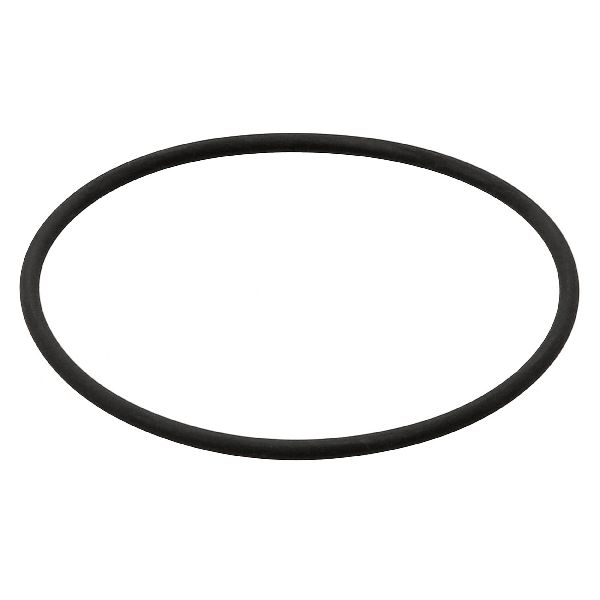
How to confirm: Follow the test in TSB #PIP5286B: With a COLD engine, use a scan tool to command 'Fuel System Depressurize' at idle. The pressure reading should drop to zero and the engine will stall. If the sensor reading gets stuck (e.g., at 30-40 PSI) after the engine stalls, the sensor is faulty. Note that the O-ring for the sensor is often a separate part number and must be replaced as well.
Typical fix: Replace the fuel pressure sensor. On many models, it is located on the frame rail under the driver's side of the vehicle.
Est. part cost: $40-$150 - Clogged Rear Fuel Tank Vent (6.6L Diesel with Dual Tanks) ⚪ Low Probability → Shop Fuel Tank TSB #19-NA-277 describes a scenario on trucks with the 6.6L engine and dual fuel tanks (RPO N2N) where dirt and debris can clog the rear tank's vent. This creates a vacuum as fuel is used, causing the tank to physically collapse and restricting fuel flow.
How to confirm: Visually inspect the rear fuel tank for signs of collapse or deformation (it may look sucked in). Check the vent line on top of the tank for blockages.
Typical fix: Replace the collapsed fuel tank and the fuel pump module. A newly designed vent hose (a 74cm/29in piece of fuel line) must be installed and routed down the fuel feed line to prevent future blockages, as per the TSB instructions.
Est. part cost: $1000-$2000 - Faulty Fuel Pump Control Module (FPCM) ⚪ Low Probability → Shop Fuel Pump While the module itself can fail, it is often misdiagnosed. The FPCM is located on the frame crossmember, often near the spare tire.
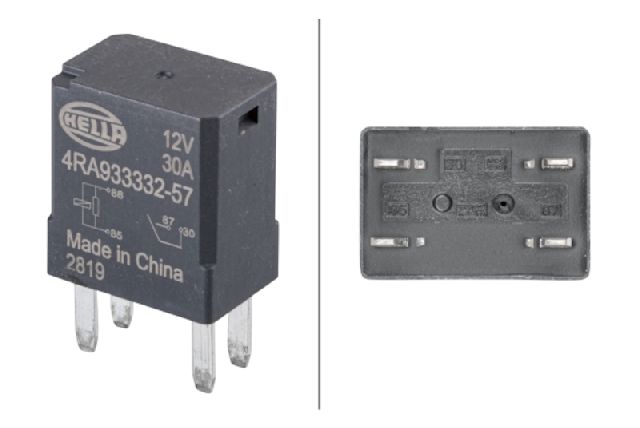
How to confirm: Using a multimeter and wiring diagram, verify the FPCM is receiving proper power, ground, and a command signal from the ECM. Check the fuel pump fuse (e.g., F18 in the underhood block on some models) and relay (e.g., Relay 60/70) before condemning the module. If inputs are correct but the output to the pump is not, the module is likely faulty.
Typical fix: Replace the Fuel Pump Control Module. It may require programming to the vehicle. An example part number for some 2014 models is 23337305.
Est. part cost: $80-$250
Rare But Worth Checking
- Wiring Harness Damage: A damaged wire or corroded connector for the FPCM or the fuel pump can mimic component failure. Always inspect the wiring harness running along the frame rail to the fuel tank and FPCM before replacing expensive parts. The FPCM connector is particularly exposed to the elements. A known chafe point exists where the harness runs inside the square tube of the frame under the driver's side fuse panel.
- Failed Active Grille Shutters: In a documented owner experience, a failing active grille shutter system caused a cascade of seemingly unrelated codes, including P2635. The dealership repair of the shutter system resolved the fuel pump code, suggesting a complex interaction within the vehicle's control modules.
Diagnosis Steps
- Connect a professional scan tool to read codes from both the ECM and the FPCM. Note if P2635 is accompanied by P018B or P069E. 🎬 Watch: Diagnostic steps for P069E and P2635 codes.
- Record the freeze frame data to see the conditions (engine temperature, ambient temperature, vehicle speed) when the code was set. Note if ambient temp was high.
- Using the scan tool's live data function, monitor 'Commanded Fuel Pressure' vs. 'Actual Fuel Pressure' (often labeled 'Low Fuel System Pressure').
- If P018B is also present, perform the sensor test from TSB #PIP5286B on a COLD engine. Use the scan tool to command 'Fuel System Depressurize'. If the pressure reading does not fall to zero as the engine stalls, the fuel pressure sensor is bad and must be replaced.
- If the sensor tests good (or if P018B is not present), try to replicate the fault conditions (e.g., driving in hot weather). Observe if the actual pressure drops significantly below the commanded pressure during a hesitation or stall event.
- If the truck is a 6.6L diesel with dual tanks, perform a visual inspection of the rear fuel tank for any signs of collapse or deformation.
- If the pressure is genuinely low, inspect the wiring and connectors for the Fuel Pump Control Module (FPCM) and the fuel pump for any damage or corrosion. The FPCM is typically on a frame crossmember near the spare tire.
- Check the fuel pump fuse and relay in the under-hood fuse box. Note that fuse/relay numbers differ by model year.
- If wiring, fuses, and the sensor are intact, the evidence strongly points to a failing in-tank fuel pump module, which is the most common cause.
Parts You'll Likely Need
- Fuel Pump Module Assembly
(OEM #Varies by model/tank size, refer to EPC. Updated design specified in TSB #17-NA-335.)— This is the most common failure part for P2635 on this platform, especially when stalling occurs in hot weather, as documented in TSB #17-NA-335. - Fuel Pressure Sensor — The second most likely cause, especially when P018B is also present. A failed sensor can mimic a failed pump, making it a critical diagnostic step.
- Fuel Pressure Sensor O-Ring — This seal is not included with the new sensor and must be ordered separately to prevent leaks.
Related Codes That Often Appear With This One
- P018B — This code for 'Fuel Pressure Sensor 'B' Circuit Range/Performance' is frequently set alongside P2635, as both are related to the fuel delivery system sensing a problem. TSBs #17-NA-335 and #PIP5286B mention them appearing together as a pair, often pointing to either the pump or the sensor.
- P069E — This code means 'Fuel Pump Control Module Requested MIL Illumination'. It's a direct indicator that the FPCM has detected a fault within its own control circuit or with the pump it commands, such as the condition causing P2635.
- P2636 — This code for 'Fuel Pump 'B' Low Flow / Performance' may appear on models with dual fuel tanks, indicating a problem with the secondary pump, often related to the same tank-collapse issue described in TSB #19-NA-277.
- U0074 — Mentioned in TSB #PIP5427B, this code indicates a communication bus issue. It could suggest an underlying electrical or network problem rather than a primary fuel system component failure.
Technical Service Bulletins (TSBs) & Recalls
- 17-NA-335: Malfunction Indicator Lamp Illuminated (MIL) - DTC P2635 and/or P018B Set In High Ambient Temperatures With Hesitation, Surging and Stalling.
- PIP5286B: Addresses vehicles setting both P2635 and P018B, pointing towards a potential fuel pressure sensor issue.
- 19-NA-277: Poor Fuel Transfer and/or Rear Fuel Tank Collapsed, DTCs P2635, P2636 set on 6.6L engine models with dual tanks.
- PIP5427B: Mentions P2635 in conjunction with communication codes U0074 and U18A2, suggesting a possible electrical fault.
Platform-Specific Known Issues
- High-Temperature Stalling: TSB #17-NA-335 directly addresses an issue where high ambient temperatures (above 100°F/37.7°C) cause vapor buildup in the fuel line, leading to stalling and codes P2635/P018B. The fix is an updated fuel pump module.
- Dual-Tank Diesel Rear Tank Collapse: TSB #19-NA-277 details how a clogged rear tank vent on 6.6L Duramax models with dual tanks can cause the rear tank to collapse under vacuum, damaging the pump and triggering P2635 and P2636.
Mechanic-Grade Diagnostic Values
- Low-Side Fuel Pressure Sensor Test (Cold Engine) — expected: Using the GDS2 'Fuel System Depressurize' command at idle, the pressure reading should drop to 0 PSI as the engine stalls.. Failure: The engine stalls, but the pressure reading on the scan tool remains stuck at 30-40 PSI.
- FPCM Command Signal Voltage — expected: 12 Volts at the Dark Green/White wire (Pin 13) at the FPCM connector with the key in the 'Run' position.. Failure: No voltage or significantly lower voltage, indicating a wiring issue between the ECM and FPCM or a faulty ECM.
- Fuel Pump Circuit Wiring Continuity — expected: Less than 0.2 Ω resistance on power and ground wires.. Failure: Resistance is higher than 0.2 Ω, indicating a poor connection, corrosion, or a break in the wire.
- Fuel Pressure (Key On, Engine Off) — expected: 345-690 kPa (50-100 psi).. Failure: Pressure below 345 kPa (50 psi) indicates a weak pump, clogged filter, or leak.
Hidden / Shadow Codes Worth Checking
- P1255: Fuel Pump Control Module Driver High Temperature. This manufacturer-specific code can indicate the FPCM is overheating, which may be a related issue or a precursor to the P2635 fault. (see via Requires a professional-grade scan tool (like GDS2) capable of reading manufacturer-specific DTCs from the FPCM.)
Scan Tool Commands That Help
- GDS2 / Tech2: Fuel System Depressurize — This is the primary method described in TSB #PIP5286B to test the low-side fuel pressure sensor on a cold engine. It confirms if the sensor is stuck and not reading down to zero.
- GDS2 / Tech2: Fuel Pump Enable / On-Off Command — With the engine off, this command manually activates the fuel pump. It is used to verify the pump runs and to check for voltage and current draw at the pump, helping to isolate a failed pump from a control-side issue.
- GDS2 / Tech2: Fuel Pump Driver Control Module Configuration — This service function may be required after replacing the Fuel Pump Control Module (FPCM) to program the new module to the vehicle's specific configuration.
Wiring & Ground Locations
- FPCM Connector — On the Fuel Pump Control Module, which is typically mounted to the driver's side frame rail, often above or near the spare tire.. This is the central connection point for all diagnostic voltage and signal tests for the fuel pump circuit. It is exposed to the elements and prone to corrosion.
- FPCM Command Wire (Pin 13) — Pin 13 (Dark Green/White wire) on the FPCM connector.. This wire carries the command signal from the ECM to the FPCM. A lack of 12V on this wire with the key on points to a wiring break or an ECM fault, not a faulty FPCM or pump.
- ECM Connector (Pin 50) — On similar GM trucks, the Dark Green/White command wire originates at Pin 50 of the black ECM connector.. If there is no command signal at the FPCM (Pin 13), checking for 12V at the source (ECM Pin 50) is the next step to determine if the fault is the ECM itself or the wiring in between.
Real Owner Repair Stories
- YouTube channel 'mechanicRHP' (2017 Chevrolet Silverado 4.3L V6) — Codes P2635 and P018B, scan tool showed fuel pressure sensor stuck at 48.7 PSI.
❌ Tried (didn't work) Owner noted that many online sources incorrectly suggest replacing the fuel pump first.
✅ What actually fixed it Replacing only the low-pressure fuel pressure sensor located on the frame rail. After replacement, the scan tool showed the pressure reading fluctuating correctly. - Owner forum report (2018 GM Truck) — Stalling and hard restarting in high ambient temperatures in Arizona, code P2635.
❌ Tried (didn't work) Initial dealer diagnosis led to replacing the Active Grille Shutter assembly, but the P2635 code and stalling returned.
✅ What actually fixed it The in-tank fuel pump module was replaced on a subsequent visit. The combination of the new fuel pump and the previously replaced grille shutter assembly resolved all codes and symptoms permanently.
OEM Part Supersession History
Varies (Old design fuel pump)→13512934, 13513407, others per EPC— The original pump design allowed vapor buildup in the fuel feed line in high ambient temperatures. The new design incorporates an improved one-way breather valve to mitigate this vapor lock issue.
Heads up: TSB 17-NA-335 advises technicians to use the Electronic Parts Catalog (EPC) to find the correct updated part number for the specific vehicle configuration (e.g., box length, cab size). Part number 13513407 is for Short Box Crew Cab Pickups, while 13512934 is for Short Wheel Base Utilities.
Model Year Variations Within This Range
- 2014-2018: The under-hood fuse box relays for the fuel pump circuit differ. For 2014-2017 models, check relays 60 and 70. For 2018 models, check relays 59 and 66. Fuses F18 and F21 are relevant for most of this range.
Helpful Videos
Used OEM Parts in Stock
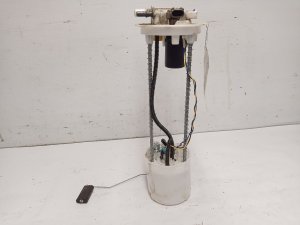
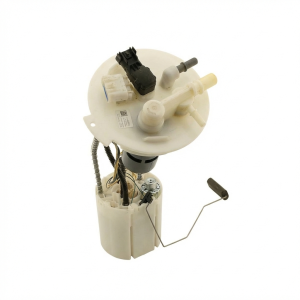
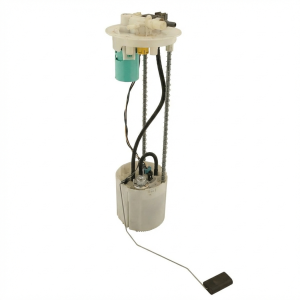
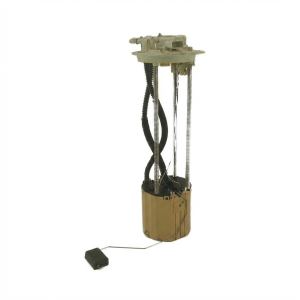
New Aftermarket Parts Available




The information in this article is provided for general reference and educational purposes only. Vehicle specifications, procedures, and part compatibility can vary by production date, trim level, and region. Always consult your vehicle's factory service manual and verify part numbers before purchasing or performing repairs. Safety-critical components such as airbags, seat belts, and braking systems should be installed by a qualified professional.
- Gmc SIERRA 3500:
- 🧭 Diagnostic Flowchart
- 🎬 Helpful Videos
- 🛍️ Shop This Part
- What's Unique About the 2014-2018 Gmc SIERRA 3500
- Symptoms You May Notice
- Most Likely Causes
- Rare But Worth Checking
- Diagnosis Steps
- Parts You'll Likely Need
- Related Codes That Often Appear With This One
- Technical Service Bulletins (TSBs) & Recalls
- Platform-Specific Known Issues
- Mechanic-Grade Diagnostic Values
- Hidden / Shadow Codes Worth Checking
- Scan Tool Commands That Help
- Wiring & Ground Locations
- Real Owner Repair Stories
- OEM Part Supersession History
- Model Year Variations Within This Range
- 🎟️ Get 5% Off