

P2635 on 2010-2014 GMC Sierra Denali: Fuel Pump Performance Causes and Fixes
This code indicates the fuel pump isn't delivering the flow commanded by the computer. On 2010-2014 Sierra models, this is frequently caused by a failing Fuel Pump Control Module (FPCM) located on the frame rail above the spare tire, or the in-tank fuel pump itself, especially in extreme hot or cold weather. Expect to pay $80-$200 for a new FPCM and $250-$450 for a quality fuel pump assembly.
- P2635 on a 2010-2014 Sierra Denali means the fuel pump's performance doesn't match what the computer expects.
- The most common causes are a faulty Fuel Pump Control Module (FPCM) or a weak in-tank fuel pump.
- This issue is often triggered by extreme temperatures (hot or cold), as documented in multiple GM service bulletins.
- Diagnosis should start with checking for other codes and inspecting the FPCM and its wiring for corrosion before replacing parts.
- If the fuel pump is replaced, ensure it is the updated part number specified by GM to prevent recurring issues in hot weather.
What's Unique About the 2010-2014 Gmc SIERRA DENALI
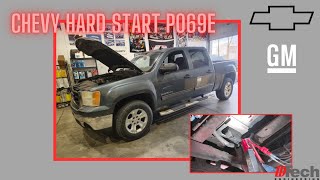
The GMT900 (2010-2013) and K2XX (2014) platforms are notoriously sensitive to fuel delivery issues at temperature extremes. Multiple GM Technical Service Bulletins (TSBs) confirm that this code can be triggered by high ambient heat (over 100°F) causing vapor buildup in the fuel feed line, mimicking vapor lock. Conversely, extreme cold (below 20°F) can also cause starting issues and trigger the code. This points 🎬 See this diagnostic walkthrough for hard starting and P069E codes. to a systemic weakness in the fuel pump and control module design of that era, rather than just random component failure.
Diagnostic Flowchart
Tap your situation to follow the diagnostic path that matches what you're seeing on this vehicle.
Generation note: This range covers the end of the second generation (GMT900, 2010-2013) and the first year of the third generation (K2XX, 2014) Sierra. The fundamental fuel system design, including the use of a Fuel Pump Control Module (FPCM), is similar. The cited TSBs cover vehicles from both generations, indicating the problem and fixes are common across this year span.
Symptoms You May Notice
- Hesitation or surging during acceleration.
- Engine stalling, especially in very hot weather (over 100°F).
- Difficulty starting or failure to start, particularly in very cold weather (below 20°F).
- Reduced engine power or 'limp mode'.
- Illuminated Check Engine Light.
- Whining noise from the in-tank fuel pump, especially in cold weather.
- Replacing only the fuel pressure sensor when the underlying cause is the fuel pump or FPCM.
- Replacing the fuel pump when the FPCM is the actual point of failure due to corrosion.
- Replacing the FPCM without checking for power, ground, and signal integrity at the connector first.
Most Likely Causes
- Failing Fuel Pump Control Module (FPCM) 🔴 High Probability → Shop Fuel Pump The FPCM is mounted to the frame rail, often above the spare tire, exposing it to road salt, water, and vibration. Corrosion on the module or its connector is a very common failure, leading to intermittent or total loss of communication with the fuel pump.
How to confirm: Visually inspect the FPCM and its connector for green/white corrosion or broken wires. Use a multimeter to confirm power (Red/White wire) and ground (Black wire) at the connector with the key on. A capable scan tool can monitor FPCM commands vs. actual fuel pressure. A common owner experience is that replacing the FPCM resolves the issue after a fuel pressure sensor replacement did not.
Typical fix: Replace the Fuel Pump Control Module. The module must be programmed to the vehicle. Some aftermarket suppliers sell pre-programmed modules. Ensure the connector is clean and apply dielectric grease before reconnecting.
Est. part cost: $80-$200 - Weak or Failing In-Tank Fuel Pump 🔴 High Probability → Shop Fuel Pump As documented in TSB #17-NA-335, the original fuel pump module is susceptible to creating a vapor buildup in high heat, leading to low flow and stalling. The updated OEM pump includes a redesigned breather to mitigate this. General wear also reduces its ability to meet pressure demands, especially on higher mileage vehicles.
How to confirm: Perform a fuel pressure and volume test. Listen for a loud whining noise from the fuel tank. Symptoms that appear exclusively in very hot weather strongly point to the heat-related vapor issue described in the TSB, which requires pump replacement.
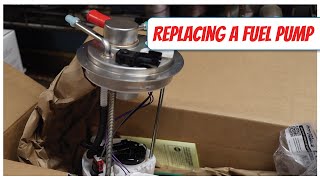
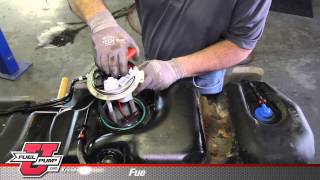
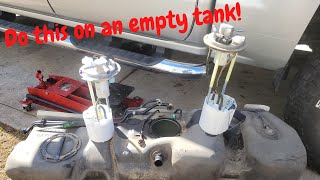
Typical fix: Replace the in-tank fuel pump module assembly. This is a labor-intensive job that requires either dropping the fuel tank or lifting the truck bed. It is highly recommended to use the updated OEM part as specified in TSBs to permanently resolve the heat-soak issue.
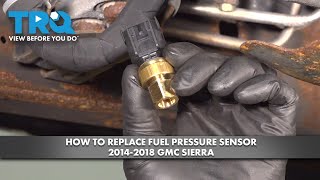
Est. part cost: $250-$450 - Faulty Fuel Pressure Sensor 🟡 Medium Probability → Shop Fuel Pressure Sensor This sensor, located on the fuel line under the driver's side of the vehicle, reports low-side fuel pressure to the FPCM. It can fail and provide inaccurate readings, causing the P2635 code, often along with P018B.
How to confirm: As per TSB PIP5286B, with a cold engine, use a scan tool to command the fuel system to depressurize. The sensor reading should drop to or near zero PSI. If the reading remains stuck at a higher value (e.g., 48 PSI), the sensor is faulty. This is a critical diagnostic step before replacing the more expensive fuel pump.
Typical fix: Replace the low-side fuel pressure sensor on the fuel line. The O-ring seal may need to be ordered separately.
Est. part cost: $40-$80 - Clogged Fuel Filter ⚪ Low Probability → Shop Fuel Filter The fuel filter is integrated into the fuel pump module assembly on these trucks and is not serviced separately. While not a primary failure point on its own, severe contamination in the fuel tank can clog it, restricting flow.
How to confirm: Diagnosis is difficult without removing the pump. A fuel pressure test showing low pressure would be a key indicator. This is typically discovered during a fuel pump replacement.
Typical fix: Replace the entire fuel pump module assembly.
Est. part cost: $250-$450
Rare But Worth Checking
- Damaged Wiring or Connectors: The wiring harness to the FPCM, located under the truck on the frame rail near the spare tire, is susceptible to corrosion and physical damage from road debris. Always inspect the connector and nearby wiring for breaks or green/white corrosion before replacing expensive components.
- Collapsed Fuel Tank / Plugged Vent: → Shop Fuel Tank As per TSB 19-NA-277, on some GM trucks, dirt and debris can plug the fuel tank vent. This can create a vacuum inside the tank as fuel is consumed, potentially causing the tank to partially collapse and damage the fuel pump module, leading to P2635. This is a rare but documented cause.
Diagnosis Steps
- Check for other stored DTCs, especially P018B and P069E, to get a complete picture of the fault.
- Using a scan tool, observe live data for commanded vs. actual low-side fuel pressure. Note any significant discrepancies or if the pressure reading is stuck.
- Visually inspect the Fuel Pump Control Module (FPCM) and its electrical connector for corrosion, water intrusion, or physical damage. The FPCM is located on the frame rail above the spare tire.
- If symptoms are temperature-dependent, try to replicate the conditions described in the TSBs (e.g., stalling in heat, no-start in cold).
- With a cold engine, perform a fuel system depressurization test as described in TSB PIP5286B to check if the fuel pressure sensor reading drops to zero. If it doesn't, the sensor is faulty.
- If the sensor tests good, check for proper voltage and ground at the FPCM connector using a multimeter.
- If wiring and sensor are confirmed good, the fault is most likely with either the FPCM or the in-tank fuel pump. Heat-related symptoms point towards the pump, while corrosion or other codes like P069E point towards the FPCM.
Parts You'll Likely Need
- Fuel Pump Control Module (FPCM)
(OEM #23487544 (supersedes 20877116))— This module is a very common failure point for causing P2635 due to its exposed location. It controls the voltage to the fuel pump and can fail from corrosion or electronic faults.
Trusted brands: ACDelco (GM Genuine), Dorman OE Solutions (p/n 601-044)
OEM price range: $120-$200
Aftermarket price range: $80-$150 - Fuel Pump and Sender Assembly
(OEM #MU2101 (This is a common aftermarket p/n, OEM p/n varies by configuration, see TSB 18))— The in-tank pump is the second most likely cause, especially when symptoms occur in high heat. TSB 17-NA-335 recommends replacing it with an updated OEM part to resolve heat-related vapor buildup.
Trusted brands: ACDelco, Delphi, Spectra Premium
OEM price range: $350-$450
Aftermarket price range: $250-$350 - Fuel Pressure Sensor (Low Pressure)
(OEM #13507129)— A common and relatively inexpensive part to fail, which can mimic a bad fuel pump. It's a prudent part to test or replace before tackling the fuel pump itself.
Related Codes That Often Appear With This One
- P018B — This code for 'Fuel Pressure Sensor 'B' Circuit Range/Performance' is frequently set alongside P2635, as noted in TSBs #17-NA-335 and #PIP5507B. They both relate to the fuel delivery system not meeting expected values, especially under thermal stress. The combination of these two codes strongly points to either the fuel pump (in heat) or the fuel pressure sensor itself.
- P0087 — 'Fuel Rail/System Pressure - Too Low'. This code can appear with P2635 in very cold conditions, as mentioned in TSB #18-NA-103, indicating a general failure to build or maintain adequate fuel pressure.
- P069E — 'Fuel Pump Control Module Requested MIL Illumination'. This is a direct indicator that the FPCM has detected a fault within its own control circuit or with the pump it commands. It often accompanies P2635 and points strongly toward the FPCM or pump as the root cause.
Technical Service Bulletins (TSBs) & Recalls
- 17-NA-335: Addresses MIL illumination with P2635 and/or P018B in high ambient temperatures, causing hesitation, surging, and stalling. Recommends replacing the fuel pump module with an updated version to prevent vapor buildup.
- PIP5507B: Preliminary information bulletin describing P2635 and/or P018B setting in temperatures over 100°F. This was a precursor to TSB 17-NA-335.
- 18-NA-103: Discusses a whining noise from the in-tank fuel pump and driveability concerns (no start, stall, loss of power) with codes P0087, P018B, or P2635 in temperatures below 20°F, primarily related to diesel fuel gelling but highlights cold-weather vulnerability.
- PIP5286B: Outlines a specific diagnostic procedure for the low-side fuel pressure sensor when P2635 and P018B are present together, involving a cold engine depressurization test.
- 19-NA-277: Details a rare condition where a plugged fuel tank vent can cause the tank to collapse, damaging the pump and setting codes like P2635.
Platform-Specific Known Issues
- Per TSB #17-NA-335 and #PIP5507B, these trucks can set P2635 in ambient temperatures over 100°F, causing hesitation and stalling due to a vapor buildup in the fuel line that the original pump design can't overcome. The fix is an updated pump module.
- Per TSB #18-NA-103, these trucks can also set P2635 in ambient temperatures below 20°F, leading to no-start or start-and-stall conditions. While the TSB focuses on diesel fuel gelling, the symptoms are analogous for gasoline engines struggling to build pressure in extreme cold.
- Corrosion on the FPCM connector is a widespread issue due to its location under the vehicle, which can cause intermittent connection and performance problems that mimic a failing pump or module.
Mechanic-Grade Diagnostic Values
- FPCM Power Supply Voltage — expected: 12.0–12.6 V at the Red/White wire (Pin 32) on the FPCM connector with ignition on.. Failure: Voltage below 11.5 V suggests a wiring or supply issue upstream of the module.
- FPCM Command Signal from ECM — expected: 12 volts present at the Dark Green/White wire (Pin 13) at the FPCM connector. This may be constant with key-on, present only while cranking, or present for 3-6 seconds after key-on.. Failure: No voltage at FPCM Pin 13. If no voltage is found, check for 12V at the source: ECM black connector, Pin 50. If voltage is present at the ECM but not the FPCM, there is a break in the wire.
- Low-Side Fuel Pressure (Scan Tool) — expected: Should remain steady around 30-45 PSI at idle.. Failure: Significant pressure drops under load or during a hesitation event. A sensor value that is stuck (e.g., 48.7 PSI) and does not fluctuate slightly is also an indicator of a bad sensor.
Scan Tool Commands That Help
- GDS2: Fuel System Depressurization — As per TSB PIP5286B, this command is used with a cold engine to test the fuel pressure sensor. When commanded, the pressure reading should drop to zero as the engine stalls. If it remains high, the sensor is faulty.
- GDS2: Fuel Pump Control Module Configuration — This function is required after replacing the Fuel Pump Control Module to program it to the vehicle. Note that early GDS2 software may have been missing this function, requiring a software update to the tool itself.
- GDS2 / Tech2: Fuel Pump On/Off or Duty Cycle Command — Used to manually command the fuel pump on to verify its operation and to check for voltage/current draw at the pump without the engine running. This helps isolate a failed pump from a control-side issue.
Wiring & Ground Locations
- FPCM Connector — On the Fuel Pump Control Module, located on the driver's side frame rail, above the spare tire.. This is the central connection point for all FPCM diagnostics. Key pins are: Pin 1 (Black) - Ground, Pin 13 (Dark Green/White) - Command Signal from ECM, Pin 32 (Red/White) - Battery Power In, Pin 47 (Gray) - 12V+ Power Out to Fuel Pump.
- ECM Connector X1 (Black) — At the Engine Control Module (ECM) on the driver's side of the engine bay.. Pin 50 (Dark Green/White wire) is the source of the command signal to the FPCM. If this pin has no voltage with the key on, the ECM may be faulty.
- G300 / G304 — G300 is located on a body mount under the vehicle at the driver's door. G304 is on the right side B-pillar behind the trim panel. The primary FPCM ground is typically a dedicated wire to the frame near the module.. While the FPCM has a direct ground wire in its harness, poor body and frame grounds can cause voltage drops and intermittent electrical issues that can affect the fuel system's stability and performance.
Real Owner Repair Stories
- YouTube channel 'The Daninator' (2018 Chevrolet Silverado) — Intermittent P2635 code, extended crank times, loss of power, overall sluggishness. Check engine light would trigger during rapid acceleration onto a highway.
❌ Tried (didn't work) Initial diagnosis focused solely on the fuel system. The first attempted fix by the dealer was replacing the Active Grille Shutter assembly, which did not solve the P2635 code on its own.
✅ What actually fixed it The final resolution required replacing BOTH the in-tank fuel pump assembly AND the Active Grille Shutter assembly. The combination of the two new parts finally cleared the code and symptoms permanently after multiple dealer visits over three months.
OEM Part Supersession History
20877116→23487544— Supersession for the Fuel Pump Control Module (FPCM). Newer part numbers typically include updated firmware or hardware to improve reliability and prevent common failure modes like corrosion or electronic faults.Varies by configuration→Varies, refer to GM Electronic Parts Catalog per TSB 17-NA-335— The original in-tank fuel pump module was prone to causing vapor buildup in high heat. The updated part, mandated by TSB 17-NA-335, has a redesigned breather valve to mitigate this issue.
Heads up: Using a non-updated or old stock fuel pump may not resolve the heat-related stalling and P2635 code.
Model Year Variations Within This Range
- 2014: 2014 marks the transition from the GMT900 to the K2XX platform. While the FPCM system is conceptually the same, some wiring and specific component locations may differ slightly from the 2010-2013 GMT900 models. However, the core issues of FPCM corrosion and heat-related pump failure are common to both platforms in this year range.
Helpful Videos
We Have This Part in Stock




The information in this article is provided for general reference and educational purposes only. Vehicle specifications, procedures, and part compatibility can vary by production date, trim level, and region. Always consult your vehicle's factory service manual and verify part numbers before purchasing or performing repairs. Safety-critical components such as airbags, seat belts, and braking systems should be installed by a qualified professional.
- Gmc SIERRA DENALI:
- 🧭 Diagnostic Flowchart
- 🎬 Helpful Videos
- 🛍️ Shop This Part
- What's Unique About the 2010-2014 Gmc SIERRA DENALI
- Symptoms You May Notice
- Most Likely Causes
- Rare But Worth Checking
- Diagnosis Steps
- Parts You'll Likely Need
- Related Codes That Often Appear With This One
- Technical Service Bulletins (TSBs) & Recalls
- Platform-Specific Known Issues
- Mechanic-Grade Diagnostic Values
- Scan Tool Commands That Help
- Wiring & Ground Locations
- Real Owner Repair Stories
- OEM Part Supersession History
- Model Year Variations Within This Range
- 🎟️ Get 5% Off