

P2635 on 2013-2018 GMC Yukon: Fuel Pump Performance, Causes, and Fixes
On a 2013-2018 GMC Yukon, code P2635 almost always points to a failing in-tank fuel pump, especially if you experience stalling or hesitation in hot weather. The fix is to replace the fuel pump module assembly with an updated GM part, which can cost between $250 and $500 for the part itself.
- P2635 on a 2013-2018 Yukon is a strong indicator of a failing fuel pump, not just a sensor.
- The problem is most likely to appear as stalling or hesitation in hot weather.
- The definitive repair, confirmed by GM, is to replace the in-tank fuel pump module assembly with an updated part.
- If communication codes (U-codes) are also present, they must be diagnosed first.
- This is a difficult DIY repair (4/5) as it requires dropping the fuel tank.
What's Unique About the 2013-2018 Gmc YUKON
This generation of GMC Yukon and its sister platforms (Tahoe, Suburban, Silverado, Sierra) are known for a specific fuel pump issue, particularly in high ambient temperatures. Multiple GM Technical Service Bulletins (TSBs) confirm that "vapor buildup in the fuel feed line" can occur, causing the pump to underperform. This leads to hesitation, surging, and stalling, especially in weather over 100°F (37.7°C), and is the most common scenario for seeing a P2635 code on these vehicles. A mechanic video explains the updated pump has a one-way breather valve to combat this, unlike the original two-way breather design.
Diagnostic Flowchart
Tap your situation to follow the diagnostic path that matches what you're seeing on this vehicle.
Generation note: This year range covers the end of the 3rd generation (2013-2014) and the beginning of the 4th generation (2015-2018) Yukon. The fuel pump issue is well-documented in TSBs that apply to both generations, indicating it's a persistent problem across the platform change. The 2015 model year introduced the new EcoTec3 engine family with direct injection, which relies on both a low-pressure in-tank pump and a high-pressure mechanical pump.
Symptoms You May Notice
- Engine hesitation or surging, especially during acceleration
- Engine stalling, particularly in hot weather or after extended driving.
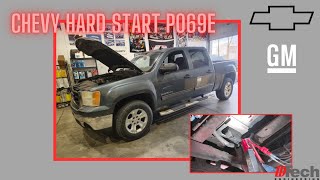
- Difficulty starting the engine, or long crank times 🎬 Watch: Diagnostic steps for hard starting and P069E codes
- Reduced engine power and performance
- Illuminated Check Engine Light
- Replacing the fuel pressure sensor. While possible, TSB #PIP5411F and #17-NA-335 point directly to the fuel pump module as the cause when P2635 is set with P018B in high temperatures, not the sensor.
Most Likely Causes
- Failing In-Tank Fuel Pump Module 🔴 High Probability → Shop Fuel Pump As documented in multiple GM TSBs (like #17-NA-335 and #PIP5411F), the original fuel pumps are susceptible to creating a vapor lock condition in high heat, which restricts fuel flow. GM later released an updated pump design with a one-way breather valve to correct this flaw. The TSB explicitly states the cause is "vapor buildup in fuel feed line".
How to confirm: Perform a fuel pressure test. 🎬 Watch: Real-world fuel pressure testing for code P2635 Monitor the fuel pressure while driving, ideally replicating the hot weather conditions. A significant drop in pressure under load or during a hesitation event points to a weak pump. If codes P2635 and P018B are present together in high ambient temperatures, the TSBs point directly to replacing the fuel pump module.
Typical fix: Replace the entire in-tank fuel pump module assembly with the new, updated GM-designed part. TSB #17-NA-335 specifically instructs technicians to "replace the fuel pump module with an updated version".
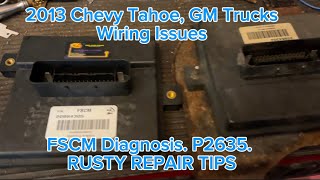
Est. part cost: $250-$500 - Faulty Fuel Pump Control Module (FPCM) ⚪ Low Probability → Shop Fuel Pump The FPCM on these GM trucks is notoriously mounted on the frame rail near the spare tire, exposing it to road salt, moisture, and debris. This leads to corrosion of the module's housing and electrical connector, which is a common cause of failure across the platform.
How to confirm: Visually inspect the FPCM and its connector for green or white corrosion. If corroded, it's highly suspect. Use a scan tool to monitor FPCM commands and output. If the FPCM receives the correct PWM signal from the ECM but does not send proper voltage to the pump, the module is likely faulty. A common related code is U0109, "loss of communication with fuel pump control module".
Typical fix: Replace the Fuel Pump Control Module. No programming is required to replace the module.
Est. part cost: $80-$150 - Clogged Fuel Filter ⚪ Low Probability → Shop Fuel Filter The fuel filter is integrated into the fuel pump module on these models and is not serviced separately. While it can become clogged from contaminated fuel, it's far more common for the pump motor itself to fail due to the heat-related design flaw. A clogged filter is rarely the sole cause but contributes to straining the pump.
How to confirm: This is difficult to confirm without removing the fuel pump assembly. A very dirty filter sock found during pump replacement indicates poor fuel quality may have accelerated the pump's failure.
Typical fix: Replace the fuel pump module assembly, which includes a new filter sock.
Est. part cost: $250-$500
Rare But Worth Checking
- Communication Bus Issue: TSB #PIP5427B notes that P2635 can appear alongside communication codes like U0074. If U-codes are present, they must be diagnosed first, as a network problem can prevent the FPCM from operating correctly.
- Wiring or Connector Damage: Damage to the wiring harness leading to the fuel pump or FPCM can cause intermittent power loss and trigger this code. Check for corrosion at the FPCM connector near the spare tire or physical damage to the harness.
- Faulty Fuel Pressure Sensor: → Shop Fuel Pressure Sensor While less common for this specific hot-stall issue, TSB #PIP5286B provides a diagnostic procedure for when P2635 and P018B are set together. It describes a test to see if the sensor is failing to read low pressure correctly, which could mimic a pump failure. However, TSB #17-NA-335, which addresses the hot-stall symptom, points directly to the pump.
Diagnosis Steps
- Scan the vehicle for all stored DTCs. If any communication (U-codes) are present, diagnose and resolve them first per TSB #PIP5427B.
- Note the conditions when the issue occurs. If it's primarily in ambient temperatures over 100°F and accompanied by code P018B, the fuel pump is the prime suspect per TSB #17-NA-335.
- Connect a fuel pressure gauge to the fuel rail. Check for Key-On, Engine-Off (KOEO) pressure and pressure at idle.
- Securely tape the gauge to the windshield and test drive the vehicle, trying to replicate the fault conditions (e.g., hard acceleration, driving in heat).
- Watch for a significant drop in fuel pressure that coincides with engine hesitation or stalling. A sharp drop confirms a fuel delivery problem.
- Inspect the Fuel Pump Control Module (FPCM), located on the frame rail near the spare tire, and its wiring connector for signs of corrosion or damage, a known issue on these trucks.
- If wiring and the FPCM appear intact and fuel pressure drops under the specified conditions, the evidence strongly points to a failing in-tank fuel pump module, which should be replaced with the updated part.
Parts You'll Likely Need
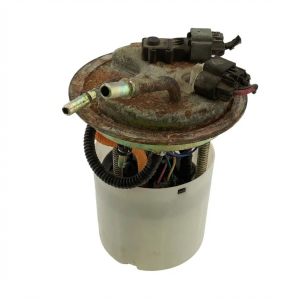
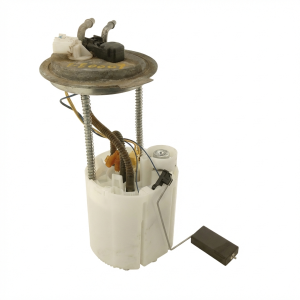
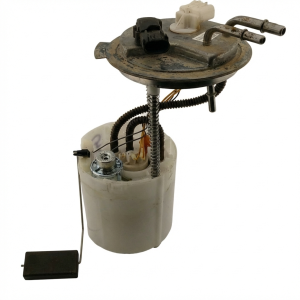
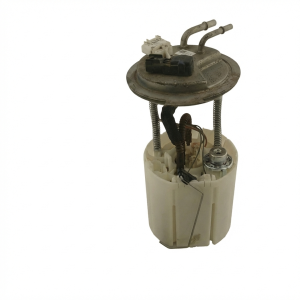
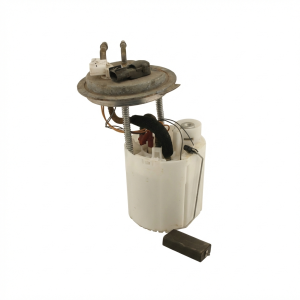
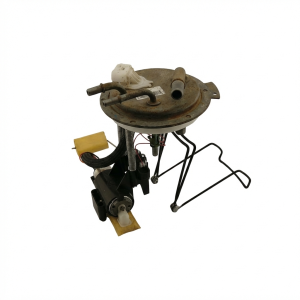
- Fuel Pump Module Assembly
(OEM #13512934 (SWB), 13512935 (LWB/XL))— This is the complete assembly that fails, causing the low flow condition described in multiple TSBs. It includes the pump, sending unit, and integrated fuel filter. TSB PIP5411F lists specific part numbers for the 'new design part' depending on wheelbase: 13512934 for short-wheelbase (Yukon) and 13512935 for long-wheelbase (Yukon XL).
Trusted brands: ACDelco (GM Genuine), Delphi, Spectra Premium
OEM price range: $350-$500
Aftermarket price range: $250-$400
Related Codes That Often Appear With This One
- P018B — This code for "Fuel Pressure Sensor 'B' Circuit Range/Performance" is frequently set with P2635. GM TSBs #17-NA-335 and #PIP5411F explicitly mention these two codes appearing together as a result of the fuel pump failing in high heat.
- U0074 — As noted in TSB #PIP5427B, this communication code can appear with P2635. It indicates a loss of communication on the bus and should be diagnosed before addressing the fuel pump code.
- P069E — This code, for "Fuel Pump Control Module Requested MIL Illumination," is often stored with P2635. It indicates the FPCM has detected a fault (like the low flow of P2635) and has asked the ECM to turn on the Check Engine Light. A user on Tahoe Yukon Forum reported seeing all three codes (P2635, P018B, P069E) together.
Technical Service Bulletins (TSBs) & Recalls
- 17-NA-335: Malfunction Indicator Lamp Illuminated (MIL) - DTC P2635 and/or P018B Set In High Ambient Temperatures With Hesitation, Surging and Stalling. Confirms cause as 'vapor buildup in fuel feed line' and the fix is replacing the fuel pump module with an 'updated version'.
- PIP5411F: Advises replacing the in-tank fuel pump module to correct hesitation/stalling with codes P2635/P018B. This TSB was later superseded by 17-NA-335 but provides part numbers for the updated pumps.
- PIP5507B: Notes that in temperatures over 100°F, DTCs P2635 and/or P018B may set along with hesitation or stalling.
- PIP5427B: Notes that P2635 can appear with communication codes like U0074 and U18A2, and that U-codes should be diagnosed first.
Platform-Specific Known Issues
- A widely documented issue, confirmed by GM TSBs #17-NA-335, #PIP5411F, and #PIP5507B, causes hesitation, surging, and stalling in high ambient temperatures (above 100°F) due to vapor buildup in the fuel line. The official fix is to replace the in-tank fuel pump module with an updated design.
- Real-World Repair Story: On the Tahoe Yukon Forum, a user with a 2012 Yukon Denali XL experienced codes P018B, P2635, and P069E. Another user suggested checking the Fuel Pump Control Module and its wiring for corrosion, a common failure point. This highlights that while the pump is the most likely culprit for the hot-stall issue, the FPCM is a known weak link worth inspecting during diagnosis.
Mechanic-Grade Diagnostic Values
- Low-Side Fuel Pressure at Idle — expected: 42-45 PSI. Failure: Pressure significantly below 42 PSI at idle, or pressure that drops sharply under load.
- Maximum Low-Side Fuel Pressure — expected: Up to 74-78 PSI. Failure: Inability to reach commanded pressure, which can vary but maxes out in this range.
- FPCM Fuel Pump Supply Voltage — expected: 12.0–12.6 V. Failure: Voltage dropping below 11.5 V suggests a wiring or voltage regulation problem.
- FPCM Command Signal from ECM (Dark Green/White Wire) — expected: 12V signal present for 2-6 seconds with key on, or constant while cranking/running.. Failure: No voltage signal on this wire indicates a problem with the ECM or the wiring between the ECM and FPCM.
Scan Tool Commands That Help
- GDS2 (GM Dealer Scan Tool): Fuel System Depressurize — Per TSB PIP5286B, this test can help identify a faulty fuel pressure sensor when P2635 and P018B are set together. With the engine cold and at idle, commanding the system to depressurize should cause the fuel pressure sensor value to drop to zero as the engine stalls. If the sensor reading remains high (e.g., 30-40 PSI) after the engine stalls, the sensor is suspect.
- GDS2 (GM Dealer Scan Tool): Fuel Pump Relay/Control — This bidirectional control allows a technician to command the fuel pump on and off directly from the scan tool. This is used to verify that the FPCM and the fuel pump itself are capable of operating when commanded, helping to isolate the problem to the control side (ECM signal) or the component side (FPCM/pump).
Wiring & Ground Locations
- Fuel Pump Control Module (FPCM) — Mounted to the frame rail, typically above or near the spare tire. On some models, it is housed inside a small shield bolted to the frame about halfway down the cab.. This location exposes the module and its connector to road salt, water, and debris, making corrosion a very common point of failure that can cause P2635 or a total loss of communication (U0109).
- FPCM Connector Pin 13 (Dark Green/White wire) — At the main connector for the Fuel Pump Control Module.. This pin carries the 'fuel pump on' command signal from the ECM. A technician can probe this wire with a test light or multimeter to confirm the FPCM is receiving the signal to activate. If the signal is present but the pump doesn't run, the FPCM or pump is likely faulty.
- ECM Connector X1, Pin 50 (Dark Green/White wire) — At the black ECM connector under the hood.. If the command signal is missing at the FPCM (Pin 13), this is the source pin at the ECM. Testing here confirms if the ECM is sending the signal. If there is 12V here but not at the FPCM, there is a break in the wire between the two components.
Real Owner Repair Stories
- YouTube video by 'kenny tv' (2015 Chevy Tahoe (sister platform)) — Check Engine Light with code P2635, "Fuel Pump A Low Flow Performance".
❌ Tried (didn't work) Replacing the in-tank fuel pump and sender unit.
✅ What actually fixed it The problem was ultimately resolved by replacing the fuel pressure sensor located on the fuel line, on the driver's side next to the ABS pump. - CK5 Forums user (2014 Silverado 5.3 (sister platform)) — Persistent P2635 and P018B codes after other repairs.
❌ Tried (didn't work) Replacing the in-tank fuel pump (which was new)., Initial diagnosis pointed towards bad fuel trims, but they self-corrected.
✅ What actually fixed it The P018B code was resolved by replacing the fuel pressure sensor on the fuel line under the driver's seat. The user was still troubleshooting P2635, but confirmed the high-pressure fuel pump (HPFP) seemed fine, pointing back towards the low-pressure side or sensor readings.
OEM Part Supersession History
13582493→13512934— This is the updated fuel pump module assembly designed to address the hot-weather stalling and P2635/P018B codes. The new design incorporates a one-way breather valve to prevent vapor lock.
Heads up: Using the old part number will likely result in a repeat failure if the vehicle is operated in high ambient temperatures.
Model Year Variations Within This Range
- 2015 vs 2016+: The 2015 model year Yukon used a traditional screw-on fuel filler cap, while models from 2016 onward were updated to a capless fuel filler design. This does not directly affect the P2635 code but is a notable change in the fuel system.
- 2013-2014 vs 2015-2018: The 2015 model year marked the introduction of the K2XX platform and the EcoTec3 engine family (5.3L L83, 6.2L L86), which feature direct injection. This means 2015+ models have both a low-pressure in-tank pump (related to P2635) and a high-pressure, engine-mounted mechanical pump. The 2013-2014 models used a port-injection system with only the in-tank pump.
Helpful Videos
Used OEM Parts in Stock
New Aftermarket Parts Available



The information in this article is provided for general reference and educational purposes only. Vehicle specifications, procedures, and part compatibility can vary by production date, trim level, and region. Always consult your vehicle's factory service manual and verify part numbers before purchasing or performing repairs. Safety-critical components such as airbags, seat belts, and braking systems should be installed by a qualified professional.
- Gmc YUKON:
- 🧭 Diagnostic Flowchart
- 🎬 Helpful Videos
- 🛍️ Shop This Part
- What's Unique About the 2013-2018 Gmc YUKON
- Symptoms You May Notice
- Most Likely Causes
- Rare But Worth Checking
- Diagnosis Steps
- Parts You'll Likely Need
- Related Codes That Often Appear With This One
- Technical Service Bulletins (TSBs) & Recalls
- Platform-Specific Known Issues
- Mechanic-Grade Diagnostic Values
- Scan Tool Commands That Help
- Wiring & Ground Locations
- Real Owner Repair Stories
- OEM Part Supersession History
- Model Year Variations Within This Range
- 🎟️ Get 5% Off