

P2636 on 2007-2014 Chevrolet Silverado 1500: Fuel Pump Performance Fixes
On a 2007-2014 Silverado, P2636 is most often caused by a faulty Fuel Pump Control Module (FPCM) located above the spare tire, or by refueling with the engine running. An FPCM replacement costs around $70-$150 for the part and is a common DIY fix. OEM parts require programming, but aftermarket options are often plug-and-play.
- Before any repairs, ensure you are turning the truck completely off when refueling. This simple habit change may fix the issue for free.
- The most likely part to have failed is the Fuel Pump Control Module (FPCM), not the fuel pump itself. Inspect it for corrosion before buying any parts.
- The FPCM is located above the spare tire and is relatively easy to access and replace for a DIYer with basic tools.
- If you see codes P069E or U0109 alongside P2636, it is almost certain the FPCM has failed.
What's Unique About the 2007-2014 Chevrolet SILVERADO 1500
The GMT900 platform (2007-2013) is uniquely prone to this code due to two main issues. First, a widely documented software quirk, referenced in GM TSB PIT5208, can trigger P2636 if the truck is refueled with the ignition on or the engine running, causing the fuel gauge to read empty. Second, the Fuel Pump Control Module (FPCM) is mounted on the driver's side frame rail, above the spare tire, where it is highly susceptible to corrosion from road salt and moisture, leading to a high failure rate.
Diagnostic Flowchart
Tap your situation to follow the diagnostic path that matches what you're seeing on this vehicle.
Generation note: This range covers the GMT900 (2007-2013) and the first year of the K2XX (2014) generation. The causes, particularly the FPCM failure and refueling issue, are most documented for the GMT900 models. However, the FPCM remains a common failure point on many GM trucks of this era.
Symptoms You May Notice
- Fuel gauge incorrectly reads empty, especially right after filling the tank.
- Low fuel warning light illuminates despite having fuel.
- Engine may hesitate or stumble during acceleration.
- Hard starting or crank-no-start condition.
- In severe cases, the engine may stall.
- Check Engine Light may be on, but not always. The code can set without illuminating the MIL.
- Replacing the fuel pump when the Fuel Pump Control Module is the actual problem. Always inspect the FPCM first, as it's a cheaper, easier, and more common failure point for this code.
Most Likely Causes
- Refueling with the engine running or ignition on 🔴 High Probability A known software sensitivity in the fuel monitoring system documented in GM Technical Service Bulletin PIT5208. The system performs a check after refueling and can get a confusing reading if the ignition is on.
How to confirm: Ask the driver about their refueling habits. If they refuel with the key on, clear the code, refuel with the vehicle completely off, and see if the code returns. The issue almost always occurs immediately after filling the tank.
Typical fix: Change refueling habits. Always turn the ignition completely off before opening the fuel cap. No parts are required. The code may clear on its own after several drive cycles.
Est. part cost: $0 - Failing Fuel Pump Control Module (FPCM/FSCM) 🔴 High Probability → Shop Fuel Pump The module is mounted on the frame above the spare tire, exposing it to water, salt, and debris. This causes the aluminum backing plate to corrode and the electronics inside to fail.
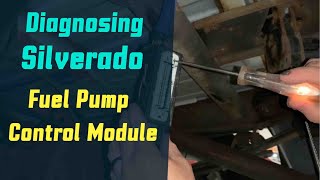
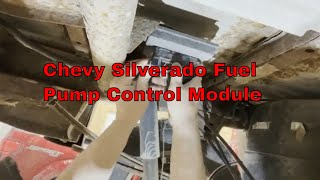
How to confirm: Lower the spare tire and visually inspect the module and its electrical connector for green or white corrosion, a swollen plastic case, or physical damage. Check for related codes like P069E or U0109, which strongly point to FPCM failure. A diagnostic scan tool may also show 🎬 Watch: How to diagnose a failing Fuel Pump Control Module. 'No Communication' with the FPCM.
Typical fix: Replace the Fuel Pump Control Module. OEM parts (ACDelco) require programming by a dealer or a shop with a J2534 pass-thru device. Many aftermarket versions (e.g., Dorman OE FIX) do not require programming and are plug-and-play. Pro-tip: Apply RTV silicone to the seam on the back of the new module to better seal it from the elements. 🎬 See this easy fix for common FPCM corrosion issues.
Est. part cost: $70-$180 - Faulty Fuel Pump or Fuel Level Sensor 🟡 Medium Probability → Shop Fuel Pump The fuel pump is a wear item. The integrated fuel level sensor (sending unit) can also fail, preventing the ECM from detecting fuel level changes, which is the very metric used to trigger P2636.
How to confirm: Perform a fuel pressure and flow test to verify the pump's output. If pressure is low, the pump is likely failing. If the gauge is erratic but pressure is good, the sending unit is the likely culprit. You can also bypass the FPCM by jumping power and ground wires at the module connector to directly power the pump and confirm its operation.
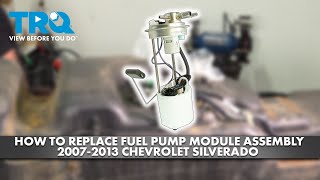
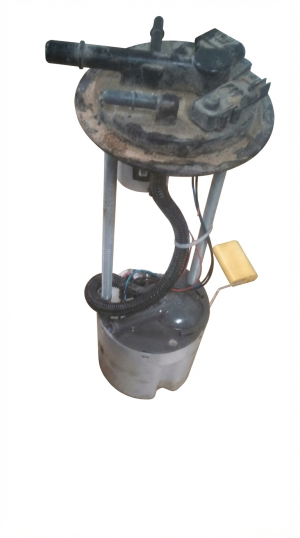
Typical fix: Replace the entire fuel pump module assembly, which includes the pump, level sensor, and filter. This requires dropping the fuel tank.
Est. part cost: $250-$500 - Corroded or Damaged Wiring ⚪ Low Probability The harness leading to the FPCM is in an exposed location and can be damaged or suffer from corrosion. The Dark Green/White wire is a common point of failure where it runs near the transfer case or driveshaft.
How to confirm: With the FPCM unplugged, inspect the connector pins for corrosion. Test for battery voltage at the appropriate pins (e.g., Dark Green/White wire at pin 13 should have power for a few seconds at key-on) and for ground continuity according to a wiring diagram.
Typical fix: Repair the damaged section of the harness or replace the connector pigtail.
Est. part cost: $20-$50
Rare But Worth Checking
- Kinked Fuel Transfer Line: This primarily affects Chassis Cab models with dual fuel tanks. TSB PIT5510C and its revisions note that the line transferring fuel between the tanks can become kinked, especially after a replacement, restricting flow and triggering P2636. The bulletin advises inspecting the line by sliding back its protective conduit.
Diagnosis Steps
- Check for other DTCs. Codes like P069E or U0109 point directly to the FPCM.
- Question the driver about refueling habits. If they leave the key on, advise them to stop, clear the code, and see if it returns. This is documented in TSB PIT5208.
- If the code persists, lower the spare tire to access the Fuel Pump Control Module (FPCM) on the driver's side frame rail.
- Visually inspect the FPCM and its connector for any signs of corrosion (white/green powder), swelling of the plastic housing, or physical damage.
- If corrosion is present, the FPCM is almost certainly the cause. Replace it.
- If the FPCM appears clean, use a multimeter to check for power and ground at the FPCM connector. Check fuse 21 (FSCM) in the underhood fuse block. The Dark Green/White wire at pin 13 should have power when the key is first turned on.
- If power and ground are good, the next step is to test the fuel pump itself. A fuel pressure gauge can be used to check if the pump is delivering adequate pressure.
- For dual-tank models, inspect the fuel transfer line between the tanks for any visible kinks or damage, as noted in TSB PIT5510C.
Parts You'll Likely Need
- Fuel Pump Control Module
(OEM #20759945 (Latest; supersedes 25967325, 20877116, etc.))— This is the most common failure point for this code on this platform due to its exposed mounting location leading to corrosion.
Trusted brands: ACDelco (OEM, requires programming), Dorman OE FIX (Aftermarket, often plug-and-play)
OEM price range: $120-$180
Aftermarket price range: $70-$120 - Fuel Pump and Sender Assembly
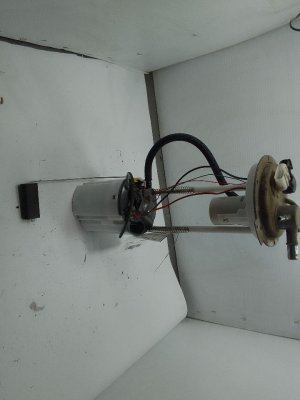
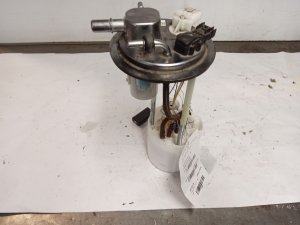
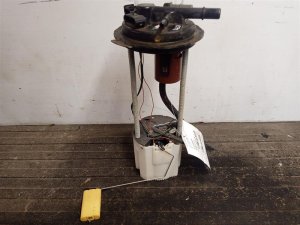
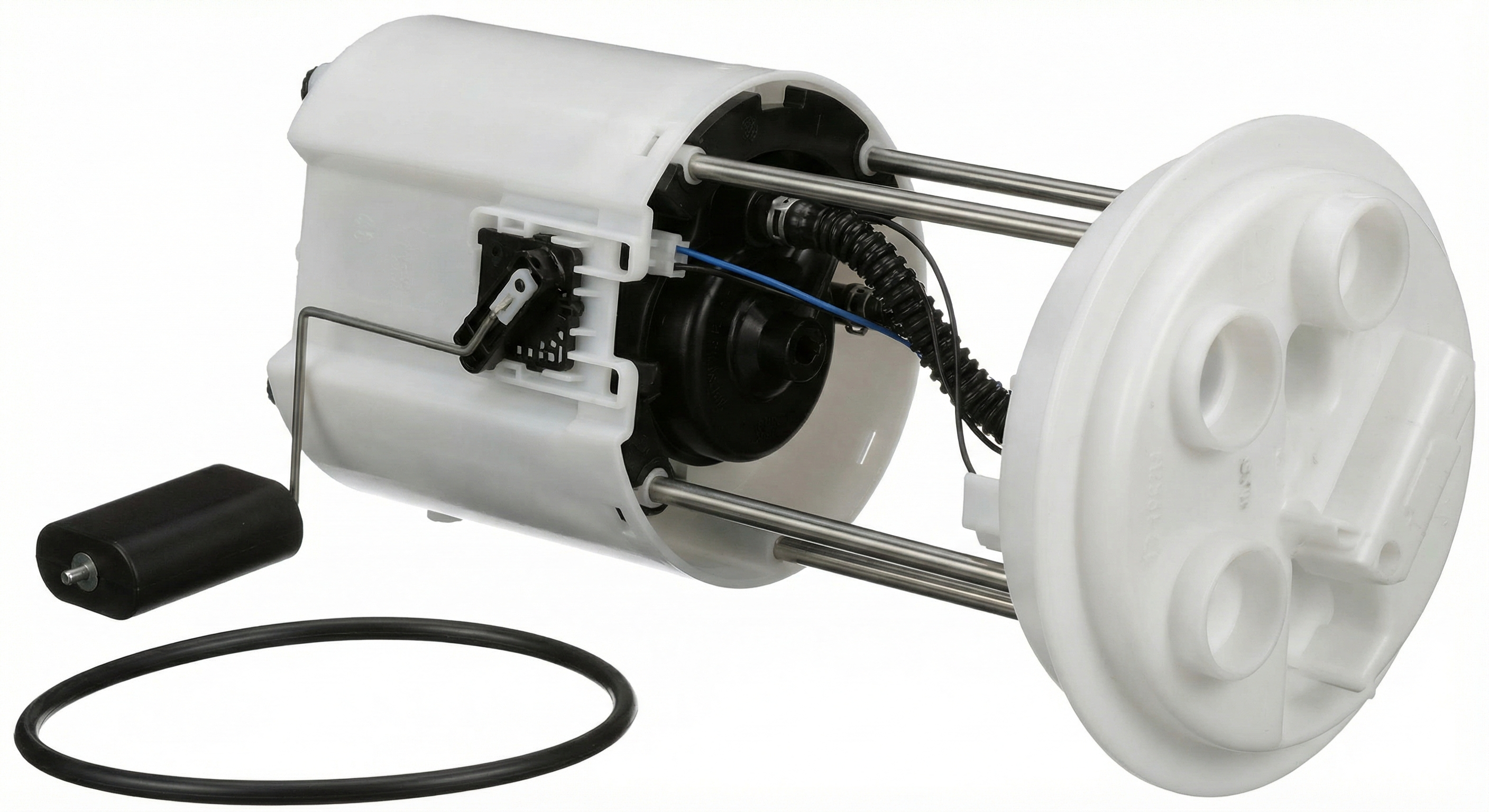
(OEM #19303633 (example part number, varies by tank/cab/bed config))— If the FPCM and wiring are good, the in-tank fuel pump is the next most likely cause. It is a wear item that can fail and cause low flow.
Trusted brands: Delphi, ACDelco, Spectra Premium
OEM price range: $350-$500
Aftermarket price range: $250-$400
Related Codes That Often Appear With This One
- P069E — This code indicates a fault was detected by the Fuel Pump Control Module's internal self-diagnostics, making it a strong companion code when the FPCM itself has failed.
- U0109 — This code means 'Lost Communication With Fuel Pump Control Module'. It is a definitive sign that the FPCM has failed completely, the connector is unplugged/corroded, or there is a complete break in the communication wiring to it.
Technical Service Bulletins (TSBs) & Recalls
- PIT5208B: Fuel Gauge Shows Empty After Refueling And DTC P2636. Confirms the cause is refueling with the ignition on.
- PIT5510C / PIT5510D: Fuel Gauge Displays Empty / Low Fuel Light On / DTC P2636. Addresses kinked fuel transfer lines on dual tank models and mentions a related ECM calibration update.
Platform-Specific Known Issues
- A GM Technical Service Bulletin (PIT5208B) explicitly states that refueling with the engine or ignition on can cause a P2636 code and make the fuel gauge read empty.
- The placement of the Fuel Pump Control Module on the frame rail above the spare tire makes it extremely vulnerable to corrosion, a very common issue for trucks in regions that use road salt. Many owners find the module swollen and full of water upon removal.
Mechanic-Grade Diagnostic Values
- Fuel Level Sensor Resistance — expected: 40 Ohms (Empty) to 250 Ohms (Full). Note: Some sources suggest 2007+ models may have this reversed to 250 Ohms (Empty) and 40 Ohms (Full).. Failure: Readings are open (infinite resistance), shorted (zero resistance), or do not change smoothly as the float arm is moved.
- Fuel Pressure (Key On, Engine Off, Pump Commanded On) — expected: Should be a minimum of 500 kPa (73 psi) for 2014 models per a GM recall bulletin. A general operating range is often cited as 58-62 psi.. Failure: Pressure below the minimum specification indicates a weak pump, clogged filter, or leak.
- FPCM Connector Pin 32 (Red/White wire) Voltage — expected: Battery Positive Voltage (12V+) at all times.. Failure: No voltage indicates a blown FSCM fuse (Fuse 21 underhood) or a break in the power wire.
- FPCM Connector Pin 1 (Black wire) to Chassis Ground — expected: Should have good continuity to ground (<1 Ohm).. Failure: High resistance indicates a bad ground connection, which is a common issue.
- FPCM Connector Pin 13 (Dark Green/White wire) Voltage — expected: 12V+ signal from the ECM for a few seconds at key-on or while cranking.. Failure: No voltage indicates a wiring break between the ECM and FPCM or a faulty ECM driver.
- FPCM Connector Pin 15 (Pink wire) Voltage — expected: Ignition 1 Voltage (12V+ with key in ON position).. Failure: No voltage indicates an issue with the ignition circuit providing power to the module.
Hidden / Shadow Codes Worth Checking
- P2636 without MIL: On this platform, DTC P2636 can be set and stored in the PCM's memory without illuminating the Malfunction Indicator Lamp (MIL) or Check Engine Light. A technician may only find the code when scanning for other issues or checking Failure Records with a professional scan tool. (see via GM GDS2/Tech2 or equivalent professional scan tool capable of reading history codes and failure records.)
Scan Tool Commands That Help
- GDS2 / Tech2: Fuel Pump ON/OFF Command — This is a primary bidirectional control used to verify the entire fuel pump circuit. A technician can command the pump ON to listen for it running and to perform a fuel pressure and flow test without cranking the engine. If the pump runs with this command, it confirms the FPCM, wiring, and pump motor are capable of functioning.
- GDS2 / Tech2: FPCM Replacement Setup/Programming — This function is required after installing a new, unprogrammed OEM (ACDelco) Fuel Pump Control Module. The tool downloads the correct vehicle-specific software and calibrations to the new module to ensure it communicates correctly with the ECM and other vehicle systems.
Wiring & Ground Locations
- FPCM Connector — On the Fuel Pump Control Module, mounted to the frame crossmember above the spare tire.. This is the central connection point for all power, ground, and signal wires related to the fuel pump. Corrosion here is a primary cause of failure. Key pins for testing are 1 (Ground), 13 (ECM Signal), 15 (Ignition Power), and 32 (Battery Power).
- Fuse 21 (FSCM) — In the underhood fuse block.. This 20A fuse supplies main battery power to the FPCM on Pin 32. If this fuse is blown or its contacts are corroded, the module will be completely dead, often setting a U0109 code along with P2636.
- G303 / G300-series Grounds — GM designates grounds in the rear section of the vehicle with a '300' series number. These are typically located on the frame rails under the rear of the cab or bed.. While the FPCM has a dedicated ground wire in its harness (Pin 1), overall system integrity relies on clean chassis grounds. A corroded frame ground (a common issue on these trucks) can cause intermittent electrical problems that mimic module failure.
- ECM Connector (Pin 50) — At the Engine Control Module (ECM). Pin 50 in the black connector is the source for the Dark Green/White signal wire.. If there is no 12V signal at FPCM Pin 13, the next step is to check for that signal directly at the ECM. If voltage is present at the ECM but not the FPCM, it confirms a break in the Dark Green/White wire between them.
Real Owner Repair Stories
- YouTube: 'Chevy Silverado Fuel Pump Control Module' by 'Repair Geek' (Chevrolet Silverado, year not specified but GMT900 platform.) — Crank no-start condition.
❌ Tried (didn't work) Initial diagnosis pointed towards the common FPCM failure.
✅ What actually fixed it The technician performed a 'quick and dirty' bypass test by jumping the power and ground pins for the pump at the FPCM connector. The fuel pump did not run. After confirming power and ground were being supplied TO the FPCM connector, this proved the fuel pump itself had failed, not the FPCM. The fix was replacing the in-tank fuel pump. - YouTube: 'Diagnosing Silverado Fuel Pump Control Module' by 'DieselDog' (2010 Chevrolet Silverado) — Crank no-start, code P069E (Fuel Pump Control Module Requested MIL Illumination).
✅ What actually fixed it The technician methodically tested for power at Fuse 21 (good), then tested for power and ground at the FPCM connector (pins 32 and ground were good). He then tested for the 12V signal from the PCM on pin 13 (Dark Green/White wire) while cranking and found it was present. He then bypassed the FPCM by jumping the main power and ground to the pump output pins and heard the pump run. This comprehensive diagnosis confirmed all inputs and the pump were good, isolating the FPCM as the sole point of failure. Replacing the FPCM fixed the truck. - PerformanceTrucks.net forum user 'BigKID' (GM Truck (likely Silverado/Sierra)) — Fuel gauge reads empty when the tank is completely full.
✅ What actually fixed it This was a preventative check, not a repair. Before installing a spare fuel pump module, the user tested the fuel level sending unit's resistance range. He measured 39-249 Ohms from empty to full. Another user confirmed the GM specification is 40-250 Ohms, verifying the sending unit was good before installation. This confirms the correct diagnostic value for the sensor.
When the Usual Fixes Don't Work
- In cases where a new Fuel Pump Control Module (FPCM) is installed but the P2636 code or a no-start condition persists, the cause is often a misdiagnosis. Before condemning the FPCM, a technician must verify the integrity of its inputs and the component it controls. The most common oversight is failing to test the fuel pump itself. This can be done by bypassing the FPCM and jumping the main power (Pin 32) and ground (Pin 1) wires at the connector to the pump's power (Pin 47, Gray wire) and ground wires. If the pump runs, the FPCM is likely faulty. If the pump does not run, the pump itself or its wiring is the problem. Another common miss is a break in the Dark Green/White signal wire from the ECM, which can be confirmed by checking for a 12V signal at Pin 13 during crank.
OEM Part Supersession History
15213110, 25854536, 25785013, 25866052, 20850907, 25967325, 13501024→20759945— GM consolidated multiple older part numbers into a single updated module. The new module incorporates hardware and software revisions for improved reliability.
Heads up: While physically interchangeable, OEM modules must be programmed with vehicle-specific software (VIN) using GDS2 to function correctly. Failure to program can result in a no-start or immediate setting of communication codes.
Model Year Variations Within This Range
- 2007-2014: The FPCM part number changed multiple times. For example, a 2008 model may have used 15213110, while a 2011 used 25967325. All have been superseded by 20759945 for service replacement.
- 2014: The 2014 model year was subject to GM Emission Recall #13370 for an incorrect fuel pressure regulator inside some fuel pump modules on 4.3L and 5.3L engines, which could cause stalling or hard starts. Diagnosis for this specific recall involves checking fuel pressure with a GDS2 scan tool to see if it meets a minimum of 500 kPa (73 psi).
- 2007-2014: There is conflicting information regarding the fuel level sensor's resistance logic. The long-standing GM standard is 40 ohms at empty and 250 ohms at full. However, some sources indicate that for 2007 and newer vehicles, this logic was reversed to 250 ohms at empty and 40 ohms at full. Using a replacement sending unit with the wrong logic will cause the fuel gauge to read backwards.
Helpful Videos
![Easy Fix for Common Chevy Problem [Fuel Pump Control Module]](https://img.youtube.com/vi/38Xeo1uLBoU/mqdefault.jpg)
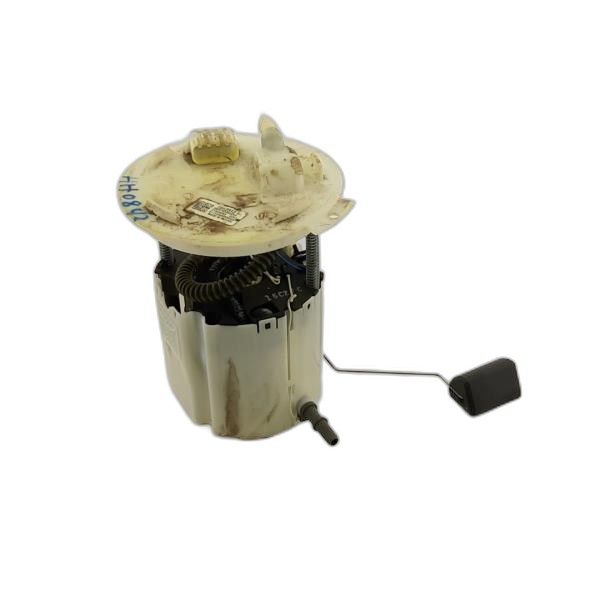
Used OEM Parts in Stock
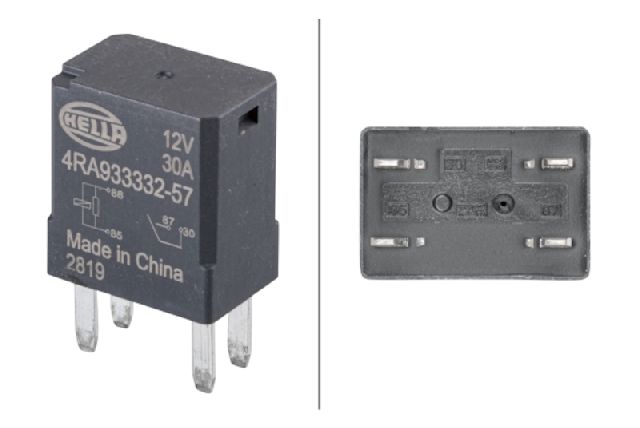
New Aftermarket Parts Available




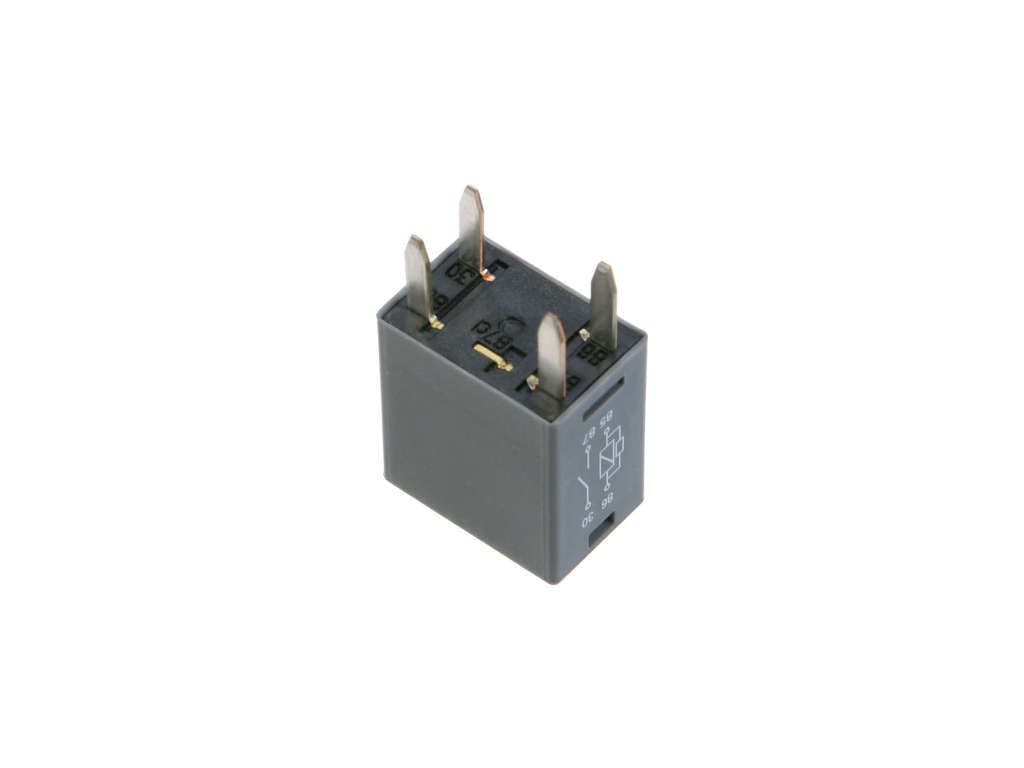

The information in this article is provided for general reference and educational purposes only. Vehicle specifications, procedures, and part compatibility can vary by production date, trim level, and region. Always consult your vehicle's factory service manual and verify part numbers before purchasing or performing repairs. Safety-critical components such as airbags, seat belts, and braking systems should be installed by a qualified professional.
- Chevrolet SILVERADO 1500:
- 🧭 Diagnostic Flowchart
- 🎬 Helpful Videos
- 🛍️ Shop This Part
- What's Unique About the 2007-2014 Chevrolet SILVERADO 1500
- Symptoms You May Notice
- Most Likely Causes
- Rare But Worth Checking
- Diagnosis Steps
- Parts You'll Likely Need
- Related Codes That Often Appear With This One
- Technical Service Bulletins (TSBs) & Recalls
- Platform-Specific Known Issues
- Mechanic-Grade Diagnostic Values
- Hidden / Shadow Codes Worth Checking
- Scan Tool Commands That Help
- Wiring & Ground Locations
- Real Owner Repair Stories
- When the Usual Fixes Don't Work
- OEM Part Supersession History
- Model Year Variations Within This Range
- 🎟️ Get 5% Off