

P2636 on 2015-2017 Chevrolet Silverado 1500: Fuel Pump Performance Causes and Fixes
On a 2015-2017 Silverado, code P2636 typically points to a failing Fuel Pump Control Module (FPCM) or the in-tank fuel pump itself. Before replacing parts, ensure the code wasn't triggered by refueling with the ignition on, a known issue cited in GM bulletins PIT5208A and PIT5510D.
- First, rule out the simplest cause: P2636 can be falsely triggered by refueling with the key in the 'on' position. Always turn the truck off to refuel.
- The most common failed parts for this code are the Fuel Pump Control Module (FPCM) or the in-tank fuel pump assembly.
- Check for related codes. U0109 or P069E almost always confirms the problem is with the FPCM.
- Repairing this code can be expensive and complex. Professional diagnosis is recommended to avoid replacing the wrong parts.
What's Unique About the 2015-2017 Chevrolet SILVERADO 1500
The K2XX platform (2014-2019) Silverado uses a sophisticated variable-speed fuel system managed by a dedicated Fuel Pump Control Module (FPCM). This system is more efficient but also more sensitive to performance deviations. A unique and well-documented quirk for GM trucks is the system's tendency to set a false P2636 code if the vehicle is refueled while the engine is running or the key is in the 'on' position. This is explicitly detailed in Technical Service Bulletins like PIT5208A and PIT5510D, which advise technicians to question the owner's refueling habits as the first diagnostic step.
Diagnostic Flowchart
Tap your situation to follow the diagnostic path that matches what you're seeing on this vehicle.
Symptoms You May Notice
- Check Engine Light is on
- Engine hesitation or stumbling during acceleration
- Engine may stall, especially under load
- Hard starting or long crank times
- Inaccurate fuel gauge, may show empty immediately after refueling
- Reduced engine power or 'Limp Mode'
- Low fuel warning light illuminated despite having fuel
- Replacing the fuel pump when the actual problem is a faulty Fuel Pump Control Module (FPCM) or simply the refueling procedure.
- Replacing the ECM when the issue is with the fuel delivery hardware or FPCM.
- Overlooking a corroded frame ground or a damaged wire in the harness, leading to repeat replacement of the FPCM or fuel pump.
Most Likely Causes
- Refueling with the Ignition On 🔴 High Probability The fuel management system performs a self-check after refueling. If the ignition is on, it interrupts this process, confuses the fuel level calculation, and falsely triggers code P2636. This is the most common trigger and is documented extensively in GM TSBs.
How to confirm: This is a procedural issue. If the code appeared immediately after filling the tank, this is the most likely cause. Clear the code and operate the vehicle normally, ensuring it's turned completely off during the next refuel. If the code does not return, this was the cause.
Typical fix: Change refueling habits. Always turn the vehicle completely off and remove the key before opening the fuel cap. No parts are required.
Est. part cost: $0 - Failed Fuel Pump Control Module (FPCM) 🟡 Medium Probability → Shop Fuel Pump The FPCM is an electronic module located on a frame crossmember near the spare tire, making it vulnerable to corrosion from road salt and moisture. While the K2XX design is improved over the prior generation, FPCM failure remains a common issue, causing a loss of communication or incorrect commands to the fuel pump.
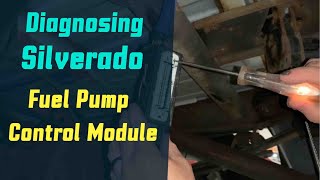
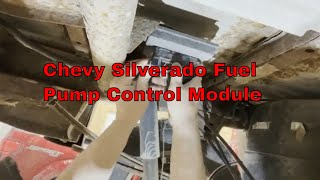
How to confirm: Check for related codes like U0109 (Lost Communication with FPCM) or P069E (FPCM Fault), which strongly point to the module. A technician can use a scan tool to attempt to communicate with the FPCM; a lack of communication indicates failure. 🎬 Watch: How to diagnose a faulty fuel pump control module. A visual inspection may reveal a swollen or corroded module case.
Typical fix: Replace the Fuel Pump Control Module. An OEM replacement (ACDelco Part No. 23382215) requires programming by a dealership or a shop with GM software. Some aftermarket modules are sold pre-programmed.
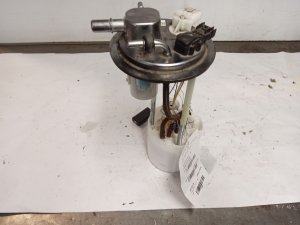
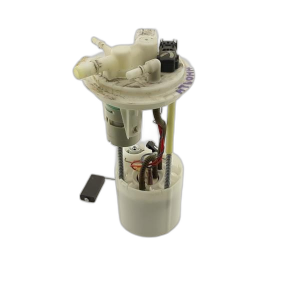
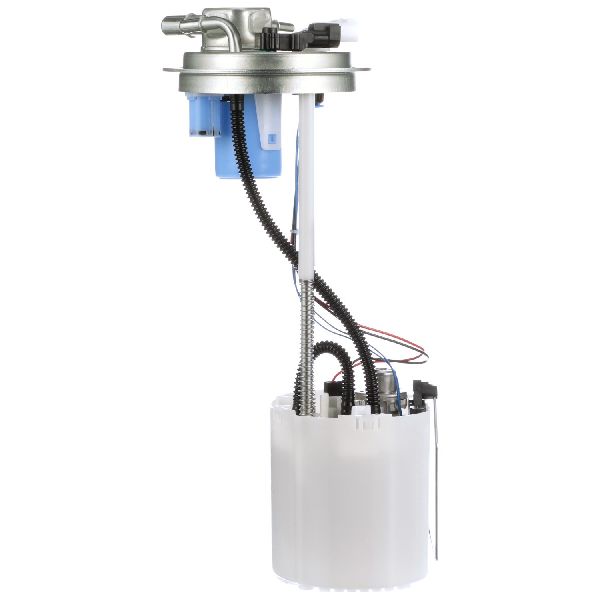
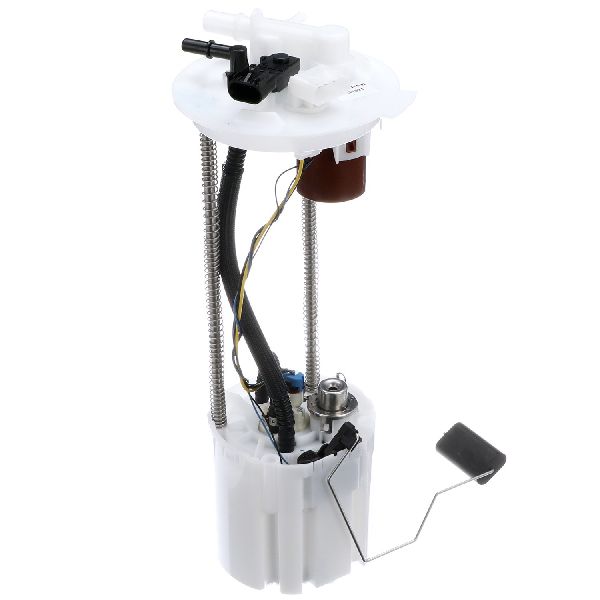
Est. part cost: $80-$200 - Failing In-Tank Fuel Pump Assembly 🟡 Medium Probability → Shop Fuel Pump The electric fuel pump inside the tank is a wear item that can fail over time, especially with high mileage, leading to insufficient pressure and flow.
How to confirm: A fuel pressure and flow test must be performed. A technician will use a scan tool to command maximum pump duty cycle while monitoring a fuel pressure gauge. A significant drop in pressure below specification (typically around 58 psi for this platform) indicates a weak pump.
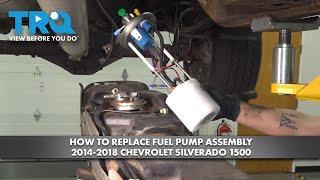
Typical fix: Replace the entire fuel pump and sender assembly inside the fuel tank. This requires either dropping the fuel tank or removing the truck bed for access. 🎬 Watch this detailed walkthrough on replacing the fuel pump assembly. An example OEM part number is ACDelco M100265, though it varies by cab/bed configuration.
Est. part cost: $250-$500 - Clogged Fuel Filter or Kinked Fuel Line ⚪ Low Probability → Shop Fuel Line The fuel filter is integrated into the fuel pump module and is non-serviceable separately. On dual-tank HD models, TSB PIT5510D specifically warns that the fuel transfer line can get kinked under its protective conduit during service, causing a repeat P2636 code.
How to confirm: A fuel pressure test will show low pressure. For kinked lines, a visual inspection is necessary, which may require sliding back protective conduits to see the actual line. If the filter is clogged, it will be replaced as part of the fuel pump module.
Typical fix: Replace the fuel pump module (which includes the filter) or carefully repair/replace the damaged fuel line section.
Est. part cost: $20-$500
Rare But Worth Checking
- Wiring Harness or Connector Issue: The wiring to the FPCM or the fuel pump can become corroded or damaged, causing an intermittent connection or high resistance. This can mimic the symptoms of a failing module or pump. One owner on a forum found a broken power wire to the FPCM inside the harness where it passed through the frame.
- Ground Wire Integrity: The FPCM and fuel pump circuits rely on clean frame grounds. A common ground point is on the driver's side frame rail. Corrosion at this single point can cause a voltage drop, leading to low pump performance and triggering P2636 even if all components are healthy.
Diagnosis Steps
- Check for other DTCs. Codes like U0109 or P069E strongly suggest an FPCM issue.
- Question the driver about refueling habits. Per TSB PIT5208A, if the code appeared right after a fill-up, clear the code and advise the owner to refuel with the vehicle off.
- Lower the spare tire and visually inspect the Fuel Pump Control Module (FPCM) and its connector for any signs of corrosion, swelling, or physical damage. The FPCM is located on a frame crossmember near the spare tire.
- Inspect the main FPCM/fuel pump ground connection on the driver's side frame rail for rust and tightness.
- Using a bi-directional scan tool, command the fuel pump on and monitor fuel rail pressure. Compare the actual pressure to the desired pressure. The target is typically around 58 psi.
- If fuel pressure is low, test for power and ground at the FPCM connector. Pin 32 (Red/White) should have constant battery voltage, and Pin 1 (Black) should have a good ground (<1.0 ohm).
- If power and ground to the FPCM are good, check the command signal from the ECM and the power output to the pump from the FPCM (Pin 47, Gray wire).
- If voltage output from the FPCM is correct but pressure is low, the fuel pump is weak or there is a line restriction (kink). Inspect fuel lines for kinks, especially where they are hidden by protective conduits, as noted in TSB PIT5510D.
- If voltage output from the FPCM is incorrect or there is no communication (U0109), the FPCM itself is the most likely cause, assuming its power and ground are good.
Parts You'll Likely Need
- Fuel Pump Control Module
(OEM #ACDelco 23382215 (supersedes 23184800, 20856290, etc.))— This electronic module is a common failure point due to its exposed location and is responsible for controlling the fuel pump's speed. Its failure directly causes performance issues and requires programming upon replacement.
Trusted brands: ACDelco (GM Original Equipment), Dorman
OEM price range: $80-$150
Aftermarket price range: $70-$120 - Fuel Pump and Sender Assembly
(OEM #13513407 (varies by configuration))— The mechanical pump inside the fuel tank wears out over time, resulting in low flow and pressure. The assembly includes the pump, level sensor, and integrated filter.
Trusted brands: ACDelco, Delphi, Bosch
OEM price range: $250-$500
Aftermarket price range: $200-$400
Related Codes That Often Appear With This One
- U0109 — This code means 'Lost Communication With Fuel Pump Control Module.' It directly points to a failed FPCM or a wiring/power/ground issue between the ECM and FPCM. It is a very strong indicator that the FPCM is the epicenter of the problem.
- P069E — This code means 'Fuel Pump Control Module Requested MIL Illumination.' It indicates the FPCM has detected an internal fault and has asked the main computer to turn on the Check Engine Light, making the FPCM the primary suspect.
- P0461 — This code, 'Fuel Level Sensor 'A' Circuit Range/Performance,' can appear alongside P2636 because the system uses fuel level changes to verify pump operation, especially after refueling. An erratic sensor can contribute to the logic fault.
Technical Service Bulletins (TSBs) & Recalls
- Bulletin #PIT5208A: The most critical TSB for this issue. It explicitly states that DTC P2636 and a fuel gauge showing empty can be caused by refueling with the ignition on. It advises questioning the owner on habits before any repairs.
- Bulletin #PIT5510D: Provides detailed diagnostics for P2636, primarily on dual-tank models. It warns that a kinked fuel transfer line is a common cause for repeat failures and again emphasizes the 'ignition on' refueling issue.
- Bulletin #17-NA-171: A general bulletin that lists P2636 among many other codes for various potential issues on 2017 models, but lacks specific diagnostic detail for this code.
- Recall #17067: A product emission recall for 2015-2016 diesel HD models with dual tanks to fix insufficient fuel transfer rates that set P2636. The fix involves replacing fuel line connections and reprogramming the ECM.
Platform-Specific Known Issues
- A known procedural issue documented in TSB #PIT5208A can cause this code to set if the vehicle is refueled with the ignition on or the engine running.
- On 2015-2016 Silverado HD models (2500/3500) with the 6.6L diesel and dual fuel tanks, a specific recall (GM #17067, NHTSA #17V399000) was issued for code P2636 related to the fuel transfer pump system not moving fuel at a sufficient rate.
- TSB #PIT5510D warns technicians that even after replacing parts, a repeat P2636 can be caused by a kinked fuel transfer line hidden under its protective conduit.
Mechanic-Grade Diagnostic Values
- FPCM Connector Pin 32 (Red/White Wire) to Ground — expected: Battery Voltage (approx. 12.6V) at all times. Failure: No voltage indicates a blown fuse (FSCM Fuse 21) or a break in the power wire from the underhood fuse block.
- FPCM Connector Pin 1 (Black Wire) to Chassis Ground — expected: < 1.0 ohm. Failure: High resistance indicates a corroded or loose frame ground, a very common issue.
- FPCM Connector Pin 15 (Pink Wire) to Ground — expected: Ignition Voltage (approx. 12.6V) with Key On. Failure: No voltage points to an issue with the ignition circuit supplying the 'wake-up' signal to the module.
- FPCM Connector Pin 13 (Dark Green/White Wire) to Ground — expected: 12V for 2-6 seconds when key is first turned ON, or constant 12V while cranking.. Failure: No voltage indicates the ECM is not sending the 'pump on' command, which could be a broken wire from ECM Pin 50 or a faulty ECM.
- Fuel Pump Flow Test (Dual Tank HD Models) — expected: Greater than 2.6 liters (0.70 gallons) transferred in 2 minutes.. Failure: Less flow indicates a weak transfer pump, kinked line, or clogged vent.
Scan Tool Commands That Help
- GDS2 / Tech2: Fuel Pump ON/OFF Command — Used to manually activate the fuel pump to verify its mechanical operation (audible hum) and to check for voltage output from the FPCM without the engine running.
- GDS2: Fuel Pump Control Module Setup / Programming — This function is required after replacing the OEM Fuel Pump Control Module (FPCM) to program the new module to the vehicle's VIN and control strategy.
- GDS2 / Tech2: Vehicle DTC Information — This is the initial step to query all modules on the vehicle for stored trouble codes, which is crucial for identifying related codes like U0109 or P069E that can pinpoint the FPCM as the fault.
Wiring & Ground Locations
- FPCM Connector — On the Fuel Pump Control Module, which is mounted to a frame crossmember above the spare tire on the driver's side.. This is the central connection point for all power, ground, and command signals for the fuel pump. All voltage and resistance tests are performed here to diagnose the FPCM, wiring, and pump.
- ECM Connector X1, Pin 50 — In the black connector at the Engine Control Module (ECM), it is a Dark Green/White wire.. This pin is the source of the 'pump on' command signal sent to the FPCM. If there is no signal at FPCM Pin 13, checking for voltage here can determine if the ECM is faulty or if the wire between the two modules is broken.
- FSCM Fuse #21 (20A) — In the underhood fuse block on the driver's side.. This fuse supplies the main battery power to the Fuel Pump Control Module (FPCM) via the Red/White wire at Pin 32. If this fuse is blown, the module will be completely dead.
- FPCM Ground — A black wire bolted directly to the inside of the driver's side frame rail, near the FPCM.. This is the primary ground for the FPCM. Corrosion at this single point is a frequent cause of high resistance, leading to intermittent module operation, low pump voltage, and codes P2636 and U0109.
Real Owner Repair Stories
- DuramaxDiesels.com forum user (2015-2016 Silverado HD with 6.6L LML Diesel and dual tanks) — Code P2636 returned two years after the official recall (#17067) was performed.
❌ Tried (didn't work) Verified the recall kit was installed., Visually inspected the fuel transfer line for kinks., Checked that the breather on the rear tank was open.
✅ What actually fixed it The user suspected the rear transfer pump itself had failed despite running when commanded by a scan tool (i.e., it was making noise but not actually pumping fuel). The final fix was replacing the rear fuel transfer pump assembly.
OEM Part Supersession History
20856290, 23184800, 23199128, 23482843→23382215— Standard part evolution for GM electronic modules, likely for improved sealing or internal components to combat corrosion and failure.
Heads up: While all these part numbers are for the FPCM, using the latest number (23382215) is recommended to get the most recent design revisions.
Model Year Variations Within This Range
- 2015-2016 (HD Models with Dual Tanks): Certain 2015-2016 HD models with the 6.6L diesel engine and dual tanks (RPO N2N) were subject to a voluntary emission recall (GM #17067). The fix involved replacing fuel line connections and reprogramming the ECM because the rear tank could not transfer fuel to the front tank at a sufficient rate, setting a P2636.
Helpful Videos
Used OEM Parts in Stock
New Aftermarket Parts Available


The information in this article is provided for general reference and educational purposes only. Vehicle specifications, procedures, and part compatibility can vary by production date, trim level, and region. Always consult your vehicle's factory service manual and verify part numbers before purchasing or performing repairs. Safety-critical components such as airbags, seat belts, and braking systems should be installed by a qualified professional.
- Chevrolet SILVERADO 1500:
- 🧭 Diagnostic Flowchart
- 🎬 Helpful Videos
- 🛍️ Shop This Part
- What's Unique About the 2015-2017 Chevrolet SILVERADO 1500
- Symptoms You May Notice
- Most Likely Causes
- Rare But Worth Checking
- Diagnosis Steps
- Parts You'll Likely Need
- Related Codes That Often Appear With This One
- Technical Service Bulletins (TSBs) & Recalls
- Platform-Specific Known Issues
- Mechanic-Grade Diagnostic Values
- Scan Tool Commands That Help
- Wiring & Ground Locations
- Real Owner Repair Stories
- OEM Part Supersession History
- Model Year Variations Within This Range
- 🎟️ Get 5% Off