

P2636 on 2007-2011 Chevrolet Silverado: Fuel Pump Performance Causes and Fixes
On a 2007-2011 Silverado, code P2636 is most often caused by a corroded Fuel System Control Module (FSCM) located on the frame near the spare tire. This is due to galvanic corrosion between the module's aluminum housing and the truck's steel frame. Before replacing parts, ensure you are not refueling with the ignition on, as this can trigger a false code per GM TSB PIT5208A. A new aftermarket FSCM costs between $70 and $150 and often does not require programming.
- Before performing any repairs for P2636, confirm you are always turning the truck completely off when refueling. This simple habit change, as noted in a GM TSB, may resolve the issue.
- The most likely failed part is the Fuel System Control Module (FSCM), not the fuel pump itself. Always inspect the FSCM on the frame above the spare tire for corrosion before buying any parts.
- If you see codes U0109 or P069E alongside P2636, it's a very strong sign that the FSCM has failed.
- Replacing the FSCM is a common DIY repair. Aftermarket modules are often pre-programmed and may include better mounting hardware to prevent future corrosion.
What's Unique About the 2007-2011 Chevrolet SILVERADO
The GMT900 platform (2007-2013) is notorious for P2636 issues due to the exposed mounting location of the Fuel System Control Module (FSCM). It's placed on a rear frame crossmember, directly above the spare tire, making it highly susceptible to water, salt, and road debris. This leads to galvanic corrosion between the FSCM's aluminum housing and the steel frame, trapping moisture and destroying the module's internal circuit board and its connector. This single design flaw is the root cause of the vast majority of P2636 codes on these trucks.
Diagnostic Flowchart
Tap your situation to follow the diagnostic path that matches what you're seeing on this vehicle.
Generation note: The 2007-2011 year range covers the second generation (GMT900) of the Silverado, which ran from 2007 to 2013. Note that for the 2007 model year, GM also sold the previous generation (GMT800) as the "Classic" model. This guide specifically applies to the GMT900 trucks, which have the FSCM mounted on the frame above the spare tire, the primary cause of this issue.
Symptoms You May Notice
- Check Engine Light is on
- Fuel gauge reads empty or is inaccurate, especially after refueling.
- Engine hesitation or stumbling under acceleration.
- Reduced engine power or entering "Limp Mode"
- Engine cranks but fails to start
- Engine stalls unexpectedly, sometimes after 30-45 minutes of running.
- Replacing the in-tank fuel pump when the actual problem is the less expensive, externally mounted Fuel System Control Module (FSCM) or a procedural issue like refueling with the key on.
- Overlooking a corroded ground wire on the frame rail, which can mimic the symptoms of a failed FSCM or fuel pump.
Most Likely Causes
- Failed Fuel System Control Module (FSCM) 🔴 High Probability → Shop Fuel System Controller The FSCM is mounted on the frame rail above the spare tire, where it is exposed to moisture and road salt. Galvanic corrosion occurs between the module's aluminum backplate and the steel frame, compromising the seal and allowing water to destroy the internal electronics.
How to confirm: Lower the spare tire and visually inspect the FSCM and its connector for white, powdery corrosion, a swollen case, or pin damage. Check for related codes like U0109 (Lost Communication with FPCM), which is a very strong indicator of a failed module.
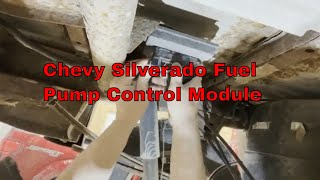
Typical fix: Replace the Fuel System Control Module. 🎬 Watch: How to replace the fuel pump control module Aftermarket modules from brands like Dorman often come with updated mounting hardware (spacers or rubber bushings) to create an air gap and prevent future corrosion. Many aftermarket modules are pre-programmed and do not require a trip to the dealer, unlike most OEM replacements.
Est. part cost: $70-$150 - Refueling with the Ignition On 🟡 Medium Probability As documented in GM Technical Service Bulletin PIT5208A, the fuel management system performs a self-check after refueling. If the vehicle is refueled while the engine is running or the key is on, it can interrupt the fuel level calculation, leading to a false P2636 code and an empty gauge reading.
How to confirm: This is a procedural issue. If the code appeared immediately after a fill-up, ask the driver about their refueling habits. This is the first diagnostic step recommended by GM.
Typical fix: Advise the owner to always turn the ignition completely off before refueling. Clear the code with a scan tool. If the procedure is followed, the code should not return.
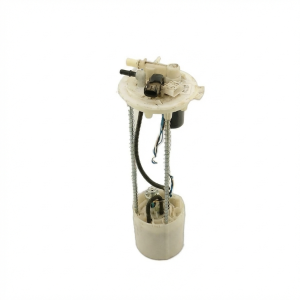
Est. part cost: $0 - Failed Fuel Level Sensor / Fuel Pump Module ⚪ Low Probability → Shop Fuel Pump The fuel level sensor is a moving part inside the fuel tank that can wear out over time, causing incorrect readings. While less common than the FSCM failure, it can still be the root cause if all external components are verified to be in good condition.
How to confirm: Test the fuel level sensor's resistance through its range of motion to check for dead spots. For dual-tank models, use a scan tool to command the transfer pump on and listen for it to run.
Typical fix: Replace the entire fuel pump module, which includes the fuel level sensor and in-tank pump. This requires dropping the fuel tank or lifting the truck bed for access.
Est. part cost: $250-$500 - Corroded Wiring or Ground Connection ⚪ Low Probability The wiring harness to the FSCM and the main ground for the fuel pump circuit are located on the frame, making them vulnerable to corrosion and damage. A critical ground is located on the driver's side frame rail near the wheel well.
How to confirm: Inspect the wiring harness and connector at the FSCM and fuel tank for damage. Check the main ground connection (typically a black wire bolted to the frame) for corrosion or looseness. A voltage drop test on the power and ground wires can identify a wiring issue even if it looks visually okay.
Typical fix: Clean the ground connection point to bare metal or repair the damaged section of the wiring harness. The connector pigtail for the FSCM may also need to be replaced if the pins are corroded.
Est. part cost: $5-$50
Rare But Worth Checking
- Blown FSCM Fuse:
Diagnosis Steps
- Check for other Diagnostic Trouble Codes (DTCs). Codes like U0109 or P069E strongly point to a faulty FSCM.
- Question the driver about refueling habits. Per TSB PIT5208A, if the code only appears after filling the tank, it's likely due to refueling with the ignition on.
- Lower the spare tire to access the Fuel System Control Module (FSCM) on the frame crossmember.
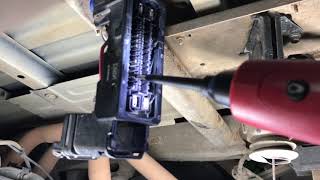
- Thoroughly inspect the FSCM and its electrical connector for signs of white/green corrosion, a swollen aluminum case, or physical damage. This is the most common point of failure. 🎬 See this walkthrough on diagnosing a faulty FSCM
- If corrosion is found, the FSCM is almost certainly the cause and should be replaced. Consider replacing the connector pigtail if it is also corroded.
- If the FSCM appears clean, inspect the wiring harness for damage and check the fuel pump circuit ground on the driver's side frame for corrosion.
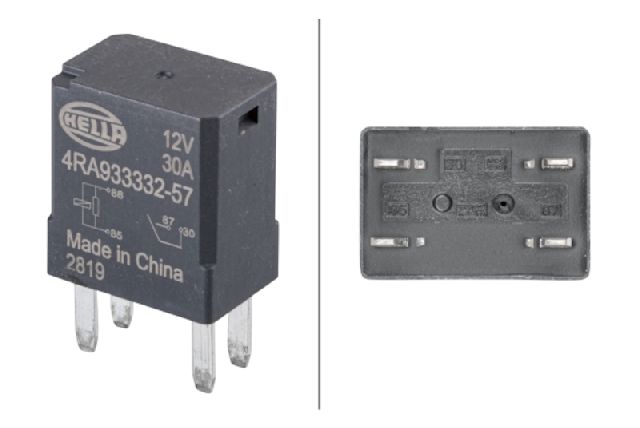
- Check the FSCM-related fuses in the under-hood fuse block (often #21 and #56).
- If all external components and wiring are good, the issue may be the in-tank fuel level sensor or fuel pump, which requires more in-depth testing, such as checking resistance or dropping the tank for inspection.
Parts You'll Likely Need
- Fuel System Control Module (FSCM)
(OEM #20859553)— This module is the most common failure point for code P2636 on this platform due to its poor mounting location, which leads to galvanic corrosion.
Trusted brands: ACDelco (OEM), Dorman (Aftermarket, often pre-programmed)
OEM price range: $120-$180
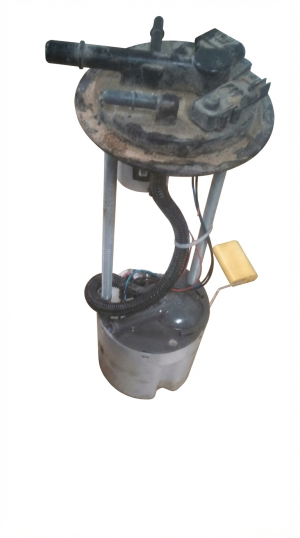
Aftermarket price range: $70-$150 - Fuel Pump and Sender Assembly — If the FSCM and wiring are confirmed to be good, the fault may lie with the fuel level sender or the pump itself, which are sold as a single module inside the fuel tank.
Trusted brands: ACDelco, Delphi, Bosch
OEM price range: $350-$500
Aftermarket price range: $200-$350
Related Codes That Often Appear With This One
- U0109 — This code means "Lost Communication With Fuel Pump Control Module." It frequently appears with P2636 because if the FSCM is dead due to corrosion or internal failure, the PCM cannot communicate with it.
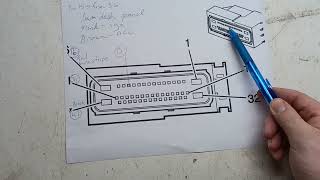
- P069E — This code indicates a fault was reported by the Fuel Pump Control Module itself. It points directly to the FSCM as the source of the problem and is a strong confirming code. 🎬 Learn how to perform a fuel control module bypass
Technical Service Bulletins (TSBs) & Recalls
- PIT5208A: Provides information that a P2636 code and an empty fuel gauge after refueling can be caused by refueling with the engine or ignition on. This is the most common procedural cause.
- PIT5510C / PIT5510D: Pertains mostly to dual-tank HD models, but warns that a kinked fuel transfer line between tanks can restrict flow and cause a P2636, even after
Platform-Specific Known Issues
- A General Motors Technical Service Bulletin (TSB #PIT5208A) directly addresses P2636. It states that if a customer complains of the fuel gauge showing empty after refueling, the cause may be refueling the vehicle with the engine running or the ignition on.
- Another TSB, PIT5510C, notes that for dual-tank models, a kinked fuel transfer line (even on a new replacement part) can cause a repeat P2636 code by restricting flow.
Mechanic-Grade Diagnostic Values
- FSCM Connector Pin 32 (Red/White Wire) Voltage — expected: 12V+ (Constant Battery Voltage). Failure: Low or no voltage points to a blown FSCM fuse (typically fuse #21 in the under-hood block) or a break in the power wire.
- FSCM Connector Pin 13 (Dark Green/White Wire) Voltage — expected: 12V for 2-6 seconds with key-on, or 12V continuously while cranking.. Failure: No voltage indicates a problem with the ECM, a break in the wire from ECM Pin 50, or a failed ECM driver.
- FSCM Connector Pin 1 (Black Wire) Resistance to Chassis Ground — expected: < 1.0 ohm. Failure: High resistance indicates a bad or corroded ground connection for the module itself.
- Fuel Level Sensor Resistance — expected: Approximately 40 Ohms when empty and 250 Ohms when full.. Failure: Readings are outside this range, do not change smoothly, or show an open circuit (infinite resistance).
Scan Tool Commands That Help
- GDS2 / Tech2: Fuel Pump On/Off Command — This is a primary bidirectional test to verify if the FSCM and fuel pump respond to commands. If the pump runs with this command, it helps isolate the fault to the control/logic side rather than a hard failure of the pump or module.
- GDS2: Fuel Pump Module Matching / Self Learning Process — This function is required after replacing the FSCM with a new OEM unit. It allows the ECM to learn and communicate with the new module, clearing old data.
Wiring & Ground Locations
- Fuel Pump Circuit Ground — On the driver's side frame rail, often near the rear wheel well. It is a black wire from the harness bolted directly to the frame.. This is a primary ground for the entire fuel pump circuit. Corrosion or a loose connection here can cause low voltage to the pump and FSCM, directly causing low flow performance and setting P2636 or communication code U0109.
- G103 — On the front of the passenger side (right) cylinder head.. This is a main engine wiring harness ground. While not the primary ground for the fuel pump circuit, a poor connection here can cause a host of electrical issues and seemingly unrelated DTCs, and is a known point of corrosion.
- FSCM Connector — Mounted on a crossmember under the vehicle, above the spare tire.. This is the central connection point for power, ground, and communication for the fuel pump system. Testing voltages and resistance at its specific pins is the most direct way to diagnose the circuit. Pin 32 is power, Pin 1 is ground, and Pin 13 is the command signal from the ECM.
Real Owner Repair Stories
- DuramaxDiesels.com forum user (2015 LML Dump Truck (similar dual-tank system logic)) — Recurring P2636, loss of communication with the fuel pump module, and incorrect fuel level readings.
❌ Tried (didn't work) Dealer repeatedly replaced the sending unit/pump assembly.
✅ What actually fixed it The fuel pump ground wire eyelet attached to the frame was found to be severely rusted. The final fix was cutting off the old eyelet and running a new, clean ground wire to the frame, which resolved all codes and symptoms.
OEM Part Supersession History
1501024, 15213110, 25785013, 25854536, 25866052, 25967325→20759945 (and others)— Module design and software updates to improve reliability and address failures.
Heads up: Modules for 2007-2009 models are generally not compatible with 2010-2012 models, which use a different series of part numbers (e.g., 20791901, 20827745, 20877116). Always verify the part number for the specific model year.
Model Year Variations Within This Range
- 2007-2009 vs 2010-2011: The Fuel System Control Module (FSCM) part numbers changed after the 2009 model year. Modules for 2007-2009 trucks (e.g., ending in 25967325) are different from those for 2010 and newer trucks (e.g., ending in 20877116). While physically similar, they are not interchangeable due to internal hardware and software differences.
Helpful Videos
Used OEM Parts in Stock
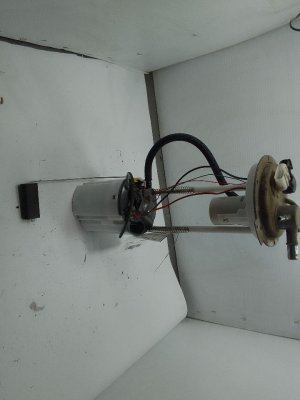
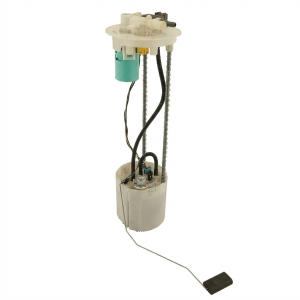
New Aftermarket Parts Available




The information in this article is provided for general reference and educational purposes only. Vehicle specifications, procedures, and part compatibility can vary by production date, trim level, and region. Always consult your vehicle's factory service manual and verify part numbers before purchasing or performing repairs. Safety-critical components such as airbags, seat belts, and braking systems should be installed by a qualified professional.
- Chevrolet SILVERADO:
- 🧭 Diagnostic Flowchart
- 🎬 Helpful Videos
- 🛍️ Shop This Part
- What's Unique About the 2007-2011 Chevrolet SILVERADO
- Symptoms You May Notice
- Most Likely Causes
- Rare But Worth Checking
- Diagnosis Steps
- Parts You'll Likely Need
- Related Codes That Often Appear With This One
- Technical Service Bulletins (TSBs) & Recalls
- Platform-Specific Known Issues
- Mechanic-Grade Diagnostic Values
- Scan Tool Commands That Help
- Wiring & Ground Locations
- Real Owner Repair Stories
- OEM Part Supersession History
- Model Year Variations Within This Range
- 🎟️ Get 5% Off