

P2636 on 2012-2016 Chevrolet Silverado: Causes and Fixes for Fuel Gauge and Performance Issues
On a 2012-2016 Silverado, code P2636 typically points to a faulty Fuel Pump Control Module (FPCM), often due to galvanic corrosion between its aluminum housing and the steel frame. This can cause the fuel gauge to read empty after refueling and may lead to stalling. Inspecting the FPCM (located above the spare tire) is the first step. A replacement module, like Dorman 601-011, costs between $70 and $250 and often includes improved hardware.
- Before buying any parts for a P2636 code, first check your refueling habits. Always turn the truck completely off before filling the tank.
- The most likely part to fail is the Fuel Pump Control Module (FPCM), not the fuel pump itself. Inspect the FPCM above the spare tire for corrosion before dropping the fuel tank.
- If the FPCM is bad, you will often see codes U0109 or P069E stored along with P2636.
- If the FPCM and wiring are fine, the next most likely cause is a failed fuel level sensor, which is part of the in-tank fuel pump module and requires a more involved replacement.
What's Unique About the 2012-2016 Chevrolet SILVERADO
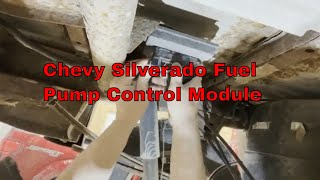
The GMT900 (2012-2013) and K2XX (2014-2016) Silverado platforms are known for P2636 issues primarily due to the exposed mounting location of the Fuel Pump Control Module (FPCM). It is placed on a rear frame crossmember above the spare tire, making it 🎬 Watch: How to find and inspect your fuel control module. highly susceptible to corrosion from water and road salt. The original design often bolted the FPCM's bare aluminum housing directly to the steel frame, causing severe galvanic corrosion that destroys the module and its connector. Additionally, GM has issued service bulletins acknowledging that simply refueling the truck with the ignition on can confuse the fuel monitoring logic and trigger this specific code.
Diagnostic Flowchart
Tap your situation to follow the diagnostic path that matches what you're seeing on this vehicle.
Generation note: This range covers the end of the GMT900 generation (2012-2013) and the beginning of the K2XX generation (2014-2016). The most common cause, a corroded Fuel Pump Control Module (FPCM), affects both generations due to its poor location. However, a TSB for 2016 models also points to a specific issue with a fuel tank fill vent hose, which may be more common on the K2XX platform. That TSB, originally PIT5510B, was updated to PIT5510C to include a diagnostic tip about checking the replacement hose for kinks.
Symptoms You May Notice
- Check Engine Light is on
- Fuel gauge reads empty, especially right after refueling.
- Low fuel warning light is illuminated despite the tank having fuel.
- Engine hesitation or stumbling during acceleration.
- Reduced engine power or 'Limp Mode'.
- Engine cranks but does not start.
- Engine stalls unexpectedly.
- Replacing the entire fuel pump module when the actual problem is the less expensive and more accessible Fuel Pump Control Module (FPCM).
- Replacing the instrument cluster gauge, which is rarely the cause of this specific code.
- Assuming the fuel pump is bad without first inspecting the FPCM, its connector, and its ground wire on the frame.
Most Likely Causes
- Corroded or Failed Fuel Pump Control Module (FPCM) 🔴 High Probability → Shop Fuel Pump The FPCM is mounted on a frame crossmember above the spare tire, where it is exposed to moisture and road salt. Galvanic corrosion occurs between the aluminum module housing and the steel frame, causing the case to swell, break its seal, and allow water to destroy the internal circuit board.
How to confirm: Lower the spare tire and visually inspect the FPCM and its connector for white/green corrosion, a swollen or chalky aluminum case, or damaged pins. Check for related communication codes like U0109, which is a strong indicator of FPCM failure. 🎬 See this diagnostic walkthrough for testing and replacing the module.
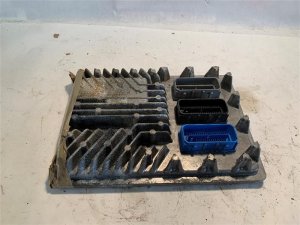
Typical fix: Replace the Fuel Pump Control Module. Aftermarket modules, such as the Dorman 601-011, often come with improved mounting hardware (standoffs or plastic brackets) to isolate the module from the frame and prevent repeat failures. Some OEM replacements may require programming by a dealer, while many aftermarket units are plug-and-play.
Est. part cost: $70-$250 - Refueling with Ignition On or Engine Running 🟡 Medium Probability The fuel management system performs a self-check after refueling to verify the new fuel level. If the ignition is on, it can interrupt this check, confuse the fuel level calculation, and falsely trigger code P2636. This is explicitly detailed in GM TSB #PIT5208A.
How to confirm: This is a procedural issue. If the code only appears immediately after a fill-up, this is the likely cause. Clear the code, ensure the vehicle is turned off completely during subsequent refuelings, and see if the code returns.
Typical fix: Change refueling habits. Always turn the ignition completely off before opening the fuel cap. No parts are required.
Est. part cost: $0 - Faulty Fuel Level Sensor (Sender) 🟡 Medium Probability The sensor's resistive contacts or 'feelers' can wear out over time from rubbing against the rheostat, causing erratic or incorrect readings. This is a common failure on many high-mileage vehicles as the float arm moves constantly with fuel slosh.
How to confirm: Use a scan tool to monitor the fuel level sensor's resistance/voltage. A normal sensor should read approximately 40 Ohms when empty and 250 Ohms when full. If the reading is erratic, stuck, or doesn't change smoothly while adding fuel, the sensor is bad. A more involved test requires removing the pump assembly to check the sensor's sweep with a multimeter.
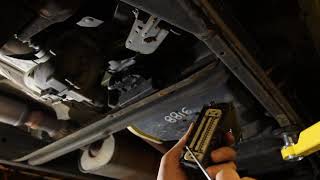
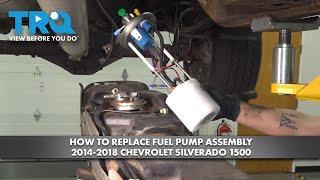
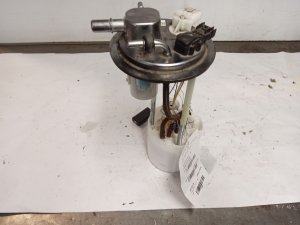
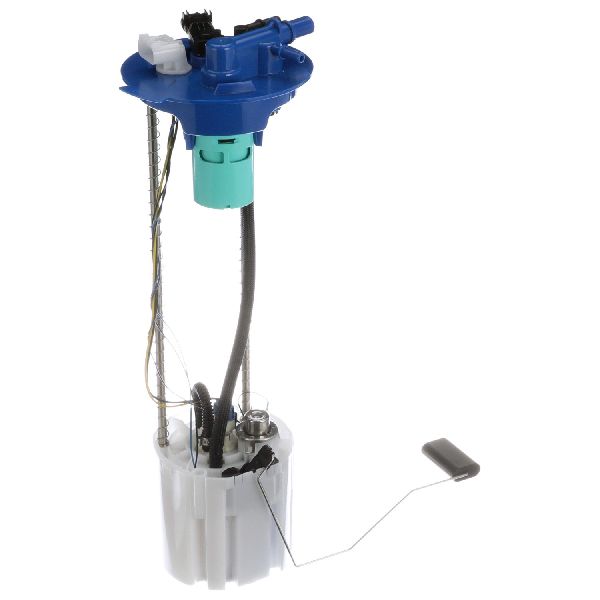
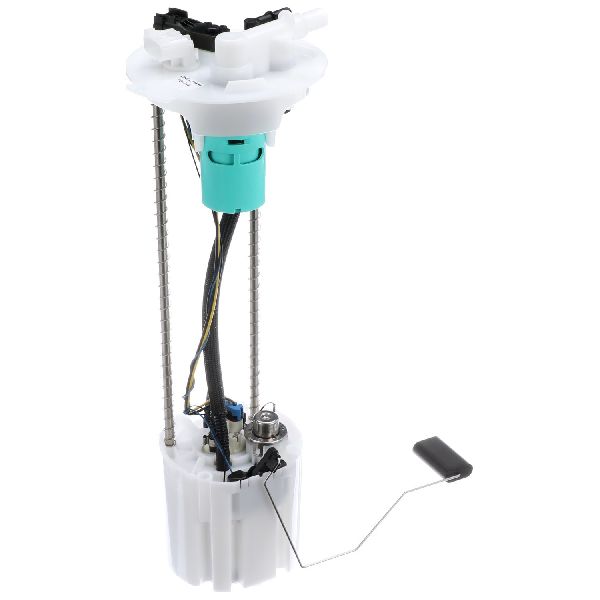
Typical fix: The fuel level sensor is part of the fuel pump module assembly. The entire module must be replaced, which requires dropping the fuel tank or lifting the truck bed for access. 🎬 Watch: Step-by-step guide to replacing the in-tank fuel pump assembly.
Est. part cost: $200-$500 - Kinked or Clogged Fuel Tank Fill Vent Hose ⚪ Low Probability → Shop Fuel Tank A TSB specifically for 2016 models indicates this hose can become kinked or damaged, restricting flow and causing the code. TSB PIT5510C (which supersedes PIT5510B) warns that even the replacement hose can be kinked during installation, causing a repeat failure.
How to confirm: Visually inspect the vent hose assembly near the fuel tank for any visible kinks, damage, or restrictions as described in TSB PIT5510C. The conduit may need to be slid back to see the line underneath.
Typical fix: Install a new Fuel Tank Fill Vent hose assembly per the TSB instructions, being careful not to kink the new part.
Est. part cost: $50-$100
Rare But Worth Checking
- Corroded Fuel Pump Ground Wire: → Shop Fuel Pump The main ground for the fuel pump assembly (and FPCM) is located on the driver's side frame rail, often near the FPCM. Corrosion at this single point can cause low voltage and mimic a failing pump or FPCM, leading to a P2636 code.
- Corroded Underhood Fuse Block / Fuse: In some cases, the power supply to the FPCM can be compromised by corrosion not at the module itself, but at the fuse in the underhood fuse block (often fuse #21). A poor connection at the fuse legs can cause low voltage to the module.
Diagnosis Steps
- Scan the ECM for P2636 and any other codes, paying close attention to U0109 or P069E, as these strongly point to the FPCM.
- Question the driver about their refueling habits. If the code appeared after filling up, advise them to always turn the truck off during refueling, clear the code, and see if it returns. This is the first step recommended by GM TSB #PIT5208A.
- Lower the spare tire to gain access to the Fuel Pump Control Module (FPCM) on the frame crossmember.
- Thoroughly inspect the FPCM and its electrical connector for signs of white/green corrosion, physical damage, or a swollen aluminum case. This is the most common point of failure.
- If the FPCM looks clean, locate and inspect the fuel pump ground wire. It is a black wire bolted to the driver's side frame rail, near the FPCM. Check for corrosion or looseness.
- Check the FPCM fuse in the underhood fuse block (typically fuse 21) for corrosion on its legs or a poor connection in the block itself.
- If no external issues are found, use a scan tool to monitor the fuel level sensor readings. If they are erratic or do not change when fuel is added, the fuel pump module/sending unit inside the tank is likely faulty.
- For 2016 models in particular, inspect the fuel tank fill vent hose for kinks as outlined in TSB PIT5510C.
Parts You'll Likely Need
- Fuel Pump Control Module (FPCM)
(OEM #13565641)— This is the most common failure point for code P2636 on this platform due to its exposed location leading to corrosion.
Trusted brands: ACDelco (GM Genuine), Dorman (e.g., 601-011)
OEM price range: $150-$250
Aftermarket price range: $70-$180 - Fuel Pump and Sender Assembly — If the fuel level sensor has failed, it must be replaced as part of the entire in-tank fuel pump module.
Trusted brands: ACDelco, Delphi, Bosch
OEM price range: $350-$500
Aftermarket price range: $200-$350 - Fuel Tank Fill Vent Hose
(OEM #84214102)— A specific TSB for 2016 models identifies this hose as a potential cause if it becomes kinked, requiring replacement.
Trusted brands: ACDelco (GM Genuine)
OEM price range: $50-$100
Aftermarket price range: $40-$80
Related Codes That Often Appear With This One
- U0109 — This code means 'Lost Communication With Fuel Pump Control Module.' It frequently appears with P2636 because if the FPCM fails due to corrosion or a bad ground, the ECM can no longer communicate with it. It's a very strong indicator that the FPCM or its wiring is the fault.
- P069E — This code indicates a fault was reported by the Fuel Pump Control Module itself. It's a strong indicator that the FPCM has self-diagnosed a problem and is the root cause.
Technical Service Bulletins (TSBs) & Recalls
- PIT5208A: Explicitly states that refueling with the ignition on can cause P2636 and the fuel gauge to read empty. Recommends advising the customer of proper refueling procedure before performing diagnostics.
- PIT5510B / PIT5510C: Pertains to 2016 models where the fuel gauge reads empty with a P2636. It originally pointed to a faulty fuel tank fill vent hose. The 'C' revision added a crucial tip to inspect the new replacement hose for kinks, as they can cause a repeat failure.
Platform-Specific Known Issues
- A high failure rate of the Fuel Pump Control Module (FPCM) due to corrosion from its placement above the spare tire.
- A known software logic issue where refueling with the ignition on can set a false P2636 code and cause the fuel gauge to read empty.
Mechanic-Grade Diagnostic Values
- Fuel Level Sensor Resistance — expected: Approximately 40 Ohms when empty and 250 Ohms when full.. Failure: Readings are erratic, stuck, or do not change smoothly as fuel level changes.
- FPCM Power Supply Voltage (Pin 32, Red/White wire) — expected: ≥ 12.6V with key on, engine off; ≥ 13.5V with engine running.. Failure: Low or no voltage points to a blown FPCM fuse (Fuse 21) or a break in the power wire.
- FPCM Ground Connection (Pin 1, Black wire) — expected: Near 0 Ohms of resistance to a clean chassis ground.. Failure: High resistance indicates a poor ground for the module itself, which can cause erratic behavior.
- FPCM Command Signal Voltage (Pin 13, Dark Green/White wire) — expected: 12V signal for 2-6 seconds with key on, or 12V continuously while cranking.. Failure: No voltage indicates a problem with the ECM or a break in the signal wire from the ECM.
- Fuel Transfer Pump Flow Rate (for dual tank models) — expected: Greater than 2.6 liters (0.70 gallons) in 2 minutes.. Failure: A volume less than this indicates a weak pump, clogged line/vent, or a voltage issue.
- DTC Set Condition — expected: The PCM commands the transfer pump ON for 120 seconds.. Failure: The code sets if the PCM does not detect a change of 4 Liters (1.06 gallons) in both the primary and secondary fuel level sensors during the test.
Scan Tool Commands That Help
- GDS2 (GM Dealer Tool): Fuel Pump Control Module - Control Functions — Used to command the fuel pump ON and OFF manually. This allows a technician to audibly verify pump operation or perform a fuel flow rate test without having to bypass the module with jumpers.
- GDS2 (GM Dealer Tool): Configuration/Reset Functions - Fuel Pump Driver Control Module Configuration — This function is required after replacing the FPCM with a new OEM unit. It programs the new module to the vehicle's VIN and software configuration.
Wiring & Ground Locations
- Fuel Pump/FPCM Ground — A black wire bolted directly to the driver's side frame rail, near the FPCM and the wheel well.. This is the primary ground for the entire fuel pump circuit. Corrosion or a loose connection at this single point causes low voltage, mimicking a failing pump or FPCM and directly causing low flow performance.
- FPCM Connector (X313) — Located above the spare tire, connecting to the Fuel Pump Control Module.. This is the central point for testing. Key pins are Pin 32 (Power), Pin 1 (Ground), Pin 13 (ECM Command Signal), and Pin 47 (Voltage to Pump).
- ECM Command Signal Source — Pin 50 on the black PCM connector, located in the engine bay on the driver's side.. This is the origin of the Dark Green/White wire that tells the FPCM to turn on. If there's no signal at FPCM Pin 13, testing here determines if the PCM is bad or if the wire is broken somewhere along the frame.
- G300 (2014+ K2XX models) — On the back of the first frame outrigger behind the left front tire, under the truck directly below the driver door hinge area.. This is a known problematic ground location on newer models that is prone to rusting and wire fatigue, affecting various control modules.
Real Owner Repair Stories
- DuramaxDiesels.com forum user (2015 LML Dump Truck (Silverado 3500 HD Chassis Cab)) — Recurring P2636 code, loss of communication with the fuel pump module, and incorrect fuel level readings.
❌ Tried (didn't work) The truck already had a recall/update kit installed for the issue, which worked for two years before the problem returned.
✅ What actually fixed it The final fix was cutting off the old, corroded ground wire eyelet for the fuel pump circuit and running a new, redundant ground wire to a clean spot on the frame/engine block.
When the Usual Fixes Don't Work
- While replacing the Fuel Pump Control Module (FPCM) is the most common fix for P2636, it is not a guaranteed solution. If the FPCM has been replaced and the code persists, the root cause may lie elsewhere. For instance, TSB PIT5510C for 2016 models highlights that a physically kinked fuel line—even a newly installed one—can restrict flow and re-trigger the code, a problem a new module cannot fix. Furthermore, the primary ground wire for the fuel pump circuit, located on the driver's side frame rail, is a critical failure point. In at least one documented case, a recurring P2636 on a 2015 model was only resolved after the owner cut off the corroded ground terminal and ran a completely new ground wire, after a previous recall-related repair had failed. This demonstrates that before condemning a second FPCM, technicians should perform a voltage drop test on the ground circuit and physically inspect fuel lines for restrictions.
OEM Part Supersession History
13526238, 13531875, 13540028, 13558812→13565641— Standard part evolution and consolidation by the manufacturer.
Heads up: The newest part number (13565641) is the correct service replacement for all the previous numbers.
Model Year Variations Within This Range
- 2012-2013 (GMT900): These models are specifically called out in TSB #PIT5208A regarding the false P2636 code caused by refueling with the ignition on.
- 2015-2016 (K2XX Diesel Dual Tank): These specific models were subject to Voluntary Emission Recall #17067 to fix an insufficient fuel transfer rate that sets P2636 and requires an ECM reprogram.
- 2016 (Chassis Cab): These models are the specific subject of TSB #PIT5510C, which details a fix involving a potentially kinked Fuel Tank Fill Vent hose or transfer line.
Helpful Videos
![Easy Fix for Common Chevy Problem [Fuel Pump Control Module]](https://img.youtube.com/vi/38Xeo1uLBoU/mqdefault.jpg)
Used OEM Parts in Stock
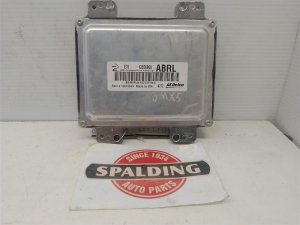
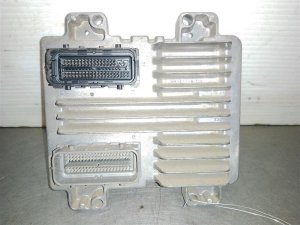
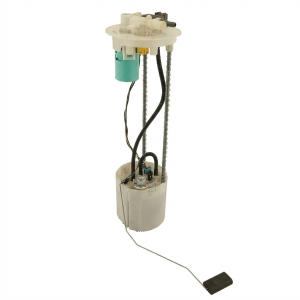
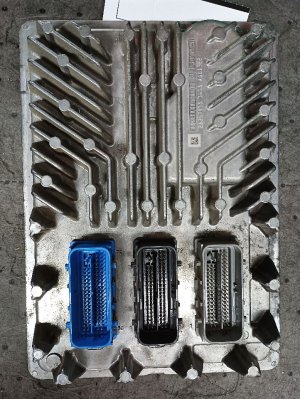
New Aftermarket Parts Available

The information in this article is provided for general reference and educational purposes only. Vehicle specifications, procedures, and part compatibility can vary by production date, trim level, and region. Always consult your vehicle's factory service manual and verify part numbers before purchasing or performing repairs. Safety-critical components such as airbags, seat belts, and braking systems should be installed by a qualified professional.
- Chevrolet SILVERADO:
- 🧭 Diagnostic Flowchart
- 🎬 Helpful Videos
- 🛍️ Shop This Part
- What's Unique About the 2012-2016 Chevrolet SILVERADO
- Symptoms You May Notice
- Most Likely Causes
- Rare But Worth Checking
- Diagnosis Steps
- Parts You'll Likely Need
- Related Codes That Often Appear With This One
- Technical Service Bulletins (TSBs) & Recalls
- Platform-Specific Known Issues
- Mechanic-Grade Diagnostic Values
- Scan Tool Commands That Help
- Wiring & Ground Locations
- Real Owner Repair Stories
- When the Usual Fixes Don't Work
- OEM Part Supersession History
- Model Year Variations Within This Range
- 🎟️ Get 5% Off