

P2636 on 2007-2011 GMC Yukon Denali: Fuel Pump Performance Causes and Fixes
On a 2007-2011 GMC Yukon Denali, code P2636 is most often caused by a failed Fuel Pump Driver Module (FPDM) located on the frame above the spare tire. This module corrodes due to its exposed location. Expect to pay $50-$150 for an aftermarket part, which is a common DIY fix. Before replacing the more expensive in-tank fuel pump, always inspect the FPDM first.
- P2636 on a 2007-2011 Yukon Denali most often points to a bad Fuel Pump Driver Module (FPDM), not the fuel pump itself.
- Before buying parts, check the FPDM located above the spare tire for heavy corrosion, which is a very common and visible sign of failure.
- Always turn the vehicle completely off before refueling to prevent setting a false P2636 code, as documented in a GM service bulletin.
- If you see code P069E along with P2636, the FPDM is almost certainly the failed component.
- An aftermarket FPDM (like Dorman 590-001) is a cost-effective, plug-and-play repair, while an OEM part may require dealer programming.
What's Unique About the 2007-2011 Gmc YUKON DENALI
The GMT900 platform, which includes the 2007-2011 Yukon Denali, places the Fuel Pump Driver Module (FPDM) on the driver's side frame rail, often above the spare tire. This location exposes the module to road salt, water, and debris, leading to frequent dissimilar metal corrosion between the module's aluminum housing and the steel frame. This corrosion compromises the module's electronics and ground connection, making the FPDM the most common failure point for code P2636 on these trucks, often before the in-tank fuel pump itself wears out.
Diagnostic Flowchart
Tap your situation to follow the diagnostic path that matches what you're seeing on this vehicle.
Symptoms You May Notice
- Check Engine Light is on
- Engine stalls, especially under load or when warm
- Hesitation or loss of power during acceleration
- Crank-no-start condition
- Fuel gauge reads empty immediately after refueling
- Reduced Engine Power message on the dash
- Whining noise from the fuel pump area
- Replacing the in-tank fuel pump before inspecting the Fuel Pump Driver Module (FPDM). The FPDM is a more common failure point for this code on this vehicle and is easier and cheaper to replace.
Most Likely Causes
- Failed Fuel Pump Driver Module (FPDM) 🔴 High Probability → Shop Fuel Pump The module is mounted on the frame above the spare tire, where it is highly susceptible to corrosion from road salt and moisture, causing the electronics inside to fail. The aluminum housing corrodes where it contacts the steel frame.
How to confirm: Lower the spare tire and visually inspect the module on the driver's side frame rail. Look for heavy white corrosion, a cracked housing, or physical damage. Tapping on it may temporarily restore function. A scan tool may also show a P069E code alongside P2636, strongly indicating FPDM failure.
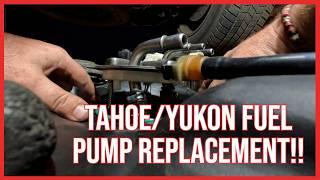
Typical fix: Replace the Fuel Pump Driver Module. The old module is unbolted, the electrical connector is swapped, 🎬 Watch: This video shows how to swap the corroded module. and the new module is bolted in its place. Aftermarket modules from brands like Dorman often come pre-programmed and are 'plug and play'. OEM ACDelco modules may require programming by a dealer or a shop with the appropriate tools.
Est. part cost: $50-$150 - Failing In-Tank Fuel Pump Assembly 🟡 Medium Probability → Shop Fuel Pump The electric fuel pump inside the fuel tank can wear out over time, typically after 100,000 miles. It is a common misdiagnosis when the FPDM is the actual root cause.
How to confirm: After confirming the FPDM and its wiring are good, a fuel pressure test is performed. If the pressure is below specification (e.g., under 50-60 PSI) while the pump is commanded on with a scan tool or by jumping the FPDM connector, the pump is likely faulty.
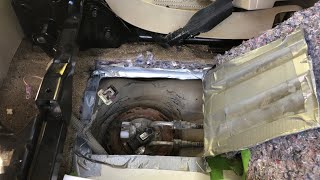
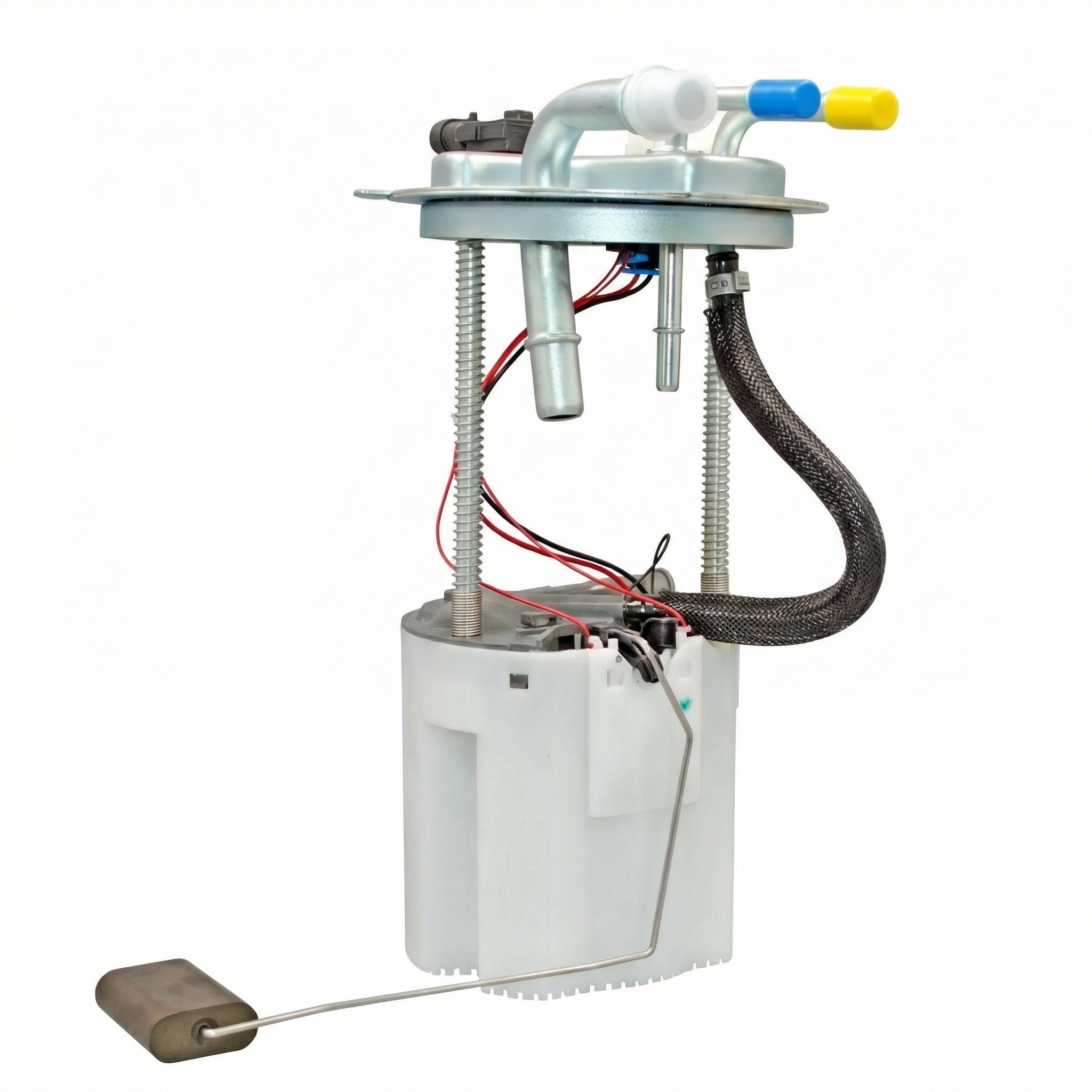
Typical fix: Replace the entire fuel pump and sender assembly inside the fuel tank. This requires dropping the fuel tank for access. 🎬 See this step-by-step guide for replacing the in-tank pump. Using a quality OEM or Delphi pump is highly recommended over cheaper alternatives.
Est. part cost: $200-$450 - Refueling with Engine On ⚪ Low Probability As noted in GM Technical Service Bulletin #PIT5208A, refueling with the ignition on can cause a logic error, making the fuel gauge read empty and setting code P2636.
How to confirm: Ask the driver about their refueling habits. If the code appeared immediately after filling up, this is a likely trigger.
Typical fix: Clear the code with a scan tool and advise the owner to always turn the vehicle off before refueling. No parts are required.
Est. part cost: $0 - Damaged Wiring or Connectors ⚪ Low Probability The wiring harness leading to the FPDM is also in an exposed location and can suffer from corrosion or physical damage. The ground wire for the module is a common point of failure.
How to confirm: Inspect the electrical connector and wiring going to the FPDM for green corrosion, frayed wires, or loose pins. Perform a voltage drop test on the power and ground circuits to check for high resistance.
Typical fix: Repair the damaged section of the harness or replace the connector pigtail.
Est. part cost: $20-$50
Rare But Worth Checking
- Clogged Fuel Filter: The fuel filter is part of the fuel pump module on these vehicles and is not serviced separately. However, a severely clogged filter can cause low flow and trigger P2636, requiring the replacement of the entire fuel pump module.
- Kinked Fuel Transfer Line (Dual Tank Models): On models equipped with dual fuel tanks (RPO N2N), such as some chassis cab variants, a kinked transfer line between the tanks can restrict fuel flow and set a P2636 code, as noted in TSB PIT5510C and its successor, PIT5510D.
Diagnosis Steps
- Scan for any other DTCs. The presence of P069E or U0109 strongly points to the FPDM.
- Interview the driver: Ask if the code appeared directly after refueling. If so, clear the code and advise them to refuel with the vehicle off, per TSB #PIT5208A.
- Check the fuel pump fuses in the under-hood fuse box. Specifically, check fuses 21 (FSCM) and 56 (ECM).
- Lower the spare tire to gain access to the Fuel Pump Driver Module (FPDM) on the driver's side frame rail.
- Visually inspect the FPDM for signs of heavy white corrosion, cracks, or other damage. Also inspect the electrical connector and nearby wiring for corrosion or damage.
- If the FPDM is heavily corroded or damaged, replace it. This is the most likely fix. Aftermarket Dorman units are typically pre-programmed, while OEM ACDelco units may require programming.
- If the FPDM and wiring appear okay, test the circuit. Check for 12V power at the FPDM connector (Red/White wire) and check for a command signal from the ECM (Dark Green/White wire) while cranking.
- To test the fuel pump directly, you can bypass the FPDM by jumping the power and ground pins to the corresponding pins for the fuel pump at the module's connector. If the pump runs, the FPDM is faulty. If it doesn't, the pump or its wiring is the issue.
- If the FPDM and its circuit are confirmed good, perform a fuel pressure test using a mechanical gauge. If fuel pressure is low, the in-tank fuel pump assembly is the next most likely cause of failure.
Parts You'll Likely Need
- Fuel Pump Driver Module
(OEM #20850907 (Supersedes multiple previous numbers like 25967325))— This is the most common failure item for code P2636 on this platform due to its exposed mounting location leading to corrosion.
Trusted brands: ACDelco (GM Genuine), Dorman (OE FIX, often pre-programmed)
OEM price range: $100-$180
Aftermarket price range: $50-$120 - Fuel Pump and Sender Assembly — If the Fuel Pump Driver Module is working correctly, the in-tank pump is the next component 🎬 Watch: A clever shortcut for replacing the pump without dropping the tank. to fail from normal wear and tear.
Trusted brands: ACDelco (GM Genuine), Delphi, Bosch
OEM price range: $300-$500
Aftermarket price range: $200-$450
Related Codes That Often Appear With This One
- P069E: Fuel Pump Control Module Commanded OFF. This code is very specific to a fault within the FPDM itself and strongly points to it as the root cause when seen with P2636.
- U0109: Lost Communication With Fuel Pump Control Module.
Technical Service Bulletins (TSBs) & Recalls
- PIT5208A: Provides information that refueling with the engine or ignition on can cause the fuel gauge to show empty and set code P2636.
- PIT5510C: On dual-tank models, discusses how a kinked fuel transfer line can cause P2636.
Platform-Specific Known Issues
- A known issue documented in TSB #PIT5208A involves the fuel gauge dropping to empty and code P2636 setting if the vehicle is refueled while the engine is running or the ignition is on.
- The FPDM's aluminum body corrodes severely due to galvanic reaction with the steel frame it's bolted to, exacerbated by moisture and road salt. Upgraded replacement parts often include rubber bushings to isolate the module from the frame.
Mechanic-Grade Diagnostic Values
- FPDM Connector Pin 32 (Red/White wire) to Ground — expected: 12V+ (Battery Positive Voltage). Failure: No voltage indicates a blown fuse (FSCM Fuse 21) or a break in the power wire.
- FPDM Connector Pin 1 (Black wire) to 12V+ — expected: Good ground connection (test light illuminates).. Failure: No ground indicates a break in the ground wire or a corroded ground point (G303).
- FPDM Connector Pin 13 (Dark Green/White wire) with Key On or Cranking — expected: 12V+ for 2-6 seconds with key on, or constant 12V+ while cranking. This is the 'pump on' command from the ECM.. Failure: No voltage indicates a wiring break between the ECM (Pin 50) and FPDM, or a faulty ECM.
- FPDM Connector Pin 15 (Pink wire) with Key On — expected: 12V+ (Ignition 1 Voltage). Failure: No voltage indicates a wiring or fuse issue in the ignition circuit.
- Fuel Pump Amperage Draw — expected: 4 to 8 amps at normal operating pressure (~60 psi).. Failure: Significantly higher draw suggests a clogged filter or failing pump; lower draw suggests high resistance or a bad ground.
Scan Tool Commands That Help
- GM GDS2 / Tech2: Fuel Pump Relay / Fuel Pump Control Test — Used to command the fuel pump on to verify the pump's operation independently of the FPDM, or to check for fuel pressure and flow. This helps isolate the fault between the pump and the control module.
- GM GDS2 / Tech2: Enter 'Service Only Mode' — On some GM vehicles, certain bidirectional controls will fail with an 'Incorrect power mode' error unless the vehicle is put into this specific mode. To enter, with foot off the brake, press and hold the bottom of the ignition button for 5+ seconds until the check engine light illuminates.
Wiring & Ground Locations
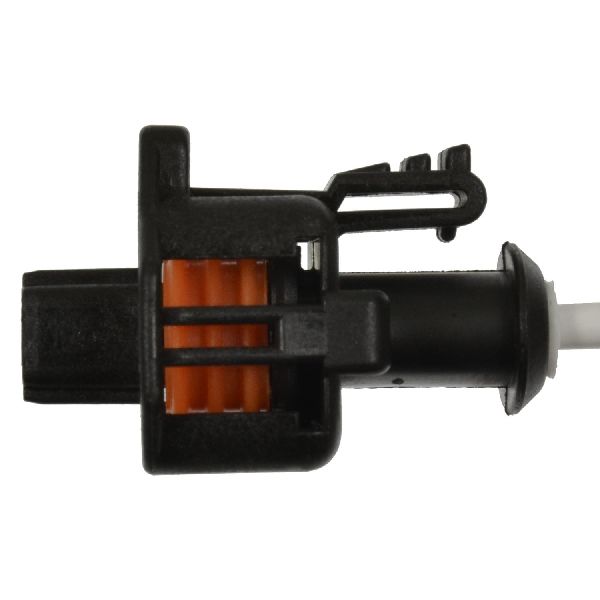
- FPDM Connector — Above the spare tire, mounted to the driver's side frame rail.. This is the central connection point for all power, ground, and command signals for the fuel pump system. Corrosion here is common and can cause P2636.
- G303 — On the left side (driver's side) B-pillar, behind the trim panel.. This is a primary body ground point for components in the rear half of the vehicle. While the FPDM has a direct frame ground, issues at G303 can cause various electrical problems that may indirectly affect the fuel system readings.
- Fuel Pump Frame Ground — On the driver's side frame rail, near the FPDM and driver's side tire. Often a stud with multiple ground wires attached.. This is the direct ground point for the FPDM and fuel pump. Corrosion or looseness at this specific point is a direct cause of high resistance in the fuel pump circuit, leading to low performance and code P2636.
- Fuses 21 & 56 — In the under-hood fuse block.. Fuse 21 (20A) provides power to the FSCM/FPDM, and Fuse 56 (15A) provides power to the ECM. A blown fuse will cut power to the respective module, preventing the fuel system from operating.
"I Checked Everything" — The Actual Cause
- In one documented case (on a different vehicle platform), a persistent P2636 with good electrical tests and fuel pressure was finally resolved by addressing contaminated fuel. The fuel was 'off-color' and had caused one fuel injector to leak constantly and another to become clogged. After dropping and cleaning the tank and replacing the faulty injectors, the code was resolved. This is a rare but possible cause when all common electrical and module faults have been ruled out.
OEM Part Supersession History
13501024, 15213110, 25785013, 25854536, 25866052, 25967325→20850907, and subsequently 20759945— GM periodically updates electronic modules to improve reliability and address field failures. The high corrosion-related failure rate of early modules likely prompted these revisions.
Heads up: While all listed part numbers are for the same component, OEM modules require programming to the vehicle's VIN to function correctly. Aftermarket modules often do not require this step.
Helpful Videos
![Easy Fix for Common Chevy Problem [Fuel Pump Control Module]](https://img.youtube.com/vi/38Xeo1uLBoU/mqdefault.jpg)
Used OEM Parts in Stock
New Aftermarket Parts Available


The information in this article is provided for general reference and educational purposes only. Vehicle specifications, procedures, and part compatibility can vary by production date, trim level, and region. Always consult your vehicle's factory service manual and verify part numbers before purchasing or performing repairs. Safety-critical components such as airbags, seat belts, and braking systems should be installed by a qualified professional.
- Gmc YUKON DENALI:
- 🧭 Diagnostic Flowchart
- 🎬 Helpful Videos
- 🛍️ Shop This Part
- What's Unique About the 2007-2011 Gmc YUKON DENALI
- Symptoms You May Notice
- Most Likely Causes
- Rare But Worth Checking
- Diagnosis Steps
- Parts You'll Likely Need
- Related Codes That Often Appear With This One
- Technical Service Bulletins (TSBs) & Recalls
- Platform-Specific Known Issues
- Mechanic-Grade Diagnostic Values
- Scan Tool Commands That Help
- Wiring & Ground Locations
- "I Checked Everything" — The Actual Cause
- OEM Part Supersession History
- 🎟️ Get 5% Off