

P2636 on 2007-2013 GMC Yukon XL: Causes for Fuel Gauge Issues and Fixes
On a 2007-2013 GMC Yukon XL, P2636 is most often caused by refueling with the engine running, which confuses the fuel level system. If that's not the cause, the next most likely culprit is a corroded Fuel Pump Control Module (FPCM) located on the frame rail, a common failure point on this platform. This code specifically relates to the performance of the secondary fuel pump in models with dual tanks.
- Before any repairs, ensure you are turning the vehicle completely off before refueling. This simple habit change resolves the issue for many owners.
- If the code persists, your first mechanical check should be a visual inspection of the Fuel Pump Control Module (FPCM) on the driver's side frame rail for corrosion.
- Do not replace the expensive in-tank fuel pump assembly without first ruling out the cheaper, more accessible, and more likely-to-fail FPCM.
- If you see codes P069E or U0109 along with P2636, the FPCM is almost certainly the problem. Also check the 'FSCM' fuse in the underhood fuse box for corrosion.
- When replacing the FPCM, closely inspect the electrical connector pigtail for corrosion and replace it if necessary. Remember that OEM modules require programming, while some aftermarket versions do not.
What's Unique About the 2007-2013 Gmc YUKON XL
The GMT900 platform, which includes this generation of Yukon XL, has two well-documented quirks related to code P2636. First, the fuel monitoring system is highly sensitive to refueling procedures, as outlined in General Motors Technical Service Bulletin (TSB) PIT5208A. Second, the Fuel Pump Control Module (FPCM), made of cast aluminum, is mounted on the exterior of the driver's side frame rail near the spare tire. This location makes it extremely vulnerable to water, road salt, and debris, which leads to severe corrosion of the housing and electrical connector pins, causing a high rate of failure.
Diagnostic Flowchart
Tap your situation to follow the diagnostic path that matches what you're seeing on this vehicle.
Symptoms You May Notice
- Fuel gauge drops to empty or shows an inaccurate reading immediately after refueling.
- Check Engine Light is illuminated.
- Low Fuel light may turn on even with a full tank.
- Engine cranks but does not start.
- Engine stalls while driving, sometimes intermittently.
- In cases of FPCM or pump failure, possible engine hesitation or stalling.
- Audible whine from the fuel pump may be absent when turning the key to the 'ON' position.
- Replacing the in-tank fuel pump assembly before inspecting the much cheaper and more accessible Fuel Pump Control Module (FPCM). The FPCM is a significantly more common failure point for this code on this platform.
Most Likely Causes
- Refueling With Ignition On or Engine Running 🔴 High Probability The vehicle's computer monitors fuel tank levels and can misinterpret a rapid fuel level increase while the system is active as a fault. This is a well-documented issue in GM TSB #PIT5208A.
How to confirm: Question the driver's refueling habits. If they refuel with the key on, clear the code, turn the vehicle off completely before the next refuel, and see if the code returns.
Typical fix: Change refueling procedure. Always turn the ignition completely off before opening the fuel cap.
Est. part cost: $0 - Failed Fuel Pump Control Module (FPCM) 🟡 Medium Probability → Shop Fuel Pump The FPCM is mounted to the frame rail under the vehicle, exposing it to moisture and road salt, which causes severe corrosion on the aluminum housing and its connector. This is the most common hardware failure for this code on the GMT900 platform.
How to confirm: Visually inspect the FPCM, located on the driver's side frame rail, typically above the spare tire. Look for heavy rust, white, chalky corrosion on the aluminum housing, and green or white crust on the electrical connector pins. Scan for codes U0109 ('Lost Communication With Fuel Pump Control Module') or P069E ('Fuel Pump Control Module Commanded On'), which strongly point to a failed FPCM.
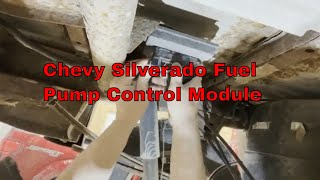
Typical fix: Replace the failed Fuel Pump Control Module. The connector pigtail often corrodes as well and may need to be replaced. OEM modules require programming by a dealer or qualified shop, while some aftermarket modules (like Dorman) are sold pre-programmed. 🎬 Watch this guide on FPCM replacement and programming options.
Est. part cost: $70-$200 - Failed Fuel Level Sensor (Part of Fuel Pump Assembly) ⚪ Low Probability The fuel level sensor is a moving part inside the fuel tank that can wear out over time, leading to incorrect readings. However, this is less common than an FPCM failure.
How to confirm: Use a scan tool to monitor the fuel level sensor voltage for both the primary and secondary tanks. If a reading is erratic, stuck, or does not correspond to the actual fuel level after ruling out the FPCM, the sensor is likely bad. The resistance range for late model GM trucks is typically 40 ohms (empty) to 250 ohms (full).
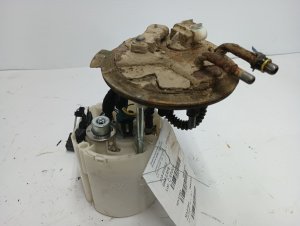
Typical fix: Replace the entire fuel pump and sender assembly, as the sensor is typically integrated into it. This requires dropping the fuel tank.
Est. part cost: $250-$500
Rare But Worth Checking
- Kinked Fuel Transfer Line: On models equipped with dual fuel tanks (RPO N2N), a kinked or restricted transfer line between the tanks can prevent proper fuel balancing and trigger a P2636 code. This is noted in TSB PIT5510C, primarily for chassis cab models, but the principle applies if a line becomes damaged or pinched.
- Corroded Underhood Fuse Box Terminal: The fuse that powers the FPCM (often fuse #21, labeled 'FSCM') can have its terminals corrode within the fuse box itself. This leads to an intermittent loss of power to the module, causing a U0109 and sometimes a P2636, even if the FPCM itself is good. A visual inspection of the fuse and its contacts in the box is warranted.
Diagnosis Steps
- First, ask the driver if they refuel the vehicle with the engine running or the key in the 'ON' position. If so, advise them to stop, clear the code, and see if it returns after the next (engine-off) refueling.
- If the issue persists, scan the ECM for any other trouble codes. Pay close attention to P069E and U0109, as they point directly to the FPCM.
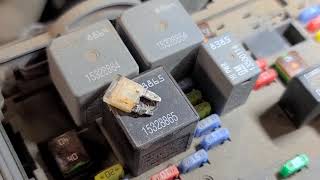
- Inspect the underhood fuse box. Locate the fuse for the FPCM/FSCM (typically a 20A fuse in position 21). Remove it and check the fuse legs and the box terminals for any signs of green or white corrosion.
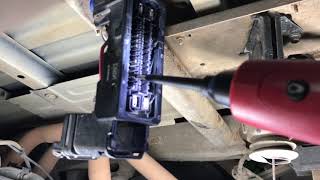
- Locate the Fuel Pump Control Module on the driver's side frame rail, near the spare tire. Perform a thorough visual inspection of the module and its electrical connector for signs of corrosion, swelling, or physical damage. Disconnect it and check the pins. 🎬 See a professional diagnosis of the Fuel System Control Module.
- If the FPCM is corroded or communication codes are present, replace the FPCM. Be prepared to replace the connector pigtail as well if it is damaged.
- If the FPCM and wiring look clean, use a bi-directional scan tool to command the fuel transfer pump on and monitor the fuel level sensor data PIDs for both tanks. Check for smooth, logical changes.
- If the FPCM is fine but fuel level readings are erratic or incorrect, the in-tank fuel level sender is the likely problem, requiring replacement of the fuel pump module assembly.
Parts You'll Likely Need
- Fuel Pump Control Module (FPCM)
(OEM #20759945)— This is the most common part to fail due to its exposed mounting location on the frame, leading to corrosion. The OEM part requires programming after installation.
Trusted brands: ACDelco (OEM), Dorman (Often pre-programmed)
OEM price range: $100-$200
Aftermarket price range: $70-$150 - FPCM Connector Pigtail
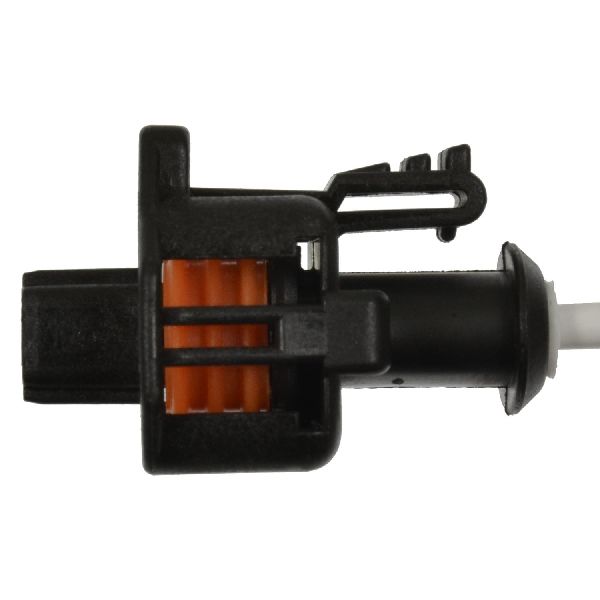
(OEM #PT2782, PT1798)— The electrical connector for the FPCM is also exposed to the elements and frequently corrodes along with the module, requiring it to be cut out and spliced in.
Trusted brands: ACDelco, Duralast
OEM price range: $50-$70
Aftermarket price range: $20-$45 - Fuel Pump and Sender Assembly
(OEM #MU1739, MU1385)— This part is replaced if the internal fuel level sensor fails. The specific part number depends on the vehicle's wheelbase and fuel system (e.g., Flex Fuel). Always verify with VIN.
Trusted brands: ACDelco, Delphi
OEM price range: $350-$500
Aftermarket price range: $200-$350
Related Codes That Often Appear With This One
- P069E — This code indicates a fault was detected within the Fuel Pump Control Module itself, often appearing with P2636 when the FPCM is the root cause.
- U0109 — This code means 'Lost Communication With Fuel Pump Control Module.' It is a strong indicator that the FPCM has failed completely due to internal failure, corrosion, or a wiring issue (like a corroded fuse box terminal) preventing it from powering on. 🎬 Watch how to troubleshoot a U0109 no-start condition.
Technical Service Bulletins (TSBs) & Recalls
- PIT5208 / PIT5208A: Addresses the fuel gauge showing empty and DTC P2636 after refueling with the engine or key on.
- PIT5510C: Discusses P2636 on dual-tank chassis cab models due to kinked transfer lines, a potential issue on Yukon XLs if lines are damaged.
Platform-Specific Known Issues
- A known issue documented in TSB #PIT5208A where refueling with the ignition on causes the fuel gauge to read empty and sets code P2636.
- The Fuel Pump Control Module (FPCM) is highly prone to failure from corrosion due to its placement on the exterior frame rail. This is the most common hardware failure for this code.
- On some models, the underhood fuse box is prone to moisture intrusion, causing corrosion on the FPCM power supply fuse terminals, which mimics a failed module.
Mechanic-Grade Diagnostic Values
- Fuel Level Sensor Resistance — expected: Approximately 40 Ohms at Empty, 250 Ohms at Full.. Failure: An open circuit (infinite resistance) or a reading that is stuck and does not change when the fuel level changes.
- Fuel Transfer Pump Flow Test — expected: Greater than 2.6 liters (0.70 gallons) of fuel transferred in 2 minutes.. Failure: Transferring less than 2.6 liters in the specified time, indicating a weak pump, clogged line, or voltage issue.
- FPCM 'Pump On' Signal Voltage — expected: 12V present for 2-6 seconds with key on, or constant 12V while cranking.. Failure: No voltage at the Dark Green/White wire (Pin 13) at the FPCM connector when commanded on by the ECM.
- Main Fuel Pump Pressure (FPCM Commanded) — expected: 345-690 kPa (50-100 psi) with pump commanded ON by a scan tool.. Failure: Pressure below 345 kPa (50 psi) suggests a weak pump or restriction; pressure above 690 kPa (100 psi) may indicate a faulty pump module.
Scan Tool Commands That Help
- GDS2 / Tech2: Fuel Pump Relay 2 ON/OFF Command — Use this bidirectional control to manually turn the secondary (transfer) fuel pump on and off to verify the FPCM, relay, and pump are capable of functioning. You should hear the pump run when commanded ON.
- GDS2 / Tech2: Fuel Transfer Pump Test — This automated test commands the transfer pump on for a specific duration (e.g., 120 seconds) while monitoring the fuel level PIDs. It's used to verify if the expected volume of fuel (e.g., 4 liters) is successfully transferred between tanks, which is the direct condition the ECM uses to set P2636.
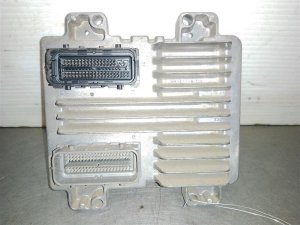
- Professional Scan Tool: PCM-FICM Handshake Test — This function specifically tests the CAN bus communication link between the main engine computer and the fuel control module. A failure here, when wiring is known-good, strongly points to a faulty module.
Wiring & Ground Locations
- FPCM Connector Pin 13 — On the main connector for the Fuel Pump Control Module, located on the driver's side frame rail near the spare tire.. This pin, with a Dark Green/White wire, receives the 'pump on' signal from the ECM. Testing for voltage here is a critical step to determine if the FPCM is receiving the command to activate the transfer pump.
- FPCM Connector Pin 32 & Pin 1 — On the main connector for the FPCM.. Pin 32 (Red/White wire) is the main battery positive voltage supply to the module, and Pin 1 (Black wire) is the main ground. Loss of power or ground here will cause a U0109 and prevent the pump from running.
- FPCM Power Wire Harness Chafe Point — Inside the square tube section of the frame where the wiring harness makes a turn under the truck, directly below the underhood fuse panel on the driver's side.. The power wire to the FPCM can chafe and break inside this harness section, causing an intermittent or total loss of power to the module, leading to a U0109 and P2636. This is a hidden failure point that won't be found by inspecting the module itself.
- ECM Connector Pin 50 — At the black connector of the Engine Control Module (ECM).. This is the origin of the Dark Green/White wire that commands the FPCM on. If there is no voltage at Pin 13 of the FPCM, checking for voltage here can determine if the ECM is sending the signal or if there is a break in the wire between the ECM and FPCM.
Real Owner Repair Stories
- 2CarPros Forum User (GM Truck (GMT900 platform)) — Crank no start, no communication with fuel pump control module (likely U0109 and P2636).
❌ Tried (didn't work) Initial checks of the FPCM and its ground wires showed no obvious issues.
✅ What actually fixed it The user found a voltage drop on the power wire to the FPCM. After running a temporary jumper wire, the truck started. The physical break in the wire was located inside the square tube of the frame where the harness turns under the driver's side, just below the fuse panel. Repairing this broken wire resolved the issue.
OEM Part Supersession History
15213110, 25785013, 25854536, 25967325, 13501024, 20850907→20759945— Standard part evolution and consolidation by the manufacturer.
Heads up: The replacement part 20759945 requires programming by a dealer or qualified shop with GM software after installation. Some aftermarket alternatives do not require this step.
Model Year Variations Within This Range
- 2009+: For the 2009 model year, many Yukon XLs received a new 6-speed automatic transmission (replacing the 4-speed) when equipped with the 5.3L and 6.0L engines. While not directly related to the P2636 code, this was a significant powertrain change within the generation. The FPCM and fuel transfer system logic remained largely consistent.
Helpful Videos
![Easy Fix for Common Chevy Problem [Fuel Pump Control Module]](https://img.youtube.com/vi/38Xeo1uLBoU/mqdefault.jpg)
Used OEM Parts in Stock
New Aftermarket Parts Available


The information in this article is provided for general reference and educational purposes only. Vehicle specifications, procedures, and part compatibility can vary by production date, trim level, and region. Always consult your vehicle's factory service manual and verify part numbers before purchasing or performing repairs. Safety-critical components such as airbags, seat belts, and braking systems should be installed by a qualified professional.
- Gmc YUKON XL:
- 🧭 Diagnostic Flowchart
- 🎬 Helpful Videos
- 🛍️ Shop This Part
- What's Unique About the 2007-2013 Gmc YUKON XL
- Symptoms You May Notice
- Most Likely Causes
- Rare But Worth Checking
- Diagnosis Steps
- Parts You'll Likely Need
- Related Codes That Often Appear With This One
- Technical Service Bulletins (TSBs) & Recalls
- Platform-Specific Known Issues
- Mechanic-Grade Diagnostic Values
- Scan Tool Commands That Help
- Wiring & Ground Locations
- Real Owner Repair Stories
- OEM Part Supersession History
- Model Year Variations Within This Range
- 🎟️ Get 5% Off