

OBD-II Code P2681: Engine Coolant Bypass Valve Control Circuit/Open
The Ultimate 2026 Guide: What P2681 means, why it triggers, and how to fix it for good
- P2681 indicates a complete electrical break (open circuit) between the Powertrain Control Module and the engine coolant bypass valve.
- Stop driving immediately if the engine temperature gauge spikes, as overheating causes $2,000+ in catastrophic engine damage.
- On 2016-2021 VW/Audi models, this code almost always requires a $1,000+ replacement of the leaking water pump and thermostat assembly.
- Always check the 10-amp bypass valve fuse first, especially on 2017-2019 Ford Escapes, before buying a replacement valve.
What Does P2681 Mean?
The Powertrain Control Module (PCM) detected a complete electrical break in the engine coolant bypass valve circuit. This valve controls coolant flow to help the engine warm up quickly and directs hot coolant to the cabin's heater core. Because the circuit is 'open,' the computer cannot command or monitor the valve. It remains stuck in one position, causing engine overheating, no cabin heat, or excessively long warm-up times.
Technical definition: The SAE/OBD-II definition is 'Engine Coolant Bypass Valve 'A' Control Circuit/Open'. The PCM detected a loss of continuity or infinite resistance in the electrical circuit operating the bypass valve. The 'A' designates the primary valve circuit. The PCM can no longer send voltage commands or receive feedback, triggering the fault.
Can I Drive With P2681?
Yes, But With Caution. You can drive for short, essential trips (e.g., to a repair shop), but it is strongly discouraged. An unresolved P2681 code causes engine overheating, leading to catastrophic damage like a warped cylinder head or blown head gasket (a $2,000-$4,000 repair). If the engine fails to warm up, running too rich destroys the catalytic converter over time, adding an $800-$2,500 replacement cost. If the temperature gauge enters the red, pull over immediately and shut off the engine.
Common Causes
- Faulty Engine Coolant Bypass Valve (Very Common) — The electronic solenoid or internal motor burns out or develops an internal open circuit, ignoring PCM commands.
- Coolant Leaking into Connector (Common) — On 2016-2021 VW, Audi, and 2019-2022 Subaru models, the water pump or thermostat housing leaks coolant directly into the valve's electrical connector, destroying the circuit.
- Blown Fuse & Shorted Wiring (Common) — On vehicles like the 2017-2019 Ford Escape, a chafed wiring harness shorts to ground, repeatedly blowing the circuit's protective fuse and cutting all power.
- Corroded Electrical Connector (Less Common) — Exposed to heat and moisture, the connector pins corrode or break, severing the electrical connection.
- Internal Mechanical Failure (Less Common) — Plastic gears inside the valve assembly crack (common on 2022-2023 Ram trucks), preventing movement and causing the PCM to register a circuit fault.
- Faulty PCM (Very Rare) — The driver circuit inside the PCM fails. Consider this only after exhaustively ruling out the valve, wiring, and fuses.
Symptoms
- Engine Overheating or Temperature Fluctuates — The temperature gauge spikes into the red, fluctuates wildly, or boils over, creating white steam under the hood.
- No Cabin Heat — The valve is stuck blocking coolant flow to the heater core, blowing cold air from the vents even when the engine is warm.
- Engine Takes Too Long to Warm Up — The valve fails in a bypass position, preventing the engine from reaching optimal operating temperature efficiently.
- Reduced Engine Power ('Limp Mode') — To prevent catastrophic damage, the vehicle enters a protection mode, dramatically reducing engine power and causing heavy hesitation.
- Visible Coolant Leak — A puddle of coolant forms under the vehicle, indicating the component housing the bypass valve is leaking.
- Check Engine Light On (also visible on scanner) — The PCM illuminates the Malfunction Indicator Lamp (MIL) as soon as the open circuit fault is confirmed.
Diagnostic Flowchart
Tap your situation to follow the diagnostic path that matches what you're seeing on this code.
Common Fixes & Costs
- Replace Engine Coolant Bypass Valve — Parts: $50-$250, Labor: $150-$350, ~1.0-2.5 hr book time (Intermediate)
- Replace Water Pump & Thermostat Assembly (VW/Audi) — Parts: $300-$550, Labor: $600-$1,200, ~4.0-7.0 hr book time (Professional)
- Replace Thermo Control Valve (Subaru) — Parts: $150-$300, Labor: $650-$900, ~3.5-5.0 hr book time (Professional)
- Repair Wiring & Replace Fuse — Parts: $5-$50, Labor: $100-$200, ~1.0-1.5 hr book time (Intermediate)
- PCM Replacement — Parts: $600-$900, Labor: $150-$300, ~1.0-2.0 hr book time (Professional)
Used vs. New Parts: Buying Guide
When a used part is worth it: For a simple, accessible bypass valve on a high-mileage vehicle (>150k miles) where budget is the primary concern.
Donor-vehicle mileage cap: roughly under 80000 miles for the part to have meaningful remaining life.
Donor quality checklist:
- Verify the donor vehicle was not scrapped for overheating issues.
- Match the part number exactly.
- Inspect the electrical connector on the used part for corrosion or coolant contamination.
Decision logic:
- If Part is a complex, integrated unit (e.g., VW/Audi water pump assembly) → Buy new OEM or high-quality aftermarket. High labor costs make risking a used part unwise.
- If Vehicle is under 100k miles and the new part is under $300 → Buy new for the longer warranty and peace of mind.
- If Budget is extremely tight and the vehicle's value is low → A used part is an acceptable risk, but expect a shorter lifespan.
Warranty tradeoff: Used parts carry a 30-90 day warranty covering only the part. New aftermarket parts offer 1-year to lifetime warranties. New OEM parts carry a 1-2 year warranty.
Worst-case if a used part fails: $300-$1500 if a used part fails, requiring repeat labor costs.
What Happens If You Wait — Timeline
- 0-2 weeks: Check Engine Light illuminates. You experience inconsistent cabin heat or a slightly longer warm-up time. (MPG impact: 0-5%% · Added cost: $0)
- 2 weeks - 3 months: The valve is permanently stuck. The engine overheats in traffic or runs too cool on the highway. The car enters 'limp mode' to protect the engine. (MPG impact: 5-15%% · Added cost: $50-$150 in wasted fuel.)
- 3-6 months / Single severe event: A severe overheating event warps the aluminum cylinder head. If stuck open, running rich damages the catalytic converter. (MPG impact: 10-20%% · Added cost: $1,500-$3,000 (Head gasket or catalytic converter replacement).)
- 6+ months / Catastrophic failure: A blown head gasket allows coolant to mix with oil, destroying internal engine bearings and requiring complete engine replacement. (MPG impact: N/A (Vehicle likely undrivable)% · Added cost: $4,000-$8,000+ (Engine replacement).)
Cost of Not Fixing It
- 0-1 month: Reduced fuel economy (5-10% drop) due to inefficient engine warm-up. Inconsistent or no cabin heat. Failed emissions test. (Added cost: Negligible, besides fuel cost.)
- 1-6 months: Running too rich for months contaminates and destroys the catalytic converter. Frequent overheating causes smaller gaskets to fail. (Added cost: $1,200-$2,800 for catalytic converter replacement.)
- 6+ months / Single severe event: A severe overheating event warps the cylinder head or blows the head gasket. Coolant mixing with oil destroys internal engine bearings. (Added cost: $2,000-$4,000+ for head gasket repair; $4,000-$8,000+ for engine replacement.)
Diagnosis Steps
- Scan Codes & Review Freeze Frame Data
Use an OBD-II scanner to confirm P2681. Record any other codes (like P00B7) and analyze the Freeze Frame data to see exact engine conditions when the code set.
Tools: OBD-II Scanner (Beginner) - Check the Circuit Fuse
Consult the fuse box diagram to locate the bypass valve fuse (e.g., F34 on Ford Escapes). Remove and inspect it. A blown fuse indicates a short circuit in the wiring.
Tools: Fuse Puller or Pliers (Beginner) - Perform a Visual Inspection
Locate the bypass valve. Inspect the electrical connector for pink/white crusty coolant residue, pushed-out pins, or corrosion. Check the wiring harness for chafing against the engine block.
Tools: Flashlight, Inspection Mirror (Beginner) - Test Valve Internal Resistance
Unplug the valve and set your multimeter to Ohms (Ω). Touch the probes to the valve's pins. A reading of 'OL' (infinite resistance) confirms internal failure. Normal is typically 10-100 Ω.
Tools: Digital Multimeter (Intermediate) - Test Circuit Power and Ground
With the ignition on (engine off), unplug the connector. Use a multimeter set to DC volts to check for battery voltage at the power wire. Check the ground wire for continuity to the battery negative terminal.
Tools: Digital Multimeter (Intermediate) - Command Valve via Live Data
Using a bi-directional scan tool, command the bypass valve to open and close. Observe the 'Coolant Bypass Valve Position' PID. If the voltage doesn't change smoothly (0.5V to 4.5V), it confirms a control issue.
Tools: Bi-directional Scan Tool (Advanced) - Perform a Voltage Drop Test
With the circuit active, place one multimeter lead on the battery negative post and the other on the ground pin at the valve connector. A reading above 0.2 volts (200mV) indicates excessive resistance in the ground circuit.
Tools: Digital Multimeter, Bi-directional Scan Tool (Advanced)
When This Code Triggers (Freeze-Frame Conditions)
- Engine Coolant Temp: 190-215°F (88-102°C) (The code sets after the engine reaches normal operating temperature and the PCM expects to actively manage coolant flow.)
- RPM: 1500-2500 (Steady cruise or light acceleration, when the PCM commands the valve to adjust for changing engine loads.)
- Engine Load: 20-50% (Moderate engine load during city or highway driving, where temperature regulation is active.)
- Vehicle Speed: 30-60 mph (48-97 km/h) (The fault is detected during a normal drive cycle, not necessarily at idle.)
Related Codes
- P00B7 — Engine Coolant Flow Low/Performance. The failed bypass valve is physically stuck, preventing proper coolant circulation. Fixing P2681 resolves P00B7.
- P2682 / P2683 — P2681 means 'Circuit Open' (complete break). P2682 means 'Circuit Low' (short to ground). P2683 means 'Circuit High' (short to power).
- P0116 — Engine Coolant Temperature Sensor Circuit Range/Performance. Triggered when the bypass valve malfunction causes erratic temperature readings that conflict with other sensors.
- P0128 — Coolant Temperature Below Thermostat Regulating Temperature. Sets if the bypass valve fails in a position that over-cools the engine.
Climate & Environmental Factors
- Cold Climates: Symptoms like 'No Cabin Heat' and 'Engine Takes Too Long to Warm Up' become critical safety issues due to the inability to defrost the windshield.
- High Humidity / Coastal Areas: Moisture accelerates corrosion on connector pins and wiring harnesses, increasing the likelihood of an open circuit fault.
- Road Salt (Winter Climates): Corrosive salt spray degrades the wiring harness and connector, rapidly destroying the metal pins.
How to Talk to a Mechanic About This Code
Say this: "I have a P2681 code for the Engine Coolant Bypass Valve Control Circuit. I'd like to schedule a diagnostic. Please check for TSBs and verify if the cause is the valve, the wiring, a fuse, or a leak from the thermostat housing."
This signals you understand the common failure points. It directs the technician to perform a thorough diagnosis instead of blindly replacing the most expensive part.
Avoid saying:
- 'My check engine light is on, can you just fix it?'
- 'I think I need a new water pump.'
- 'Just do whatever it takes to pass inspection.'
Questions to ask before authorizing the repair:
- Did you test the valve's internal resistance? What was the reading?
- Did you find power and ground at the valve's connector?
- Is there any evidence of a coolant leak onto the connector or wiring?
- If a fuse was blown, did you locate and repair the short in the wiring harness?
- What is the warranty on the proposed repair, for both parts and labor?
Where to Take It: Dealer vs Independent vs Chain
- Dealer:
Recommended for VW, Audi, and Subaru owners due to known issues and potential warranty coverage.
Best for: Vehicles under warranty or with a relevant warranty extension (e.g., VW/Audi water pump, Subaru TCV)., Complex, manufacturer-specific failures where TSBs are critical.
Downsides: Highest labor rates., Defaults to replacing large, expensive assemblies even if a smaller component is the root cause., Less willing to perform component-level wiring repairs. (Typical cost: +50% vs. baseline) - Independent Shop:
Best overall fit for most vehicles. Choose a reputable shop with ASE-certified technicians experienced in electrical diagnostics.
Best for: Out-of-warranty vehicles with straightforward causes (e.g., Ford Escape fuse/wiring issue, accessible valve replacement)., Owners seeking better value on labor costs.
Downsides: Quality varies. Shops without experience in modern cooling system electronics struggle., May lack access to the latest manufacturer-specific diagnostic software. (Typical cost: +0% vs. baseline) - Chain Shop:
AVOID for P2681 diagnosis and repair. The risk of misdiagnosis or an incomplete repair is very high.
Best for: Reading the initial code for free.
Downsides: Technician skill is highly variable., Lacks advanced diagnostic tools for complex electrical faults like P2681., High pressure to upsell leads to unnecessary part replacements. (Typical cost: -10% vs. baseline)
When to Walk Away From the Repair
If the estimated repair cost exceeds 40-50% of the car's private-party value, seriously consider selling or trading it in.
- Car worth $8000, fix is $3200: Borderline. The repair is 40% of the car's value. Get a second opinion before authorizing.
- Car worth $15000, fix is $1200: Fix it. The cost is well below the threshold and extends the life of a valuable vehicle.
- Car worth $3000, fix is $2800: Walk away. The repair cost is nearly the entire value of the car. It is not economically sensible.
What Scan Tool You Need for This Code
Minimum: A basic code reader reads and clears powertrain codes, confirming P2681 exists but offering no diagnostic help.
A $20 reader cannot determine if the cause is a bad wire, a corroded connector, or a failed valve. You need live data and bi-directional control to test valve function.
Budget: BlueDriver Pro (~$100) — Connects via Bluetooth. Reads/clears codes, views freeze-frame data, and graphs live coolant temperature data to verify repairs.
Mid-range: Innova 5610 or Foxwell NT604 Elite (~$150-330) — Bi-directional tools that command the bypass valve to open and close. This active test is crucial for confirming if the valve is non-responsive.
Professional: Autel MaxiCOM MK808 / Launch X431 series (~$450-600) — Offers full bi-directional control and access to manufacturer-specific data. Pinpoints wiring issues or confirms a faulty PCM driver circuit.
Rent vs buy: Auto parts stores read codes for free. However, buying a mid-range scanner is a smart investment for DIYers, paying for itself by avoiding a single misdiagnosis.
How to Clear the Code After You Fix It
- Use an OBD-II scan tool to clear the P2681 code.
- Ensure the fuel tank is between 15% and 85% full.
- Perform a complete drive cycle to allow readiness monitors to run.
Drive cycle (~20 minutes): Start the engine cold (coolant temp below 122°F/50°C). Idle for 3 minutes. Drive at a steady 55 mph (88 km/h) for 10 minutes. Perform 5 minutes of stop-and-go city driving. Allow the engine to cool down completely.
Readiness monitors affected: Catalyst Monitor, Oxygen (O2) Sensor Monitor, Coolant System Monitor
Before emissions retest: drive at least 50 miles to fully set monitors.
Watch out for:
- Disconnecting the battery clears the code but resets all readiness monitors to 'Not Ready', guaranteeing an emissions test failure.
- The code returns immediately if the underlying electrical fault (bad valve, broken wire) is not repaired.
- Driving too aggressively prevents the Catalyst and EVAP monitors from running.
Will This Fail Emissions / State Inspection?
Yes — this code typically fails an OBD-II emissions inspection.
- California: An active P2681 code is an automatic failure. You must complete a drive cycle to set all readiness monitors before passing the smog check.
- New York: The NYVIP3 inspection includes an OBD-II scan. A Check Engine Light with code P2681 results in an immediate test failure.
- Texas: In emissions-testing counties, an illuminated Check Engine Light is an automatic failure. You cannot pass until the repair is made and the code is cleared.
Manufacturer-Specific Notes
- Volkswagen/Audi (2016-2021): P2681 is a secondary symptom. The primary failure is the main water pump/thermostat housing assembly (P/N 06L121111H), which leaks coolant directly into the bypass valve's connector. The entire assembly must be replaced.
- Subaru (2019-2022): Failure of the Thermo Control Valve (TCV) on 2.5L engines disables safety systems like EyeSight. Subaru issued a 15-year/150,000-mile warranty extension (WMM-23) to cover this.
- Ford (2017-2019): Check the 10A fuse F34 in the under-hood fuse box first. The engine wiring harness chafes against the engine block, causing a short to ground (TSBs SSM 48895 and SSM 47575).
- Stellantis / Ram (2022-2023): TSB 07-009-23 identifies a cracked plastic gear inside the 3-way coolant valve. This mechanical failure manifests as an electrical fault code.
- Toyota (2019-2021): On RAV4 models, coolant bypass valve failure is widespread, prompting Warranty Enhancement Program ZLA. The part itself is the primary failure point.
Real Owner Stories
2017 Ford Escape 1.5L - The Easy Fix
Check Engine Light illuminated, AWD Fault warning appeared, and the car entered 'limp mode' with reduced power.
Outcome: Following TSB SSM 48895, the owner checked fuse F34 and found it blown. Replacing the $1 fuse and taping a chafed wire on the engine block resolved all issues permanently.
Lesson: On 2017-2019 Ford Escapes, P2681 is almost always caused by a blown F34 fuse due to a chafed wiring harness. Check this fuse before replacing parts.
2016 VW Golf GTI (58k miles) - The Misdiagnosis Story
Check Engine Light with code P2681. An independent mechanic diagnosed a failed water pump.
Outcome: The dealer determined the water pump was fine, but the thermostat housing was leaking coolant onto the valve's electronics. The owner paid $1,400 because the thermostat housing was not covered by the specific water pump warranty.
Lesson: On 2016-2021 VW/Audi models, P2681 is a symptom of a leaking thermostat housing destroying the integrated electronics. Correct diagnosis is crucial for warranty claims.
2018 VW Tiguan (131k miles) - The Inevitable VW/Audi Failure
Temperature gauge spiked towards red, throwing codes P2681 and P00B7 (Engine Coolant Flow Low/Performance).
Outcome: The confirmed fix was replacing the entire water pump/thermostat assembly. Leaking coolant contaminated the electrical connector, creating the open circuit and physically jamming the valve.
Lesson: P2681 and P00B7 appearing together on a VW/Audi is the classic signature of a failed water pump/thermostat housing unit requiring complete replacement.
2017 Audi Q7 2.0T - The Unusual Root Cause
Check Engine Light with P2681 and limp mode. A strange back-and-forth motor sound came from the engine bay whenever the driver's door opened.
Outcome: The internal valve was physically broken, causing the motor to hunt back and forth endlessly. Replacing the assembly fixed the codes and the noise.
Lesson: A grinding or hunting motor sound from the thermostat area when unlocking the car confirms an internal mechanical failure within the valve assembly.
How to Prevent This Code From Triggering
- Perform cooling system flushes at recommended intervals. (Every 30,000 to 50,000 miles.) — Fresh coolant contains corrosion inhibitors that protect plastic and metal components, preventing the leaks that destroy valve electronics.
- Use the correct OEM-specified coolant. (Every time you top off or flush the system.) — Wrong coolant chemistry degrades seals and plastic housings, causing leaks.
- Apply dielectric grease to the connector. (When replacing the valve or disconnecting it for service.) — Dielectric grease waterproofs the metal pins, preventing moisture and corrosion from causing an open circuit.
Frequently Asked Questions
What are the most common mistakes when diagnosing P2681?
The biggest mistake is replacing the bypass valve without testing the circuit or checking the fuse. Another error is missing hidden corrosion deep inside the connector. Never condemn the PCM until you prove the valve, wiring, and connectors are fully functional.
Why is this repair so expensive on my VW/Audi?
On modern VW and Audi engines, the coolant bypass valve is integrated into a large, complex assembly with the thermostat and water pump. This part is expensive and buried deep in the engine bay, requiring extensive labor like removing the intake manifold. You must replace the entire unit to fix the valve.
Can I just clear the code and keep driving?
You can clear the code, but it returns immediately because P2681 indicates a hard electrical fault. Ignoring it risks severe engine overheating. This leads to catastrophic and expensive damage like a warped cylinder head or blown head gasket.
Will replacing my thermostat fix the P2681 code?
Usually, no, because P2681 is an electrical fault with the separate bypass valve circuit, not the mechanical thermostat. However, on modern VW/Audi models, the valve is physically built into the thermostat housing assembly. In those specific cases, replacing the entire assembly is the required fix.
My car started shaking and lost power. Can P2681 really cause this?
Yes. When the PCM detects a critical cooling system fault, it engages a protective 'limp mode' to prevent engine meltdown. This mode severely restricts power and causes heavy hesitation or shaking. Stop driving immediately when this occurs.
My coolant level is full, so why am I getting this code?
P2681 is an electrical circuit problem, not a low coolant problem. The computer lost its ability to control the valve that directs the coolant. The system has plenty of fluid, but it cannot route it to the radiator or heater core.
What does the 'A' in 'Engine Coolant Bypass Valve A' mean?
The 'A' is a circuit identifier used by the OBD-II system. Complex engine designs use multiple bypass valves or have multiple control circuits. The 'A' specifies that the fault lies within the primary designated circuit.
Is the coolant bypass valve the same as the heater control valve?
Often, yes, as the terms are frequently used interchangeably. The valve controls coolant flow to the heater core for cabin heat and bypasses the radiator during warm-up. Manufacturers use different names for the exact same component.
Key Takeaways
- P2681 indicates a complete electrical break (open circuit) between the Powertrain Control Module and the engine coolant bypass valve.
- Stop driving immediately if the engine temperature gauge spikes, as overheating causes $2,000+ in catastrophic engine damage.
- On 2016-2021 VW/Audi models, this code almost always requires a $1,000+ replacement of the leaking water pump and thermostat assembly.
- Always check the 10-amp bypass valve fuse first, especially on 2017-2019 Ford Escapes, before buying a replacement valve.
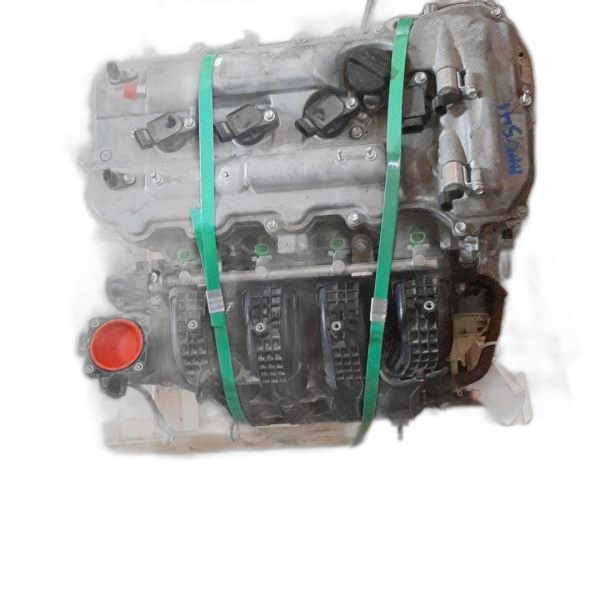
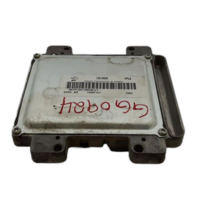
Shop the Parts Behind P2681
Below are the parts most often responsible for code P2681, ranked by how frequently each one is the actual culprit (per the diagnosis above). Tap any to see what we have for your vehicle.




The information in this article is provided for general reference and educational purposes only. Vehicle specifications, procedures, and part compatibility can vary by production date, trim level, and region. Always consult your vehicle's factory service manual and verify part numbers before purchasing or performing repairs. Safety-critical components such as airbags, seat belts, and braking systems should be installed by a qualified professional.
- 🧭 Diagnostic Flowchart
- 🛍️ Shop This Part
- What Does P2681 Mean?
- Can I Drive With P2681?
- Common Causes
- Symptoms
- Common Fixes & Costs
- Used vs. New Parts: Buying Guide
- What Happens If You Wait — Timeline
- Cost of Not Fixing It
- Diagnosis Steps
- When This Code Triggers (Freeze-Frame Conditions)
- Related Codes
- Climate & Environmental Factors
- How to Talk to a Mechanic About This Code
- Where to Take It: Dealer vs Independent vs Chain
- When to Walk Away From the Repair
- What Scan Tool You Need for This Code
- How to Clear the Code After You Fix It
- Will This Fail Emissions / State Inspection?
- Manufacturer-Specific Notes
- Real Owner Stories
- 2017 Ford Escape 1.5L - The Easy Fix
- 2016 VW Golf GTI (58k miles) - The Misdiagnosis Story
- 2018 VW Tiguan (131k miles) - The Inevitable VW/Audi Failure
- 2017 Audi Q7 2.0T - The Unusual Root Cause
- How to Prevent This Code From Triggering
- Frequently Asked Questions
- What are the most common mistakes when diagnosing P2681?
- Why is this repair so expensive on my VW/Audi?
- Can I just clear the code and keep driving?
- Will replacing my thermostat fix the P2681 code?
- My car started shaking and lost power. Can P2681 really cause this?
- My coolant level is full, so why am I getting this code?
- What does the 'A' in 'Engine Coolant Bypass Valve A' mean?
- Is the coolant bypass valve the same as the heater control valve?
- Key Takeaways
- 🎟️ Get 5% Off