

P2681 on 2012-2019 Ford Kuga: Engine Coolant Bypass Valve Circuit Fault Causes and Fixes
On a 2012-2019 Ford Kuga (especially 2017-2019 models), code P2681 is almost always caused by a blown 10-amp fuse (F34) in the under-hood fuse box. The root cause is typically a chafed wiring harness shorting to the engine block, a known issue covered by Ford TSBs. The fix involves finding and repairing the wire and replacing the fuse.
- Before buying any parts, your first step should always be to check the 10-amp fuse F34 in the under-hood fuse box.
- If fuse F34 is blown, the root cause is almost certainly a chafed wiring harness. You must find and repair the damaged wire, or the new fuse will also blow.
- Do not waste money replacing the thermostat or coolant temperature sensor for this code; they are not related to this electrical fault.
- The repair is very DIY-friendly and often costs less than $20 for a new fuse and some wiring repair supplies.
What's Unique About the 2012-2019 Ford Kuga
For this generation of Ford Kuga (and its North American twin, the Ford Escape), the P2681 code is very frequently not an issue with the valve itself, but rather a symptom of a different problem. Ford has issued Technical Service Bulletins (TSBs), specifically SSM 48895, acknowledging that the engine wiring harness is prone to rubbing against the engine or other components. This chafing causes a short-circuit that blows the 10-amp F34 fuse in the under-hood Battery Junction Box (BJB). This single fuse powers the bypass valve, A/C clutch, turbo wastegate, and AWD module, which is why its failure can trigger P2681 along with an "AWD Fault" warning and other codes.
Generation note: The 2012-2019 Ford Kuga covers the entire second generation (codename C520). The issues described are particularly well-documented for the 2017-2019 model years with 1.5L and 2.0L engines, but the diagnostic process applies to all vehicles in this range.
Symptoms You May Notice
- Check Engine Light is on
- Engine temperature gauge reads abnormally high or low
- Slow engine warm-up
- Reduced or no heat from the cabin heater
- Vehicle may enter a reduced power 'limp mode'
- An "AWD Fault" warning may appear on the dash, as the same F34 fuse powers the AWD module
- Traction Control (TC) light may illuminate
- Replacing the engine thermostat. The thermostat is a mechanical part, whereas P2681 is a purely electrical circuit code.
- Replacing the Engine Coolant Temperature (ECT) sensor. A faulty ECT sensor would trigger its own specific trouble codes.
Most Likely Causes
- Blown 10A Fuse (F34) 🔴 High Probability This fuse is often blown by a short circuit in the wiring harness, a known issue on this platform. It is the most common failure point.
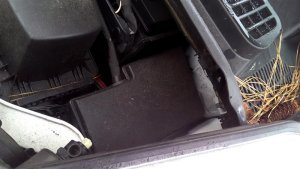
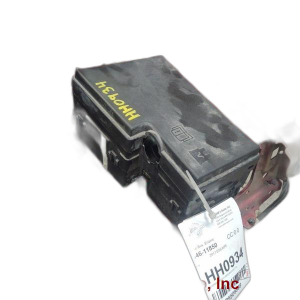
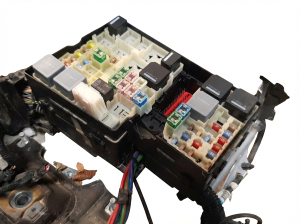
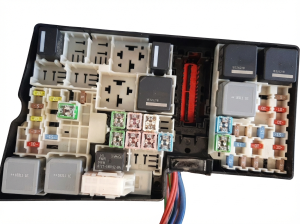
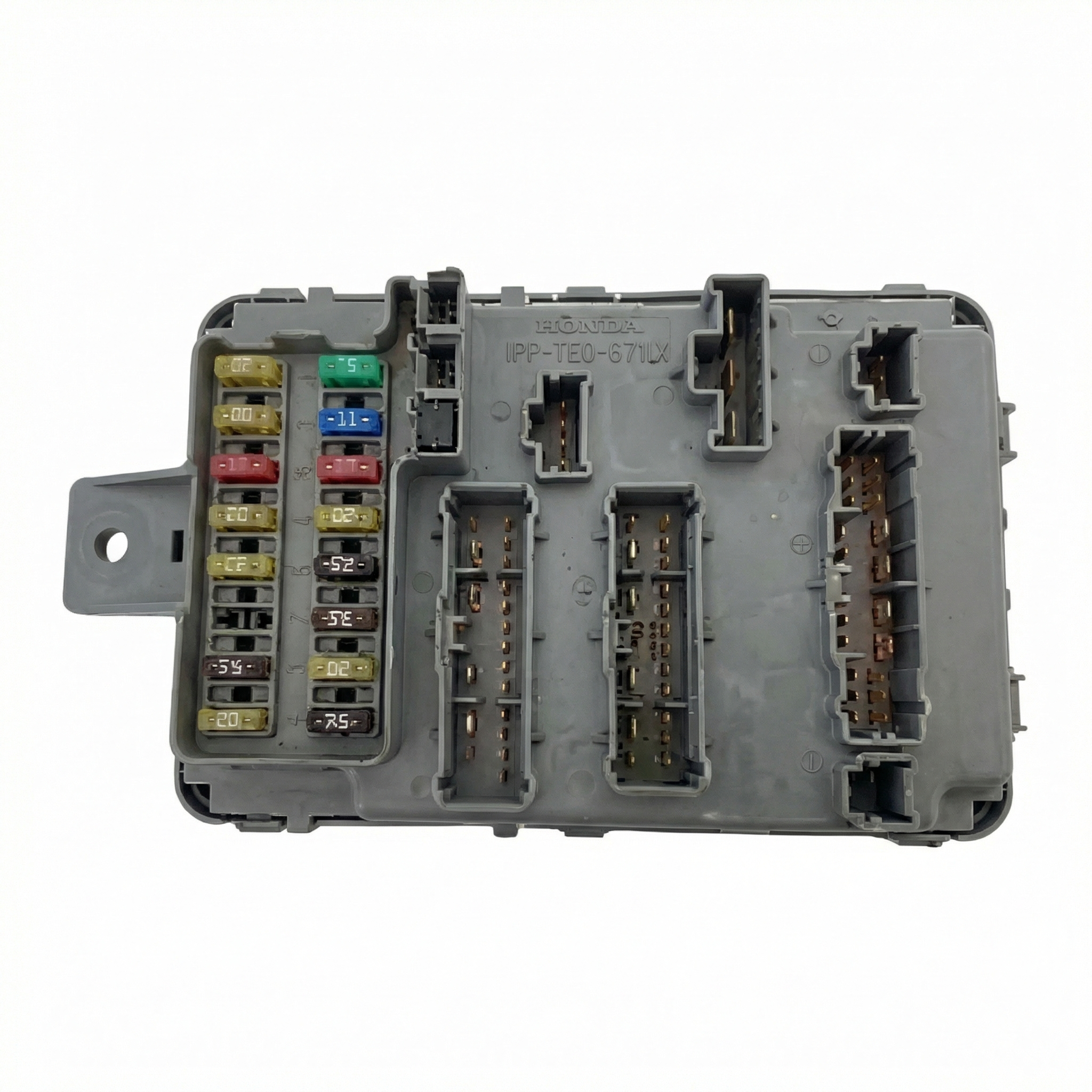
How to confirm: Locate the under-hood fuse box (Battery Junction Box) on the right side of the engine bay. Visually inspect fuse F34, a 10-amp mini fuse. 🎬 Watch: How to find and check the F34 fuse location.
Typical fix: Replace the fuse. However, you must find and repair the source of the short circuit, or the new fuse will blow immediately.
Est. part cost: $1-$5 - Chafed or Shorted Wiring Harness 🔴 High Probability The harness for the bypass valve is routed in a way that it can rub against the engine block or A/C lines, wearing through the insulation. This is a known issue covered by Ford TSBs SSM 48895 and SSM 47575. The specific harness is part number 12A690 (1.5L) or 12C508 (2.0L).
How to confirm: After confirming a blown fuse, carefully inspect the wiring harness leading from the fuse box to the engine components. The chafe point is often difficult to see without removing the airbox assembly to gain clear access. Look for areas where the loom is rubbing against metal brackets or has melted.
Typical fix: Repair the damaged section of wire using solder and heat shrink, or by splicing in a new section of wire with butt connectors. Protect the repaired area with high-quality electrical tape and/or flexible conduit. Use zip ties to secure the harness away from the chafe point to prevent recurrence. 🎬 See this guide on identifying and repairing Ford wiring issues.
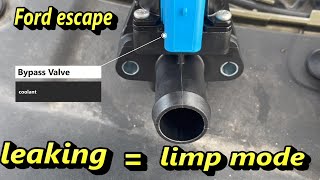
Est. part cost: $5-$20 - Failed Engine Coolant Bypass Valve 🟡 Medium Probability Like any electronic component, the solenoid within the valve can fail, creating an internal open circuit. This is a common failure if the fuse and wiring are intact.
How to confirm: If the fuse and wiring are intact, unplug the valve's electrical connector. Use a multimeter set to Ohms (Ω) to measure the resistance across the two pins on the valve itself. A good valve should read between 7 and 16 ohms. A brand new OEM part often reads around 10 ohms. An open circuit (OL or infinite resistance) confirms the valve's internal solenoid has failed.
Typical fix: Replace the engine coolant bypass valve. This will require partially draining the coolant system. Ensure the new part comes with a new O-ring seal.
Est. part cost: $50-$100
Rare But Worth Checking
- Faulty Powertrain Control Module (PCM): → Shop Engine Control Module (ECM) This is extremely rare. The PCM should only be considered after all other possibilities, including the entire circuit's wiring, have been exhaustively tested and confirmed to be perfect.
Diagnosis Steps
- Scan the vehicle for trouble codes to confirm P2681 is present. Note any other codes, such as those for the AWD system or A/C clutch.
- Open the hood and locate the under-hood fuse box (BJB).
- Find fuse F34 (10-amp) and check if it is blown. This is the most likely cause.
- If the fuse is blown, DO NOT simply replace it yet. The next step is to find the short. Remove the airbox assembly for better access to the engine wiring harness.
- Carefully inspect the wiring harness (P/N 12A690 for 1.5L, 12C508 for 2.0L) for signs of chafing, especially where it runs near the engine block, A/C lines, and other brackets.
- Repair any damaged wiring found. Insulate the wires and secure the harness away from sharp edges or hot surfaces using zip ties.
- Once the wiring is repaired, replace the F34 fuse.
- If the fuse was NOT blown, inspect the electrical connector at the coolant bypass valve for corrosion or loose pins.
- If the connector is clean and tight, use a multimeter to test the resistance of the bypass valve itself. A reading of 7-16 Ohms is good. 🎬 Watch: How to test the bypass valve control circuit. A reading of infinite resistance (OL) indicates the valve has failed and needs replacement.
- If the valve's resistance is within spec, the fault lies in the wiring between the fuse box, PCM, and the valve. Check for continuity and shorts in the harness.
Parts You'll Likely Need
- 10 Amp Mini Fuse — This is the most common failure point, as it blows to protect the circuit from a short in the wiring harness.
Trusted brands: Bussmann, Littlefuse
OEM price range: $1-$5
Aftermarket price range: $1-$5 - Engine Coolant Bypass Valve
(OEM #BM5Z-18495-C (for 1.6L, also widely used), CM5Z-8C520-A)— If the fuse and wiring are good, the valve's internal coil has likely failed, creating an open circuit.
Trusted brands: Motorcraft, Dorman (p/n 902-055), Gates
OEM price range: $70-$120
Aftermarket price range: $40-$80
Technical Service Bulletins (TSBs) & Recalls
- SSM 48895: Some 2017-2019 Escape/Kuga vehicles with 1.5L or 2.0L engines may exhibit an open fuse F34 and DTC P2681 (among others) due to wiring harness retainers not being installed correctly, allowing chafing. The TSB directs technicians to inspect the harness, repair wires, and use the causal part numbers 12A690 or 12C508 for claims. This bulletin notes that the vehicle may also exhibit an all-wheel drive (AWD) fault warning and/or illuminated traction control (TC).
- SSM 47575: An earlier bulletin describing the same issue of a chafed harness causing P2681 and an open F34 fuse, potentially accompanied by an illuminated MIL and an AWD fault warning or TC light. Superseded by SSM 48895.
Platform-Specific Known Issues
- A known issue exists where the engine wiring harness (12A690 on 1.5L, 12C508 on 2.0L) chafes against the engine or chassis, causing a short circuit. This blows the F34 fuse and triggers P2681 and often an 'AWD Fault' message. This is documented in Ford TSB SSM 48895.
Mechanic-Grade Diagnostic Values
- Engine Coolant Bypass Valve Solenoid Resistance — expected: 7 to 16 Ohms across the two pins on the valve connector. A new OEM part typically measures around 10 Ohms.. Failure: An Open Line (OL) or infinite resistance reading indicates a failed internal coil.
- Voltage at Bypass Valve Harness Connector — expected: With the connector unplugged and ignition ON, one pin should show battery voltage (approx. 12V) from fuse F34. The other pin is the control from the PCM.. Failure: No voltage on the power pin indicates a problem upstream (blown fuse F34, wiring issue).
- Commanded Voltage at Bypass Valve Harness Connector — expected: When back-probing the connector with the valve plugged in, the PCM will send a pulsing 12V ground signal to the control wire to activate the solenoid.. Failure: A steady 0V or 12V with no pulse when the valve should be active points to a wiring issue or a faulty PCM driver.
Hidden / Shadow Codes Worth Checking
- P2681-13-6C: This is a more specific version of the code, with the suffix '-13' indicating a 'Circuit Open' fault. This level of detail confirms the PCM has detected a physical break in the electrical line to the valve. (see via Professional-grade scan tools (like Ford's IDS) or advanced DIY tools (like FORScan) will display this extended code format. Basic OBD-II readers will typically only show P2681.)
Scan Tool Commands That Help
- Ford IDS, FORScan, or other high-end scanners: Coolant Bypass Valve Active Command / Bidirectional Control — Use this function when the fuse and wiring have been checked and are intact. By commanding the valve to cycle on and off, you can confirm if the valve itself is mechanically stuck or if the PCM is capable of sending the signal. You can monitor voltage at the connector while using this command to definitively isolate the fault to the valve or the PCM.
Wiring & Ground Locations
- Fuse F34 — In the under-hood fuse box, also known as the Battery Junction Box (BJB), typically on the right side of the engine bay.. This 10A fuse is the direct power source for the coolant bypass valve circuit. A short in the harness, as described in Ford TSBs, will cause this fuse to blow, which is the most common trigger for P2681 on this vehicle.
- G104 / G108 — G104 is typically on the right rear of the engine compartment; G108 is on the front or left rear. These are common chassis/engine ground points.. The coolant bypass valve is grounded through the engine block, which relies on main engine-to-chassis ground straps. While a bad ground is not the most common cause for this specific code (which is 'circuit open'), a corroded or loose main ground can cause a wide range of electrical issues and should be checked if diagnosis becomes difficult.
- Chafe Point — The wiring harness (12A690 or 12C508) often rubs against the engine block, A/C lines, or nearby brackets. The most common area is below and behind the airbox assembly.. This is the root cause of the short circuit that blows fuse F34. The TSBs from Ford specifically address this harness routing and chafing issue. Finding and repairing the damaged wire here is the critical step in the most common repair scenario.
Real Owner Repair Stories
- Go-Parts.com user story (2017 Ford Escape 1.5L) — Check Engine Light, 'AWD Fault' warning, vehicle entered 'limp mode' with reduced power.
❌ Tried (didn't work) Initial diagnosis pointed towards potentially expensive component failure.
✅ What actually fixed it Owner followed TSB SSM 48895. They located the under-hood fuse F34 and found it was blown. After inspecting the wiring harness, they found a chafed wire near the engine block, taped it for insulation, and replaced the $1 fuse. This single action resolved all symptoms and codes permanently. - YouTube channel 'Real Auto Solutions' (2017 Ford Kuga 1.6L, 137,000 km) — Check Engine Light with code P2681-13-6C (Engine Coolant Bypass Valve A Control Circuit Open) that would log instantly upon clearing.
❌ Tried (didn't work) Diagnosis was direct; no other parts were unnecessarily replaced.
✅ What actually fixed it The mechanic confirmed the fuse and wiring were intact. He then tested the resistance of the existing bypass valve and found it was open circuit (infinite resistance). He measured a new Ford OEM valve at 10.1 ohms. Replacing the failed valve assembly fixed the issue. - NHTSA ODI #11594427 — An owner reported pulling a P2681 engine light error for an issue with the coolant bypass valve after previously having the degas bottle and mount replaced by a dealership.
OEM Part Supersession History
BM5Z-18495-A→BM5Z-18495-B, then BM5Z-18495-C— Standard part revision and improvement by the manufacturer.
Heads up: The latest version, BM5Z-18495-C (also sold under part number YG-780), is the correct replacement for all previous versions and fits the specified 1.6L engines across multiple model years. Always use the latest revision when replacing.
Model Year Variations Within This Range
- 2017-2019: These model years are specifically called out in Ford TSB SSM 48895 for having improperly installed wiring harness retainers, making them exceptionally prone to the chafing issue that blows fuse F34 and triggers code P2681. While the issue can occur on earlier years, it is a documented production-related problem for the facelifted models.
Diagnostic Flowchart
Other Known Issues on This Vehicle
Issues unrelated to this code that are worth knowing about as an owner of this generation:
- 1.5L/1.6L EcoBoost Coolant Intrusion 🔴 High — Common enough to warrant multiple TSBs and a customer satisfaction program (21N12). Can occur at various mileages. The engine block design allows coolant to leak into cylinders. (Ref: TSB 20-2100, Customer Satisfaction Program 21N12)
- PowerShift Automatic Transmission Problems 🔴 High — Primarily affects dry-clutch versions not used in all Kugas, but wet-clutch versions also have known issues with shuddering, hesitation, and premature failure of clutch packs or control modules. (Ref: Multiple lawsuits and customer satisfaction programs, primarily for Focus/Fiesta but indicative of the technology's issues.)
- Tailgate/Boot Wiring Harness Failure 🟠 Medium — Common on models with power tailgates. The wiring loom that passes from the body to the tailgate can fatigue and break from repeated opening and closing, causing failure of the lock, lights, or camera.
- Diesel Particulate Filter (DPF) Clogging 🟠 Medium — Common on diesel models, especially those used primarily for short, stop-start journeys that prevent the DPF from completing its regeneration cycle.
- Panoramic Sunroof Mechanism/Drain Issues 🟡 Low — Reports of rattling blinds, failing motors, and clogged drainage tubes that can lead to water ingress into the cabin.
Used vs. New Parts: Buying Guide for This Vehicle
When a used part is the smart pick: A used part is only recommended for sourcing a connector pigtail. If the wiring harness is damaged right at the valve's connector, cutting a connector with a few inches of wire from a donor vehicle at a junkyard can be an effective and inexpensive repair.
Donor-vehicle mileage cap: roughly under 100000 miles for the part to have meaningful remaining life.
What to inspect on the donor part:
- For a connector pigtail, ensure the plastic is not brittle or cracked.
- Check that the locking tab on the connector is intact.
- Inspect the wires for any signs of insulation damage or previous repairs.
OEM-only on this vehicle (don't cheap out):
- Engine Coolant Bypass Valve: This part contains both a plastic valve body exposed to heat cycles and an electronic solenoid. Aftermarket versions can have questionable reliability. Given the labor to access it, using a new OEM (Motorcraft) part is strongly recommended to ensure longevity.
- Fuses: Never use a used fuse. Always replace with a new fuse of the exact same amperage rating.
Aftermarket brands forum-validated for this vehicle:
- Gates
- Dorman (p/n 902-055)
Brands owners have reported issues with on this vehicle:
- Unbranded, no-name parts from online marketplaces should be avoided due to high failure rates reported on forums.
Real Owner Stories
Aggregated from forums and TSBs cited above. Mileages and costs reflect what owners reported in those sources.
2017 Ford Kuga
Symptoms: Check Engine Light was on with code P2681, indicating an open circuit for the coolant bypass valve.
What fixed it: Technician tested the resistance of the original valve and found it was an open circuit (infinite resistance). A new OEM valve measured 10.1 ohms. Replacing the failed Engine Coolant Bypass Valve cleared the code.
Source hint: YouTube - Real Auto Solutions: 'Ford Kuga P2681 Engine Coolant Bypass Valve A Control Circuit Open'
2018 Ford Kuga
Symptoms: The Check Engine Light came on, and a scan showed code P2681. Some owners also reported an 'AWD Fault' message at the same time.
What fixed it: The problem was a blown 10A fuse (F34) caused by a chafed wire in the engine harness. The fix was to repair the damaged section of wire and protect it with conduit, then replace the fuse. The chafe point was hidden under the airbox.
Source hint: kugaownersclub.co.uk
2017 Ford Escape (Kuga twin)
Symptoms: Vehicle displayed a P2681 code and the F34 fuse was found to be blown.
What fixed it: The root cause was a short in the engine wiring harness where it had rubbed against a metal bracket. Repairing the damaged wires and replacing the F34 fuse resolved the issue.
Source hint: fordescape.org
Related OBD-II Codes
Frequently Asked Questions
My 2018 Kuga has a P2681 code and an 'AWD Fault' warning on the dash. Are these two issues related?
I heard there's a Technical Service Bulletin (TSB) for the P2681 wiring issue. What is it and does it apply to my vehicle?
I replaced the F34 fuse, but it blew again as soon as I started the car. What's the next step?
Where exactly is the wiring harness chafe point for the P2681 code located?
My F34 fuse is good and the wiring looks fine. How can I test the Engine Coolant Bypass Valve itself?
Helpful Videos
We Have This Part in Stock

The information in this article is provided for general reference and educational purposes only. Vehicle specifications, procedures, and part compatibility can vary by production date, trim level, and region. Always consult your vehicle's factory service manual and verify part numbers before purchasing or performing repairs. Safety-critical components such as airbags, seat belts, and braking systems should be installed by a qualified professional.
- Ford Kuga:
- 🧭 Diagnostic Flowchart
- 🎬 Helpful Videos
- 🛍️ Shop This Part
- What's Unique About the 2012-2019 Ford Kuga
- Symptoms You May Notice
- Most Likely Causes
- Rare But Worth Checking
- Diagnosis Steps
- Parts You'll Likely Need
- Technical Service Bulletins (TSBs) & Recalls
- Platform-Specific Known Issues
- Mechanic-Grade Diagnostic Values
- Hidden / Shadow Codes Worth Checking
- Scan Tool Commands That Help
- Wiring & Ground Locations
- Real Owner Repair Stories
- OEM Part Supersession History
- Model Year Variations Within This Range
- Other Known Issues on This Vehicle
- Used vs. New Parts: Buying Guide for This Vehicle
- Real Owner Stories
- 2017 Ford Kuga
- 2018 Ford Kuga
- 2017 Ford Escape (Kuga twin)
- Related OBD-II Codes
- Frequently Asked Questions
- 🎟️ Get 5% Off