

P2700 on 2009-2013 Ford E-350: Transmission Clutch Apply Time Fault Causes and Fixes
On a 2009-2013 Ford E-350 with a TorqShift transmission, code P2700 is most often caused by an internal failure of the coast clutch assembly. Ford issued TSB 16-0057 for this exact problem. The failure is typically a broken weld on the coast clutch cylinder. The fix requires transmission removal to replace the coast clutch cylinder and one-way clutch, a job for a professional.
- P2700 on a 2009-2013 E-350 is not a generic code; it points to a specific, well-documented issue with the TorqShift transmission.
- Check for Ford Technical Service Bulletin (TSB) 16-0057, as it provides the exact cause (failed coast clutch weld) and repair for this code.
- The most likely cause is a mechanical failure of the internal coast clutch assembly, not a simple electrical fault.
- This is a complex, professional-level repair that requires removing and partially disassembling the transmission.
- Always check for companion codes P0751 and P0730, as their presence makes the TSB diagnosis almost certain.
What's Unique About the 2009-2013 Ford E-350
For this specific E-350 with the 5R110W TorqShift® transmission, the P2700 code is strongly linked to a known mechanical issue rather than a simple sensor or fluid problem. Ford issued Technical Service Bulletin (TSB) 16-0057 specifically for this fault (along with P0751 and P0730) on transmissions built before December 15, 2015. The problem is a known failure of the coast clutch cylinder, often due to a failed weld, and the coast one-way clutch (OWC) mechanical diode. This requires a significant internal repair.
Diagnostic Flowchart
Tap your situation to follow the diagnostic path that matches what you're seeing on this vehicle.
Symptoms You May Notice
- Harsh or delayed shifting
- Transmission slipping between gears
- Inability to change gears or sudden loss of motive power
- Check Engine Light or Malfunction Indicator Lamp (MIL) is on
- Transmission may enter a "limp mode," getting stuck in one gear
- Transmission temperature may be elevated
- Replacing only a single shift solenoid (like the SSPC-A solenoid for P0751) when the root cause is the mechanical coast clutch failure described in the TSB.
- Assuming the entire transmission needs to be replaced without first investigating the specific, repairable issue outlined in TSB 16-0057.
- Attributing the problem to low or dirty fluid when the fluid condition is actually a symptom of the internal mechanical failure.
Most Likely Causes
- Internal Coast Clutch Assembly Failure 🔴 High Probability As identified in Ford TSB 16-0057, TorqShift transmissions built on or before 12/15/2015 are prone to this specific mechanical failure, which is often a broken weld on the coast clutch cylinder.
How to confirm: Confirm the vehicle's transmission build date. If it's on or before 12/15/2015 and codes P2700, P0751, and/or P0730 are present, the TSB procedure is the likely diagnosis. A mechanic may also drop the transmission pan and find excessive clutch material or burnt fluid, indicating internal damage. A definitive diagnosis requires transmission disassembly to inspect the coast clutch drum.
Typical fix: Remove and disassemble the transmission to replace the coast clutch cylinder and the coast one-way clutch (OWC) mechanical diode assembly, per the procedure in TSB 16-0057.
Est. part cost: $200-$500 - Low or Contaminated Transmission Fluid 🟡 Medium Probability → Shop Transmission Assembly
How to confirm: Check the transmission fluid level and condition using the dipstick. The fluid should be at the correct level, red in color, and not have a burnt smell. Burnt, dark fluid is a strong indicator of internal mechanical problems, such as the coast clutch failure.
Typical fix: Top off the fluid if low. If the fluid is dark, burnt, or contaminated, perform a transmission fluid and filter change. Use only MERCON LV fluid. Note that if the fluid is burnt, this is often a symptom of the mechanical failure, not the root cause.
Est. part cost: $50-$150 - Faulty Transmission Solenoid or Valve Body ⚪ Low Probability → Shop Transmission Assembly
How to confirm: A technician can perform electronic tests on the solenoids and hydraulic pressure tests on the valve body to check for malfunctions. However, with codes P2700 and P0751 present, the issue is much more likely to be the mechanical coast clutch failure than an electrical solenoid fault.
Typical fix: Replace the specific faulty solenoid or the entire valve body assembly. This is often misdiagnosed, and the problem may persist if the underlying mechanical failure is not addressed.
Est. part cost: $300-$800
Rare But Worth Checking
- Transmission Control Module (TCM) Failure: → Shop Transmission Assembly While rare, a faulty TCM can misinterpret data and set false codes. This is usually diagnosed after all mechanical and hydraulic causes have been ruled out.
- Wiring Harness Issues: Damaged or corroded wiring between the TCM and the transmission can cause communication errors, leading to this code. This is more common on work vehicles like the E-350 that see harsh conditions.
Diagnosis Steps
- Check and record any stored diagnostic trouble codes (DTCs). Note if P0751 or P0730 are also present, as this strongly points to the TSB issue.
- Inspect the transmission fluid level and condition. The fluid should be full and clean. Burnt or dark fluid indicates internal wear, likely from the failing coast clutch.
- Consult TSB 16-0057. Check the transmission build date located on the transmission case.
- If the build date is on or before 12/15/2015 and the relevant codes (P2700, P0751, P0730) are present, the TSB repair is the most likely solution.
- A technician can perform a hydraulic pressure test at the transmission's test port. Low pressure during coast clutch application would confirm a hydraulic leak, likely from the failed clutch cylinder.
- If the TSB does not apply, proceed with further diagnostics, such as checking solenoid resistance and inspecting the wiring harness for visible damage, corrosion, or loose connections.
- If other tests are inconclusive, the final step is to remove the transmission for internal inspection of the coast clutch and other components as per the TSB.
Parts You'll Likely Need
- Coast Clutch Cylinder and One-Way Clutch Kit
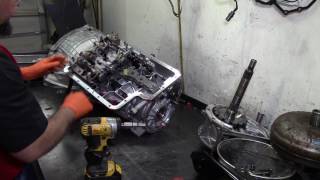
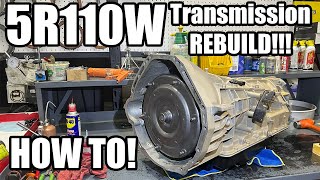
(OEM #BC3Z-7B164-B (Friction Plate/Clutch Kit component))— This is the specific point of failure identified by Ford in TSB 16-0057 for this code on this vehicle. The part number BC3Z-7B164-B is for the low/reverse friction plate, a related component in the assembly. The entire kit is required for the TSB repair. 🎬 See this step-by-step walkthrough of a full 5R110W rebuild.
Trusted brands: Motorcraft
OEM price range: $200-$400
Aftermarket price range: $150-$300 - Transmission Fluid and Filter Kit — Required for any internal transmission repair. The correct fluid is MERCON LV.
Trusted brands: Motorcraft, Premium Guard
OEM price range: $100-$180
Aftermarket price range: $60-$120
Related Codes That Often Appear With This One
- P0751 — Shift Solenoid 'A' Performance/Stuck Off. This code is explicitly mentioned in TSB 16-0057 as appearing with P2700 due to the same root cause in the coast clutch assembly. The mechanical failure prevents the clutch from applying correctly, which the TCM interprets as a solenoid performance issue.
- P0730 — Incorrect Gear Ratio. This code is also listed in TSB 16-0057 and is a direct symptom of the clutch failing to apply correctly, causing a mismatch between the expected and actual gear ratio.
Technical Service Bulletins (TSBs) & Recalls
- 16-0057 / TSB160057: Addresses MIL illumination with DTCs P0751, P0730, and/or P2700 on vehicles with a TorqShift® transmission built on or before 12/15/2015, requiring replacement of the coast clutch cylinder and one-way clutch.
Platform-Specific Known Issues
- Ford TSB 16-0057 directly addresses DTC P2700 (along with P0751 and P0730) on 2009-2013 E-350s with the TorqShift transmission. It identifies a faulty coast clutch cylinder (often a failed weld) and one-way clutch in transmissions built on or before December 15, 2015.
- Safety Recall 19S20 was issued for certain ambulance and school bus vehicles for a similar coast clutch issue, referencing TSB 16-0057 as the repair procedure. It warns that a weld failure can cause a total loss of motive power.
Mechanic-Grade Diagnostic Values
- Shift Solenoid Resistance (SSPC-A, B, C, D, E, TCC) — expected: 4.1 - 4.7 Ohms when tested at approx. 70°F.. Failure: A reading outside of this range indicates a faulty solenoid coil.
- EPC (Electronic Pressure Control) Solenoid Resistance — expected: 5.1 - 5.8 Ohms.. Failure: A reading outside of this range indicates a faulty solenoid coil.
- Transmission Line Pressure at Idle (Warm) — expected: Approx. 60 PSI in Park/Neutral; Approx. 100 PSI in Reverse; Approx. 100 PSI in Drive.. Failure: Significantly lower pressures, especially if accompanied by codes P0751 and P2700, can indicate a major hydraulic leak from a failed pump or, more commonly, the broken coast clutch drum.
- Transmission Fluid Temperature (TFT) Sensor Resistance — expected: 37k - 100k Ω at 32° - 68° F; resistance decreases as temperature increases.. Failure: Readings that are wildly out of spec or do not change with temperature can indicate a faulty sensor, leading to incorrect shift strategy.
Scan Tool Commands That Help
- Ford IDS (Integrated Diagnostic System): Reset Transmission Adaptive Learning Tables — This function must be performed after replacing the valve body, solenoids, or performing any internal transmission repair. It clears the learned shift pressure adjustments, allowing the TCM to relearn the characteristics of the new components.
- Ford IDS (Integrated Diagnostic System): Output State Control / Actuator Commands — A technician can use this bidirectional function to manually command specific shift solenoids (like SSPC-A for the coast clutch) on and off while monitoring line pressure to verify if the solenoid is mechanically responding and if the hydraulic circuit can hold pressure.
Wiring & Ground Locations
- Powertrain Control Module (PCM) — Located in the engine compartment at the left rear (driver's side firewall area) for most E-350 models.. The PCM is the master controller that receives sensor data and commands the transmission solenoids. All related wiring terminates here.
- Transmission Harness Chafe Point — Visually inspect the main wiring harness where it routes over the top/back of the transmission case.. Vibrations and heat can cause the harness to rub against the transmission case, potentially shorting or breaking wires for the shift solenoids, leading to intermittent faults.
- Main Transmission Connector (C167) — On the driver's side of the transmission case.. This is the primary connection point for all electronic controls. Checking for corrosion, moisture, or pushed-out pins here is a key step in diagnosing electrical faults before condemning internal components.
Real Owner Repair Stories
- Ford Truck Enthusiasts Forum user (Ford Truck with 5R110W) — Sudden loss of power, transmission died while driving, elevated temperature. Codes P0751 and P2700 were present.
❌ Tried (didn't work) The initial plan was to replace the SSPC-A (coast clutch) solenoid.
✅ What actually fixed it The user later updated the post stating the root cause was a locked-up transmission pump, which resulted in a lack of hydraulic pressure to actuate the coast clutch. The codes were a symptom of the hydraulic failure, not an electrical solenoid failure. - Ford Truck Enthusiasts Forum user (2006 Ford with 134,000 miles) — Inconsistent downshifting in tow/haul mode, tow/haul light flashing, hunting for gears when cold. Codes P0751, P2700, P0700.
❌ Tried (didn't work) Replaced the PC-A and another solenoid as part of an 'upgrade kit'. The problem was not resolved.
✅ What actually fixed it The thread ends without a final confirmed fix, but the failure of the solenoid replacement strongly implies the root cause was the deeper mechanical issue described in TSB 16-0057, which is common when these codes appear together.
"I Checked Everything" — The Actual Cause
- In the context of this code, the equivalent of a 'smoke test clean' scenario is when all electrical tests pass. A technician may test the resistance of the shift solenoids and find they are all within spec (around 4.5 ohms). They may also inspect the wiring harness and find no visible damage. Despite the electrical system appearing healthy, the P2700 and related P0751 codes persist because the root cause is a purely mechanical failure—the broken weld on the coast clutch drum—which the TCM misinterprets as a solenoid or hydraulic control problem.
OEM Part Supersession History
3C3Z-7G387-AA, 5C3Z-7G387-SA→7C3Z-7G387-B— Design change and update. The key difference is the sun gear tooth count and design. Earlier models (approx. pre-2007) used drums with 32 or 38-tooth sun gears, while the updated design for 2007+ models, including the 2009-2013 E-350, uses a 41-tooth sun gear.
Heads up: Using the wrong drum will result in a mismatch with the planetary gearset, and the transmission will not function. The part number specified in TSB 16-0057 (7C3Z-7G387-B) is the correct part for the TSB repair on the affected vehicles.
Model Year Variations Within This Range
- 2009-2013: The most critical variation is not the model year of the van, but the build date of the transmission itself. TSB 16-0057 applies specifically to TorqShift transmissions built on or before December 15, 2015, which covers this entire vehicle range.
- 2009-2013 (vs. pre-2008 models): Models from 2008-onward use a different coast clutch drum, overdrive planetary, and intermediate shaft combination than pre-2008 models. This is critical knowledge for anyone sourcing used parts or performing a rebuild, as parts from earlier 5R110W transmissions are not interchangeable.
Helpful Videos
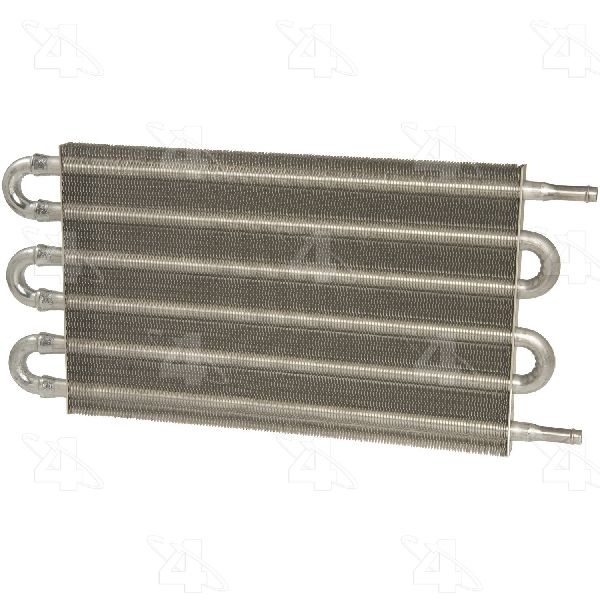
We Have This Part in Stock

The information in this article is provided for general reference and educational purposes only. Vehicle specifications, procedures, and part compatibility can vary by production date, trim level, and region. Always consult your vehicle's factory service manual and verify part numbers before purchasing or performing repairs. Safety-critical components such as airbags, seat belts, and braking systems should be installed by a qualified professional.
- Ford E-350:
- 🧭 Diagnostic Flowchart
- 🎬 Helpful Videos
- 🛍️ Shop This Part
- What's Unique About the 2009-2013 Ford E-350
- Symptoms You May Notice
- Most Likely Causes
- Rare But Worth Checking
- Diagnosis Steps
- Parts You'll Likely Need
- Related Codes That Often Appear With This One
- Technical Service Bulletins (TSBs) & Recalls
- Platform-Specific Known Issues
- Mechanic-Grade Diagnostic Values
- Scan Tool Commands That Help
- Wiring & Ground Locations
- Real Owner Repair Stories
- "I Checked Everything" — The Actual Cause
- OEM Part Supersession History
- Model Year Variations Within This Range
- 🎟️ Get 5% Off