

P2700 on 2018-2023 Ford Expedition: Transmission Clutch Apply Time Fault Guide
Code P2700 on a 2018-2023 Ford Expedition indicates a serious internal transmission problem, specifically that a clutch is taking too long to engage. This is almost always caused by a known issue with the CDF clutch drum inside the 10R80 transmission, where a bushing 'walks out' of position, causing an internal hydraulic leak. This is a well-documented failure requiring a major professional repair. Do not ignore this code.
- P2700 on a 2018-2023 Expedition is not a minor issue; it signals a significant internal transmission problem.
- The cause is almost certainly related to a known design issue with the CDF clutch drum in the 10R80 transmission, as documented by Ford in multiple TSBs.
- This is not a DIY repair. It requires professional diagnosis with specialized tools and a complete transmission overhaul.
- Do not delay diagnosis. Continued driving will likely lead to more severe and expensive transmission damage.
- When speaking to a repair shop, mention the code P2700 and the related TSBs for the 10R80 transmission to ensure they are aware of the common failure point.
What's Unique About the 2018-2023 Ford EXPEDITION
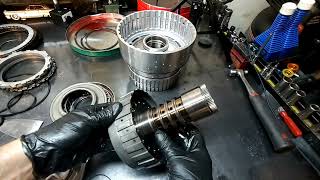
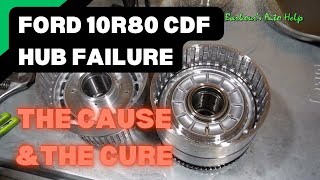
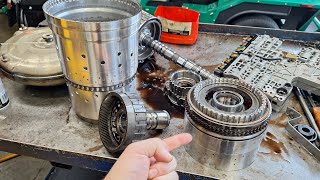
The 2018-2023 Ford Expedition uses the 10-speed 10R80 automatic transmission, which was co-developed with GM. 🎬 See why this 10-speed transmission design often fails. This specific transmission is known to have a design flaw related to a component called the CDF (Clutch D/F) clutch cylinder. Multiple Ford Technical Service Bulletins (TSBs) point to a specific failure mode where a bushing inside the CDF drum assembly migrates, or 'walks out,' of its intended position. This movement partially or fully blocks hydraulic fluid passages, causing a loss of pressure. This pressure loss is the direct cause for the slow clutch application times that trigger P2700 and a host of other related transmission codes. Therefore, on this specific vehicle, P2700 is a very strong indicator of this well-documented internal transmission fault.
Diagnostic Flowchart
Tap your situation to follow the diagnostic path that matches what you're seeing on this vehicle.
Symptoms You May Notice
- Harsh or abrupt shifting, sometimes described as a 'bang' or 'clunk', especially on the 3-5 upshift.
- Delayed shifting or hesitation between gears, where the engine RPMs flare up before the next gear engages.
- Delayed or harsh engagement when shifting from Park to Drive or Reverse, particularly when the vehicle is cold.
- Illuminated Malfunction Indicator Lamp (Check Engine Light) or Wrench Light.
- Vehicle may enter "limp mode," locking it into a single gear to prevent further damage.
- Replacing only the transmission solenoids without addressing the root cause of hydraulic pressure loss from the CDF drum.
- Performing a transmission fluid flush, which will not fix the internal mechanical damage and may temporarily mask symptoms before they return.
- Resetting the adaptive learning tables. This is a temporary software patch for a hardware problem and the harsh shifting will inevitably return as the TCM cannot adapt to a physical blockage.
Most Likely Causes
- Failed CDF Clutch Cylinder Sleeve/Bushing 🔴 High Probability → Shop Automatic Transmission Coast Clutch Hub This is a widespread, well-documented failure point in the 10R80 transmission. A bushing inside the drum assembly can 'walk out' of place, blocking hydraulic ports and causing pressure loss to the C, D, and/or F clutches. Ford has issued multiple TSBs and an updated part to address this specific design flaw.
How to confirm: A technician will perform a hydraulic pressure test on the transmission circuits as outlined in Ford's TSBs to confirm an internal leak. Visual confirmation requires complete transmission disassembly, where the migrated bushing will be clearly visible.
Typical fix: Replacement of the entire CDF clutch cylinder with the updated OEM part (Part No. JL3Z-7H351-B), which features a machined lip to prevent the bushing from walking out again. 🎬 Watch: A deep dive into the CDF hub failure and fix. This is a major internal transmission repair.
Est. part cost: $400-$600 for the updated drum assembly - Sticking Valves in Main Control Valve Body 🟡 Medium Probability → Shop Transmission Valve Body Debris from the failing CDF drum clutches can contaminate the transmission fluid and cause valves or solenoids in the valve body to stick. Some TSBs also point to valve body issues as a potential cause, sometimes in conjunction with the CDF drum failure.
How to confirm: A technician will inspect the valve body for sticking solenoids or valves during service. A scan tool can also command solenoids to check for proper response. The separator plate is often checked for warping or damage.
Typical fix: Overhaul or replacement of the main control valve body assembly. In many cases, this is done at the same time as the CDF drum replacement.
Est. part cost: $500-$1200 - Low or Contaminated Transmission Fluid ⚪ Low Probability → Shop Transmission Assembly While possible, this is more often a symptom of a larger internal problem (like a leak caused by the CDF drum issue) rather than the root cause itself. The clutch material from the failing clutches contaminates the fluid, which can accelerate wear on other components.
How to confirm: Check the transmission fluid level and condition. Fluid that is dark, burnt, or contains excessive metallic or clutch material particles indicates a serious internal problem requiring disassembly.
Typical fix: If fluid is simply low, top it off and check for external leaks. If contaminated, the transmission requires internal inspection and repair; a simple fluid change will not fix the underlying mechanical issue.
Est. part cost: $15-$30 per quart of Mercon ULV fluid
Rare But Worth Checking
- Faulty Transmission Control Module (TCM): → Shop Transmission Assembly While possible, electronic failure is far less common than the documented mechanical and hydraulic issues with the 10R80 transmission. This should only be considered after all mechanical and hydraulic causes are ruled out.
Diagnosis Steps
- Verify the code with a professional-grade OBD-II scanner.
- Check the transmission fluid level and condition. Note any burnt smell, dark color, or glittery metallic/clutch material in the fluid.
- Scan for all related DTCs. The presence of a large group of codes listed in Ford's TSBs is a strong indicator of the specific CDF drum issue. [TSB 26-2046, TSB 22-2428, TSB 25-2023, TSB 24-2254]
- Consult the latest Ford TSBs, such as TSB 26-2046, which specifically addresses the CDF drum bushing issue, to see if the vehicle's symptoms and codes match the documented problem.
- Perform a hydraulic pressure test of the transmission circuits as outlined by Ford to confirm internal leakage caused by the migrated sleeve.
- If tests confirm a leak, proceed with transmission removal and disassembly to inspect and replace the CDF clutch cylinder with the updated part (JL3Z-7H351-B) and inspect for any other damaged components.
- If no leaks are found, inspect the main control valve body for sticking valves, damaged separator plate, or faulty solenoids.
Parts You'll Likely Need
- CDF Clutch Cylinder / Drum Assembly (Updated)
(OEM #JL3Z-7H351-B)— This is the most common point of failure in the 10R80 transmission leading to code P2700. The updated part has a machined lip to prevent the internal bushing from 'walking out' and causing hydraulic leaks. This part supersedes older versions like HL3Z-7H351-A and JL3Z-7H351-A.
Trusted brands: Motorcraft
OEM price range: $140-$210 - Main Control Valve Body Assembly — Often replaced due to contamination from the primary failure or for sticking valves that also cause shifting issues. It is a common recommendation to replace this along with the CDF drum.
Trusted brands: Motorcraft
OEM price range: $800-$1200
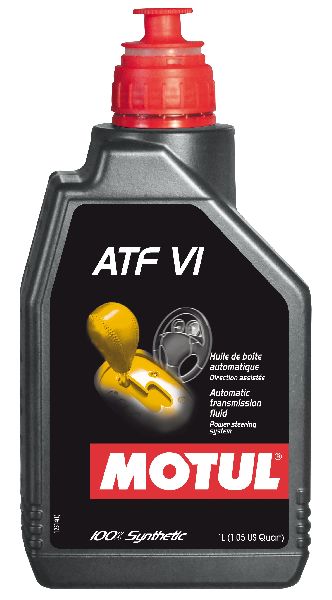
Aftermarket price range: $600-$900 - Automatic Transmission Fluid (Mercon ULV)
(OEM #XT-12-QULV)— Required for refilling the transmission after any internal service. The 10R80 specifically requires this Ultra-Low Viscosity fluid.
Trusted brands: Motorcraft
OEM price range: $20-$30 per quart
Aftermarket price range: $15-$25 per quart - Transmission Gasket and Seal Kit — Necessary for any transmission overhaul to ensure proper sealing upon reassembly.
Trusted brands: Motorcraft
OEM price range: $150-$300
Aftermarket price range: $100-$200
Related Codes That Often Appear With This One
- P0751, P0756, P0761, P0766, P0771, P2701-P2708 — These are all transmission codes related to shift solenoids and other clutch apply time faults. The TSBs for the Expedition list them together, as they all stem from the same core issue of hydraulic pressure loss within the 10R80 transmission. [TSB 26-2046, TSB 22-2428, TSB 25-2023, TSB 24-2254]
- P0729, P0731-P0736 — These codes indicate incorrect gear ratios. They are often triggered alongside P2700 because the slow clutch application directly affects the transmission's ability to achieve and maintain the correct gear. [TSB 26-2046, TSB 22-2428, TSB 25-2023, TSB 24-2254]
- P07F7 — This code specifically points to an inability to engage the 'F' clutch, which is housed within the problematic CDF drum assembly. It is often seen with P2702 (Clutch 'C' Apply Time) for the same reason. [TSB 26-2046, TSB 22-2428, TSB 25-2023, TSB 24-2254]
Technical Service Bulletins (TSBs) & Recalls
- TSB 23-2250: Specifically addresses harsh/delayed shifts due to the CDF clutch cylinder sleeve issue and lists P2700 as a related code.
- TSB 24-2254: Mentions harsh/delayed shifts and engagements with P2700 due to axial movement of the CDF clutch cylinder sleeve.
- TSB 22-2428: Also covers illuminated MIL with P2700 among other codes, pointing to internal transmission issues.
- TSB 21-2357: An earlier TSB covering harsh shifts and a long list of codes including P2700, recommending valve body overhaul or adaptive learning resets.
Platform-Specific Known Issues
- A widespread and well-documented issue with the 10R80 transmission involves the CDF clutch cylinder sleeve moving out of place, causing internal hydraulic leaks. This is the primary cause for P2700 and related codes on this platform. Ford has issued numerous TSBs to address this, including TSB 23-2250, TSB 24-2254, and TSB 22-2428. The failure is often called 'CDF drum bushing walkout' and the permanent fix is an updated drum with a retaining lip.
Mechanic-Grade Diagnostic Values
- Shift Solenoid Resistance (A-F) — expected: 5.0 - 5.4 Ohms at 68°F (20°C). Failure: A reading outside of this range indicates a faulty solenoid coil.
- Line Pressure Control (LPC) Solenoid Current — expected: Inverse operation: ~50 mA at full pressure, ~850 mA at low pressure.. Failure: Current readings that do not correspond to commanded pressure indicate a solenoid or wiring issue.
- Torque Converter Clutch (TCC) Solenoid Current — expected: Proportional operation: ~50 mA at low pressure, ~850 mA at high pressure.. Failure: Current readings that do not align with commanded TCC lockup status suggest a fault.
Hidden / Shadow Codes Worth Checking
- P163E: Transmission Control Module (TCM) Programmable Parameters Internal Error (see via This code can be stored in the PCM or TCM and is visible with a Ford-compatible scan tool like IDS. It may appear after replacing the main control valve body if the new solenoid strategy file is incompatible with the existing TCM software, as noted in TSB 22-2339.)
Scan Tool Commands That Help
- Ford IDS (Integrated Diagnostic System) or FORScan: Transmission Characterization / Solenoid Body Strategy Programming — This function is required after replacing the valve body or the entire transmission. It involves writing the 13-digit solenoid strategy number from the new part into the TCM to ensure proper shift calibration. Failure to perform this step will result in poor shift quality and may set additional codes.
- Ford IDS (Integrated Diagnostic System) or equivalent professional scan tool: Clear All Adaptive Tables — This should be performed after any major transmission repair, including CDF drum or valve body replacement. It resets the transmission's learned shift patterns, forcing it to relearn based on the new components. This is followed by a specific adaptive learning drive cycle.
- Ford IDS (Integrated Diagnostic System): Adaptive Learning Drive Cycle — After clearing the adaptive tables, a specific, multi-step drive cycle must be performed to allow the TCM to learn the hydraulic characteristics of the new components. This involves a series of gentle accelerations, stops, and gear selections.
Wiring & Ground Locations
- C175T — This is a main connector at the Powertrain Control Module (PCM).. This connector contains the circuits for multiple transmission solenoids, including Shift Solenoid A (Pin 38) and Shift Solenoid B (Pin 37), as well as the EPC (Electronic Pressure Control) solenoid (Pin 39). A poor connection or corrosion at these specific pins could cause erratic solenoid operation and trigger apply-time faults like P2700.
- C177 — This is the internal transmission harness connector located inside the transmission.. This connector links the external harness to the internal components, including all shift solenoids. The wire for Shift Solenoid A is typically located here. Internal fluid contamination can compromise this connector over time.
- Main Body and Engine Ground Straps — Key ground points include straps from the engine/transmission assembly to the chassis/frame, often found near the engine mounts. Additional grounds are located behind the kick panels in the passenger footwells and on the inner fenders in the engine bay.. The transmission solenoids are electronically controlled and rely on a solid ground path to function correctly. A corroded or loose ground strap can cause intermittent electrical issues, leading to erratic solenoid behavior and unpredictable shifting that could be misdiagnosed as an internal hydraulic fault.
Real Owner Repair Stories
- Reddit user on r/f150 (2019 F-150 Lariat 2.7L 4x4) — Initially had harsh upshifts and downshifts. After a reflash, it developed a 2-3 second delay when shifting from Park to Drive/Reverse.
❌ Tried (didn't work) A PCM/TCM reflash and replacement of some parts per a TSB initially addressed the harsh shifting but led to the new symptom of delayed engagement.
✅ What actually fixed it The delayed engagement was fixed by replacing the CDF drum. However, 900 km later, the truck developed a very hard shift into third gear, which then required a valve body replacement to resolve.
OEM Part Supersession History
HL3Z-7H351-A, JL3Z-7H351-A→JL3Z-7H351-B— The original CDF drum design allowed an internal bushing to 'walk' out of position, blocking hydraulic passages. The updated JL3Z-7H351-B part features a machined lip on the drum to physically prevent the bushing from migrating, providing a permanent fix.
Heads up: The older part numbers should not be used for repair, as they contain the original design flaw. Always use the latest superseded part number for durability.
Model Year Variations Within This Range
- 2018-2022: Vehicles manufactured on or before August 15, 2022, were likely built with the original, failure-prone CDF drum design. Vehicles built after this date are expected to have the updated drum (JL3Z-7H351-B) from the factory, significantly reducing the probability of this specific failure. However, due to supply chain variables, the exact cutoff date can be inexact, and a dealer can verify by VIN.
Helpful Videos

We Have This Part in Stock


The information in this article is provided for general reference and educational purposes only. Vehicle specifications, procedures, and part compatibility can vary by production date, trim level, and region. Always consult your vehicle's factory service manual and verify part numbers before purchasing or performing repairs. Safety-critical components such as airbags, seat belts, and braking systems should be installed by a qualified professional.
- Ford EXPEDITION:
- 🧭 Diagnostic Flowchart
- 🎬 Helpful Videos
- 🛍️ Shop This Part
- What's Unique About the 2018-2023 Ford EXPEDITION
- Symptoms You May Notice
- Most Likely Causes
- Rare But Worth Checking
- Diagnosis Steps
- Parts You'll Likely Need
- Related Codes That Often Appear With This One
- Technical Service Bulletins (TSBs) & Recalls
- Platform-Specific Known Issues
- Mechanic-Grade Diagnostic Values
- Hidden / Shadow Codes Worth Checking
- Scan Tool Commands That Help
- Wiring & Ground Locations
- Real Owner Repair Stories
- OEM Part Supersession History
- Model Year Variations Within This Range
- 🎟️ Get 5% Off