

P2700 on 2019-2023 Ford Ranger: Transmission Apply Time Fault Causes & Fixes
P2700 on a 2019-2023 Ford Ranger indicates a performance issue with a transmission clutch. This is a known issue with the 10R80 10-speed transmission, often related to internal hydraulic leaks or valve body problems. The fix usually requires professional service and may involve valve body repair or replacement of the CDF clutch drum with an updated part, as outlined in multiple Ford Technical Service Bulletins.
- P2700 on a 2019-2023 Ranger is a serious transmission code that points to a known issue with the 10R80 transmission.
- The most likely cause, especially on models built before mid-August 2022, is a faulty CDF clutch drum, which is a major internal repair covered by Ford TSBs.
- Other causes include a faulty valve body or low/dirty transmission fluid.
- This is not a typical DIY repair. You should take the vehicle to a qualified technician who is aware of the Ford TSBs for this issue.
- Do not ignore this code, as continued driving can lead to more severe and costly transmission damage.
What's Unique About the 2019-2023 Ford RANGER

The 2019-2023 Ford Ranger uses the 10-speed 10R80 automatic transmission, which was co-developed with GM and is known to have specific issues leading to this code. Ford has released several Technical Service Bulletins (TSBs) that directly address harsh shifting, delayed engagement, and this group of trouble codes. The problems are often traced back to issues within the main control valve body or, more significantly, a well-documented design flaw in the 'CDF' clutch cylinder sleeve that can move and cause internal hydraulic leaks. This makes the P2700 code on a Ranger more specific than a generic transmission fault and points towards a known pattern of failure.
Diagnostic Flowchart

Tap your situation to follow the diagnostic path that matches what you're seeing on this vehicle.
Symptoms You May Notice
- Harsh or abrupt shifts between gears, sometimes described as a 'clunk' or 'slam'.
- Delayed shifts or a long pause (flare) before a gear engages, particularly noted on the 3-5 shift.
- Delayed engagement when shifting from Park into Drive or Reverse.
- Slipping, where the engine RPMs increase but the vehicle doesn't accelerate accordingly.
- Illuminated Malfunction Indicator Lamp (MIL) or Check Engine Light.
- Transmission may enter 'limp mode', getting stuck in a single gear.
- Shuddering or vibration during acceleration.
- A feeling of the transmission 'hunting' for gears or lugging at low speeds.
- Replacing only a single shift solenoid when the issue is a larger hydraulic leak or a sticking valve in the valve body.
- Assuming the entire transmission has failed without performing the specific diagnostic tests outlined in Ford's TSBs, which can pinpoint a repairable component like the CDF drum.
- Repeatedly reprogramming the TCM and resetting adaptive learning tables without addressing the underlying mechanical or hydraulic fault.
Most Likely Causes

- CDF Clutch Cylinder Sleeve Movement 🔴 High Probability → Shop Automatic Transmission Coast Clutch Hub This is a well-documented design flaw in Ford's 10R80 transmission, as noted in TSBs 22-2428 and 25-2134. The sleeve within the CDF clutch drum can move axially, misaligning fluid passages and tearing Teflon seals, which causes hydraulic pressure loss. This issue is particularly noted on Rangers built on or before August 15, 2022.
How to confirm: A technician must perform a specific Transmission Clutch Circuit Leak Test using the Ford Diagnostic & Repair System (FDRS) as outlined in the TSBs. This often requires transmission disassembly to visually inspect the drum for a dropped sleeve.
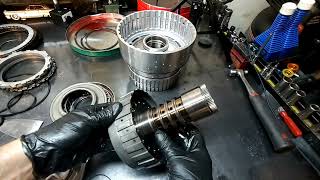
Typical fix: Replacement of the CDF clutch drum with an updated part that has a machined lip or step to prevent the sleeve from moving. 🎬 Watch: See exactly how the CDF drum sleeve fails internally. This is a major internal transmission repair requiring removal and disassembly of the transmission.
Est. part cost: $200-$400 for the drum assembly - Sticking Valves in Main Control Valve Body 🟡 Medium Probability → Shop Transmission Valve Body Ford TSBs also list sticking valves in the aluminum valve body as a potential cause for these symptoms. Debris in the fluid or warping of the valve body itself can cause valves to operate slowly or get stuck, affecting hydraulic pressure to the clutches. Some technicians note this is one of the three most common issues with the 10R80, alongside the CDF drum and programming.
How to confirm: Diagnosis involves checking transmission fluid for contamination and may require a technician to remove and inspect the valve body. A dealership may attempt this repair before suspecting the CDF drum.
Typical fix: Overhauling or replacing the main control valve body. In some cases, a fluid flush with an additive like Lubegard Platinum is attempted by owners, but valve body replacement is often necessary.
Est. part cost: $700-$1200 for a new valve body, with some forum users reporting dealer quotes up to $5,000 for the job. - Low or Contaminated Transmission Fluid 🟡 Medium Probability → Shop Transmission Assembly While not unique to the Ranger, low fluid levels will cause a loss of hydraulic pressure, and contaminated fluid can cause valves and solenoids to stick. The 10R80 is sensitive to fluid condition and requires a specific fluid, Motorcraft MERCON ULV. Some owners have reported their trucks being underfilled from the factory.
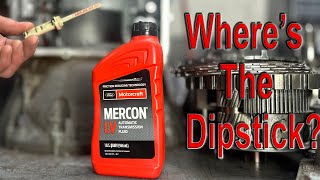
How to confirm: Check the transmission fluid level and condition. The fluid should be red and clear, not brown, black, or smelling burnt. This is difficult as the 10R80 does not have a traditional dipstick. 🎬 Watch: How to check transmission fluid on this Ford system.
Typical fix: Top off the fluid if low and repair any leaks. If the fluid is dirty, perform a fluid and filter change using only MERCON ULV fluid.
Est. part cost: $150-$300 for fluid and filter service - Faulty PCM/TCM Software ⚪ Low Probability Early TSBs for the 10R80 transmission mentioned software updates and resetting the adaptive learning strategy to resolve shift quality issues. This is often the first step a dealer will take, but it rarely provides a permanent fix for a mechanical or hydraulic problem.
How to confirm: A Ford dealership or qualified shop can check if the vehicle's PCM/TCM software is up to date using their diagnostic tools.
Typical fix: Reprogramming the PCM/TCM with the latest calibration and performing a transmission adaptive learning drive cycle.
Est. part cost: $0 under warranty, or $100-$250 for labor
Diagnosis Steps
- Check for any Technical Service Bulletins (TSBs) related to your vehicle's VIN. TSBs 22-2428 and 25-2134 are highly relevant for this issue.
- Scan the TCM for all stored trouble codes and review freeze-frame data. Note which gears and conditions trigger the fault.
- Check the transmission fluid level and condition. This requires the vehicle to be at a specific temperature and lifted level. The fluid must be MERCON ULV.
- If fluid is low, inspect for leaks from the pan gasket, cooler lines, or seals and repair as needed.
- If TSBs point to it, have a qualified technician perform the FDRS Transmission Clutch Circuit Leak Test to check for internal hydraulic leaks related to the CDF drum.
- Inspect the transmission wiring harness and connectors for any damage, corrosion, or looseness.
- If the CDF drum leak test passes and fluid is clean, the issue may be with the main control valve body, requiring inspection and possibly replacement.
Parts You'll Likely Need
- CDF Clutch Cylinder / Drum
(OEM #JL3Z-7H351-B)— This is the updated part from Ford designed to fix the known issue of the internal sleeve moving and causing hydraulic leaks, which is a primary cause of P2700 on Rangers built before mid-August 2022. It supersedes previous part numbers HL3Z-7H351-A and JL3Z-7H351-A.
Trusted brands: Motorcraft
OEM price range: $200-$400 - Transmission Main Control Valve Body — Sticking valves or internal wear in the valve body can cause incorrect hydraulic pressure, leading to apply time faults. It's a common failure point addressed in Ford TSBs and a frequent topic of owner complaints.
Trusted brands: Motorcraft
OEM price range: $700-$1200
Aftermarket price range: $500-$900 - Automatic Transmission Fluid and Filter Kit
(OEM #Motorcraft XT-12-QULV (Fluid))— Low or contaminated fluid is a basic and crucial first step. A fluid and filter change using the correct MERCON ULV fluid is necessary during any major transmission repair.
Trusted brands: Motorcraft
OEM price range: $150-$250
Aftermarket price range: $100-$180
Related Codes That Often Appear With This One
- P0751 - P0772 — These codes relate to the performance of other shift solenoids (A, B, C, D, E). They often appear with P2700 because a systemic issue like low hydraulic pressure, a faulty valve body, or a bad CDF drum affects multiple clutch circuits.
- P0729 - P0736 — These codes indicate incorrect gear ratios. They are logged when the TCM detects a mismatch between the commanded gear and the actual gear ratio, which is a direct consequence of a clutch (friction element) failing to apply correctly.
Technical Service Bulletins (TSBs) & Recalls
- TSB 25-2134: Supersedes previous TSBs and outlines the diagnostic procedure, including the FDRS Transmission Clutch Circuit Leak Test, to confirm hydraulic leaks from the CDF clutch cylinder sleeve.
- TSB 22-2428: A comprehensive TSB covering multiple models with the 10R80 transmission, including the Ranger. It identifies potential causes as software, the valve body, or the CDF clutch cylinder sleeve movement for vehicles built on or before August 15, 2022.
- TSB 25-2024: An earlier version superseded by 25-2134, also dealing with the same set of DTCs and shift quality symptoms.
Platform-Specific Known Issues
- Ford has issued multiple TSBs (including 22-2428 and 25-2134) for the 10R80 transmission in 2019-2023 Rangers concerning harsh/delayed shifts and a list of DTCs including P2700.
- The primary
Mechanic-Grade Diagnostic Values
- Shift Solenoid Resistance — expected: 5.0 - 5.4 Ohms at 20°C (68°F). Failure: A reading outside this range indicates a faulty solenoid coil.
- Transmission Fluid Temperature (TFT) Sensor Resistance — expected: 0.8kΩ to 1.5kΩ. Failure: Resistance corresponds to temperature; specifically, 0.8kΩ to 1.5kΩ should correspond to a fluid temperature of 111°C to 130°C (231°F to 266°F). A mismatch indicates a faulty sensor.
Hidden / Shadow Codes Worth Checking
- P163E: Transmission Control Module (TCM) Internal Logic Failure. This code can be set after replacing the main control valve body if the new solenoid strategy information is programmed incorrectly. (see via This code will appear on a standard scan tool after valve body replacement if the procedure is done incorrectly. TSB 22-2339 notes that this is caused by software incompatibility between the new valve body and the existing PCM/TCM software.)
Scan Tool Commands That Help
- Ford IDS / FDRS: Solenoid Body Strategy Programming — This is mandatory after replacing the main control valve body. The 13-digit strategy number from the new valve body must be entered into the PCM/TCM to ensure correct solenoid operation. Failure to do so will cause shifting problems and may set code P163E.
- Ford IDS / FDRS: Transmission Accelerated Main Control Break-in Routine — This procedure is used to address harsh or delayed shifts, particularly on lower-mileage vehicles, as an initial repair step before replacing hardware. TSB 20-2226 suggests performing this routine twice.
- Ford IDS / FDRS: Clear Transmission Adaptive Tables — This function should be performed after any transmission repair, including software updates or component replacement, to force the TCM to relearn the transmission's characteristics and driver habits for optimal shift quality.
- Ford IDS / FDRS: Transmission Clutch Circuit Leak Test — This is a specific diagnostic test outlined in TSBs to check for internal hydraulic leaks, which is the primary method for confirming a failed CDF clutch drum without full disassembly.
Wiring & Ground Locations
- Main Transmission Case Connector — The 34-pin main electrical connector on the side of the 10R80 transmission case.. This connector is the single point of communication between the TCM and all internal transmission electronics. A pinout chart allows a technician to test for continuity and voltage at specific sensor and solenoid circuits, such as the Transmission Fluid Temperature (TFT) sensor (Pin 17) and various speed sensors (Pins 1, 2, 3, 4), without disassembling the transmission.
- Fuse F24 (Engine Bay) — In the under-hood fuse box (Power Distribution Box).. This 10A fuse provides power to the Transmission Control Module (TCM). A loss of power here would cause a total loss of transmission control and multiple codes.
- Ground - Frame Middle Right — A ground point located on the middle right side of the vehicle's frame.. Pin 21 of the main transmission connector is a frame ground. A poor connection at this ground point could cause erratic behavior from transmission sensors and solenoids, potentially leading to performance codes like P2700.
Real Owner Repair Stories
- Reddit user /u/Sysmithers on r/f150 (2022 Ford F-150) — A random, harsh 4th to 3rd gear downshift that happened about once a week when the engine was cold.
❌ Tried (didn't work) The dealer first replaced the main control valve body.
✅ What actually fixed it After the valve body replacement did not work, the dealer then replaced the CDF clutch drum with the updated part, which resolved the harsh shifting. - Reddit user on r/F150Powerboost (2021 Ford F-150 Powerboost) — At light throttle, the transmission would shutter or slam into 3rd gear. The issue was not present under firm acceleration.
❌ Tried (didn't work) No other repairs were attempted first.
✅ What actually fixed it The dealer performed the fix outlined in TSB 22-2428, which involved reprogramming the PCM. The owner reported this completely fixed the harsh shifting and improved overall pedal feel and shift behavior. - F150 Tremor Forum user (Ford F-150 with 10R80) — Delayed and very harsh shifts (1-2, 2-3, 6-7) and harsh downshifts when stopping. The problem became much worse after removing a custom tune.
❌ Tried (didn't work) The user was still in the diagnostic process.
✅ What actually fixed it The dealer diagnosed the issue as requiring a valve body replacement, noting that Ford's TSBs outline a staged repair process that can escalate to a larger rebuild if the valve body doesn't solve it. This highlights the common dealer diagnostic path.
"I Checked Everything" — The Actual Cause
- A common diagnostic pattern for the 10R80 transmission is for a dealer to first suspect and replace the main control valve body to fix harsh shifting. However, in many cases, this does not resolve the problem. The actual root cause is often the mechanical failure of the CDF clutch drum, where an internal sleeve moves and causes a hydraulic leak. One owner reported their dealer replaced the valve body, but the harsh shifting persisted until the CDF drum was also replaced with the updated part.
OEM Part Supersession History
HL3Z-7H351-A, JL3Z-7H351-A→JL3Z-7H351-B— The original CDF clutch drum design allowed an internal bushing/sleeve to 'walk' or move out of position, blocking fluid passages and causing pressure loss. The updated JL3Z-7H351-B part features an integrated retention lip machined into the drum to physically prevent the sleeve from moving.
Model Year Variations Within This Range
- 2019 - early 2023: Per TSB 22-2428, 10R80 transmissions in Rangers built on or before August 15, 2022, are susceptible to the CDF clutch drum sleeve failure. Vehicles built after this date are expected to have the updated CDF drum (part JL3Z-7H351-B) installed from the factory, which is designed to prevent this specific issue.
Helpful Videos


We Have This Part in Stock


The information in this article is provided for general reference and educational purposes only. Vehicle specifications, procedures, and part compatibility can vary by production date, trim level, and region. Always consult your vehicle's factory service manual and verify part numbers before purchasing or performing repairs. Safety-critical components such as airbags, seat belts, and braking systems should be installed by a qualified professional.
- Ford RANGER:
- 🧭 Diagnostic Flowchart
- 🎬 Helpful Videos
- 🛍️ Shop This Part
- What's Unique About the 2019-2023 Ford RANGER
- Symptoms You May Notice
- Most Likely Causes
- Diagnosis Steps
- Parts You'll Likely Need
- Related Codes That Often Appear With This One
- Technical Service Bulletins (TSBs) & Recalls
- Platform-Specific Known Issues
- Mechanic-Grade Diagnostic Values
- Hidden / Shadow Codes Worth Checking
- Scan Tool Commands That Help
- Wiring & Ground Locations
- Real Owner Repair Stories
- "I Checked Everything" — The Actual Cause
- OEM Part Supersession History
- Model Year Variations Within This Range
- 🎟️ Get 5% Off