

P2701 on 2020-2024 Ford TRANSIT: Transmission Clutch 'B' Apply Time Fault
On a 2020-2024 Ford Transit with the 10R80 transmission, code P2701 is most often caused by a faulty main control valve body or an internal transmission failure like a damaged CDF drum or one-way clutch. This is a serious issue requiring professional diagnosis and repair, which can be costly and often involves transmission removal.
- P2701 on a 2020-2024 Transit indicates a serious internal transmission problem, not just a simple sensor failure.
- The most likely causes are a faulty main control valve body or a mechanical failure of an internal clutch component, as documented in Ford's own service bulletins.
- Do not continue to drive the vehicle. The transmission can fail completely, leaving you stranded and leading to a much more expensive repair.
- This is not a DIY-friendly repair. It requires professional-level diagnostics and potentially a complete transmission teardown.
What's Unique About the 2020-2024 Ford TRANSIT
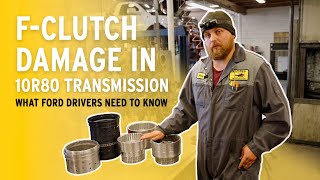
The 2020-2024 Ford Transit is equipped with the 10-speed 10R80 automatic transmission, which is known for specific, well-documented vulnerabilities. Ford has issued multiple Technical Service Bulletins (TSBs) that directly link code P2701 to known issues within this transmission, such as sticking valves in the main control body (TSB 21-2377) and internal mechanical damage to the CDF clutch drum or a one-way clutch (TSB 26-2112). Therefore, unlike a generic vehicle, a P2701 on a Transit points strongly towards these documented failure points rather than simple sensor or wiring issues. These problems are so prevalent that class-action lawsuits have been filed 🎬 Watch: A mechanic explains the four most common 10R80 failures. concerning the 10R80's performance in various Ford models.
Diagnostic Flowchart
Tap your situation to follow the diagnostic path that matches what you're seeing on this vehicle.
Symptoms You May Notice
- Harsh, jerky, or delayed shifts.
- Vehicle is unable to upshift past second gear. [TSB 26-2112]
- Transmission slipping (engine RPMs rise without an increase in speed).
- Illuminated Malfunction Indicator Lamp (Check Engine Light). [TSB 21-2377]
- Vehicle enters 'limp mode,' staying in a single gear.
- Delayed engagement when shifting into Drive or Reverse.
- Loud clunking noises during gear changes, especially at low speeds.
- Replacing only one shift solenoid when the entire valve body is faulty or contaminated.
- Assuming it's a simple sensor issue without considering the high probability of a mechanical or hydraulic fault inside the transmission, as documented in TSBs like 21-2377 and 22-2428.
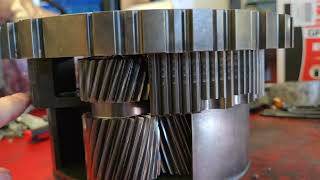
- Performing a fluid flush to fix a mechanical issue. If the CDF drum has failed or there is metal in the pan, new fluid will not solve the problem. 🎬 See why these 10-speed transmissions often suffer from mechanical failure.
Most Likely Causes
- Sticking Valves in the Main Control Valve Body 🔴 High Probability → Shop Transmission Valve Body This is a primary documented issue for the 10R80 transmission in this vehicle, as noted in Ford's TSB 21-2377 and the superseding TSB 22-2428. Debris and worn material can contaminate the valve body, causing valves to stick.
How to confirm: A technician can monitor solenoid commands and hydraulic pressures with a diagnostic scan tool. Following the diagnostic procedure in TSB 21-2377, which may include a 'Main Control Break In' routine, is the standard procedure. If the procedure fails to resolve the issue, valve body overhaul or replacement is indicated.
Typical fix: Replacement of the main control valve body assembly and reprogramming the TCM. In some cases, an overhaul (cleaning and inspection) of the existing valve body may be performed per the TSB.
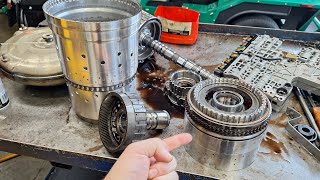
Est. part cost: $700-$1200 for an OEM Motorcraft part. - Damaged or Leaking CDF Drum 🔴 High Probability → Shop Automatic Transmission Clutch Drum A major known weakness in early 10R80 transmissions is the CDF (Clutch D/F) drum. A bushing inside the drum can slide out of place, uncovering fluid passages and causing a hydraulic leak. This leads to pressure loss, delayed shifts, and various performance codes, including P2701. Ford has since released a revised part with a machined lip to prevent the bushing from moving. 🎬 Watch this teardown to see the CDF drum bushing failure.
How to confirm: This requires transmission disassembly and internal inspection. Metal shavings in the transmission pan are a strong indicator of internal mechanical failure. This is typically diagnosed after external factors and the valve body have been ruled out.
Typical fix: Transmission removal and overhaul to replace the failed CDF drum with the updated part. This is a major repair.
Est. part cost: $400-$900 for internal parts, including a revised CDF drum, plus seals and gaskets. - Damaged One-Way Clutch (OWC) 🟡 Medium Probability TSB 26-2112 specifically identifies a damaged OWC as a cause for P2701, especially when accompanied by code P0757 and the vehicle being stuck in second gear.
How to confirm: This requires transmission disassembly and internal inspection. The OWC should lock in one direction and spin freely in the other.
Typical fix: Transmission removal and overhaul to replace the failed one-way clutch and any collateral damage.
Est. part cost: $100-$200 for the OWC itself, but this is part of a larger rebuild. - Low or Contaminated Transmission Fluid 🟡 Medium Probability → Shop Transmission Assembly The 10R80 is very sensitive to fluid type and level. It requires Mercon ULV fluid. Using the wrong fluid or running it low can cause overheating, accelerated wear, and shifting problems that can trigger P2701.
How to confirm: Check the transmission fluid level and condition according to the manufacturer's procedure. The fluid should be at the correct level, red in color, and not smell burnt. Gray sludge or a 'glitter' appearance indicates severe internal wear.
Typical fix: Perform a transmission fluid and filter change using only Motorcraft Mercon ULV. If the fluid is very dark or contains metal, it indicates a more severe internal problem requiring a teardown.
Est. part cost: $150-$250
Rare But Worth Checking
- Failed Shift Solenoid: → Shop Transmission Valve Body Solenoids are integrated into the main control valve body on the 10R80. A single solenoid failure is uncommon; more often, the entire valve body is compromised by contamination, necessitating replacement of the whole assembly.
- Faulty Transmission Control Module (TCM): → Shop Transmission Assembly While less common, a software glitch or internal failure in the TCM can cause it to misinterpret data or command shifts incorrectly. Often, a software re-flash or clearing of the adaptive learning tables is the first step before condemning hardware.
- Wiring Harness Damage: Damage to the wiring between the TCM and the transmission can cause communication errors or incorrect voltage readings, though this is less likely than an internal transmission fault on this platform.
Diagnosis Steps
- Verify the transmission fluid level and condition. Ensure it is clean, full, and of the correct type (Motorcraft Mercon ULV).
- Use a professional OBD-II scanner to check for any other transmission-related codes and review the freeze frame data for P2701.
- Inspect the transmission housing and wiring harness for any visible signs of damage, leaks, or loose connections.
- Consult Ford's Technical Service Bulletins (TSBs). Specifically review TSB 22-2428 and TSB 26-2112 for diagnostic paths related to P2701.
- Using a Ford-specific scan tool, attempt the 'PCM - Transmission Accelerated Main Control Break In' routine as described in TSB 21-2377. This may resolve issues related to sticky valves.
- If the break-in routine fails, or if fluid is heavily contaminated with metal 'glitter', the next step is typically valve body replacement.
- If a new valve body does not resolve the issue, the transmission must be removed and disassembled for an internal inspection of the CDF drum, one-way clutch, and other friction elements.
Parts You'll Likely Need
- Main Control Valve Body Assembly
(OEM #L1MZ-7A100-C (Note: Part numbers can be specific; always verify with VIN))— This is a primary cause identified by Ford TSB 21-2377 for a wide range of shifting issues, including code P2701.
Trusted brands: Motorcraft
OEM price range: $700-$1200
Aftermarket price range: $500-$900 - CDF Clutch Cylinder (CDF Drum) — A known major failure point in the 10R80; the internal sleeve can slip, causing hydraulic leaks and multiple shift codes. Aftermarket and updated OEM versions have a retaining feature to prevent this.
Trusted brands: Motorcraft (updated version), Aftermarket (BD Diesel, etc.)
OEM price range: $200-$350
Aftermarket price range: $250-$400 - Transmission Overhaul Kit — If the transmission requires disassembly to fix an internal part like the CDF drum or OWC, a full overhaul kit with all necessary seals, gaskets, and clutches is the standard repair method.
Trusted brands: Motorcraft
OEM price range: $500-$1000
Related Codes That Often Appear With This One
- P0757 — This code for 'Shift Solenoid 'B' Stuck On' is specifically mentioned alongside P2701 in TSB 26-2112, pointing to a potential one-way clutch failure.
- P0729, P0731-P0736 — These are gear ratio error codes. They frequently appear with P2701 because if a clutch fails to apply correctly, the transmission cannot achieve the commanded gear ratio. [TSB 21-2377, TSB 22-2428]
- P2700, P2702-P2705 — These are performance codes for the other friction elements (clutches A, C, D, E, F). Seeing multiple friction element codes together strongly suggests a systemic problem like a faulty valve body or widespread hydraulic issue, as seen in TSB 22-2428.
Technical Service Bulletins (TSBs) & Recalls
- TSB 26-2112: Points to a damaged one-way clutch when P2701 and P0757 are present.
- TSB 21-2377: Suggests sticking valves in the main control valve body as a cause for P2701 and other codes. Recommends a 'break-in' procedure or valve body overhaul.
- TSB 22-2428: Supersedes TSB 21-2377 and adds the moving CDF clutch cylinder sleeve as another primary cause for these issues, affecting vehicles built on or before mid-to-late 2022.
- TSB 24-2254: Also identifies the axial movement of the CDF clutch cylinder sleeve as the cause for P2701 and other codes, instructing technicians to verify hydraulic leakage.
Platform-Specific Known Issues
- TSB 26-2112 notes that P2701 combined with P0757 on these vehicles may be due to a damaged one-way clutch (OWC), causing an inability to shift past second gear.
- TSB 22-2428 (which supersedes 21-2377) points to sticking valves in the main control valve body OR axial movement of the CDF clutch cylinder sleeve as potential causes for a wide array of codes including P2701.
- A Reddit user with a 2021 Transit 3.5L described a saga of transmission problems starting with rumbling and hard shifts, leading to a valve body replacement under warranty, which failed, revealing metal in the transmission, and ultimately requiring further major repairs.
Mechanic-Grade Diagnostic Values
- Shift Solenoid Resistance — expected: 5.0 - 5.4 Ohms at 68°F (20°C). Failure: A reading outside of this range indicates a faulty solenoid coil.
- Transmission Fluid Temperature for Level Check — expected: 206°F - 215°F (96°C - 101°C). Failure: Checking the fluid level when the transmission is too cold or too hot will result in an inaccurate reading, leading to an under-filled or over-filled condition.
- Shift Solenoid 'B' Control Wire Voltage — expected: Near 12V when commanded ON by a scan tool.. Failure: Low or no voltage when commanded on points to a wiring or TCM driver issue.
Hidden / Shadow Codes Worth Checking
- Solenoid Body Strategy ID: This is not a trouble code, but a 13-digit alphanumeric identifier etched onto the valve body. It contains calibration data specific to the solenoids. When the valve body is replaced, this new ID must be programmed into the vehicle's Powertrain Control Module (PCM) for the transmission to shift correctly. (see via The ID is physically etched on the side of the main control valve body casting. It must be entered into the PCM using a dealer-level scan tool like Ford IDS/FDRS.)
Scan Tool Commands That Help
- Ford IDS/FDRS: Solenoid Body Strategy Programming — This is mandatory after replacing the main control valve body or the entire transmission. Failure to program the new strategy ID will result in poor shift quality and may set new trouble codes.
- Ford IDS/FDRS: Transmission Adaptive Learning Drive Cycle / Main Control Break In — After any transmission repair, especially valve body or clutch replacement, the adaptive learning tables must be cleared and a specific drive cycle must be performed to allow the TCM to relearn the clutch apply times and pressures.
Wiring & Ground Locations
- Shift Solenoid 'B' Control Pin — At the main transmission case connector (C168B), this is pin B8, typically a Green/Brown wire.. This is the specific wire that the TCM uses to ground-control Shift Solenoid 'B'. A technician can test for continuity and voltage at this pin to diagnose wiring issues between the TCM and the transmission's internal harness.
- Transmission Internal Connector C177 — Inside the transmission, connecting the main harness to the individual solenoids and sensors on the valve body.. Provides pinout locations for testing individual components like the Transmission Fluid Temperature (TFT) sensor (Pins 1 & 2) and various solenoid power supplies and control wires, which can help isolate a fault within the internal harness.
Real Owner Repair Stories
- Ranger5G.com forum user (2020 Ford Ranger XLT (proxy for Transit with same 10R80)) — Clunking, poor shifting, stuttering when lifting off the gas.
❌ Tried (didn't work) The user had the entire transmission replaced with a new unit containing the updated CDF drum.
✅ What actually fixed it The issue was not fully resolved. Despite the new transmission, the truck continued to have poor shifting from 1st to 3rd and harsh downshifts. The owner suspected the original torque converter, which was not replaced with the transmission, might be the cause, or that the adaptive learning was incomplete. - Reddit user in r/f150 (2018 Ford F-150 5.0L with 90,000 miles (proxy for 10R80)) — Transmission throwing codes for a solenoid/valve body problem.
❌ Tried (didn't work) The owner considered replacing just the valve body.
✅ What actually fixed it Both an independent transmission shop and a Ford dealership technician advised against chasing valve body/solenoid issues, calling it a 'rabbit hole.' The owner opted to have the entire transmission replaced with a remanufactured Jasper unit, which resolved the problem.
"I Checked Everything" — The Actual Cause
- In the context of this transmission code, the equivalent of a 'smoke test clean' scenario is when the most common fix (valve body replacement) fails to solve the problem. A known pattern is replacing the valve body, only for shifting issues to return after a short period (e.g., 100 miles). This often happens because the root cause was not the valve body itself, but rather a failing CDF drum bushing which contaminated the original valve body with debris. The new valve body is then contaminated by the same ongoing internal failure.
When the Usual Fixes Don't Work
- While replacing the CDF drum with the updated part is considered a definitive fix for that specific failure, it does not make the transmission immune to other problems. Forum reports indicate that even new transmissions with the updated drum can exhibit poor shifting behavior. This suggests that other components, like the torque converter or the valve body solenoids, can still fail independently, or that the adaptive learning process after a major repair is critical and sometimes problematic.
OEM Part Supersession History
HL3Z-7H351-A (and others)→JL3Z-7H351-B— The original CDF drum design allowed an internal bushing to 'walk' or move out of position, uncovering hydraulic ports and causing pressure loss. The updated part (JL3Z-7H351-B) features a machined lip or dam that physically prevents the bushing from migrating.
Heads up: Vehicles built on or after August 16, 2022, are expected to have the updated drum from the factory.Original CDF Drum→Sonnax CDF Drum Saver Kit (Part #5781-K)— This is an aftermarket solution that allows a technician to modify an original, failure-prone CDF drum. It involves machining the drum and installing a new, more robust bushing and retaining ring system to prevent the bushing from walking.
Heads up: This is not a direct replacement part but a kit that requires machining of the original drum. It is an option for transmission rebuilders when a new updated drum is not available or cost-effective.
Model Year Variations Within This Range
- 2020 - Mid-2022: Vehicles built before August 16, 2022, are more susceptible to CDF drum failure due to the original drum design that lacks the anti-walk bushing feature. While a 2020-2024 Transit can experience this, earlier models in the range are at higher risk.
- 2020: Some 2020 models may be equipped with an auxiliary transmission fluid cooler that was deleted on some 2021 and newer models. The presence of this cooler adds steps to the transmission service procedure, as it and its lines must be moved to access the transmission pan.
Helpful Videos

We Have This Part in Stock


The information in this article is provided for general reference and educational purposes only. Vehicle specifications, procedures, and part compatibility can vary by production date, trim level, and region. Always consult your vehicle's factory service manual and verify part numbers before purchasing or performing repairs. Safety-critical components such as airbags, seat belts, and braking systems should be installed by a qualified professional.
- Ford TRANSIT:
- 🧭 Diagnostic Flowchart
- 🎬 Helpful Videos
- 🛍️ Shop This Part
- What's Unique About the 2020-2024 Ford TRANSIT
- Symptoms You May Notice
- Most Likely Causes
- Rare But Worth Checking
- Diagnosis Steps
- Parts You'll Likely Need
- Related Codes That Often Appear With This One
- Technical Service Bulletins (TSBs) & Recalls
- Platform-Specific Known Issues
- Mechanic-Grade Diagnostic Values
- Hidden / Shadow Codes Worth Checking
- Scan Tool Commands That Help
- Wiring & Ground Locations
- Real Owner Repair Stories
- "I Checked Everything" — The Actual Cause
- When the Usual Fixes Don't Work
- OEM Part Supersession History
- Model Year Variations Within This Range
- 🎟️ Get 5% Off