

P2701 on 2020-2023 Lincoln Aviator: Transmission Clutch Fault Causes and Fixes
On a 2020-2023 Lincoln Aviator, code P2701 almost always points to a known issue with sticking valves inside the transmission's main control valve body. This is a widespread problem on the 10R60/10R80 10-speed transmission, documented in multiple manufacturer TSBs. The definitive fix is typically a valve body replacement, which is a complex professional repair.
- P2701 on a 2020-2023 Aviator is a serious transmission code indicating a clutch is not engaging at the correct speed.
- Do not ignore this code; it can lead to more severe transmission damage.
- The most probable cause is a faulty main control valve body, a known issue for this vehicle confirmed by multiple TSBs.
- Before authorizing expensive repairs, ensure your mechanic has checked the transmission fluid and reviewed the relevant TSBs.
- This repair is complex and should be performed by a qualified professional with experience in modern Ford/Lincoln transmissions.
What's Unique About the 2020-2023 Lincoln AVIATOR
The 2020-2023 Lincoln Aviator uses a 10-speed automatic transmission (the 10R60 or the 10R80 for the 3.0L V6 and hybrid models) which is known for having issues related to its main control valve body. Ford and Lincoln have issued several superseding Technical Service Bulletins (TSBs) acknowledging that sticking valves can cause a wide range of shifting problems and trigger a cluster of codes including P2701. This makes a faulty valve body a much more likely culprit on this specific vehicle than on others where this code might appear. The issue is so prevalent that it has been a subject of owner complaints and service actions across multiple Ford/Lincoln platforms 🎬 Watch: A breakdown of the four most common 10R80 failures. using this transmission.
Diagnostic Flowchart
Tap your situation to follow the diagnostic path that matches what you're seeing on this vehicle.
Symptoms You May Notice
- Harsh, jerky, or delayed shifts, particularly during upshifts or downshifts. 🎬 See a mechanic explain common 3-4 and 5-6 shift flares.
- A noticeable lurch or jolt when the transmission engages a gear.
- Transmission slipping (engine RPMs rise without a corresponding increase in speed).
- Vehicle hesitates or lunges from a stop.
- Check Engine Light or Malfunction Indicator Lamp (MIL) is on.
- Transmission may enter a 'limp mode', getting stuck in one gear.
- In some cases, a transmission fluid leak may be noticed.
- Replacing a single shift solenoid when the entire valve body assembly is the root cause of the problem. The TSBs call for full valve body replacement.
- Assuming a full transmission rebuild is needed when only the externally-accessible valve body is faulty. This can lead to thousands in unnecessary repair costs.
- Performing a fluid flush and fill expecting it to be a permanent fix. It may provide temporary relief but usually doesn't resolve a sticking valve.
Most Likely Causes
- Sticking Valves in the Main Control Valve Body 🔴 High Probability → Shop Transmission Valve Body This is a well-documented issue for the 10R80/10R60 transmission family, as confirmed by multiple manufacturer TSBs (e.g., TSB 21-2434, TSB 22-2102, TSB 22-2428). Fine metallic debris or manufacturing imperfections can contaminate the fluid and cause the intricate solenoid-actuated valves to stick, leading to incorrect hydraulic pressure and delayed clutch application.
How to confirm: A technician will first check fluid and rule out other issues. Given the pattern of codes (often P2701 appears with others like P2700-P2705) and symptoms, and cross-referencing with TSBs, they will diagnose a faulty valve body. The TSBs outline a diagnostic procedure involving a 'Transmission Accelerated Main Control Break In' routine to see if the valves can be freed before condemning the part.
Typical fix: Replace the main control valve body assembly. Per the TSBs, the procedure is to replace the entire unit, not attempt to clean or repair individual valves. This is followed by a mandatory software-driven adaptive learning process.
Est. part cost: $700-$1400 - Low or Contaminated Transmission Fluid 🟡 Medium Probability → Shop Transmission Assembly
How to confirm: Check the transmission fluid level and condition. The 10R80 does not have a traditional dipstick; level checking is done via a plug on the transmission case when the fluid is at a specific temperature. The fluid should be at the correct level and have a bright red color, not dark brown or smelling burnt. The correct fluid is Motorcraft MERCON ULV.
Typical fix: Perform a transmission fluid drain-and-fill or a complete fluid exchange. While this can sometimes temporarily improve symptoms if the fluid is degraded, it rarely fixes the underlying P2701 issue if it's caused by a sticking valve body.
Est. part cost: $150-$400 - Failed Transmission Control Module (TCM) or Software Issue ⚪ Low Probability → Shop Transmission Assembly Some TSBs for the 10R80 family mention reprogramming the PCM/TCM as a potential first step for harsh shifting, sometimes due to the adaptive learning calibration's inability to cope with normal wear over time. However, for a persistent P2701 code, it's more often a mechanical/hydraulic issue in the valve body that software cannot correct.
How to confirm: A dealer or qualified shop can check for available PCM/TCM software updates for the vehicle's VIN. If an update is performed and the issue persists, the TCM is likely not the root cause.
Typical fix: Reprogram the Powertrain Control Module (PCM) or TCM with the latest software. In rare cases where the module itself has failed, it may need replacement, which can cost between $798 and $850.
Est. part cost: $150-$1000
Rare But Worth Checking
- Internal Mechanical Failure (e.g., Worn Clutch Pack 'B'): While less common than the valve body issue, the physical clutch pack ('Friction Element B') could be worn out from excessive slipping or a manufacturing defect. This is a much more extensive and expensive repair, often requiring a full transmission rebuild.
- Damaged Wiring Harness: Corrosion or damage to the wiring or connectors between the TCM and the transmission's internal harness can cause communication errors and trigger this code. A visual inspection and resistance check of the solenoid circuits would be required.
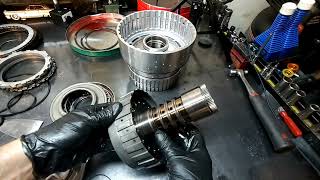
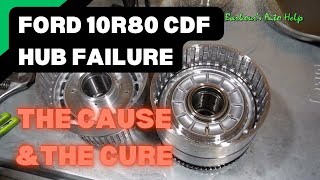
- Failed CDF Drum Bushing: → Shop Automatic Transmission Clutch Drum On 10R80 transmissions, a bushing in the CDF (Clutch C/D/F) drum is known to slide out of place, causing a loss of hydraulic pressure and various shifting issues. While this is a known failure point for the transmission family, it often presents with harsh 1-2 or 3-4 shifts and may not be the primary cause for an isolated P2701 code compared to the valve body.
Diagnosis Steps
- Verify the transmission fluid level and condition. This requires the vehicle to be level and the transmission fluid to be at a specified operating temperature (checked via scan tool) before opening the check plug. Ensure the correct fluid (MERCON ULV) is used.
- Use a professional scan tool (like Ford's FDRS) to check for any other transmission-related trouble codes. A cluster of codes (like P2700-P2705) is a strong indicator of a valve body issue.
- Consult NHTSA and manufacturer databases for relevant Technical Service Bulletins (TSBs) for your vehicle's VIN. Specifically, look for TSBs related to the 10R80/10R60 transmission, such as TSB 22-2428, which supersedes several earlier bulletins.
- Follow the diagnostic procedure outlined in the relevant TSB. This often involves running a 'PCM - Transmission Accelerated Main Control Break In' routine to attempt to free sticking valves.
- If the break-in procedure fails to resolve the issue, the TSB will direct the technician to replace the main control valve body.
- Inspect the transmission wiring harness and connectors for any visible damage, corrosion, or loose connections, though this is a less common cause.
- After replacement of the valve body, the 'adaptive learning drive cycle' must be performed with a scan tool to teach the TCM the characteristics of the new hardware. Failure to do this will result in continued poor shift quality.
Parts You'll Likely Need
- Transmission Main Control Valve Body
(OEM #L1MZ-7A100-C)— This is the most common point of failure for this code on the 10R80/10R60 transmission, as documented in multiple TSBs. The assembly contains the valves and solenoids that stick and cause the timing fault. Note: Part numbers can be superseded; always verify the latest part number with a dealer using the vehicle's VIN.
Trusted brands: Motorcraft (Ford OEM)
OEM price range: $800-$1400
Aftermarket price range: $600-$1000
Related Codes That Often Appear With This One
- P2700 — Relates to Friction Element 'A', indicating a similar timing issue with a different clutch pack, often caused by the same faulty valve body.
- P2702, P2703, P2704, P2705 — These codes point to timing/performance issues with friction elements 'C', 'D', 'E', and 'F' respectively. Seeing them together strongly suggests a systemic hydraulic control problem, like a bad valve body, as noted in TSB 22-2102.
- P0729, P0731-P0736 — These are gear ratio error codes. When a clutch fails to apply correctly (as in P2701), the TCM detects an incorrect gear ratio, triggering these related codes. They are all listed together in manufacturer TSBs like 21-2434.
Technical Service Bulletins (TSBs) & Recalls
- TSB 21-2434 / TSB 22-2102: Explicitly state that codes including P2701 may be due to sticking valves in the main control valve body and outline a diagnostic procedure involving a software-based 'break-in' routine before recommending valve body replacement.
- TSB 22-2428: This bulletin supersedes many previous ones (including 22-2102 and 21-2434) and expands the list of affected vehicles, providing a comprehensive diagnostic tree for a wide range of transmission codes including P2701, pointing to software, solenoid strategy, or the valve body itself.
- TSB 25-2302 / TSB 24-2252: Later TSBs that continue to group P2701 with a large number of other transmission DTCs, indicating a common root cause related to the powertrain control system and valve body.
Platform-Specific Known Issues
- Multiple Technical Service Bulletins (TSB 21-2434, TSB 22-2102, and the superseding TSB 22-2428) have been issued by the manufacturer for the 2020-2023 Aviator. They all list P2701 as part of a group of codes that can be caused by sticking valves in the main control valve body.
- The 10-speed 10R80 transmission platform has been the subject of class-action lawsuits and numerous owner complaints for harsh and erratic shifting behavior across several Ford and Lincoln models.
- Some owners on Reddit and Lincoln forums have reported needing full transmission replacements under warranty for persistent shifting issues, though a valve body replacement is the more common targeted fix for this specific code.
Mechanic-Grade Diagnostic Values
- Shift Solenoid Resistance — expected: 5.0 - 5.4 Ohms at 68°F (20°C). Failure: A reading outside of this range indicates a faulty solenoid coil.
- Transmission Speed Sensor Supply Voltage — expected: 9 Volts. Failure: Lack of proper voltage can cause speed sensor codes and erratic shifting.
- Shift Solenoid 'B' Control Circuit Pin — expected: Pin 9 (Green/Brown wire) on the internal transmission connector C177.. Failure: This pin is used for testing the specific circuit for Friction Element 'B'.
Scan Tool Commands That Help
- Ford FDRS/IDS: Solenoid Body Strategy Data Download — This procedure is mandatory after installing a new main control valve body. It downloads the specific performance characteristics of the new solenoids (etched on the part) to the TCM/PCM for correct operation.
- Ford FDRS/IDS: PCM - Transmission Accelerated Main Control Break In — This is a diagnostic step outlined in TSBs to attempt to free up sticking valves in the valve body before replacing it. It cycles the solenoids to dislodge potential debris.
- Ford FDRS/IDS: Adaptive Learning Drive Cycle — After any major transmission repair, especially a valve body replacement, this guided drive cycle must be performed to allow the TCM to learn the new hydraulic and mechanical characteristics of the transmission.
Wiring & Ground Locations
- C177 — The main 26-way internal transmission wiring harness connector that passes through the transmission case.. This connector carries the signals for all internal solenoids and sensors. Pin 9 (Green/Brown wire) is the control for Shift Solenoid B, which corresponds to Friction Element 'B' in code P2701. A poor connection at this pin or on the connector as a whole could cause the code.
Real Owner Repair Stories
- Reddit user in r/f150 (2018 Ford F-150 EcoBoost with 145k miles) — Crazy shift problems, floating gears then slamming into others, even attempting to shift into first gear at 80mph.
❌ Tried (didn't work) Transmission relearn procedure
✅ What actually fixed it The user first replaced the valve body, which led to the discovery of the actual root cause: a failed CDF drum bushing. The TSB (22-2428) helped confirm the diagnosis. This indicates that while the valve body is a common cause, it can also be a step in diagnosing the deeper CDF drum issue. - YouTube channel 'itsjusta6' (Ford Mustang with 10R80) — After a transmission rebuild, the car had shifting issues, including skip-shifting from 4th to 6th gear.
❌ Tried (didn't work) A complete transmission rebuild (clutches, etc.) that did not include the valve body.
✅ What actually fixed it The owner suspected the original valve body solenoids were full of debris from the previous failure. Replacing the entire main control valve body assembly resolved the post-rebuild shifting problems.
OEM Part Supersession History
HL3Z-7A100-B / HL3Z-7A100-A→L1MZ-7A100-C— Part updates to address reliability issues, likely related to sticking valves.
Heads up: Valve bodies can be specific to manual shift vs. electronic shift models and may have differences related to features like Auto Start-Stop. It is critical to verify the correct part number for the vehicle's specific VIN and configuration.
Model Year Variations Within This Range
- 2021 and later: Ford eliminated the 'gain control valve' in 2021 and later 10R80 valve bodies. While this may not directly impact a P2701 code, it represents a design change in the valve body during the specified vehicle year range.
- Post 08/16/2022: An improved CDF drum design was implemented in 10R80 production starting in August 2022. Vehicles built after this date are less likely to experience the CDF drum bushing failure.
Helpful Videos



We Have This Part in Stock


The information in this article is provided for general reference and educational purposes only. Vehicle specifications, procedures, and part compatibility can vary by production date, trim level, and region. Always consult your vehicle's factory service manual and verify part numbers before purchasing or performing repairs. Safety-critical components such as airbags, seat belts, and braking systems should be installed by a qualified professional.
- Lincoln AVIATOR:
- 🧭 Diagnostic Flowchart
- 🎬 Helpful Videos
- 🛍️ Shop This Part
- What's Unique About the 2020-2023 Lincoln AVIATOR
- Symptoms You May Notice
- Most Likely Causes
- Rare But Worth Checking
- Diagnosis Steps
- Parts You'll Likely Need
- Related Codes That Often Appear With This One
- Technical Service Bulletins (TSBs) & Recalls
- Platform-Specific Known Issues
- Mechanic-Grade Diagnostic Values
- Scan Tool Commands That Help
- Wiring & Ground Locations
- Real Owner Repair Stories
- OEM Part Supersession History
- Model Year Variations Within This Range
- 🎟️ Get 5% Off